![SEO External Links: How to Build High-Quality External Links [2026 Guide]](/_next/image?url=%2Fblog%2Fimages%2Flink-building%2Fseo-external-links-01.webp&w=3840&q=75)
How important are external links for SEO?
Google treats them as a key indicator of website authority -- the more high-quality websites that link to you, the more trustworthy your content appears.
But not all links are valuable. The wrong link strategy can actually hurt your rankings.
This guide teaches you how to build high-quality external links, avoid common pitfalls, and use the right methods to boost your website's authority.
Want to earn natural links but not sure how to start? Free consultation via LINE.
👉 Free LINE Consultation: @006ljkda
External Link Fundamentals
What Are External Links?
External links = links from your website pointing to other websites
Note: In SEO, the term "external links" is sometimes used loosely. It can refer to "links you point outward" or "links others point to you" (i.e., backlinks).
Definitions used in this article:
- External links (Outbound Links): Links you place pointing to other sites
- Backlinks (Inbound Links): Links from other sites pointing to you
The focus of link building: Earning more high-quality "backlinks"
Why External Links Matter for SEO
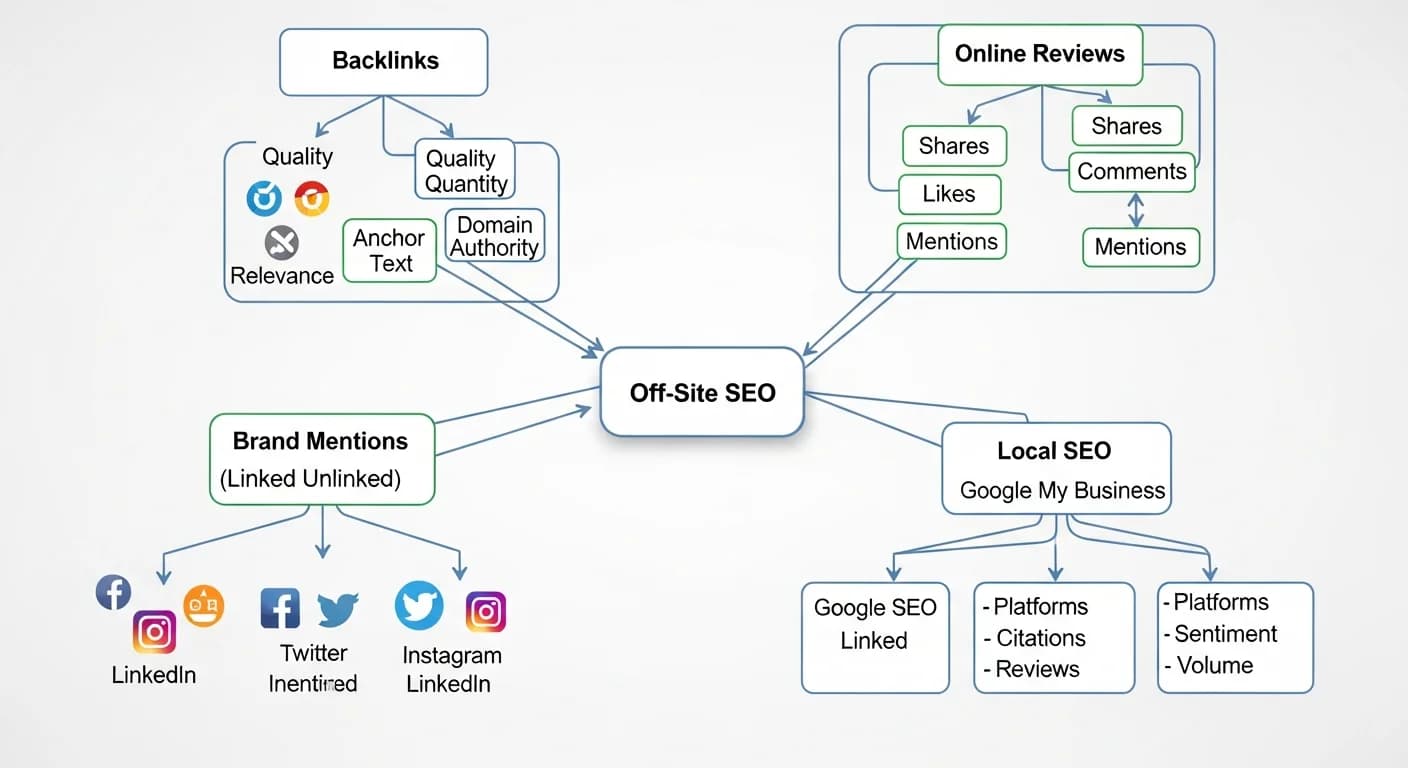
Impact of backlinks (others linking to you):
- Ranking factor: One of Google's core ranking signals
- Authority: Represents third-party endorsement
- Discovery mechanism: Search engines find pages through links
- Traffic source: May bring direct visitors
Impact of your outbound links (links you place):
- User experience: Provides additional valuable information
- Credibility: Citing authoritative sources builds trust
- Relevance signal: Linking to related content establishes topical association
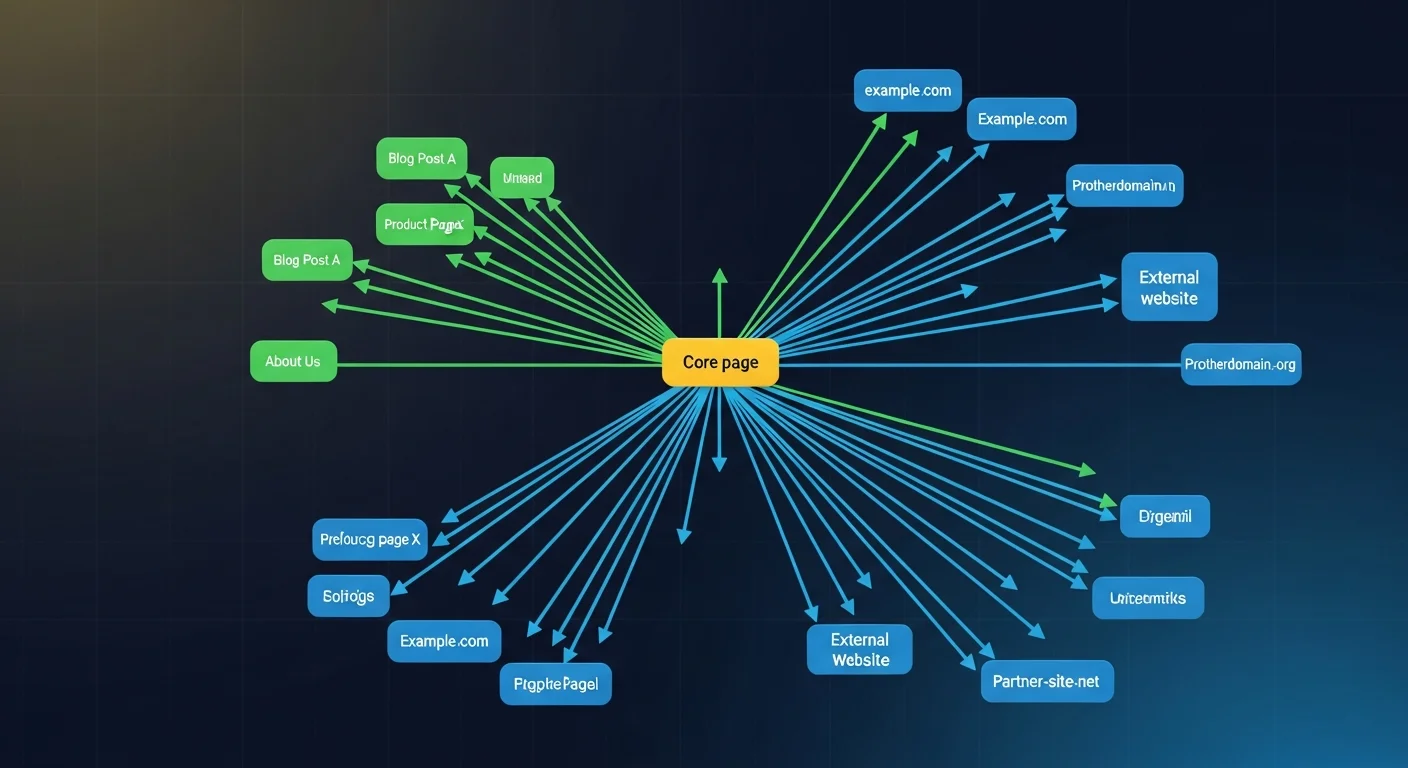
External Links vs Internal Links vs Backlinks
| Type | Definition | SEO Impact |
|---|---|---|
| Internal links | Links between pages on the same site | Optimize site architecture, pass authority |
| External links | Links from your site to other sites | Increase credibility, user experience |
| Backlinks | Links from other sites to yours | Core ranking factor, authority building |
For a complete link building strategy, check out our core guide.
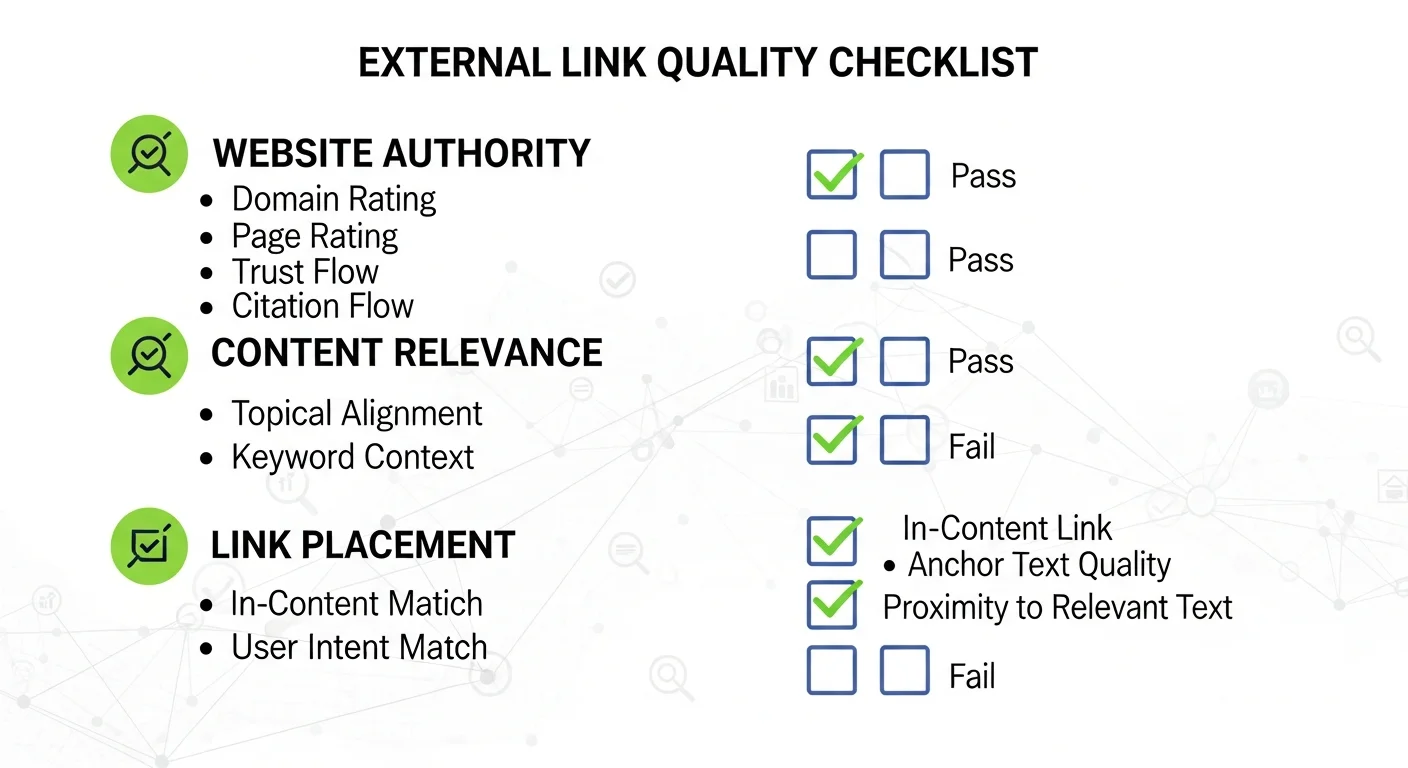
Characteristics of High-Quality External Links
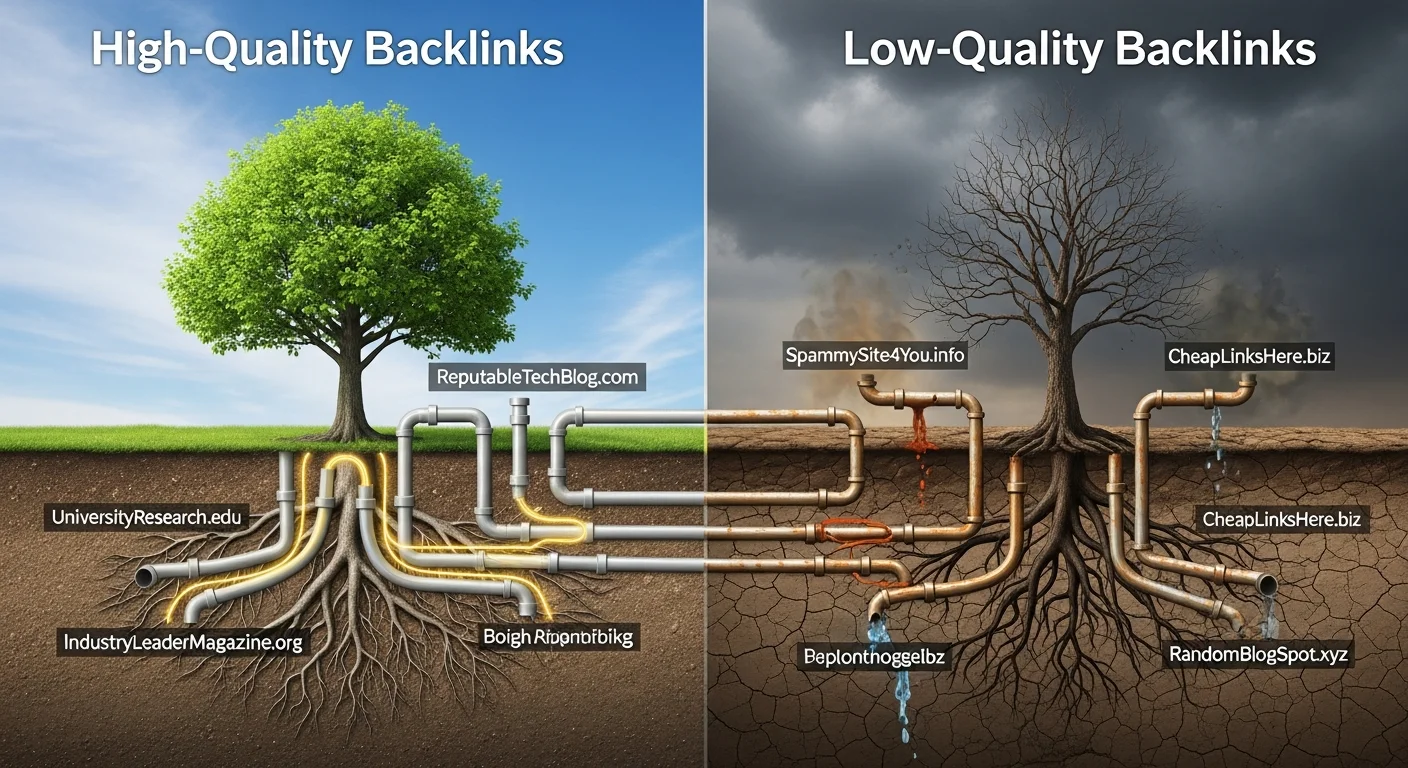
Source Website Authority
Higher authority = higher link value
Evaluation metrics:
- DA (Domain Authority): Moz's metric
- DR (Domain Rating): Ahrefs' metric
- Actual traffic: The site has real visitors
Traits of authoritative websites:
- High content quality
- Real traffic
- Established industry position
- Years of operation
Reference benchmarks:
| Score | Level | Value |
|---|---|---|
| 70+ | High authority | Extremely valuable |
| 50-69 | Above average | Valuable |
| 30-49 | Average | Some value |
| 0-29 | Lower | Limited value |
Content Relevance
Relevant links are more valuable
Why relevance matters:
- Google recognizes it as a genuine recommendation
- Irrelevant links may be seen as manipulation
- Relevant links provide value to users too
Levels of relevance:
- Highly relevant: Same industry, same topic
- Moderately relevant: Related industry, extended topic
- Low relevance: Completely different field
Example:
You have an SEO website. Getting links from:
- High relevance: Marketing websites, web design websites
- Moderate relevance: Startup websites, business websites
- Low relevance: Food websites, travel websites
Link Naturalness
Characteristics of natural links:
- Appear within body content, not in ad slots
- Relevant to surrounding content
- Natural anchor text, not over-optimized
- Editorially placed
Characteristics of unnatural links:
- Obviously paid placement
- Appear in irrelevant positions
- Anchor text stuffed with keywords
- Same anchor text used en masse
Anchor Text Diversity
What is anchor text?
The clickable text within a link.
Natural anchor text distribution:
| Type | Example | Recommended Ratio |
|---|---|---|
| Brand name | "AI SEO Hacker" | 30-40% |
| Generic | "Click here" "Learn more" | 20-30% |
| Partial match | "Complete SEO tutorial" | 20-30% |
| Exact match | "SEO tutorial" | 10-15% |
| URL | "ai-seo-hacker.cc" | 5-10% |
Avoid:
Using the same keyword as anchor text for all links -- this is a clear signal of over-optimization.
For more about backlinks, check out our dedicated article.
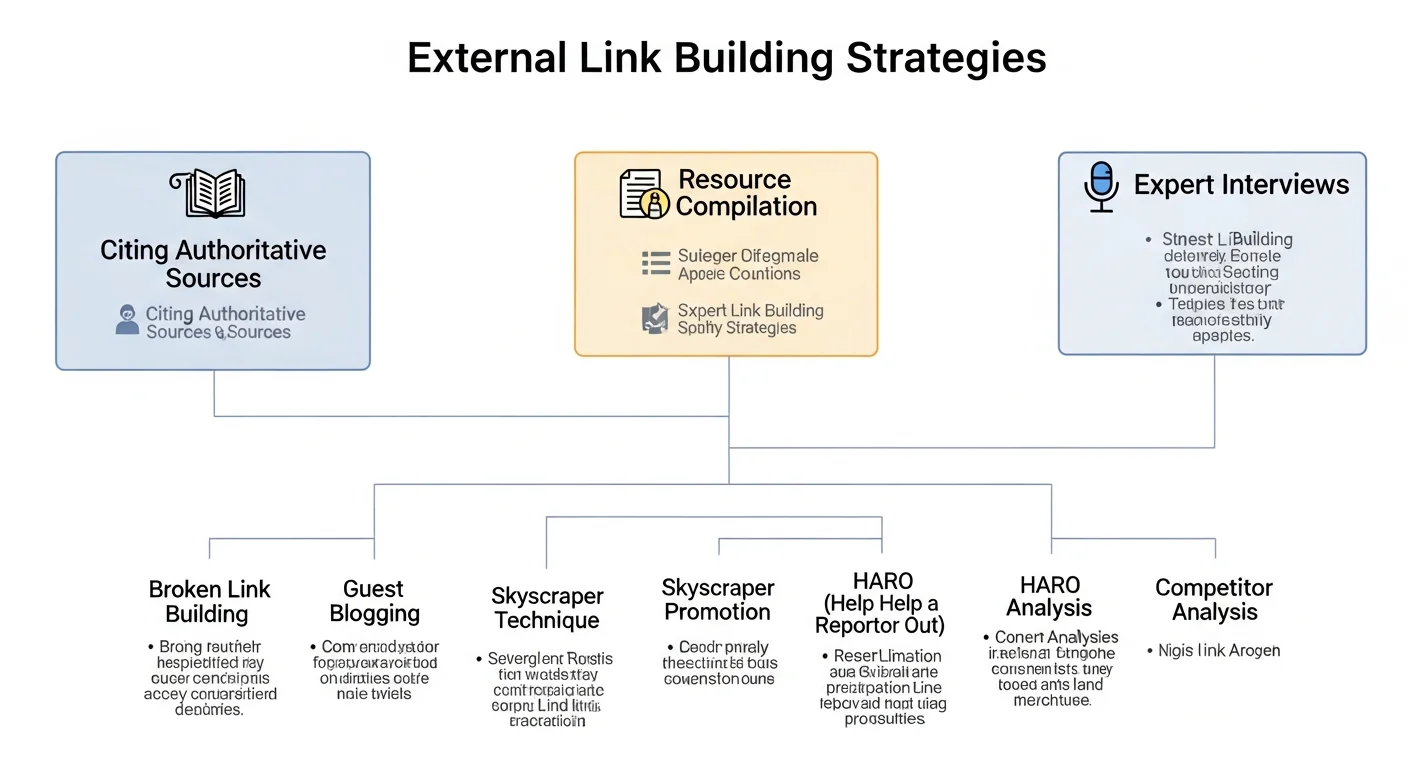
Methods for Building External Links
Content Marketing Strategy
The most fundamental approach: Create content worth linking to
Content types that attract links:
-
Original research
- Industry survey reports
- Data analysis
- User research
-
Comprehensive guides
- Ultimate tutorials
- Beginner guides
- FAQ compilations
-
Practical resources
- Free tools
- Template downloads
- Checklists
-
Visual content
- Infographics
- Visual tutorials
Content marketing workflow:
- Create high-quality content
- Promote on social media
- Actively reach out to potentially interested websites
- Continuously update content to keep it fresh
Resource Page Links
What are resource pages?
Many websites have "recommended resources" or "related links" pages.
How to earn them:
- Search for "[industry] + resources" or "[topic] + recommended links"
- Find relevant resource pages
- Confirm you have suitable content
- Contact the site admin to recommend your resource
Outreach example:
Subject: A resource suggestion for your page

Hi,

I noticed your [Resource Page Title] lists many useful resources.

I recently published [Your Content Title], which covers [content value].

If you think it would be helpful for your readers, feel free to add it to your resource list.

Thank you!
Partner Links
Earn links through partnership relationships
Common partnerships:
- Suppliers / distributors
- Strategic partners
- Industry associations
- Shared clients
Considerations:
- Links should be natural, not deliberate exchanges
- Content must be relevant
- Don't overdo it
Industry Directory Listings
Basic but still valuable link sources
Recommended directory types:
- Industry association directories
- Local business directories (e.g., Google Business)
- Professional directories (e.g., Clutch, G2)
- Government or educational institution directories
Cautions:
- Choose quality directories
- Avoid low-quality link farms
- Don't submit to many directories in a short period
High-quality content is the key to earning natural links. Let AI help you produce SEO-optimized articles.
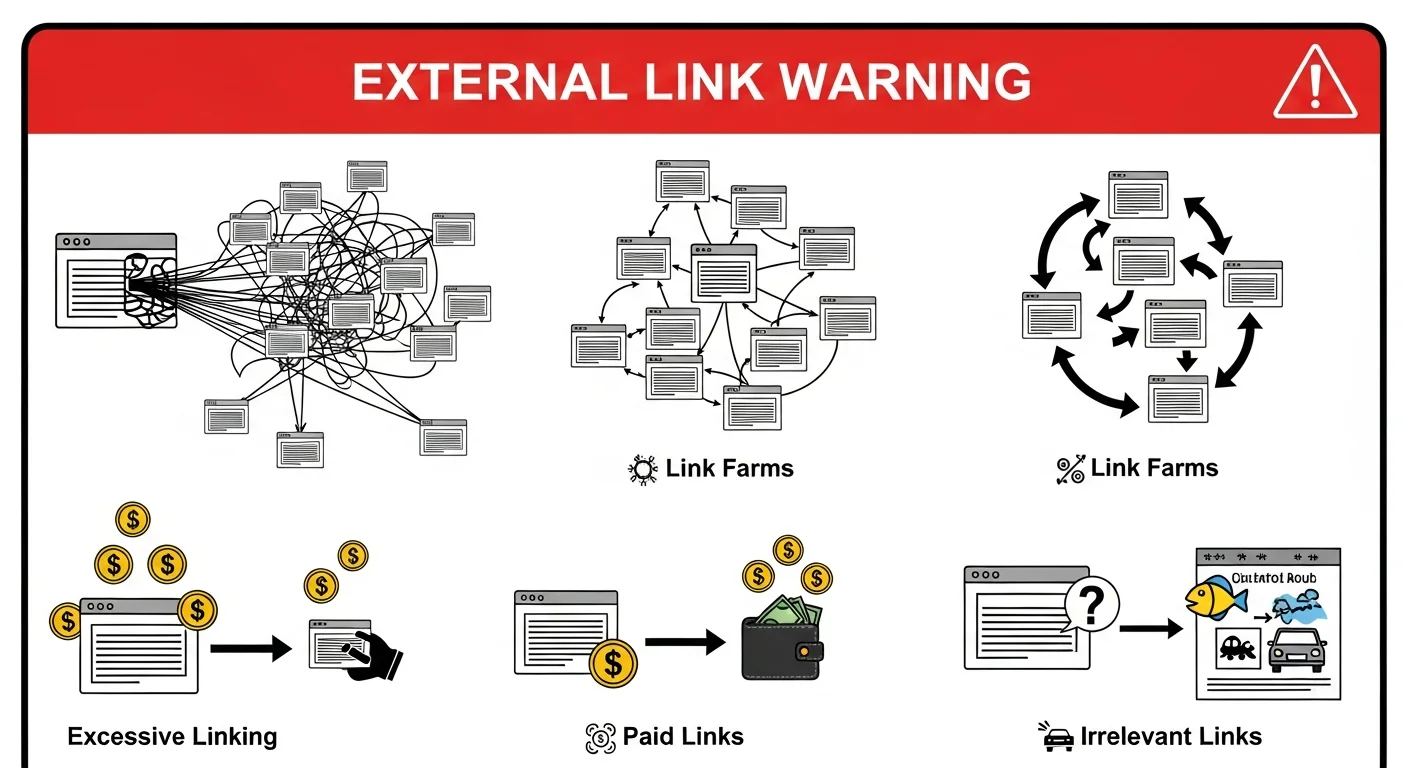
Link Building Methods to Avoid
The Risks of Buying Links
Google explicitly prohibits buying links to manipulate rankings
Common forms of paid links:
- Paying to place links within articles
- Paying for link-included reviews
- Purchasing "guaranteed ranking" link packages
- Paying for links in press releases
Possible consequences:
- Manual penalty: Caught by Google's human review team
- Algorithmic demotion: Detected automatically
- Link loss: Paid low-quality links may disappear over time
How to spot scams:
- Guaranteed large volumes of links
- Unusually cheap pricing
- No interest in your industry or content
- Unable to explain link sources
The Problem with Link Exchanges
What is link exchange?
"You link to me, I link to you" -- mutual linking agreements.
Google's stance:
Excessive link exchanges are considered ranking manipulation.
Safe practices:
- Occasional, natural mutual linking is fine
- Links should have genuine purpose and value
- Don't do it at scale
Avoid:
- Joining "link exchange groups"
- Exchanging links with unrelated websites
- Large-scale three-way links (A→B→C→A)
PBNs (Private Blog Networks)
What is a PBN?
A network of websites created specifically for building links.
How it works:
- Buy or build multiple websites
- Place links on those sites pointing to your main website
- Attempt to simulate natural links
Risks:
- Google is very good at identifying PBNs
- Once identified, all links from the network are devalued
- May result in severe penalties
Conclusion: Not worth the risk.
Spam Links & Link Farms
What are spam links?
Links from low-quality, valueless websites.
Link farm characteristics:
- Content has no value
- Exists solely to host links
- Massive number of outbound links
- No real traffic
How to handle incoming spam links:
- In most cases, do nothing: Google can usually work out which links not to trust on its own, and most sites never need the Disavow Tool
- Watch Google Search Console for a manual action notice about unnatural links
- Only if many spammy links have caused (or are likely to cause) a manual action, ask the linking sites to remove them first, then use the Disavow Tool for any you can't get removed
For more on internal linking optimization, check out our tutorial.
External Link Monitoring & Maintenance
Regular Backlink Audits
Why monitor?
- Understand link growth trends
- Discover new link sources
- Identify problematic links
Monitoring frequency:
- Check monthly
- Increase frequency when anomalies appear
What to monitor:
- New links added
- Links lost
- Changes in link quality
Identifying Toxic Links
Toxic link characteristics:
- From spammy websites
- From irrelevant, suspicious websites
- From penalized websites
- From link farms
Identification tools:
- Ahrefs: No spam score (Ahrefs recommends its "Best links" filter to screen out low-quality links)
- Moz: Spam Score
- SEMrush: Toxic link analysis
Using the Disavow Tool
What is Disavow?
A Google tool that lets you request Google to ignore specific links.
Steps:
- Confirm the link is truly harmful
- Try contacting the site for removal first
- If removal isn't possible, use Disavow
- Submit the disavow file in Search Console
Cautions:
- Use carefully -- don't disavow randomly
- Only disavow links you're certain are harmful
- When in doubt, leave them alone
- Per Google: disavow only when many spammy links have caused (or are likely to cause) a manual action — most sites never need it
Link Growth Velocity Monitoring
Why does velocity matter?
A sudden surge in links can raise Google's suspicion.
Natural growth patterns:
- New websites: Slow growth
- Established websites: Steady, consistent growth
- Viral content: May cause short-term spikes (legitimate)
Warning signs:
- Rapid increases in a short time
- Growth disproportionate to content output
- Sudden influx from low-quality sources
External Link Case Studies
Successful Link Building Example
Case: Earning links through original research
A marketing company conducted a "Digital Marketing Survey of SMBs":
- Surveyed 500 businesses
- Published a detailed report
- Created infographics
Results:
- Covered by 20+ media outlets
- Earned 50+ backlinks
- Continuously cited over time
Success factors:
- Provided data the industry needed
- Content was unique and unavailable elsewhere
- Actively promoted to relevant media
Failed Example & Lessons
Case: Penalized for buying links
An e-commerce website purchased an "SEO link package":
- Gained 500 links within one month
- Links came from unrelated foreign websites
- All anchor texts were target keywords
Results:
- Manual penalty received two months later
- Rankings dropped significantly
- Required even more time to clean up
Lessons:
- Shortcuts are usually traps
- Link quality matters more than quantity
- Natural growth is the right path
Why External Link Quality Always Trumps Quantity
Building external links is essential SEO work, but only the right approach yields results.
Key takeaways from this article:
- Quality criteria: Authority, relevance, naturalness, anchor text
- Building methods: Content marketing, resource pages, partnerships, directory listings
- Pitfalls to avoid: Don't buy links, don't over-exchange, steer clear of PBNs
- Ongoing monitoring: Regular audits, toxic link identification, disavow when necessary
Our recommendations:
- Focus on creating content worth linking to
- Don't take shortcuts -- don't buy links
- One good link beats ten bad ones
- Play the long game and keep building
Link building starts with quality content. Consult via LINE about our AI content plans.