Your website has great content, but rankings just won't budge?
The problem might be that you've overlooked another key element of SEO: link building.
Google treats links as "votes" -- the more high-quality websites that link to you, the more trustworthy your content appears.
This article takes you from foundational concepts to advanced strategies, providing a complete understanding of how link building works and practical methods to implement it.
Want to build topical authority but don't know where to start? Free consultation via LINE -- let us help you begin with quality content.
👉 Free LINE Consultation: @006ljkda
Link Building Fundamentals
What Is Link Building?
Link building is the practice of using various strategies to get other websites to place links pointing to your site.
Why is it called "building"?
Because it's not a passive process -- it requires active effort. You need to:
- Create content worth linking to
- Actively promote your content
- Build industry relationships
- Continuously monitor and optimize
Goals of link building:
- Acquire more high-quality backlinks
- Increase website authority
- Boost organic search traffic
- Build brand awareness
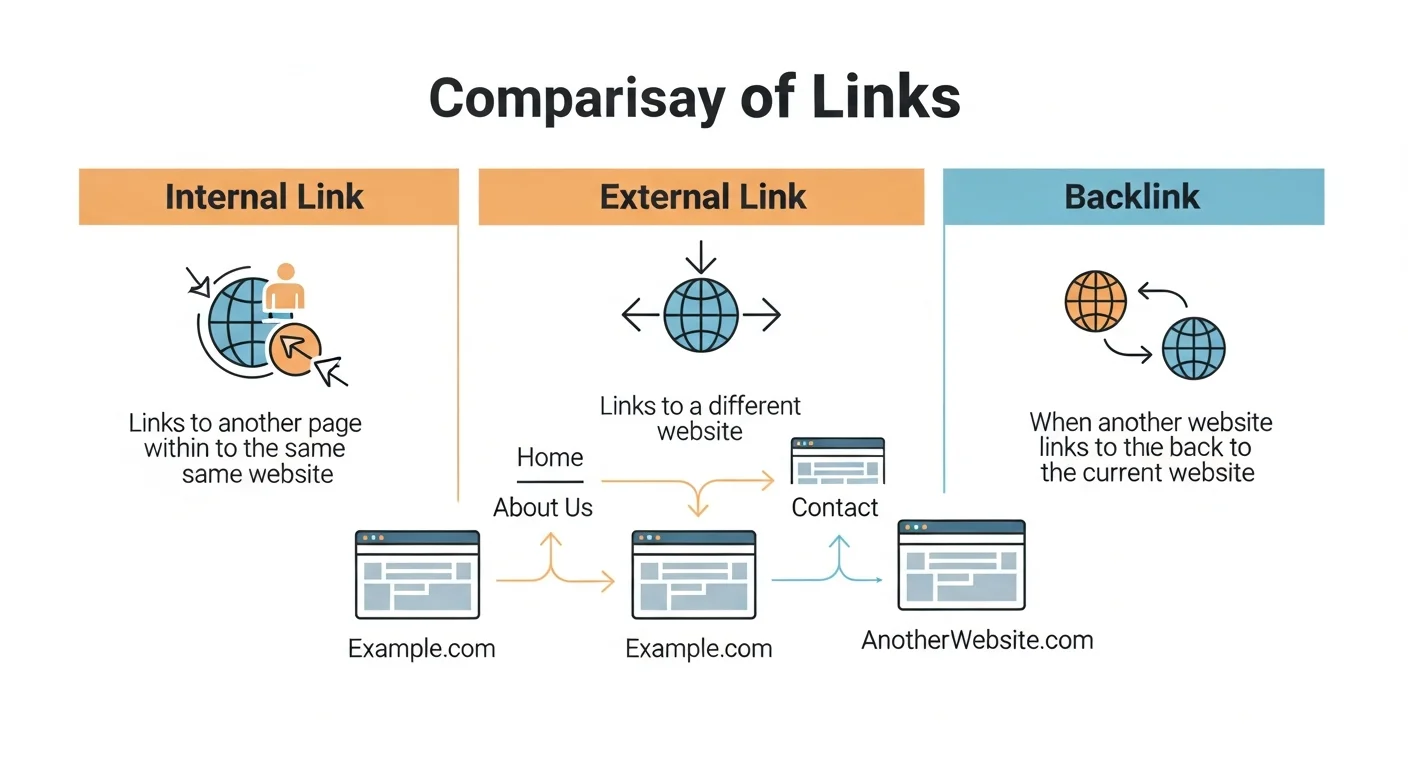
External Links vs Internal Links vs Backlinks
These three terms are often confused. Let's clarify:
| Type | Definition | Example |
|---|---|---|
| Internal links | Links between pages within the same website | Your homepage linking to your article |
| External links | Links pointing to other websites | Your article linking to Wikipedia |
| Backlinks | Links from other websites pointing to you | Someone else's article linking to you |
Key concepts:
- Your "external link" is the other site's "backlink"
- Link building focuses primarily on acquiring "backlinks"
- "Internal links" are also an important SEO factor
Why Links Are So Important for SEO Rankings
Google's PageRank algorithm has used links as a core ranking factor since its inception.
Links function as "votes":
- Each link = one vote for your website
- One vote from a high-authority site > multiple votes from low-quality sites
- Link quality matters more than quantity
Why links affect rankings:
- Trust signal: Others willing to link means they endorse your content
- Discovery mechanism: Search engines find new pages through links
- Authority transfer: Links from high-authority sites pass authority
- Topical relevance: Links from related industries strengthen topical authority
How Google Evaluates Link Quality
Google analyzes:
-
Source website authority
- Overall trust level of the website
- Site traffic and history
-
Content relevance
- Whether the linking page and your page are related
- Whether both sites operate in the same field
-
Link placement
- In-content links > sidebar/footer links
- Editorially placed > artificially added
-
Anchor text
- The clickable text of the link
- Overusing the same anchor text is seen as manipulation
-
Number of links
- Total outbound links on the source page
- Fewer links means each one carries more value
Link Types & Value
What Are Backlinks?
Backlinks = links from other websites pointing to your site
The value of backlinks:
Suppose Site A places a link in an article pointing to Site B:
- For Site A, this is an "external link"
- For Site B, this is a "backlink"
- Site B has received a "vote"
Not all backlinks are equal:
- Links from high-authority sites → high value
- Links from related industries → high value
- Links from spammy sites → potentially harmful
For an in-depth look at backlinks, check out our dedicated article.
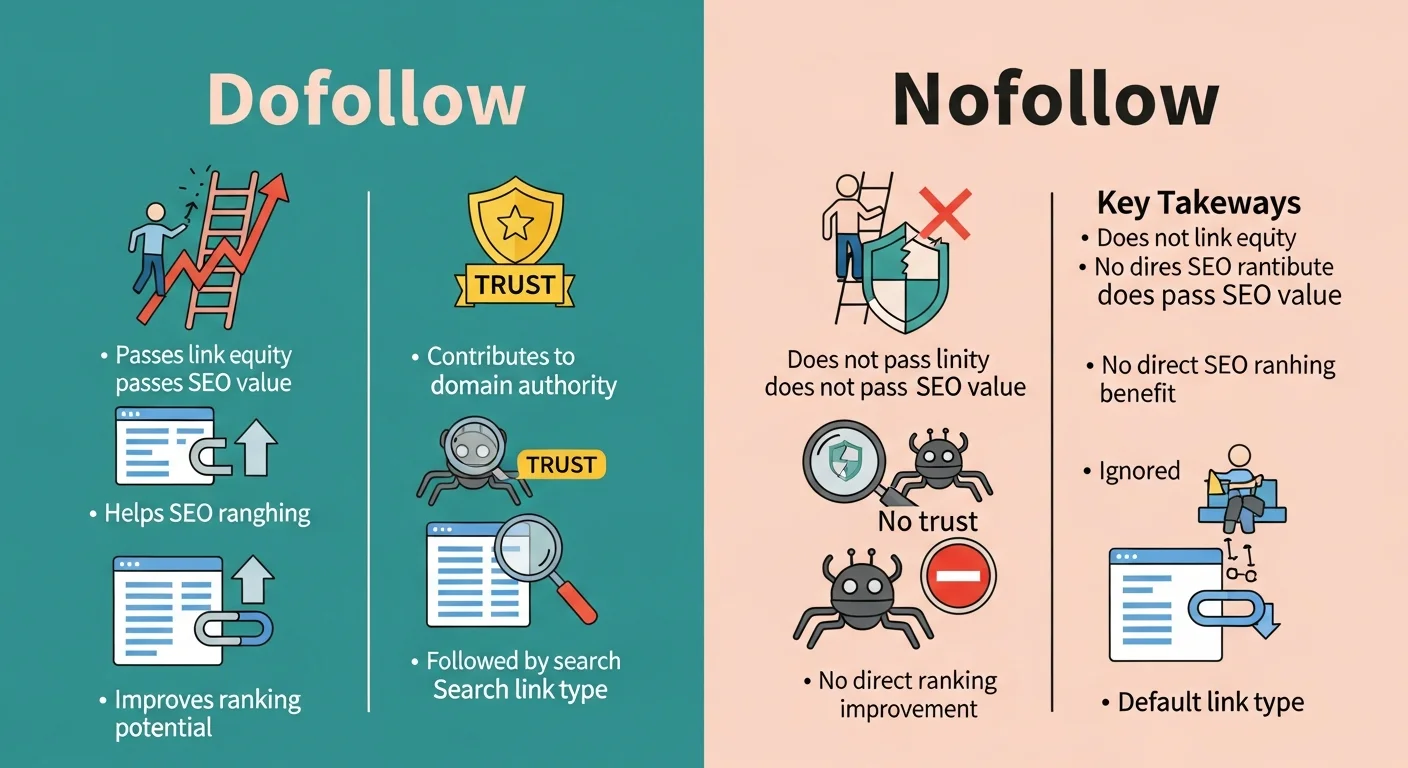
Dofollow vs Nofollow Links
Dofollow links (default):
- Pass Link Juice (link authority)
- Influence rankings
- Search engines follow them
Nofollow links:
- Include the
rel="nofollow"attribute - Do not pass authority (traditional view)
- Used for ads and untrusted links
Changes since 2019:
Google now treats nofollow as a "hint" rather than a "directive," meaning these links may still be considered.
Other link types:
rel="sponsored": Paid/advertising linksrel="ugc": User-generated content (such as comments)
Best practices:
- Natural links are typically dofollow
- Don't obsess over getting only dofollow links
- A natural mix of link types is healthy
What Are Toxic Links?
Toxic links = low-quality links that may harm your website's rankings
Common sources:
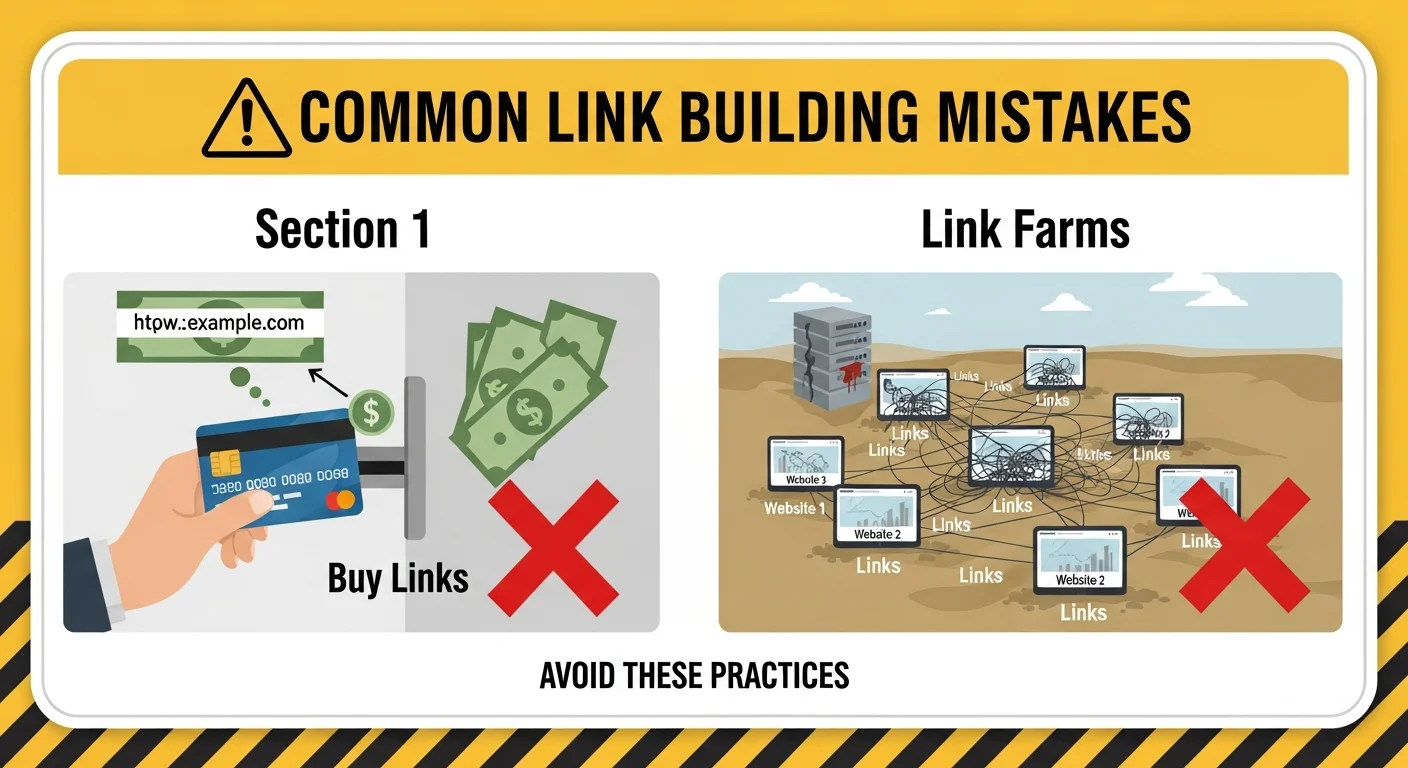
- Link farms: Sites that exist solely to buy and sell links
- Spammy sites: Low-quality content websites
- Irrelevant sites: Gambling, adult content, etc.
- Private Blog Networks (PBNs): Artificially created networks of fake sites
- Hacked insertions: Links placed by hackers
How to handle them:
- Monitor using Google Search Console
- Use tools to identify toxic links
- Contact the site and request removal
- Use the Disavow Tool to ask Google to ignore them (Google advises using it only when many spammy links have caused, or are likely to cause, a manual action)
Link Quality Criteria
Characteristics of high-quality links:
| Factor | High Quality | Low Quality |
|---|---|---|
| Source site | Authoritative, has traffic | New, no traffic |
| Content relevance | Highly relevant | Completely unrelated |
| Link placement | Within body content | Footer/sidebar |
| Acquisition method | Naturally earned | Bought/exchanged |
| Anchor text | Naturally descriptive | Over-optimized |
Off-Page SEO: A Complete Breakdown
What Is Off-Page SEO?
Off-page SEO = optimization strategies outside your website
Main components:
- Link building: Acquiring backlinks
- Social media management: Social media exposure
- Brand building: Increasing brand awareness
- Reputation management: Reviews and reputation
Compared to on-page SEO:
| On-Page SEO | Off-Page SEO |
|---|---|
| Internal website optimization | External optimization |
| Content, architecture, technical | Links, social, brand |
| You can control it | Requires external cooperation |
The Relationship Between Off-Page & On-Page SEO
They complement each other:
- On-page SEO is the foundation: Site experience and content quality must be solid
- Off-page SEO is the amplifier: It shows search engines that others endorse you
Sequence matters:
- Get on-page SEO right first (the foundation)
- Then invest in off-page SEO (expansion)
If you only do one:
- On-page only: Great site but nobody knows about it
- Off-page only: You have links but poor site experience
For more on off-page SEO strategies, check out our dedicated article.
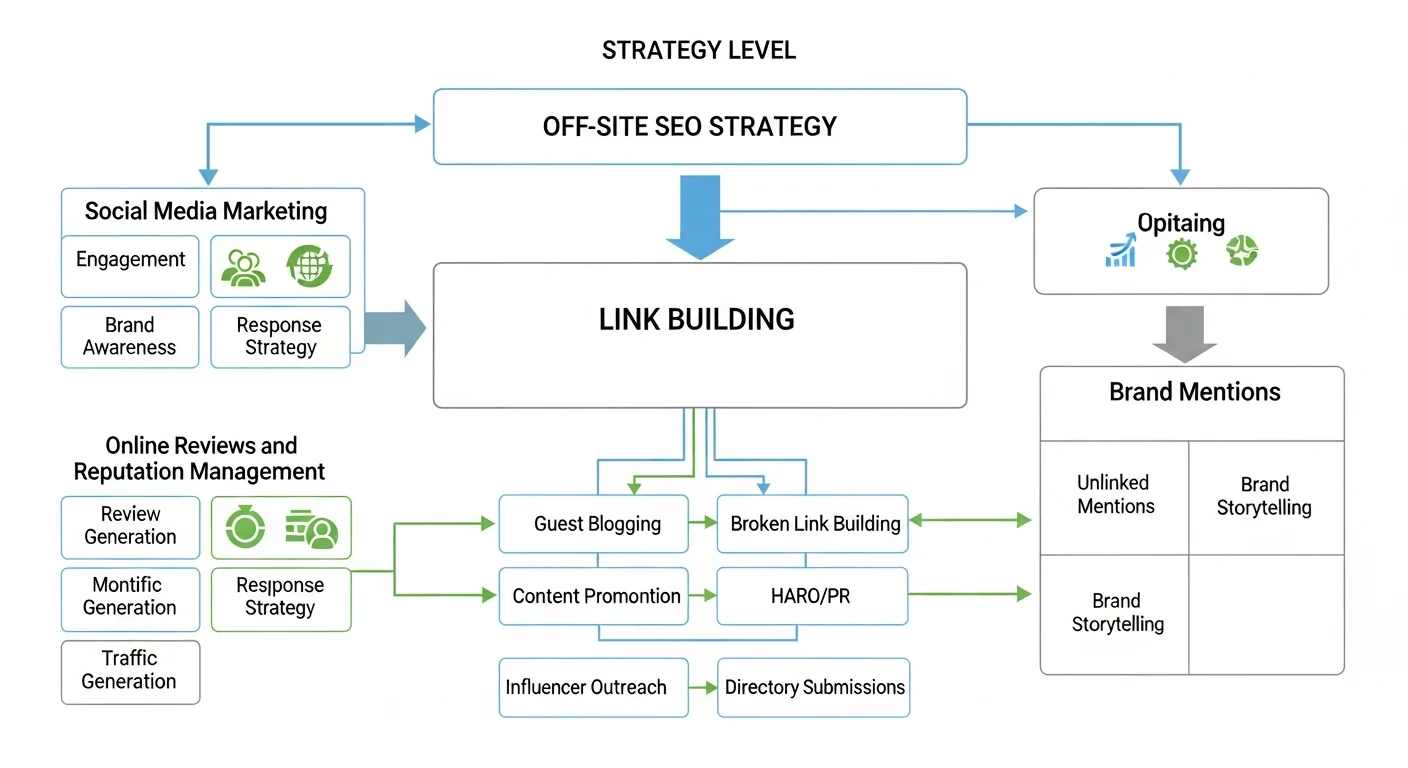
Core Off-Page SEO Strategies
Strategy 1: Link Building
- Content marketing for natural links
- Active outreach to build links
- Competitor link analysis
Strategy 2: Social Media Management
- Active social media presence
- Build a following
- Share quality content
Strategy 3: Brand Building
- Digital PR exposure
- Establish expert image
- Industry relationship building
Strategy 4: Reputation Management
- Google Business reviews
- Industry review platforms
- User referrals
Link building too time-consuming? Start by producing valuable content. Let AI help you efficiently create SEO articles.
Link Building Strategies & Methods
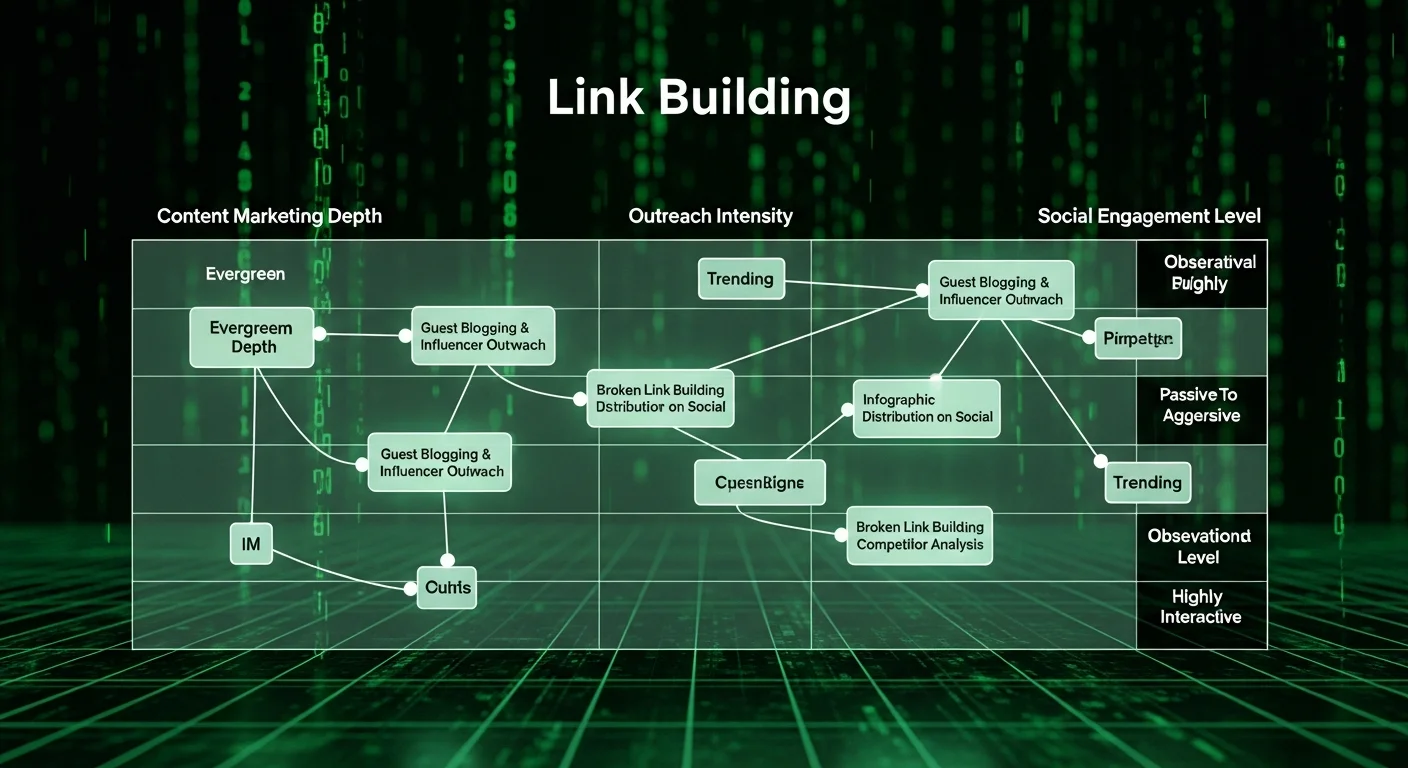
Content Marketing for Natural Links
The most recommended approach: Create content worth linking to.
Content types that attract links:
-
Original research & data
- Industry survey reports
- Data analysis
- Trend research
-
Comprehensive guides
- Ultimate guides
- Beginner tutorials
- FAQ compilations
-
Tools & resources
- Free tools
- Template downloads
- Calculators
-
Visual content
- Infographics
- Visual tutorials
- Video content
Strategic focus:
- Content must genuinely provide value
- It should be more comprehensive than competitors'
- Make it easy to share and cite
Guest Posting Strategy
What is guest posting?
Publishing articles on other websites, typically including a link back to your own site within the article or author bio.
How to find opportunities:
- Search for "write for us + [industry keyword]"
- Analyze where competitors are publishing
- Build industry relationships and pitch proactively
Execution tips:
- Choose relevant, authoritative websites
- Provide genuinely valuable content
- Don't write just for the sake of a link
- Build long-term partnerships
Cautions:
- Don't publish on low-quality sites
- Don't produce low-quality content just for links
- Google is wary of excessive guest posting
Broken Link Building
Strategy concept:
Find broken links (404 errors) on other websites and offer your content as a replacement.
Steps:
- Use tools to find broken links on industry-related sites
- Confirm you have relevant replacement content
- Contact the site admin politely to explain the issue
- Suggest your content as a replacement
Sample outreach email:
Subject: Found a broken link on [Site Name]

Hi,

While reading your article [Article Title], I noticed a broken link:
[Broken Link URL]

I have a relevant piece of content that might work as a replacement:
[Your Article URL]

Hope this helps!

[Your Name]
Competitor Link Analysis
Why analyze competitors?
- Understand their link sources
- Discover opportunities you can pursue
- Learn effective link strategies
How to analyze:
- Use tools like Ahrefs, Moz, etc.
- Enter the competitor's URL
- Review their backlinks
- Filter for high-quality link sources
- Assess whether you can acquire the same links
Key questions:
- What links do they have that I don't?
- How were those links obtained?
- Can I replicate these strategies?
Digital PR & Media Exposure
What is digital PR?
Gaining exposure and links through news media and industry publications.
Methods:
-
Press releases
- Newsworthy announcements
- Product launches, research findings
-
Expert citations
- Provide professional opinions
- Participate in industry discussions
- Respond to reporter queries (HARO)
-
Industry partnerships
- Joint events
- Collaborative research
- Mutual recommendations
Results:
- Earn links from high-authority media
- Increase brand awareness
- Establish industry authority
Internal Linking Optimization
Why Internal Links Matter for SEO
Internal links = links between pages within your website
Why are they important?
-
Help search engines crawl
- Discover new pages
- Understand site architecture
-
Pass authority
- Homepage authority transfers to other pages
- Popular pages boost others
-
Improve user experience
- Guide users to more content
- Provide relevant information
-
Build topical relevance
- Connect related pages
- Build topic clusters
For a deep dive into internal linking for SEO, check out our dedicated article.
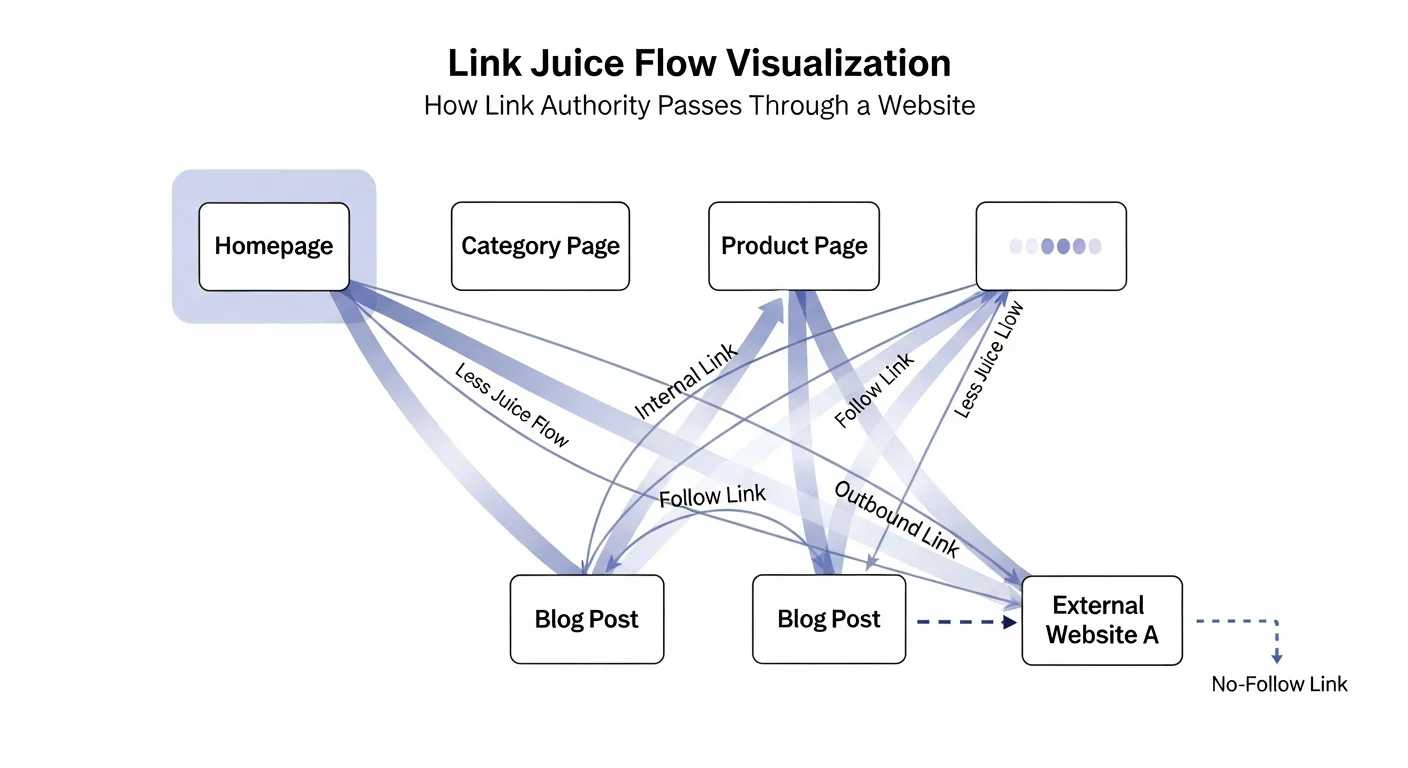
How Link Juice Flows
What is Link Juice?
A metaphor describing the authority and value passed through links.
How it works:
- Each page has a certain amount of authority
- It "flows" to other pages through links
- More links on a page means less authority per link
Diagram:
Homepage (High Authority)
├── Category A (Receives partial authority)
│   ├── Article 1
│   └── Article 2
└── Category B (Receives partial authority)
    ├── Article 3
    └── Article 4
Internal Link Architecture Principles
Principle 1: Flat architecture
- Don't bury important pages too deep
- Ideally reachable in 3 clicks or fewer
Principle 2: Topic clusters
- Pillar pages as the core
- Cluster pages link back to the pillar
- Build topical authority
Principle 3: Contextual links
- Place naturally within body content
- Highly relevant to the content
- Provide additional value
Anchor Text Best Practices
What is anchor text?
The clickable text in a link. For example: in "Learn more about SEO basics," the anchor text is "SEO basics."
Best practices:
- Descriptive: Let readers know what to expect
- Naturally diverse: Don't always use the same phrase
- Avoid over-optimization: Don't stuff keywords
- Avoid "click here": It's not descriptive
Anchor text types:
| Type | Example | Recommendation |
|---|---|---|
| Exact match | "SEO tutorial" | Use sparingly |
| Partial match | "Complete SEO tutorial guide" | Recommended |
| Brand | "AI SEO Hacker" | Recommended |
| Generic | "Click here" "Learn more" | Avoid |
| URL | "ai-seo-hacker.cc" | Occasional use |
Common Link Building Mistakes
The Risks of Buying Links
Why is it dangerous?
Google explicitly prohibits buying links to manipulate rankings. Violations can lead to penalties.
Possible consequences:
- Manual penalty: Caught by human review
- Algorithmic demotion: Detected automatically
- Complete removal: Removed from search results in severe cases
How to avoid this:
- Don't purchase "guaranteed ranking" link services
- Don't pay to place links in articles
- Focus on content quality to attract natural links
Over-Optimizing Anchor Text
What is over-optimization?
Deliberately making all links use the target keyword as anchor text.
Example:
If all your backlinks use "SEO tutorial" as anchor text, Google will see this as unnatural.
Natural anchor text distribution:
- Brand name: 30-40%
- Generic ("click here," etc.): 20-30%
- Exact keyword: 10-15%
- Partial match: 20-30%
- URL: 5-10%
These are reference ranges, not a formula — taking the midpoint of each adds up to slightly over 100%. Adjust to your own site. The point is to avoid an outsized share of exact-match anchors.
Ignoring Link Relevance
Relevance matters:
A travel website linking to your SEO article is less effective than a link from a marketing website.
How to ensure relevance:
- Target websites in related industries
- Ensure the linking page's content is relevant
- The context should make sense
Unnatural Link Growth Velocity
What counts as unnatural?
A new website suddenly acquiring a large number of links will raise Google's suspicion.
Natural link growth:
- New websites: Slow growth
- Viral content: May cause a sudden spike (legitimate)
- Steady long-term growth
How to avoid issues:
- Don't buy links in bulk
- Consistently produce content and earn links
- Diversify your link sources
Don't want to spend time researching links? Get your content right first, and natural links will follow.
👉 Learn About AI Content Services
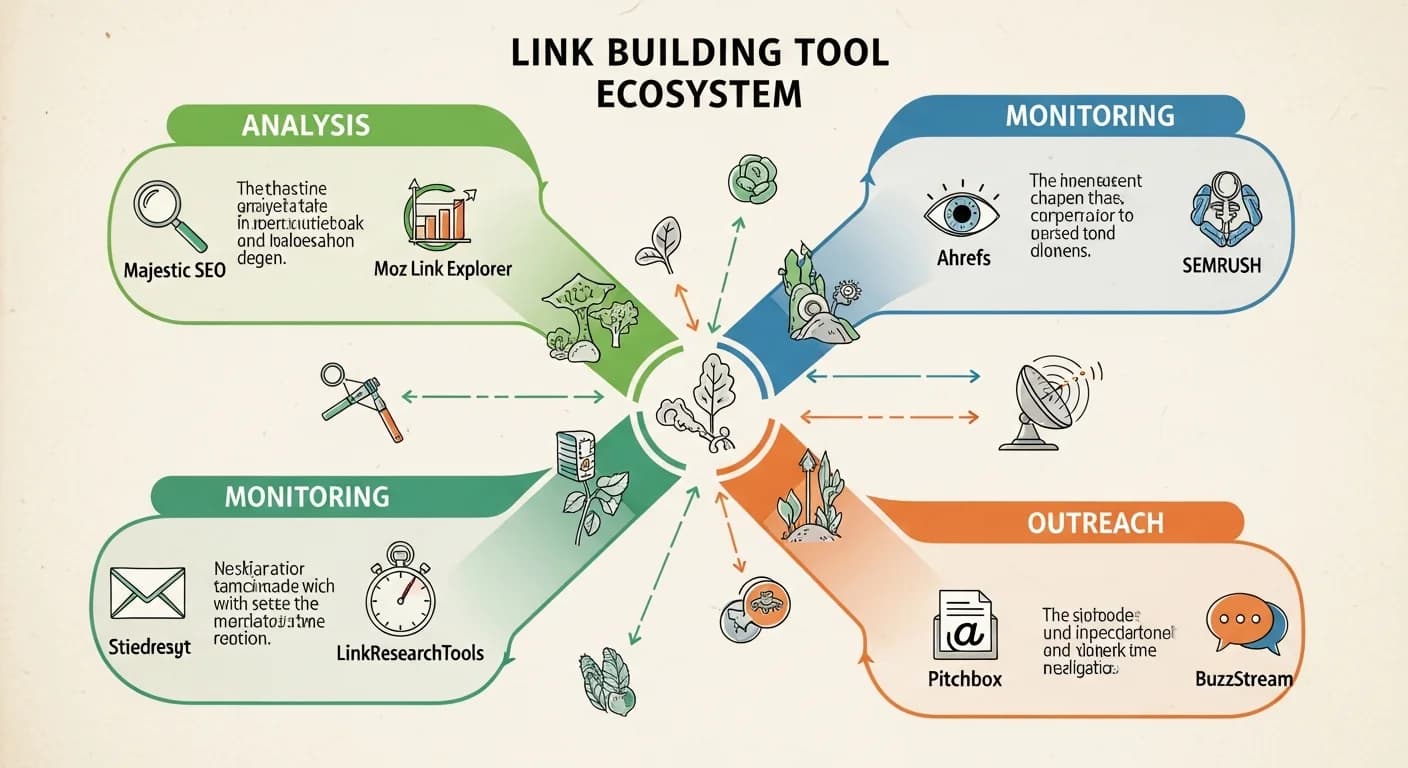
Recommended Link Building Tools
Ahrefs - Backlink Analysis
Key features:
- One of the largest backlink databases
- Detailed link analysis
- Competitor research
- Link opportunity discovery
Best for: Professional SEOs, agencies
Price: From $129/month (Ahrefs also offers a limited Starter plan at $29/month and a free tier; see the official Ahrefs pricing page)
For more on link building tools, check out our tools recommendation article.
Moz Link Explorer - Link Quality Assessment
Key features:
- Domain Authority (DA) scoring
- Spam score
- Link opportunity discovery
- Free version available
Best for: Users on a budget
Price: From $49/month (entry-level plan; free version available)
SEMrush - Competitor Link Research
Key features:
- All-in-one SEO tool
- Backlink analysis
- Link building tools
- Outreach management
Best for: Teams needing a comprehensive tool
Price: From $117.33/month (annual billing; the former Pro / Guru / Business plans are no longer listed on the public pricing page, see the official Semrush pricing page)
Google Search Console - Link Monitoring
Key features:
- Official Google tool
- Completely free
- View links Google has found (a sample, not a complete list)
- Disavow functionality
Best for: Essential for every website
Price: Free
FAQ: Common Link Building Questions
Q: Are more backlinks always better?
A: No. Link quality matters more than quantity. 10 high-quality links are worth more than 1,000 spammy links. In fact, low-quality links can actually harm your rankings. Focus on acquiring relevant, authoritative links.
Q: How should a new website start building links?
A: Recommended order: (1) Get your site foundation and content right; (2) Set up social media profiles and share content; (3) Be active in industry communities; (4) Create content worth linking to; (5) Begin active outreach. Don't rush -- steady growth is healthiest.
Q: Can buying links lead to a Google penalty?
A: Yes. Google explicitly prohibits buying links to manipulate rankings. Getting caught can result in manual penalties or algorithmic demotions. Variations of "buying" (such as paying for link placements in articles) carry the same risk.
Q: How do I assess whether a link is valuable?
A: Evaluation criteria: (1) Source site authority (DA, traffic); (2) Content relevance; (3) Link placement (in-content is better); (4) Acquisition method (naturally earned is better); (5) Whether it's dofollow. For more details, see our SEO external links tutorial.
Q: Which is more important -- internal links or external links?
A: Both are important but serve different purposes. External links (backlinks) build authority, while internal links optimize site architecture and authority distribution. We recommend doing both well, but internal links are the ones you can fully control.
Q: What is Link Juice?
A: Link Juice is a metaphor for the authority and value passed through links. High-authority pages transfer authority to linked pages through the link. This is why earning links from high-authority websites is valuable.
Why Link Building Is a Long-Term Investment
Link building is one of SEO's core strategies, but it's also the one that demands the most patience.
Key takeaways from this article:
- Fundamentals: Links are a major ranking factor; quality beats quantity
- Link types: Backlinks, dofollow/nofollow, toxic links
- Off-page SEO: Link building + social media + brand + reputation
- Strategies: Content marketing, guest posting, broken link building, competitor analysis
- Internal links: Link Juice flow, topic clusters, anchor text optimization
- Mistakes to avoid: Don't buy links, don't over-optimize, pay attention to relevance
Our recommendations:
- Start with content: Quality content is the foundation for earning natural links
- Be patient: Don't rush; steady growth is healthiest
- Prioritize quality: One good link beats ten bad ones
- Monitor consistently: Regularly check link status and results
The foundation of link building is quality content. Want to consistently produce SEO-optimized articles?
![SEO External Links: How to Build High-Quality External Links [2026 Guide]](/_next/image?url=%2Fblog%2Fimages%2Flink-building%2Fseo-external-links-01.webp&w=3840&q=75)
![What Are Backlinks? A Complete Guide to SEO Backlinks [2026]](/_next/image?url=%2Fblog%2Fimages%2Flink-building%2Fwhat-is-backlink-01.webp&w=3840&q=75)