![What Is B2B2C? Emerging Business Models and Marketing Strategies Explained [2026]](/_next/image?url=%2Fblog%2Fimages%2Findustry-seo%2Fwhat-is-b2b2c-01.webp&w=3840&q=75)
With the rise of the platform economy, you've probably encountered terms like B2B2C and S2B2C.
These aren't new inventions -- they're frameworks that describe how modern commerce actually works.
This article explains these business models in plain language and explores how they affect your marketing strategy.
Not sure which marketing strategy fits your business model? Chat with us on LINE.
👉 Free LINE Consultation: @006ljkda
The Evolution of Business Models
From B2B and B2C to B2B2C
Traditional business models were straightforward:
- B2B: Business sells to business
- B2C: Business sells to consumer
But many modern companies don't fit neatly into these categories:
- Is Uber Eats B2C or B2B?
- Is Shopee B2C or B2B?
- What model does a payment platform use?
This is why the B2B2C concept emerged.
Why Did B2B2C Emerge?
The rise of the platform economy:
In the past, commerce followed a linear model: Manufacturer → Distributor → Consumer.
Today, many companies operate as "platforms," serving both sides simultaneously:
- On one side: business customers (merchants, suppliers)
- On the other: end consumers
Examples:
- Food delivery platforms: Serve restaurants (B) and consumers (C)
- Ecommerce marketplaces: Serve sellers (B) and buyers (C)
- Payment platforms: Serve merchants (B) and users (C)
What Problem Does B2B2C Solve?
Value for business customers (the first B):
- Gain a new sales channel
- No need to develop end customers independently
- Leverage the platform's traffic and technology
Value for end consumers (C):
- More choices
- More convenient experience
- Integrated services
Value for the platform (the middle B):
- Two-sided network effects
- Economies of scale
- Data value
B2B2C: A Complete Breakdown
What Is B2B2C?
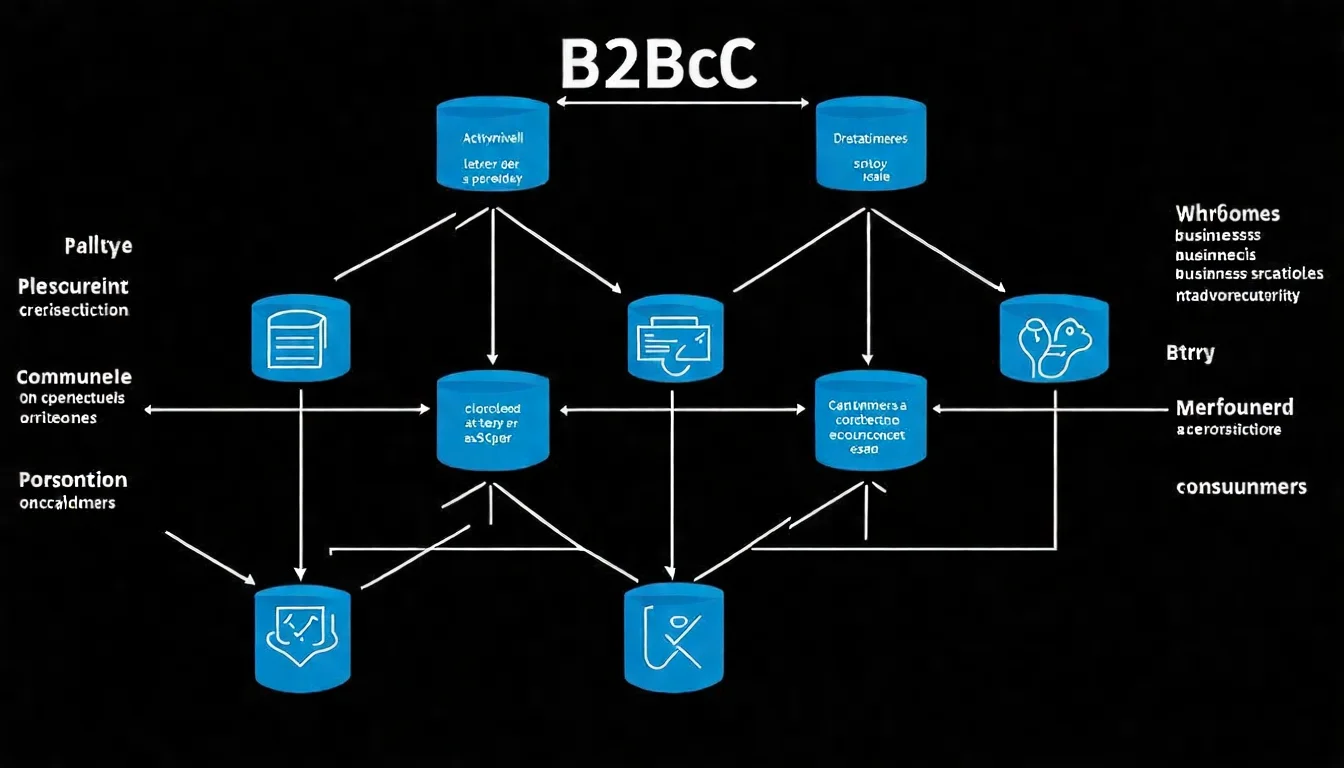
B2B2C = Business to Business to Consumer
It means: your company (B1) serves end consumers (C) through another business (B2).
Diagram:
Your Company (B1) → Partner Business (B2) → End Consumer (C)
Examples:
-
Payment Platform
- Your company: Provides payment technology
- Partner business: Merchants
- Consumer: Shoppers
-
Food Delivery Platform
- Your company: The delivery platform
- Partner business: Restaurants
- Consumer: People ordering food
-
Ecommerce Marketplace
- Your company: The ecommerce platform
- Partner business: Sellers
- Consumer: Buyers
How B2B2C Operates
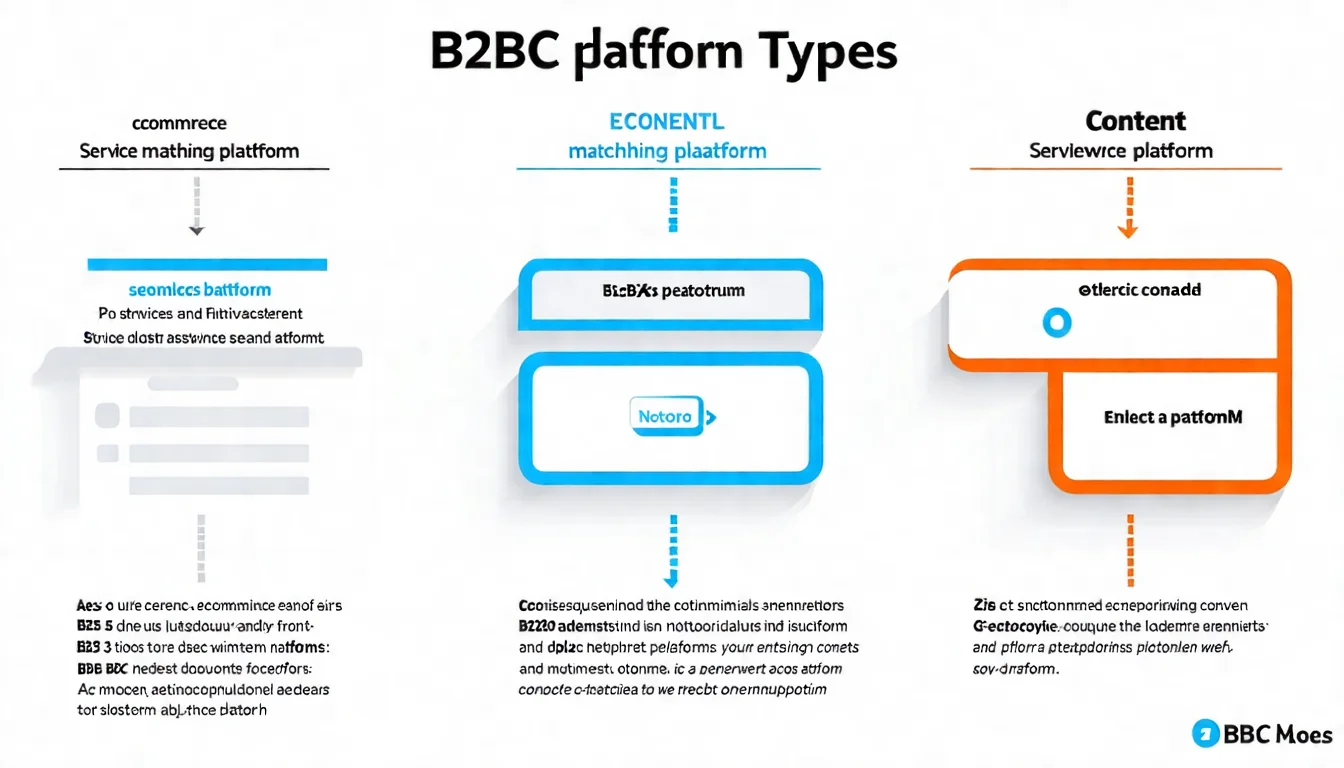
The role of a B2B2C platform:
1. Matching
- Connect supply and demand
- Facilitate transactions
2. Empowerment
- Provide technology support
- Offer tools and services
3. Integration
- Integrate upstream and downstream
- Provide one-stop solutions
Operational flow example (food delivery platform):
1. Consumer places order on platform
2. Platform sends order to restaurant
3. Restaurant prepares the food
4. Platform dispatches delivery driver
5. Driver delivers to consumer
6. Platform handles payment processing
What B2B2C Platforms Exist?
Common B2B2C platforms:
| Type | Platform | B-Side Customers | C-Side Customers |
|---|---|---|---|
| Delivery | Uber Eats, foodpanda | Restaurants | Consumers |
| Ecommerce | Shopee, Amazon, eBay | Sellers | Buyers |
| Travel | Agoda, Klook | Hotels, experience providers | Travelers |
| Payments | Apple Pay, PayPal | Merchants | Consumers |
| Mobility | Uber, Lyft | Drivers/operators | Riders |
Note: foodpanda Taiwan still operates independently under its own brand, but its pending acquisition remains under review by Taiwan's Fair Trade Commission (the review period has been extended to 2026-10-27), so brand ownership may change.
Pros and Cons of B2B2C
Pros:
| Aspect | Advantage |
|---|---|
| Scale | Can expand rapidly |
| Efficiency | Integrating resources improves efficiency |
| Data | Access to two-sided data |
| Stickiness | Two-sided network effects |
Cons:
| Aspect | Disadvantage |
|---|---|
| Complexity | Must serve both sides simultaneously |
| Cold Start | Chicken-and-egg problem |
| Balance | Interests of both sides may conflict |
| Competition | Intense competition between platforms |
S2B2C Model Explained
What Is S2B2C?
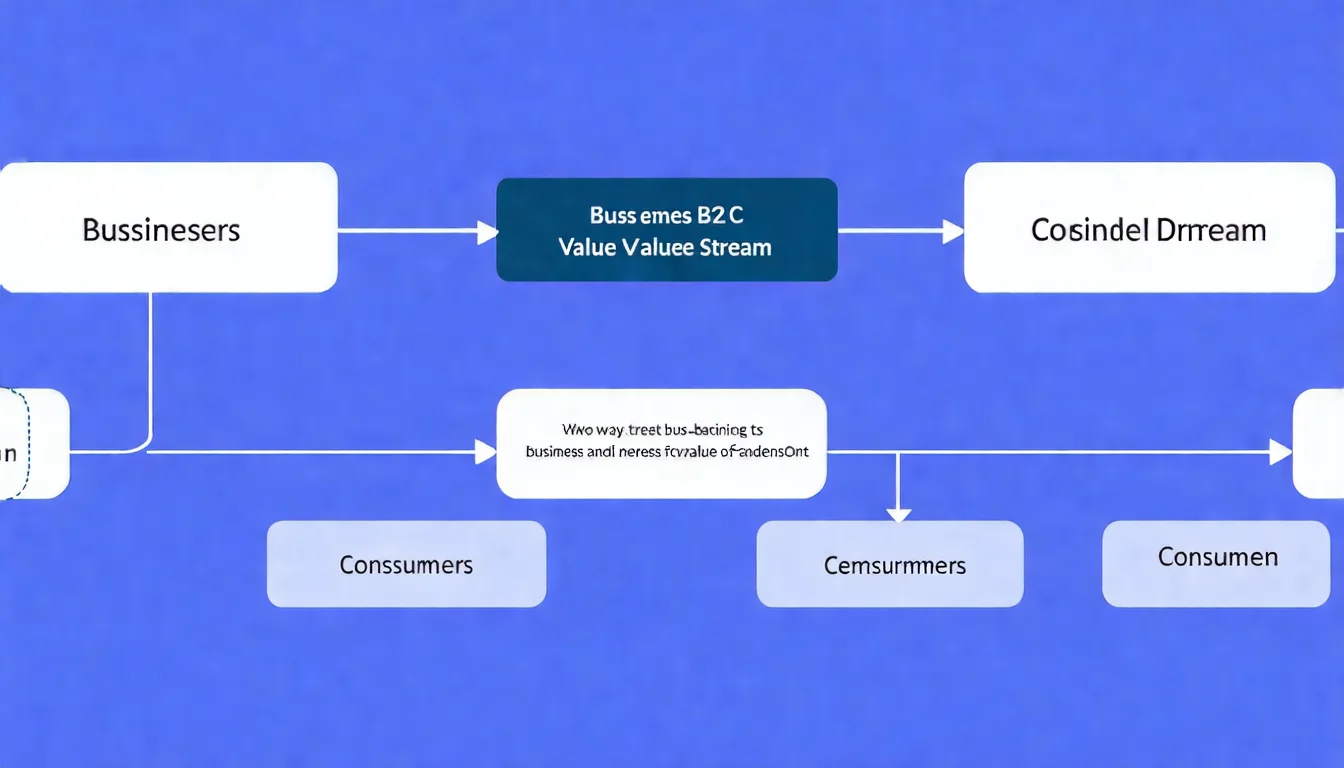
S2B2C = Supply chain to Business to Consumer
S stands for "Supply chain" or "Supplier."
Similar to B2B2C, but with a stronger emphasis on supply chain integration.
Diagram:
Supply Chain/Supplier (S) → Business (B) → Consumer (C)
Core concept:
The S-side doesn't just provide goods -- it provides a complete suite of supply chain services:
- Sourcing
- Warehousing
- Logistics
- Technology
- Data
Goal: Empower small and medium businesses so they can focus on serving consumers.
S2B2C vs B2B2C: Key Differences
| Aspect | B2B2C | S2B2C |
|---|---|---|
| Focus | Platform matching | Supply chain integration |
| S/B1 Role | Provides the platform | Provides supply chain services |
| Middle B Role | Uses platform to acquire customers | Focuses on end-user service |
| Value Proposition | Traffic, technology | Supply chain efficiency |
S2B2C characteristics:
- Stronger emphasis on supply chain integration and efficiency
- The S-side provides deeper services
- The middle B can operate more leanly
Real-World S2B2C Examples
Example 1: Community Group Buying
- S: Suppliers and logistics platform
- B: Community group leaders
- C: Community residents
Group leaders don't need to manage inventory or warehousing -- they just organize community demand.
Example 2: New Retail
- S: Supply chain platform
- B: Convenience stores, small shops
- C: Consumers
Small shops get supply chain support through the platform, so they can focus on serving customers.
Example 3: Brand Franchising
- S: Brand and supply chain
- B: Franchisees
- C: Consumers
Franchisees receive branding, product sourcing, and operational support, allowing them to focus on running the business.
Business Model Comparison
B2B vs B2C vs B2B2C
| Aspect | B2B | B2C | B2B2C |
|---|---|---|---|
| Customer | Businesses | Consumers | Both |
| Complexity | Medium | Low | High |
| Scalability | Medium | High | Very high |
| Revenue Model | Product/service fees | Product/service fees | Commission/subscription |
| Marketing Focus | Professional trust | Brand appeal | Must address both sides |
Which Industries Suit Each Model
B2B is best for:
- Manufacturing raw materials
- Enterprise software services
- Professional consulting
- Wholesale distribution
B2C is best for:
- Consumer retail
- Food and beverage
- Personal services
- Entertainment content
B2B2C is best for:
- Platform-based businesses
- Supply-demand integration needs
- Companies with network effect potential
- Services that can be standardized
How to Choose the Right Model
Ask yourself these questions:
-
Who is your customer?
- Businesses only → B2B
- Consumers only → B2C
- Both → Could be B2B2C
-
What value do you provide?
- Directly provide products/services → B2B or B2C
- Match or integrate → B2B2C
-
How do you grow?
- Linear growth → B2B or B2C
- Network effects → B2B2C
-
What's your revenue model?
- Direct sales → B2B or B2C
- Commission or subscription → B2B2C
To learn more about the differences between B2B and B2C, check out our detailed articles.
Every business model needs quality content. Let AI help you produce it.
B2B2C Marketing Strategy
The Challenge of Two-Sided Markets
What makes B2B2C marketing complex:
You need to market to both sides simultaneously:
To the B-side (business customers):
- Convince them to join the platform
- Help them succeed
- Maintain long-term relationships
To the C-side (consumers):
- Attract them to use the platform
- Provide a great experience
- Build brand loyalty
Challenges:
- Resource allocation
- Message consistency
- The two sides may have conflicting needs
Content Strategy Planning
Content for the B-side:
- Success case studies
- Business management knowledge
- Platform feature introductions
- Industry trend analysis
Content for the C-side:
- Usage tutorials
- Promotions and deals
- Brand stories
- User testimonials
Shared content:
- Company vision and values
- Safety and trust information
- FAQ content
Brand Positioning Strategy
The B2B2C branding challenge:
You need to build a dual image:
- For the B-side: Professional, reliable partner
- For the C-side: Friendly, convenient service provider
Solutions:
-
Unified core values
- Values both sides can relate to
- For example: Convenience, efficiency, trust
-
Differentiated communication
- For B: Emphasize professionalism and business outcomes
- For C: Emphasize experience and convenience
-
Consistent visual identity
- Unified brand imagery
- Both sides recognize you
SEO and Content Marketing
B2B2C SEO strategy:
B-side SEO:
- Keywords: "join platform," "partnership options," "how to open a store"
- Content: Business knowledge, success stories, partnership details
- Goal: Acquire business clients
C-side SEO:
- Keywords: Product/service-related searches
- Content: Buying guides, tutorials, promotional information
- Goal: Acquire consumers
Integration strategy:
- Same website, different sections
- Or separate marketing sites
- But brand identity must remain consistent
B2B2C Success Stories
Ecommerce Platform Case Study
Shopee's B2B2C Model:
B-side (seller) services:
- Store setup tools
- Logistics support
- Payment services
- Marketing resources
C-side (buyer) services:
- Product search
- Secure transactions
- Shipment tracking
- Return and exchange guarantees
Keys to success:
- Lower the barrier for sellers to set up shop
- Provide buyers with a convenient experience
- Continuously improve services on both sides
SaaS Platform Case Study
Shopify's S2B2C Model:
S-side services (provided by Shopify):
- Store-building system
- Payment integration
- Logistics connections
- Marketing tools
- App ecosystem
B-side (merchants):
- Use Shopify to build their store
- Focus on products and services
C-side (consumers):
- Shop at various stores
- May not even know Shopify is behind them
Keys to success:
- Enable small and medium businesses to launch stores easily
- Continuously provide more tools and services
- Build a powerful ecosystem
Success Factor Analysis
Keys to B2B2C success:
-
Solve real pain points
- B-side: Lower barriers to running a business
- C-side: Provide better choices and experiences
-
Build network effects
- More B → More C willing to come
- More C → More B willing to join
-
Continuously improve services
- Listen to needs from both sides
- Keep iterating
-
Balance both sides' interests
- You can't favor only one side
- Win-win is the only sustainable approach
Why Every Business Model Needs Quality Content
Regardless of whether you operate a B2B, B2C, or B2B2C model, content marketing is an essential tool.
Key takeaways from this article:
- B2B2C = Serving consumers through businesses: A platform-based business model
- S2B2C emphasizes supply chain integration: Empowering small and medium businesses
- Both sides need marketing: Content strategy must differentiate
- Success requires balance: Both sides must be well-served
- Content is the universal foundation: Every model needs it
Our advice:
- First determine your business model
- Understand both sides of your customer base
- Plan corresponding content strategies
- Consistently produce valuable content
To learn about comprehensive industry SEO strategies, check out our core guide.
Content marketing is a universal strategy across business models. Chat with us on LINE about our AI content solutions.
![What Is B2B? A Complete Guide to the B2B Business Model and SEO Strategy [2026]](/_next/image?url=%2Fblog%2Fimages%2Findustry-seo%2Fwhat-is-b2b-01.webp&w=3840&q=75)
![What Is B2C? SEO and Marketing Strategies for the Consumer Market [2026 Complete Guide]](/_next/image?url=%2Fblog%2Fimages%2Findustry-seo%2Fwhat-is-b2c-01.webp&w=3840&q=75)
![Industry SEO Strategy Guide: SEO Differences and Tactics for B2B, B2C, and Ecommerce [2026]](/_next/image?url=%2Fblog%2Fimages%2Findustry-seo%2Findustry-seo-guide-01.webp&w=3840&q=75)