![What Is SEO? The Complete Beginner's Guide to Search Engine Optimization [2026]](/_next/image?url=%2Fblog%2Fimages%2Fseo-basics%2Fwhat-is-seo-01.webp&w=3840&q=75)
You put in the work to build a website — so why can't anyone find it on Google?
Billions of searches happen on Google every single day. Your potential customers are among those searches, looking for answers.
If your website doesn't appear on the first page of search results, it might as well not exist. The good news? SEO can change that.
This article will walk you through everything from scratch, in plain language: what SEO actually is, why it matters, how it works, and how you can get started.
Want to boost your website rankings quickly? Let AI help you produce SEO-optimized articles — saving time while delivering results. Free LINE consultation
What Is SEO?
SEO Definition and Full Name
SEO stands for Search Engine Optimization.
In simple terms, SEO is a set of methods that help your website rank higher on search engines like Google.
When someone searches for keywords related to your products or services, and your website appears on the first page — or even in the top three — you'll receive a significant amount of free traffic.
This traffic is fundamentally different from advertising:
- Ads: You pay for exposure; stop paying, and the traffic stops
- SEO: No ad spend required; once you rank, traffic keeps coming
That's the beauty of SEO — it's a long-term investment whose returns compound over time.
SEO vs. SEM: What's the Difference?
Many people confuse SEO with SEM. Here's a quick comparison:
| Factor | SEO (Search Engine Optimization) | SEM (Search Engine Marketing) |
|---|---|---|
| Cost | Primarily time and labor | Requires ongoing ad spend |
| Time to results | In our experience, clear progress usually starts showing within 3-6 months | Immediate |
| Traffic continuity | Sustained once rankings stabilize | Stops when you stop paying |
| Cost per click | Free | Every click costs money |
| Trust level | Higher — users trust organic results more | Lower — users know it's an ad |
SEM includes paid advertising (like Google Ads), while SEO focuses on organic search results.
The two can work together, but if you want long-term, stable traffic, SEO is the essential foundation.
Why Is SEO Important?
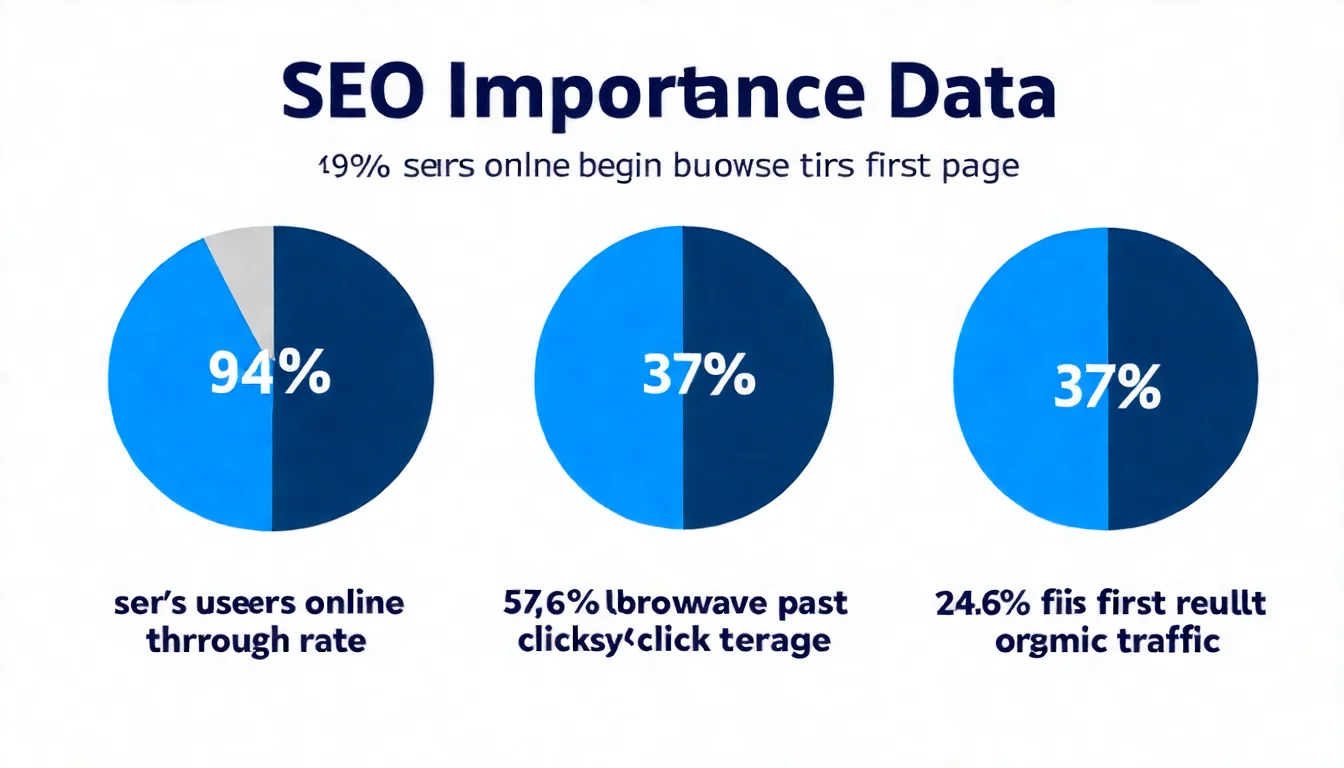
Consider these statistics:
- The vast majority of users never scroll past the first page of results
- The #1 result gets the most clicks: Backlinko's 2019 analysis of about 4 million Google search results put its average click-through rate at 27.6%. That study predates widespread AI summaries, though; First Page Sage's US data, updated September 2026, shows that on results pages with an AI answer, the #1 result's CTR drops to about 3.6%
- Organic search remains one of the largest traffic sources for most websites
What does this mean?
If your website isn't in the top results, you're missing out on a large share of your potential customers.
Moreover, visitors who come through SEO are actively searching for relevant information. Their purchase intent and trust levels are significantly higher than those who see ads.
How Search Engines Work
To do SEO well, you first need to understand how search engines operate.
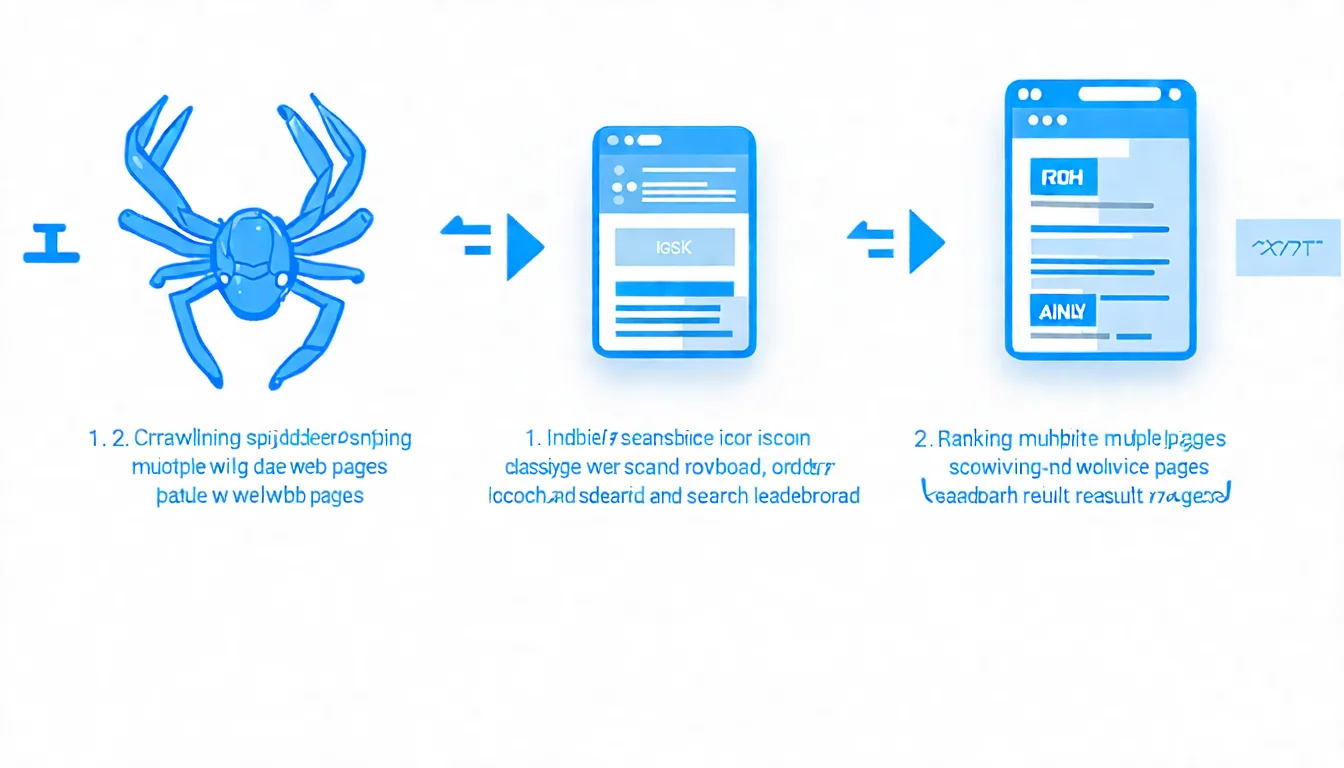
Google's process can be broken down into three stages: Crawling → Indexing → Ranking.
Crawling
Google has programs called "crawlers" (also known as spiders or bots).
Their job is to roam the web, discover new pages, follow links on those pages, and bring back the content they find.
Think of them as library acquisitions staff — traveling around collecting books (web pages) and bringing them back to the library.
How do crawlers find your website?
- Through links from other websites
- Through the Sitemap you submit
- Through pages they've previously crawled
If your site has a clear structure and solid internal linking, crawlers can smoothly access all your important pages.
Indexing
After crawlers bring back page content, Google analyzes it and builds an index.
The index works like a library catalog system.
Google figures out what each page is about, which keywords it relates to, and how good the content quality is, then categorizes and files it.
Important note: If your page hasn't been indexed, it won't appear in search results.
You can check your pages' index status in Google Search Console.
Ranking Algorithm
When someone searches for a keyword, Google pulls relevant pages from its index and decides what order to display them in.
This decision-making process is the ranking algorithm.
Google's algorithm considers many factors and signals, including:
- Content relevance: Does the content answer the searcher's question?
- Content quality: Is the content thorough, original, and valuable?
- Site authority: Is this website trustworthy?
- User experience: How fast is the page? How does it perform on mobile?
- Backlinks: How many quality websites link to this page?
The algorithm is constantly updated, but the core principle remains unchanged: deliver the most valuable content to the searcher.
The Three Pillars of SEO
SEO isn't a single skill — it's a comprehensive methodology.
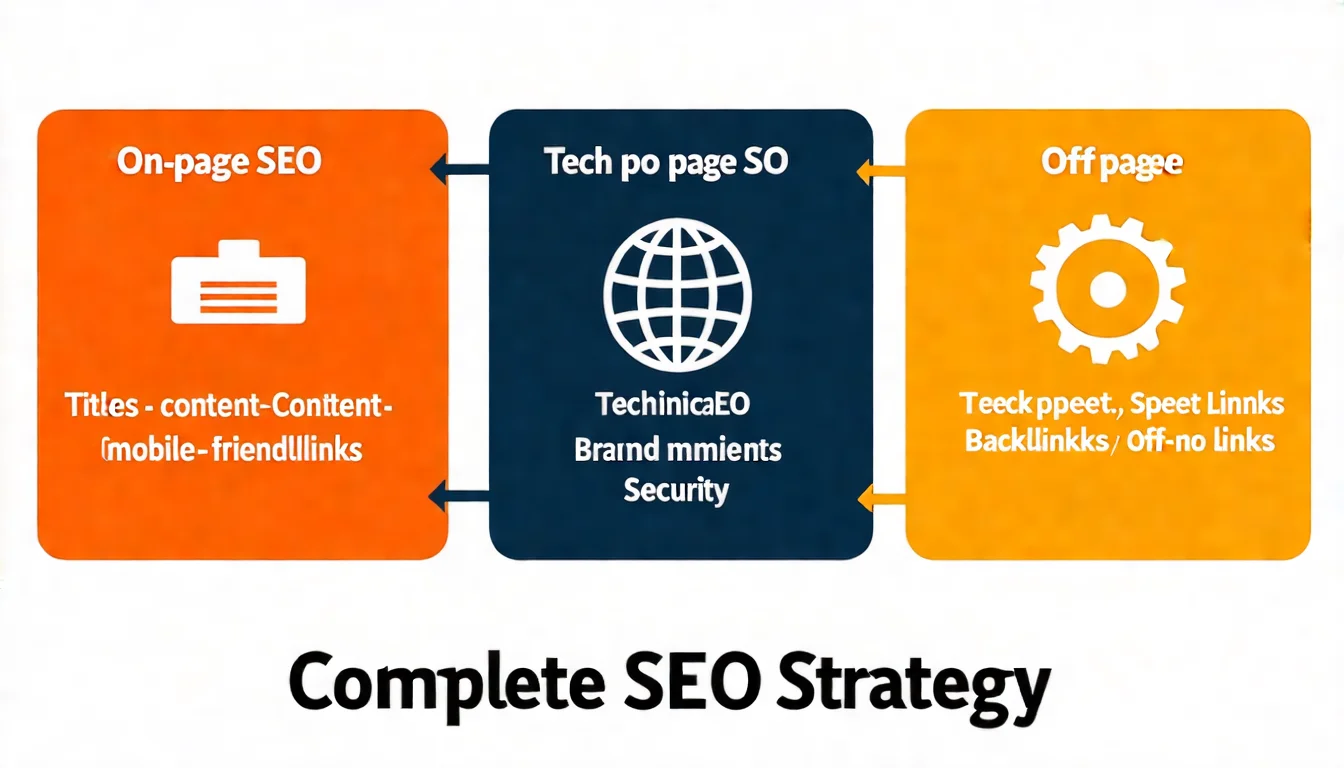
It breaks down into three pillars: On-Page SEO, Off-Page SEO, and Technical SEO.
On-Page SEO
On-Page SEO refers to the elements you can optimize within your own website. This is the area you have complete control over.
Key components include:
1. Title Tag
- Appears in search results and browser tabs
- Must include the primary keyword
- Recommended length: 50-60 characters
2. Meta Description
- The description text below the title in search results
- Encourages users to click
- Recommended length: 120-160 characters
3. Heading Hierarchy (H1-H6)
- H1 is the main heading — use only one per page
- H2 and H3 are used for section headings
- Naturally incorporate keywords into headings
4. Content Quality
- Original, in-depth, and valuable
- Solves the searcher's problem
- Keywords distributed naturally — no stuffing
5. Internal Links
- Link to other relevant pages on your site
- Use descriptive anchor text
- Help search engines understand your site structure
6. Image Optimization
- Use descriptive Alt tags
- Compress images to speed up loading
- Use meaningful keywords in file names
Want to dive deeper? Check out our Complete On-Page SEO Guide.
Off-Page SEO
Off-Page SEO covers optimization work done outside your website, primarily building authority and trust.
Core element: Backlinks
When other websites link to yours, it's like receiving a vote of confidence — a recommendation.
Google uses these "votes" to determine whether your site is trustworthy.
But keep in mind:
- Quality over quantity: One link from an authoritative site is worth more than ten from low-quality ones
- Relevance matters: Links from related industries carry more weight
- Don't buy links: This is a black hat tactic that violates Google's guidelines
The right way to build backlinks:
- Create high-quality content worth sharing
- Guest post on relevant websites
- Build industry partnerships
- Get media coverage for your brand
Technical SEO
Technical SEO ensures search engines can smoothly crawl and index your site while providing a good user experience.
Key areas:
1. Site Speed
- According to Google's 2016 mobile speed research, more than half of mobile visits are abandoned when a page takes over 3 seconds to load
- Test with PageSpeed Insights
- Optimize images, enable caching, use a CDN
2. Mobile-Friendliness
- Google uses mobile-first indexing
- Ensure your site works well on phones
- Use responsive design
3. Site Architecture
- Clear URL structure
- Reasonable site depth (no more than 3-4 levels)
- Complete Sitemap
4. HTTPS Security
- Use an SSL certificate
- Google considers HTTPS a ranking factor
- Increases user trust
5. Core Web Vitals
- LCP (Largest Contentful Paint): Under 2.5 seconds
- INP (Interaction to Next Paint): Under 200 milliseconds (replaced FID in March 2024; FID was fully retired in September 2024)
- CLS (Cumulative Layout Shift): Below 0.1
Want to learn more about technical optimization? Check out the Complete Technical SEO Guide.
Feel like SEO is too complicated?
Not sure where to begin? AI SEO Hacker leverages AI technology to handle everything from keyword research to content production — all in one place.
SEO Keyword Fundamentals
Keywords are at the heart of SEO. Choose the right keywords, and you're already halfway there.
What Are Keywords?
Keywords are the terms users type into search engines.
When someone searches "what is SEO," those words are the keyword.
Your goal: identify the keywords your potential customers are searching for, then create content that meets their needs.
Types of Keywords
By length:
| Type | Characteristics | Examples |
|---|---|---|
| Short-tail keywords | 1-2 words, high search volume, fierce competition | SEO, marketing |
| Mid-tail keywords | 2-4 words, moderate search volume | SEO tutorial, SEO optimization |
| Long-tail keywords | 4+ words, lower volume but clear intent | how to choose an SEO company, how to write SEO articles |
Beginner tip: Start with long-tail keywords. They have less search volume but also less competition, making it easier to rank.
Search Intent
Search intent is what users actually want when they type a keyword.
Understanding search intent is the key to creating truly valuable content.
| Intent Type | Description | Examples |
|---|---|---|
| Informational | Wants to learn something | What is SEO, how to cook rice |
| Navigational | Looking for a specific website | Facebook login, Google Analytics |
| Commercial investigation | Comparing products, evaluating options | iPhone vs Samsung, best SEO tools |
| Transactional | Ready to buy or take action | Buy iPhone, SEO service pricing |
The same keyword can have different search intents. You need to analyze the currently top-ranking content to determine what Google considers the primary intent for that keyword.
Keyword Research Basics
The goal of keyword research: find keywords that are relevant to your business, have search volume, and have manageable competition.
Basic steps:
- Brainstorm: List terms related to your products/services
- Expand with tools: Use keyword tools to discover more related terms
- Analyze data: Check search volume and competition level
- Evaluate intent: Confirm the search intent aligns with your goals
- Select targets: Pick the most valuable keywords
Want to learn more? Check out the Complete Keyword Research Guide.
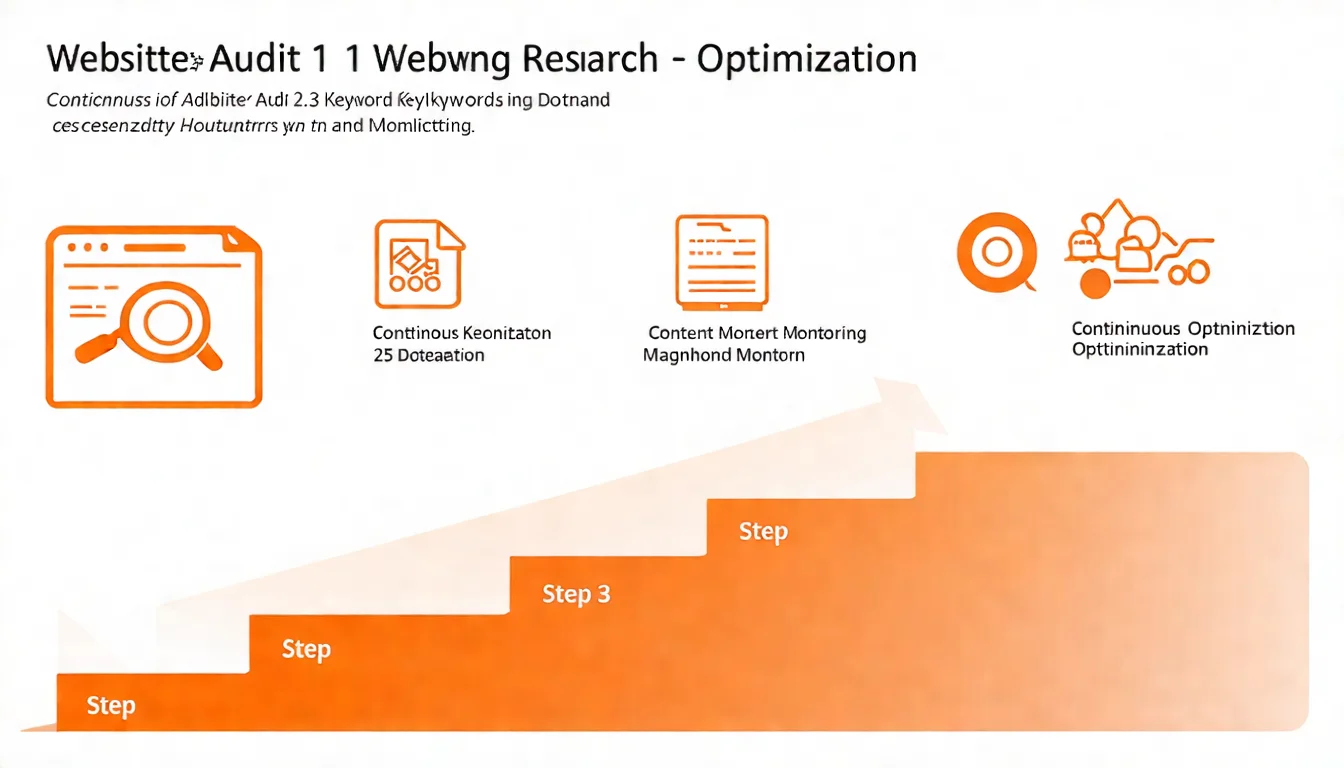
Four Steps to Getting Started with SEO
Now that you understand the basics, let's look at how to actually get started.
Step 1: Website Audit
Before you begin optimizing, assess your site's current state.
Using Google Search Console
- Sign up and verify your website
- Check the "Page indexing" report (under Indexing > Pages; formerly called "Index Coverage") to confirm your pages are indexed
- Review the "Performance" report to see which keywords drive traffic
- Check the "Core Web Vitals" report for Core Web Vitals status (the old "Page Experience" overview report has been removed by Google)
Using PageSpeed Insights
- Enter your URL
- Review scores for both mobile and desktop
- Note the areas that need improvement
Step 2: Keyword Research
Identify the keywords you should target.
Recommended free tools:
- Google Keyword Planner (requires a Google Ads account)
- Ubersuggest (limited free daily searches)
- Google search suggestions (type directly in the search box)
- Answer The Public (discover what users are asking)
Process:
- List terms related to your core products/services
- Use tools to expand and find related long-tail keywords
- Record search volume and competition levels
- Select 5-10 priority keywords to target
Step 3: Content Optimization
Create or optimize content based on your chosen keywords.
Creating new content:
- Analyze search intent and competitor content
- Plan a more comprehensive content structure than competitors
- Write high-quality, in-depth content
- Optimize titles, Meta Description, and heading tags
- Add internal links and appropriate images
Optimizing existing content:
- Find pages ranking #11-20 (they have potential to reach page one)
- Update outdated information
- Fill in missing important content
- Optimize titles and Meta Description
- Add internal links
Learn more writing techniques at How to Write SEO Articles.
Step 4: Continuous Monitoring and Optimization
SEO isn't a one-and-done effort. You need to continuously track performance and adjust your strategy based on data.
Metrics to track:
- Keyword ranking changes
- Organic search traffic
- Click-through rate (CTR)
- Bounce rate (in GA4, the share of non-engaged sessions) and average engagement time
- Conversion rate
Common tools:
- Google Search Console (free)
- Google Analytics (free)
- Ahrefs / SEMrush / Moz (paid)
Optimization cycle:
- Review data monthly
- Identify top-performing and underperforming pages
- Make targeted optimizations
- Track results
- Repeat
Want to learn how to track SEO performance? Check out our SEO Ranking Check Tutorial.
2026 SEO Trends
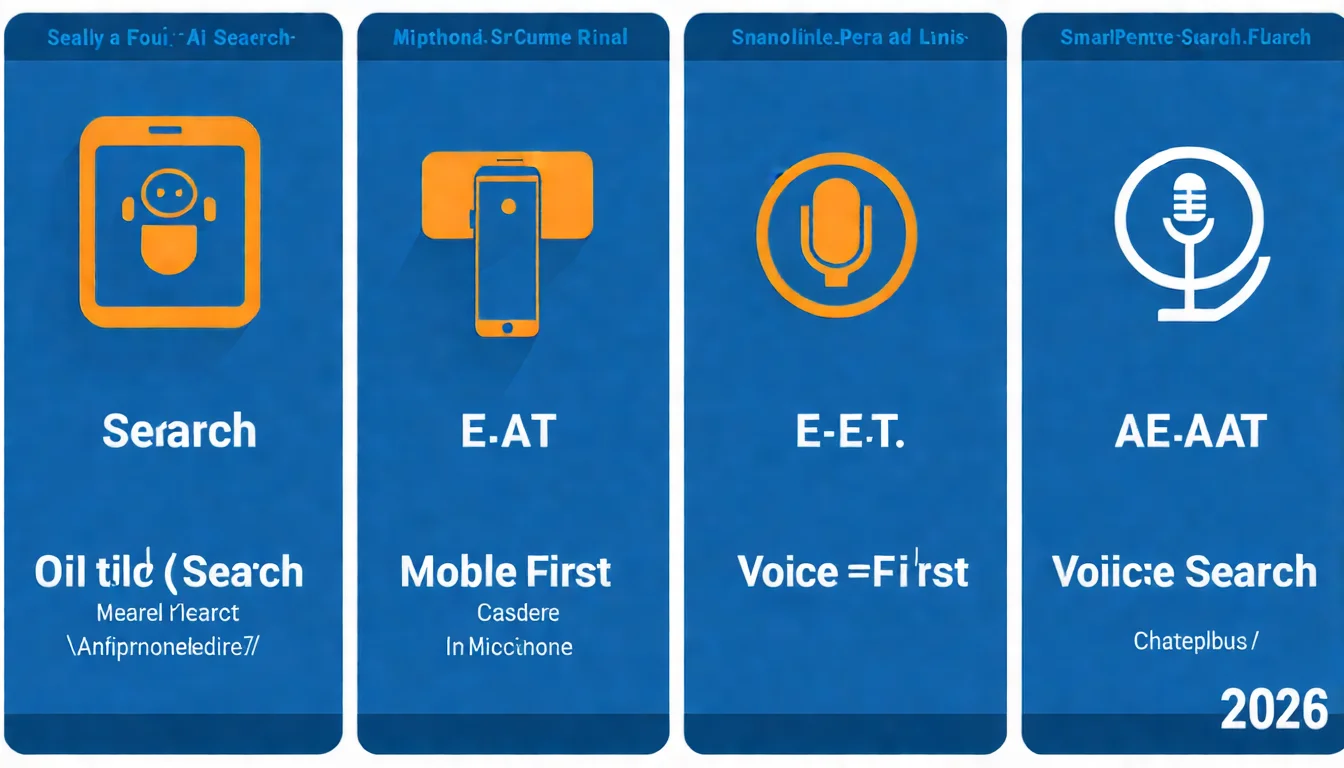
SEO fundamentals don't change, but strategies and technologies keep evolving. Here are the trends to watch in 2026:
AI Search Experience
Google's AI Overviews (formerly SGE) is transforming how search results are displayed.
AI now generates answer summaries directly at the top of search results, meaning users may not need to click through to a website to get their answer.
Beyond AI Overviews, Google launched the conversational AI Mode in 2025, which has expanded to over 200 countries and territories since October 2025 — a step further than AI Overviews in AI-driven search.
How to adapt:
- Create deeper, more unique content
- Provide expert insights that AI can't replicate
- Optimize content structure so AI can easily cite your work
E-E-A-T Matters More Than Ever
E-E-A-T stands for:
- Experience: Does the author have firsthand experience?
- Expertise: Does the author have expert knowledge in this field?
- Authoritativeness: Is the website and author recognized as an authority?
- Trustworthiness: Is the content and website trustworthy?
This is the framework Google's quality rater guidelines use to evaluate content quality. Google states that E-E-A-T is not itself a ranking factor, but its systems look for content that demonstrates these qualities, especially in YMYL (Your Money Your Life) areas involving health, finance, and other major life decisions.
How to adapt:
- Showcase authors' professional backgrounds and experience
- Cite reliable sources
- Build your brand's authority within your industry
- Provide accurate, valuable content
Mobile-First and User Experience
Google has fully adopted mobile-first indexing and places increasing emphasis on user experience signals.
How to adapt:
- Ensure your site works flawlessly on mobile devices
- Optimize Core Web Vitals
- Reduce intrusive ads and pop-ups
- Improve site loading speed
Voice Search and Conversational Queries
More people are using voice assistants to search, and queries are becoming more conversational.
How to adapt:
- Optimize for question-based keywords (how, why, what is)
- Create FAQ content
- Use natural, conversational language
SEO Frequently Asked Questions
Q: How long does it take to see SEO results?
A: In our experience, clear SEO progress usually starts showing within 3-6 months; Google's own guidance says some changes take effect in a few hours while others can take several months, and suggests waiting a few weeks before assessing results. The actual pace depends on several factors:
- Your website's current state and authority
- Competition level for your target keywords
- The intensity of your optimization efforts
- Industry characteristics
Some low-competition keywords may show improvement in 1-2 months, while highly competitive keywords may take a year or more.
SEO is a long-term investment, not a quick fix.
Q: Can I do SEO myself?
A: Yes, but it requires an investment of time to learn and execute.
Good situations for DIY:
- You have time to learn and maintain ongoing efforts
- Your website is relatively small
- Your industry isn't highly competitive
- You have a limited budget
Consider hiring a professional when:
- You lack the time and need faster results
- Your industry is highly competitive
- Your site has complex technical issues
- You need systematic content production
Whether you do it yourself or hire help, understanding SEO fundamentals is essential. It allows you to evaluate results and communicate effectively with professionals.
Related reading: How to Choose an SEO Company
Q: Do I need to write lots of articles for SEO?
A: Not necessarily, but high-quality content is indeed the core of SEO.
Content doesn't have to be articles. Depending on your industry and goals, it could be:
- Product pages
- Service description pages
- Case studies
- Tools or calculators
- Videos or podcasts
The key is: your content must satisfy the searcher's needs.
If your target keywords require in-depth educational content, then you'll need to write articles. If they're product-related keywords, optimizing product pages may be more important.
Q: What's the relationship between SEO and AI writing?
A: AI writing tools can help accelerate SEO content production, but they can't fully replace human judgment.
AI writing advantages:
- Quickly generate drafts
- Help brainstorm content structures
- Improve production efficiency
AI writing limitations:
- May produce inaccurate or outdated information
- Lacks real-world experience and unique perspectives
- Requires human review and optimization
The right approach: AI-assisted + human oversight. Use AI to speed up production, but have professionals ensure content quality, accuracy, and E-E-A-T.
Related reading: Combining AI Writing with SEO
Q: What is black hat SEO? Does it work?
A: Black hat SEO refers to optimization tactics that violate search engine guidelines, attempting to game the system for rankings.
Common black hat tactics include:
- Keyword stuffing
- Hidden text or links
- Buying low-quality links
- Content farms
It might work short-term, but the long-term risks are extremely high.
Once Google catches on, your site could be penalized or even completely removed from the index. The cost of recovery far exceeds doing things right from the start.
Learn more: White Hat vs. Black Hat SEO: A Complete Comparison
How to Start Your SEO Journey
SEO may seem complex, but the core is actually simple:
Create high-quality content that solves users' problems, and make sure search engines can find and understand that content.
Let's recap today's key takeaways:
- SEO is a long-term investment: Unlike ads that deliver instant results, SEO's effects are more lasting
- All three pillars are essential: On-Page SEO, Off-Page SEO, and Technical SEO
- Keywords are the foundation: Choose the right keywords, and you're halfway there
- Content quality is key: High-quality, in-depth, problem-solving content
- Continuous optimization: SEO is a marathon, not a sprint
If you're new to SEO, start here:
- Set up Google Search Console
- Choose 1-3 long-tail keywords
- Create high-quality content targeting those keywords
- Monitor performance and keep optimizing
The SEO learning curve can be steep, but once you've mastered the basics, you'll be able to drive a continuous stream of free traffic to your website.
Ready to use AI for fast, SEO-optimized content?
Not sure where to start? AI SEO Hacker combines AI technology with SEO expertise to help you build website content efficiently and effectively.
Get started now and let more people discover your website!
Further Reading
- What Is SEO Optimization? Essential Website Optimization Tips for Beginners
- SEO Tutorial for Beginners: Learn SEO from Scratch
- How to Write SEO Articles: A Complete Copywriting Guide
- What Is On-Page SEO? A Complete Guide to On-Site Optimization
- How to Check SEO Rankings: A Keyword Ranking Query Tutorial
- How to Choose an SEO Company: Costs and Performance Evaluation
- White Hat vs. Black Hat SEO: A Complete Comparison
References
- Google Search Central - SEO Starter Guide
- Backlinko - Google Ranking Factors
- Backlinko - Google CTR Stats
- First Page Sage - Google Click-Through Rates (CTRs) by Ranking Position
- Ahrefs - SEO Statistics
- Search Engine Journal - SEO Trends 2026
![SEO Tutorial for Beginners: A Complete Guide to Learning SEO from Scratch [2026]](/_next/image?url=%2Fblog%2Fimages%2Fseo-basics%2Fseo-tutorial-beginner-01.webp&w=3840&q=75)
![What Is SEO Optimization? 10 Essential Website Optimization Tips for Beginners [2026]](/_next/image?url=%2Fblog%2Fimages%2Fseo-basics%2Fwhat-is-seo-optimization-01.webp&w=3840&q=75)
![What Is Parasite SEO? 38 Fake Sites Are Poisoning AI Insurance Answers [2026]](/_next/image?url=%2Fblog%2Fimages%2Fseo-basics%2Fparasite-seo-ai-01.webp&w=3840&q=75)