ChatGPT, Midjourney, Runway...
These AI tools all fall under the umbrella of "AIGC," and they're rewriting the rules of content creation.
So what exactly is AIGC? How does it impact businesses? And how should you apply it?
This article takes you deep into the concept, trends, and business applications of AIGC, helping you stay ahead in this AI content revolution.
Defining AIGC and Its Scope
What Is AIGC (AI-Generated Content)?
AIGC = AI-Generated Content
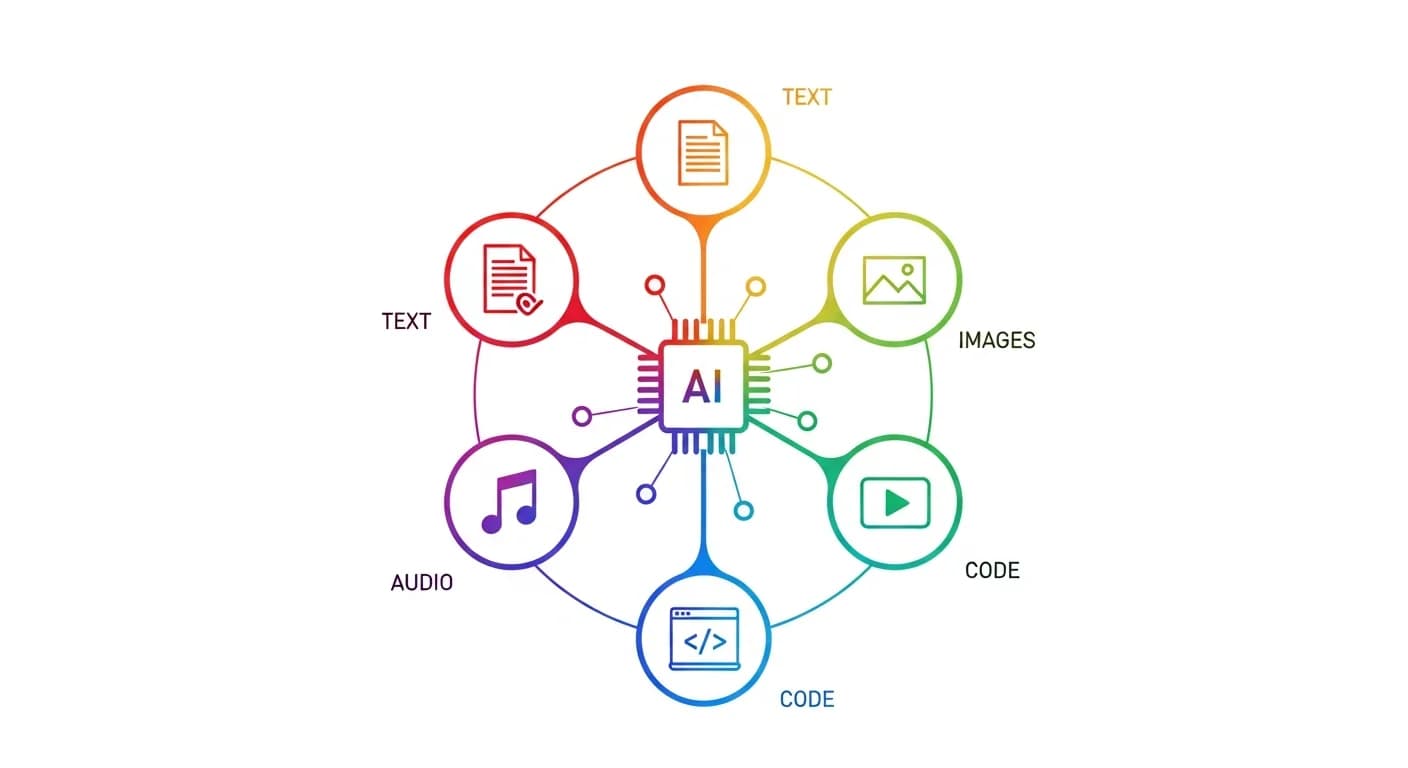
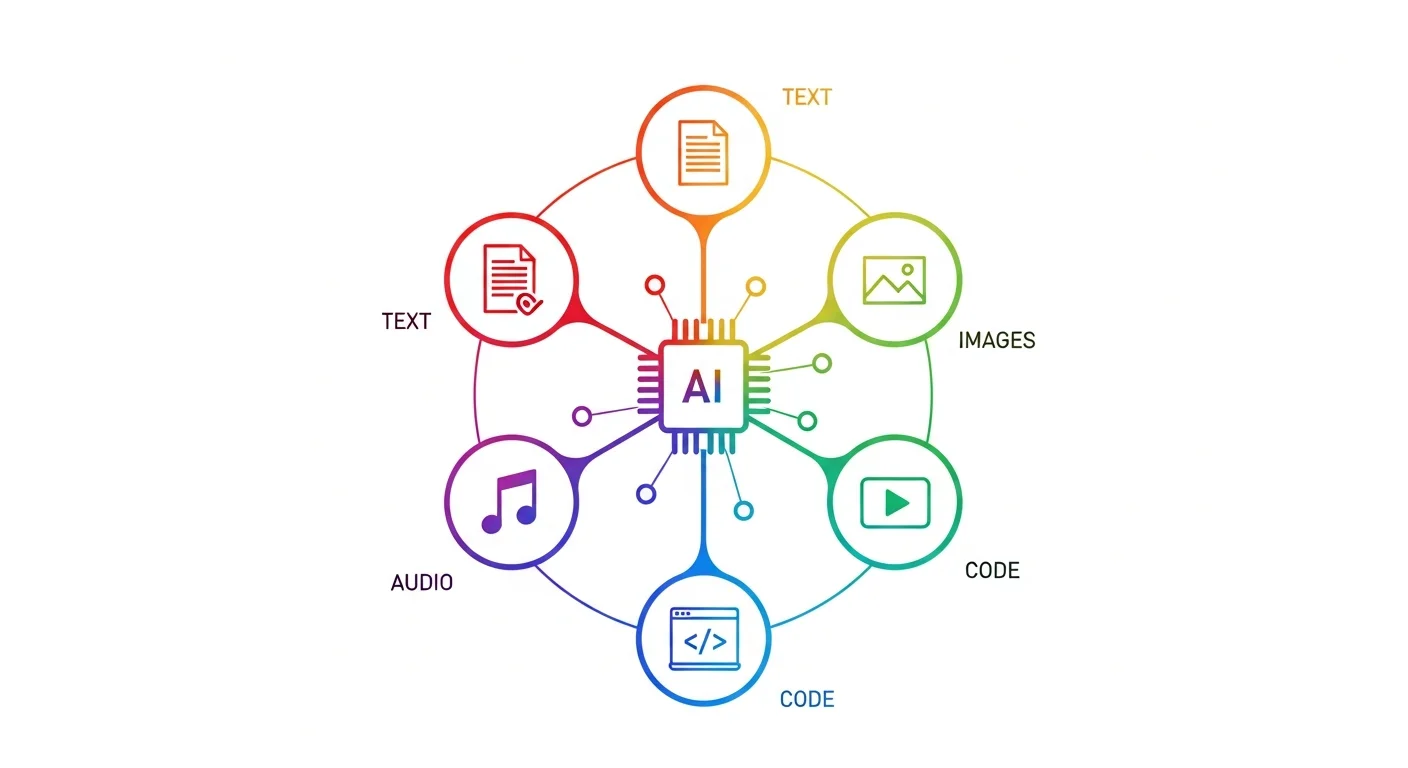
It's an umbrella term covering all content produced by artificial intelligence:
- Text: Articles, copy, conversations, translations
- Images: Photos, illustrations, designs
- Video: Short films, animations, visual effects
- Audio: Voice, music, narration
- Code: Software, automation scripts
Simply put: If AI produced it, it's AIGC.
AIGC vs. UGC vs. PGC
Before AIGC, the content industry had two primary content sources:
| Type | Definition | Examples |
|---|---|---|
| UGC | User-Generated Content | Social media posts, reviews, influencer videos |
| PGC | Professionally-Generated Content | News reporting, professional media, books |
| AIGC | AI-Generated Content | ChatGPT articles, Midjourney images |
The relationship between the three:
- UGC: High volume but inconsistent quality
- PGC: High quality but high cost
- AIGC: Above-average quality at low cost, easily scalable
AIGC's positioning: Combining the scale of UGC with the quality of PGC.
The Evolution of AIGC
Pre-2022: Early stage
- AI writing tools existed but with limited quality
- Primarily used for simple content generation
- High barrier to entry
2022-2023: Explosion
- ChatGPT launched, igniting the AI boom
- Midjourney and Stable Diffusion matured for image generation
- Barrier to entry dropped dramatically
2024-2025: Maturation
- Multimodal AI (text, image, video integration)
- Large-scale enterprise adoption
- Regulations began catching up
2026 onward: Widespread adoption
- AIGC becomes standard in the content industry
- Human-AI collaboration models established
- Industry ecosystem more complete
For a more comprehensive look at AI writing, check out our core guide.
The Technology Behind AIGC
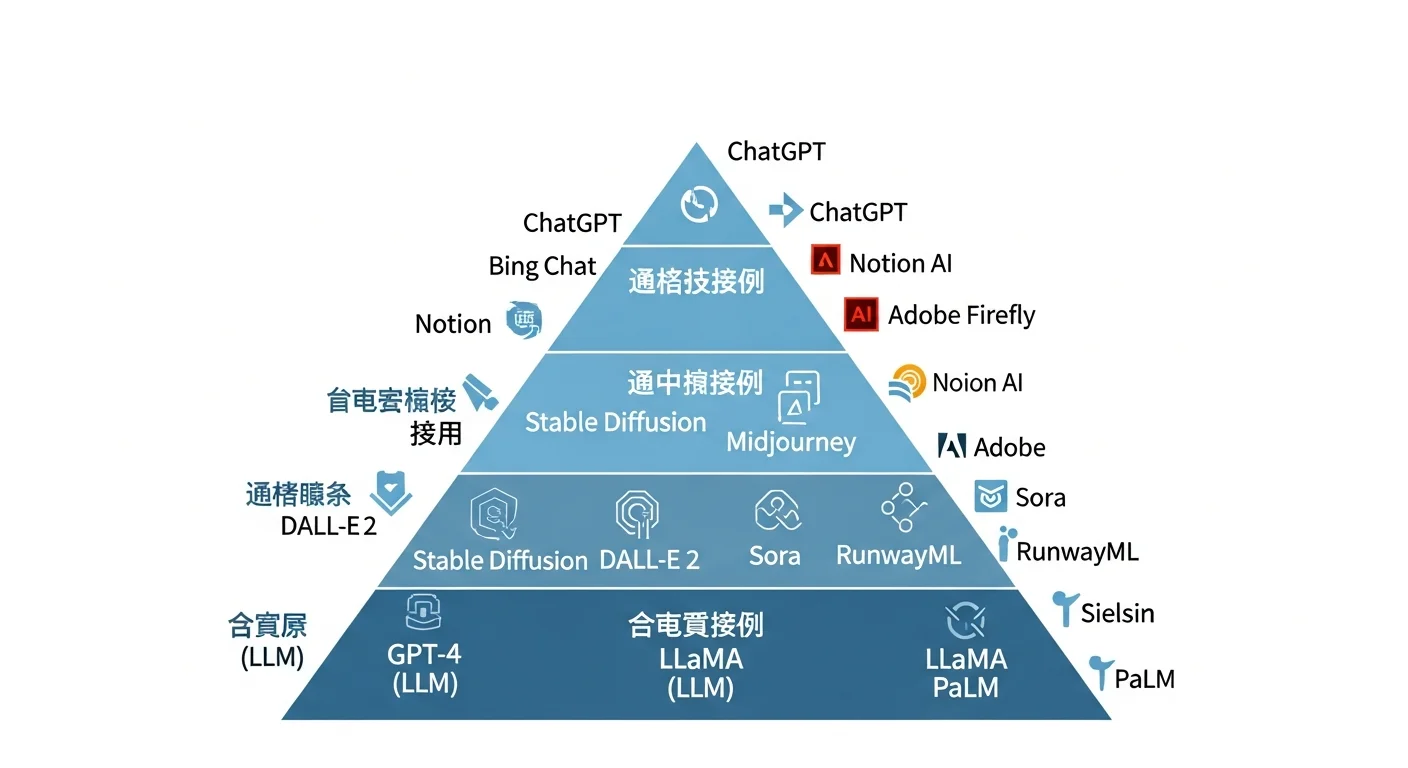
Generative AI Technology Overview
The core of AIGC is Generative AI.
Key technologies:
-
Large Language Models (LLM)
- Examples: GPT-5.x / GPT-6, Claude Opus 5.5, Gemini 3.x
- Use: Text generation, conversations
-
Diffusion Models
- Examples: Midjourney, Stable Diffusion, GPT Image (DALL·E 2/3 was shut off in the API on 2026-05-12)
- Use: Image generation
-
Video Generation Models
- Examples: Runway, Pika (the Sora app closed on 2026-04-26 and the Videos API was shut down on 2026-09-24)
- Use: Video creation
-
Audio Generation Models
- Examples: Suno, Udio (Udio has disabled audio/video/stem downloads since 2025-10-29)
- Use: Music, voice
The Rise of Multimodal AI
What is multimodal AI?
AI that can simultaneously process and generate multiple types of content (text, images, video, audio).
Representative products:
- GPT-5.x / GPT-6: Natively multimodal, text + image understanding (GPT-4 left ChatGPT in April 2025, followed by GPT-4o in February 2026 and GPT-4.5 in June 2026; legacy API snapshots such as gpt-4 are scheduled to shut down on 2026-10-23)
- Gemini: Multimodal integration
- Claude Opus 5.5: Text + image analysis (the Claude 3 and Claude 3.5 generations are fully retired; the last one, Claude 3 Haiku, was retired on 2026-04-20)
Future direction:
A single AI will handle all types of content generation, eliminating the need for multiple tools.
Technical Challenges of AIGC
Current issues that remain:
-
Hallucination
- AI can produce content that sounds right but is factually wrong
- Requires human verification
-
Copyright disputes
- Training data copyright questions
- Ownership of generated content
-
Bias issues
- AI may perpetuate biases from its training data
- Requires monitoring and correction
-
Inconsistent quality
- The same prompt can produce different results
- Requires multiple attempts and filtering
5 Key Application Areas for AIGC
Text Content Generation
Use cases:
-
Marketing copy
- Ad copy, social media posts
- Product descriptions, newsletters
-
Article writing
- SEO articles, blog posts
- Press releases, white papers
-
Customer service conversations
- Intelligent chatbots, FAQs
- Conversational AI
-
Translation and localization
- Multilingual content
- Local market adaptation
Representative tools: ChatGPT, Claude, Jasper, Copy.ai
For more on AI article generators, check out our tool reviews.
Image and Visual Design
Use cases:
-
Marketing materials
- Social media graphics
- Ad visuals
-
Product design
- Concept art
- Prototype design
-
Creative ideation
- Style exploration
- Visual creativity
-
Image editing
- Background removal
- Image extension
Representative tools: Midjourney, Stable Diffusion, Adobe Firefly, GPT Image (DALL·E 2/3 was shut off in the API on 2026-05-12)
Video and Animation Production
Use cases:
-
Short video production
- Social media short-form videos
- Product introductions
-
Animation generation
- Explainer animations
- Brand animations
-
Video editing
- Automated editing
- VFX compositing
-
Virtual digital humans
- Virtual hosts
- AI customer service
Representative tools: Runway, Pika, HeyGen (OpenAI's Sora app closed on 2026-04-26 and its Videos API was shut down on 2026-09-24, so it is no longer a safe pick for new projects)
Music and Audio Generation
Use cases:
-
Background music
- Video soundtracks
- Podcast music
-
Voice synthesis
- Audiobooks
- Multilingual voiceovers
-
Sound effects
- Advertising sound effects
- Game audio
-
Original music
- Song creation
- Musical elements
Representative tools: Suno, ElevenLabs, Murf (since its 2025-10-29 settlement with Universal Music Group, Udio has disabled audio/video/stem downloads; a relicensed platform is expected in 2026 with no confirmed date for downloads returning, so verify before any commercial use)
Code and Technical Documentation
Use cases:
-
Code generation
- Feature development
- Debug assistance
-
Technical documentation
- API docs
- User manuals
-
Test automation
- Test cases
- Test scripts
-
Code review
- Code quality
- Security analysis
Representative tools: GitHub Copilot, Cursor, Replit AI
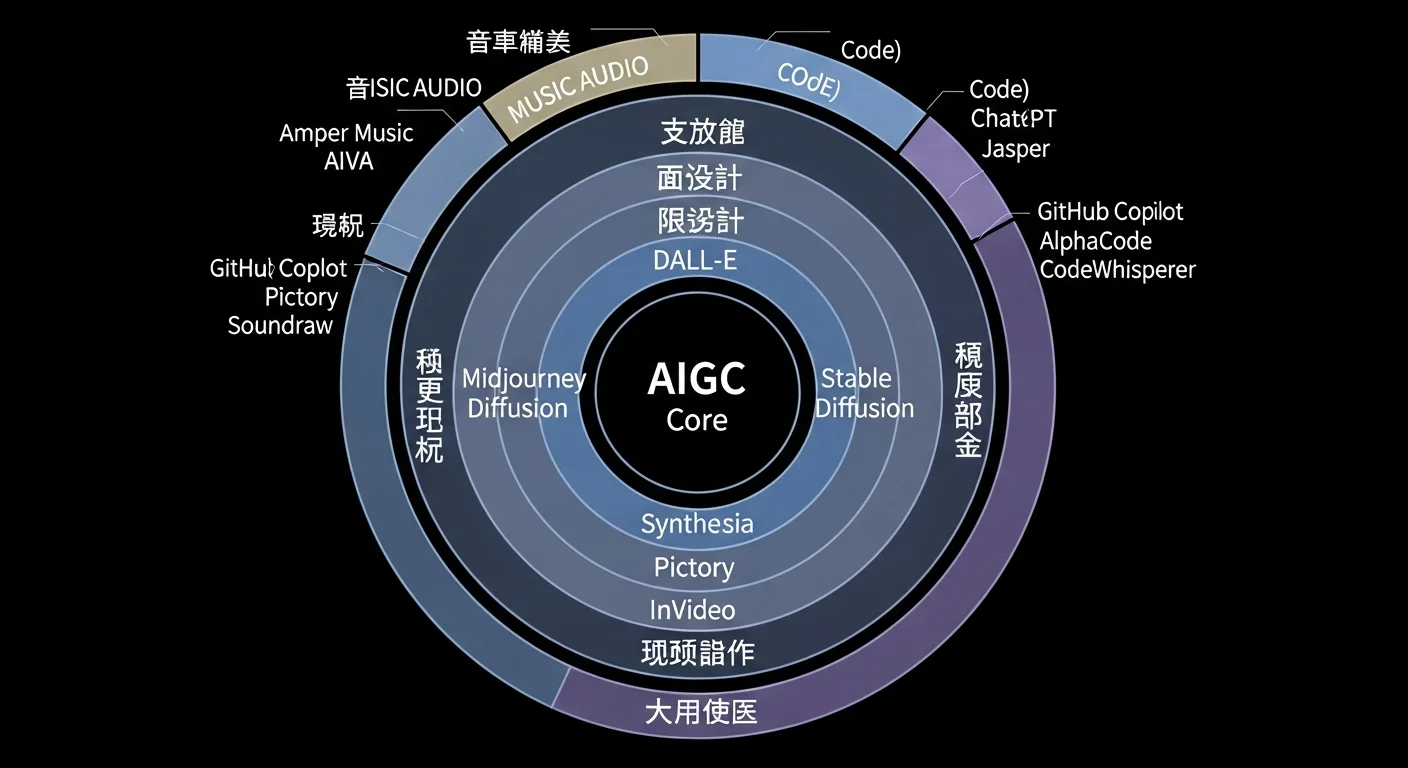
Learn how AI content can help your business.
The Business Value of AIGC
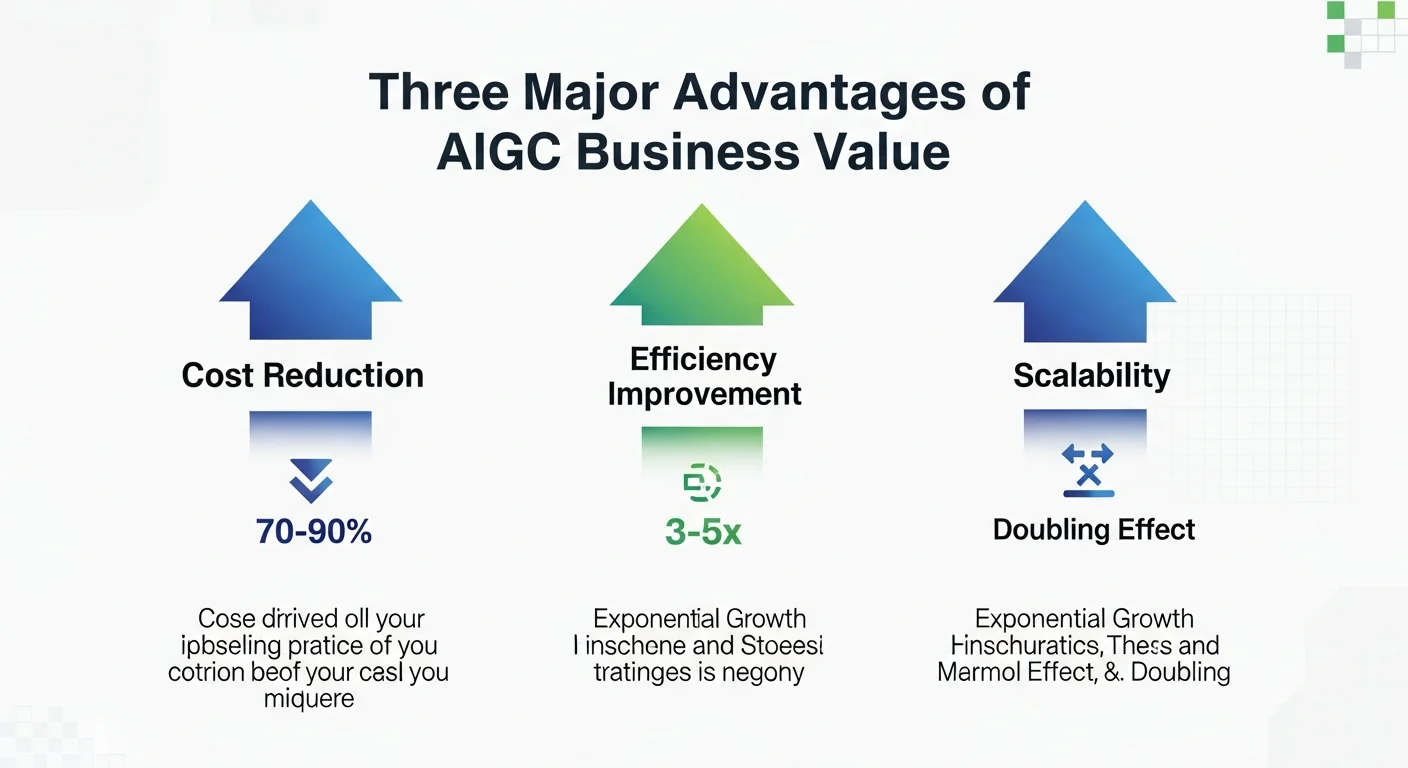
Reducing Content Production Costs
Traditional vs. AIGC cost structure:
| Content Type | Main cost under the traditional approach | Cost structure after adopting AIGC |
|---|---|---|
| Article (2,000 words) | Professional writer fees, billed per word or per piece | Tool subscription + time spent reviewing and rewriting |
| Product images (5) | Studio, equipment, models, retouching labor | Generation tool fees + time spent selecting and finishing |
| 60-second video | Production crew, location, post-production | Generation tool fees + time spent editing and correcting |
The actual savings vary widely by content type, quality bar, and how much human review you put in — there is no one-size-fits-all percentage. Track hours and spend across a real batch of jobs to find out what it saves in your own setup.
Why costs drop:
- Reduced labor requirements
- Shorter production times
- Lower cost for revisions
- Economies of scale
Boosting Content Production Efficiency
Where the efficiency gains show up:
- Article writing: much shorter wait for a usable first draft
- Image generation: no briefing, shooting, or revision scheduling
- Multi-version testing: more variations tried in the same window
How much faster it actually gets depends on topic difficulty, quality bar, and how much human review you put in — there is no universal multiplier.
Real-world example:
A content team that adopts AIGC can lift its monthly output noticeably without adding headcount — provided the time saved is reinvested in review and fact-checking, which is what keeps quality from slipping.
Scaling Personalized Content
AIGC makes personalization feasible at scale.
Application examples:
-
Personalized newsletters
- Customize content based on user interests
- Automatically generate different versions
-
Customized marketing materials
- Targeted ads for different audiences
- A/B testing with multiple versions
-
Dynamic content
- Adjust based on user behavior
- Generate relevant content in real time
Case Studies: How Businesses Apply AIGC
Case 1: E-Commerce Platform
- Challenge: Thousands of products needing descriptions
- Solution: AI batch-generates product copy
- Result: Less copywriting labor and faster listing turnaround (illustrative scenario, not measured data from a named client)
Case 2: Content Marketing Agency
- Challenge: Clients need high volumes of SEO articles
- Solution: AI generates first drafts + human optimization
- Result: Both delivery volume and margin improve (illustrative scenario, not measured data from a named client)
Case 3: Advertising Agency
- Challenge: Rapidly producing creative proposals
- Solution: AI generates multiple creative variations
- Result: More proposal variations and faster internal review and delivery (illustrative scenario, not measured data from a named client)
AIGC's Industry Impact
Opportunities and Challenges for Content Creators
Opportunities:
- Efficiency tool: Use AI to assist creation, produce more
- New skill demand: Prompt engineers, AI strategists
- Creative liberation: Let AI handle repetitive work, focus on creativity
- Personal branding: One person can produce professional-grade content
Challenges:
- Increased competition: Lower barriers to content production
- Skill transformation: Need to learn AI tools
- Value redefinition: Pure execution work decreases in value
- Copyright confusion: Ownership of AI-generated content
Marketing Industry Transformation
AIGC's impact on marketing:
-
Content marketing
- Massive capacity increase
- Lower testing costs
- Personalization becomes standard
-
Advertising creative
- Rapidly produce multiple versions
- Dynamic creative becomes possible
- Higher creative ideation efficiency
-
Social media management
- Higher posting efficiency
- Multi-platform content customization
- Automated engagement replies
-
SEO
- Higher content production efficiency
- But quality control remains essential
- Strategy becomes even more important
Media and Publishing Transformation
Changes underway:
-
News industry
- Breaking news assisted by AI
- Deep reporting still requires humans
- Fact-checking more important than ever
-
Publishing industry
- Translation costs dropping
- AI-assisted editing and proofreading
- Copyright issues to be resolved
-
Content platforms
- Content supply surging
- Quality curation more important
- Original content value rising
AIGC Ethics and Regulations
Copyright and Intellectual Property
Key disputes:
-
Training data copyright
Is it infringement to train AI on others' work?
- US: Multiple suits still in progress, with some now settled (Universal Music Group's copyright case against Udio ended in a partnership settlement on 2025-10-29)
- EU: Leaning toward requiring licensing
- Taiwan: Its legislature passed the AI Basic Act on 2025-12-23 — Taiwan's first dedicated AI statute, setting out seven governing principles, naming the National Science and Technology Council as the competent authority, and requiring the Executive Yuan to establish a national AI strategy committee
-
Generated content ownership
Who owns AI-generated content?
- Current: Users have usage rights
- Dispute: Whether full copyright applies
-
Similarity issues
What if AI-generated content too closely resembles training data?
Business recommendations:
- Understand each tool's copyright policies
- Avoid using potentially infringing generated content
- Maintain records of AI usage
Deepfake Risks
What are deepfakes?
AI-generated fake videos and audio that are difficult to distinguish from real ones.
Risks:
- Fake news: Manufacturing false information
- Fraud: Impersonating someone's voice or appearance
- Reputation damage: Creating fabricated inappropriate content
- Social trust: A world where real and fake are hard to distinguish
Prevention measures:
- AI detection tools
- Content source verification
- Digital signatures and watermarks
Transparency and Labeling Standards
Trend: More jurisdictions requiring AI content labeling.
Relevant regulations:
-
EU AI Act
- The Article 50 transparency obligations apply from 2026-08-02, requiring AI-generated content to be labeled; for systems already on the market before 2026-08-02, the marking obligation is deferred to 2026-12-02
- The European Commission published the final code of practice on transparency for AI-generated content on 2026-06-10
- Violations may result in penalties
-
US state laws
- Several states have related legislation
- Primarily targeting elections and advertising
-
Platform policies
- Some social platforms require labeling
- Violations may result in content removal
Business recommendations:
- Track regulatory developments
- Establish internal labeling policies
- Transparently disclose AI usage
For more on generative AI fundamentals, check out our beginner's guide.
Adopt AIGC to boost content efficiency. Consult us on LINE.
👉 Free consultation on LINE: @006ljkda
AIGC Future Trend Predictions
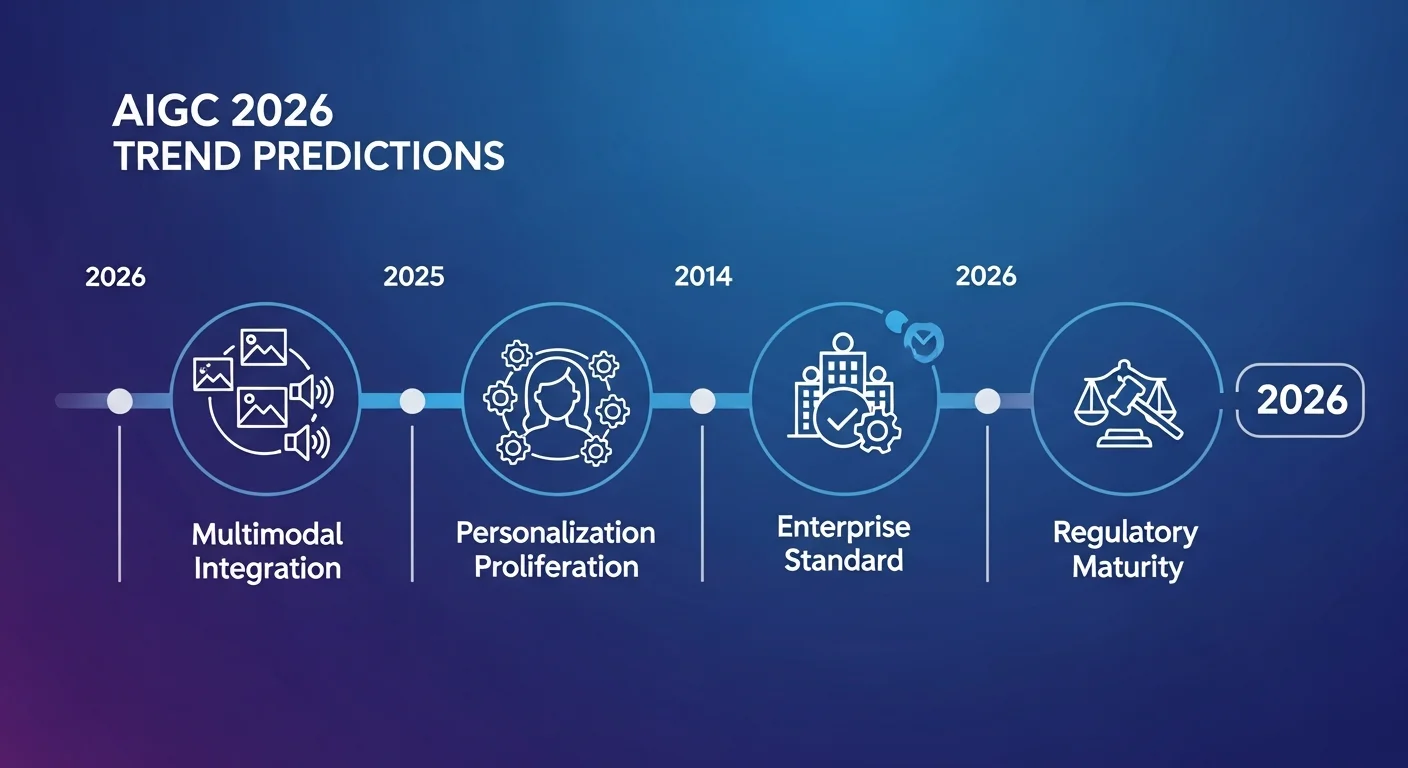
2026 AIGC Development Directions
Trend 1: Multimodal integration
- Single tools handling text, images, and video
- Cross-media content generation becomes simpler
- Creative barriers continue to lower
Trend 2: Personalization at scale
- AI remembers user preferences
- Highly customized content
- One-to-one marketing becomes viable
Trend 3: Enterprise adoption becomes standard
- Large enterprises build AI content teams
- Small and medium businesses use AI services
- AI tools become a baseline skill
Trend 4: Regulations mature
- Copyright issues gradually resolved
- Labeling standards become clearer
- Industry self-regulation mechanisms mature
Technology Advancement and Application Expansion
Expected improvements:
-
Continuously improving quality
- Fewer hallucinations
- More stable output
- Better alignment with requirements
-
Continuously declining costs
- Open-source model development
- Lower computational costs
- Competition driving price wars
-
Expanding application scenarios
- Deeper penetration into vertical industries
- Breakthroughs in specialized fields
- Progress in creative domains
Recommendations for Enterprise AIGC Adoption
Phased adoption strategy:
Phase 1: Experimentation
- Select 1-2 application scenarios
- Small-scale testing
- Evaluate benefits and risks
Phase 2: Expansion
- Scale up successful applications
- Establish standard processes
- Train team skills
Phase 3: Integration
- Integrate into daily workflows
- Build quality assurance mechanisms
- Continuously optimize and update
Key considerations:
- Don't expect AI to replace everything
- Human-AI collaboration is the optimal model
- Quality assurance can't be skipped
- Keep learning and adapting
AIGC FAQ
Q: Will AIGC replace human creators?
A: Not in the short term. AIGC excels at efficiency and scalability; humans excel at creativity, judgment, and emotion. The future is "human-AI collaboration" — AI handles repetitive work while humans focus on creativity and strategy. Some jobs will change, but new opportunities will emerge.
Q: How do I get started with AIGC?
A: Recommended steps: (1) Start with free tools (ChatGPT, Claude); (2) Choose one application scenario (e.g., copywriting, social posts); (3) Learn basic prompt techniques; (4) Understand tool limitations; (5) Establish a quality review process; (6) Gradually expand your scope.
Q: How do you ensure AIGC content quality?
A: Key practices: (1) AI produces drafts, humans review and optimize; (2) Establish content quality standards; (3) Never skip fact-checking; (4) Add original perspectives and experience; (5) Continuously refine your prompts. Pure AI content isn't enough — human-AI collaboration is essential.
How to Embrace AIGC and Build a Competitive Advantage
AIGC isn't the future — it's the present. The sooner you understand and plan for it, the better positioned you'll be in this wave.
Key takeaways from this article:
- AIGC defined: All AI-generated content spanning text, images, video, and audio
- Technical foundations: LLMs, diffusion models, multimodal AI
- Business value: Cost reduction, efficiency gains, personalization at scale
- Industry impact: Creator opportunities and challenges, marketing transformation, media evolution
- Ethics and regulation: Copyright disputes, deepfake risks, transparency standards
Our recommendations:
- Start using AI tools and build experience
- Find the right application scenarios for your business
- Establish a human-AI collaboration workflow
- Stay informed on regulatory developments
- Keep learning and keep up with technological progress
For more AI writing knowledge and AI copywriting tips, check out our other articles.
AI content experts helping you seize the AIGC opportunity.