ChatGPT, Midjourney, Sora... you've definitely heard these names.
They all belong to "generative AI" — a type of artificial intelligence that can "create" new content.
But what exactly is generative AI? Why is it so powerful? And how does it work?
This guide explains generative AI in plain language — covering its principles, top tools, and use cases — giving you a complete picture of this world-changing technology.
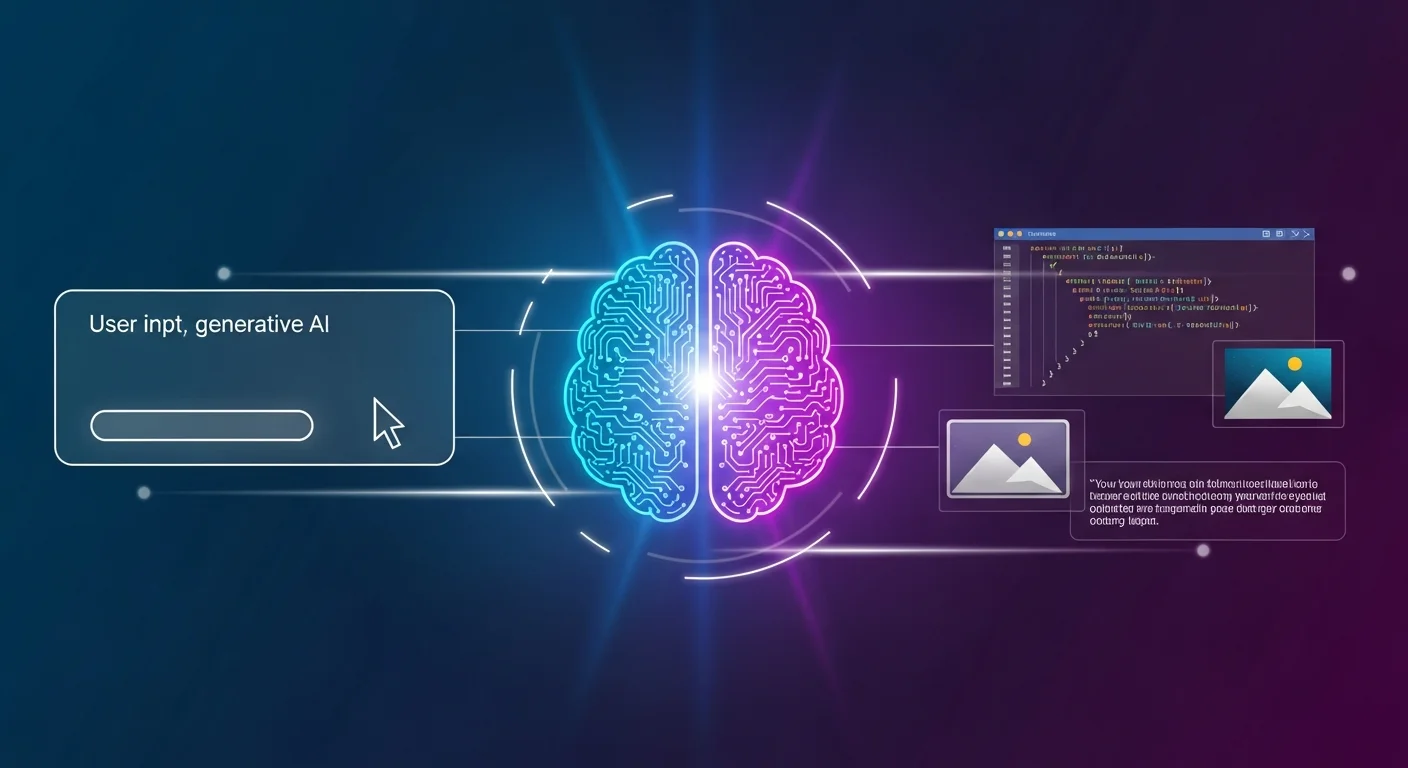
What Is Generative AI?
Defining Generative AI
Generative AI is an artificial intelligence technology capable of "creating" new content.
It differs from traditional AI:
- Traditional AI: Analyzes, classifies, predicts (e.g., determining whether an email is spam)
- Generative AI: Creates, produces, synthesizes (e.g., writing an invitation letter for you)
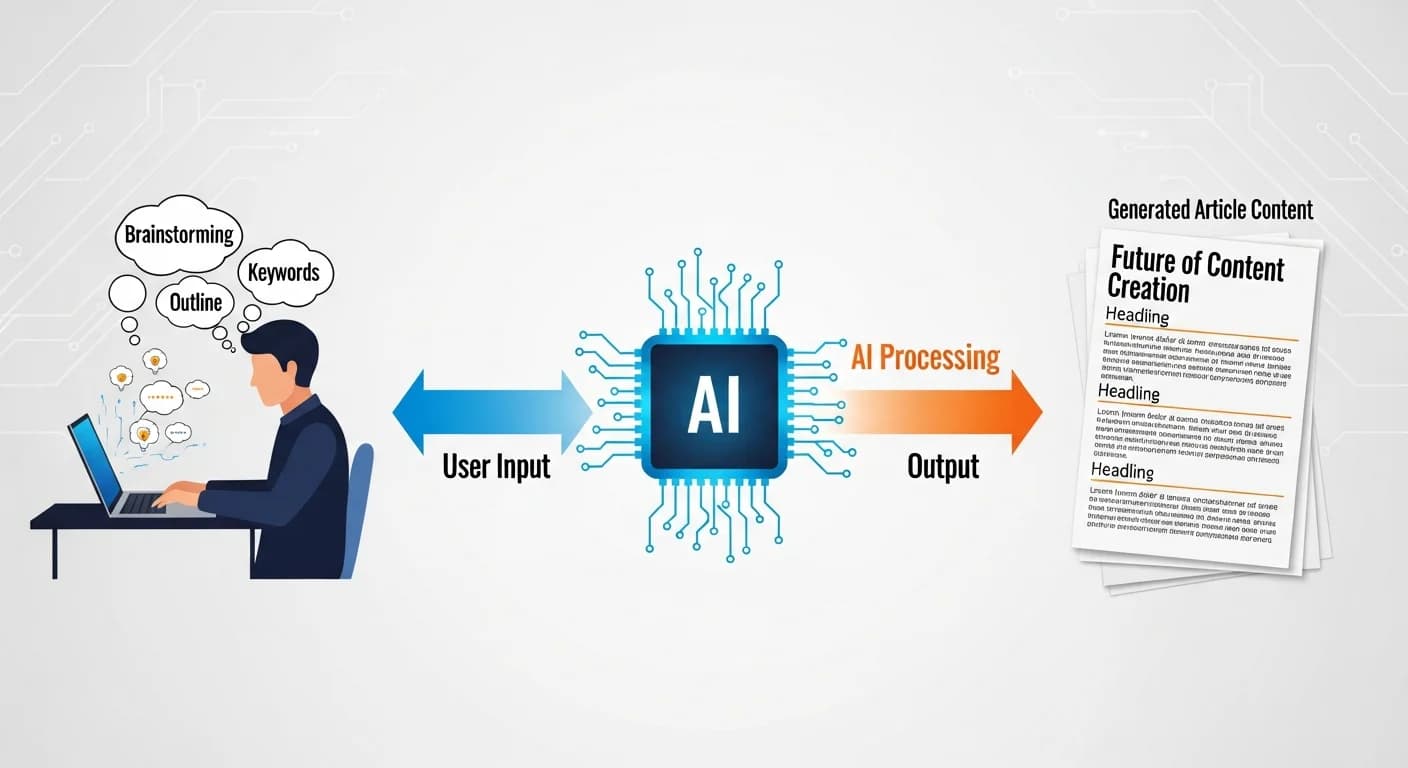
In simple terms, generative AI can produce "new" text, images, video, music, and other content based on your instructions.
Generative AI vs. Traditional AI
| Aspect | Traditional AI | Generative AI |
|---|---|---|
| Primary function | Analysis, judgment | Creation, generation |
| Output type | Classifications, numbers | Text, images, video |
| Use cases | Recognition, prediction | Creation, production |
| Key technologies | Machine learning, decision trees | Large language models, diffusion models |
Example:
- Traditional AI: Looking at a photo and determining whether it's a cat or a dog
- Generative AI: Taking the description "a Shiba Inu on the moon" and creating a brand new image
Why Did Generative AI Suddenly Explode?
Generative AI isn't new technology, but it suddenly exploded in 2022-2023. Here's why:
1. Technical breakthroughs
Advances in Transformer architecture and large language models (LLMs) dramatically improved AI output quality.
2. Lower barriers to entry
Products like ChatGPT let ordinary people use AI without writing code.
3. Clear business value
Companies discovered AI could genuinely improve efficiency and reduce costs.
4. Investment boom
Massive capital flowed in, accelerating technology development and real-world adoption.
How Generative AI Works
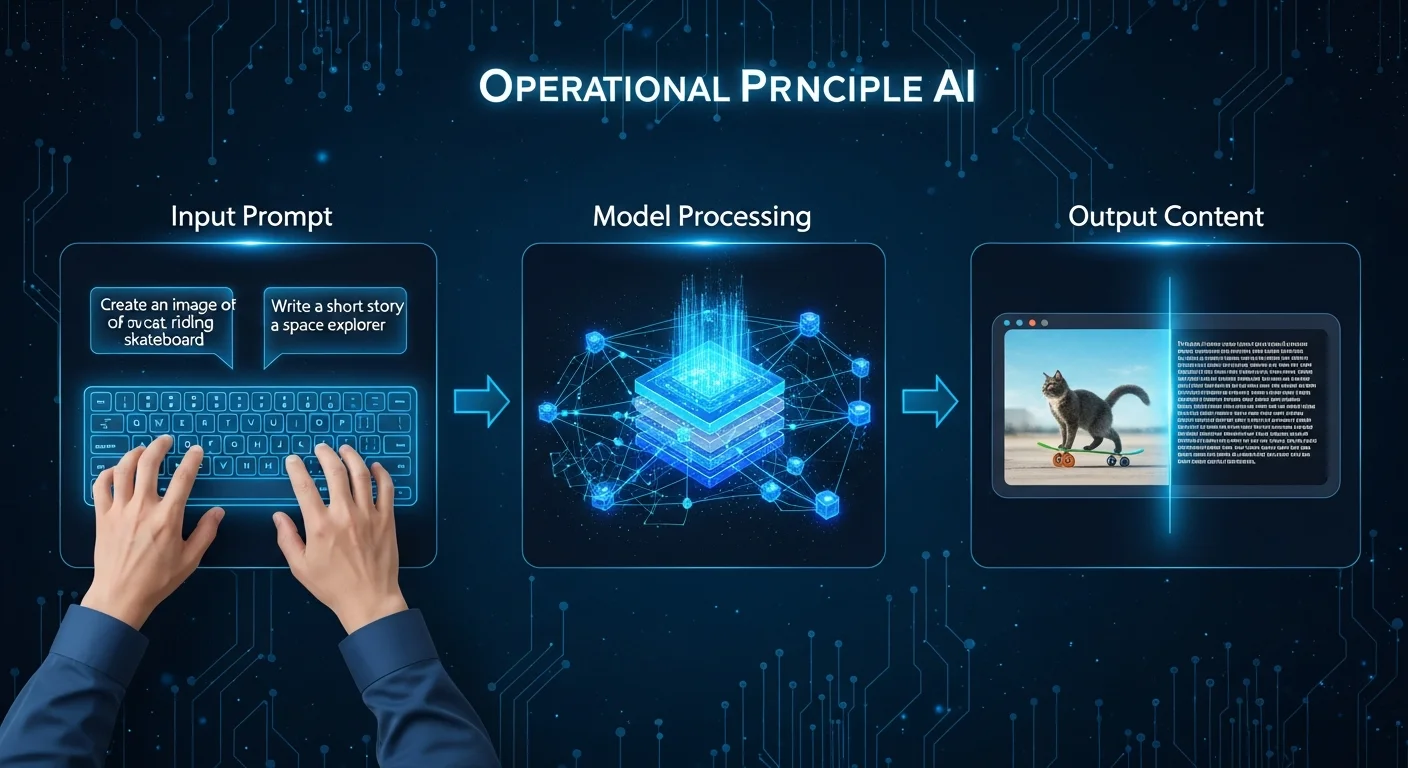
Understanding the principles helps you use the tools more effectively.
What Is a Large Language Model (LLM)?
Large Language Models (LLMs) are the core technology behind generative AI, specialized in processing text.
What "large" means:
- Massive number of parameters (billions to hundreds of billions)
- Massive training data (enormous volumes of text from the internet)
- Massive computing resources (requires many GPUs)
Representative products:
- GPT-6 and GPT-5.x series (OpenAI)
- Claude Opus 5.5, Sonnet 5.5 (Anthropic)
- Gemini (Google)
- Llama 4 (Meta)
Training Data and Learning Methods
How do LLMs learn?
- Data collection: Articles, books, conversations from the internet
- Predictive learning: Learning to "predict the next word based on preceding text"
- Fine-tuning: Human feedback adjustments to improve output alignment
An analogy:
Imagine someone who has read every book in the world. When you ask them a question, they generate the most reasonable answer based on "everything they've ever read."
Key characteristics:
- Knowledge comes from training data — it's not true "understanding"
- It doesn't know anything that happened after its training cutoff
- It can produce content that "sounds right but is actually wrong"
Introduction to Transformer Architecture
Transformer is a neural network architecture proposed by Google in 2017, serving as the foundation for most modern LLMs.
Why is it important?
It solved efficiency problems when processing long text, enabling AI to understand longer contexts.
Key technology: "Attention mechanism"
It helps the model know which other words to "pay attention to" when processing a particular word.
For example, in the sentence "I went to New York today and had an amazing bowl of ramen," when processing "ramen," the model pays special attention to "had" and "New York."
Learn more about how AI can help you write articles.
What Is AIGC?
AIGC (AI-Generated Content): Definition and Scope
AIGC = AI-Generated Content
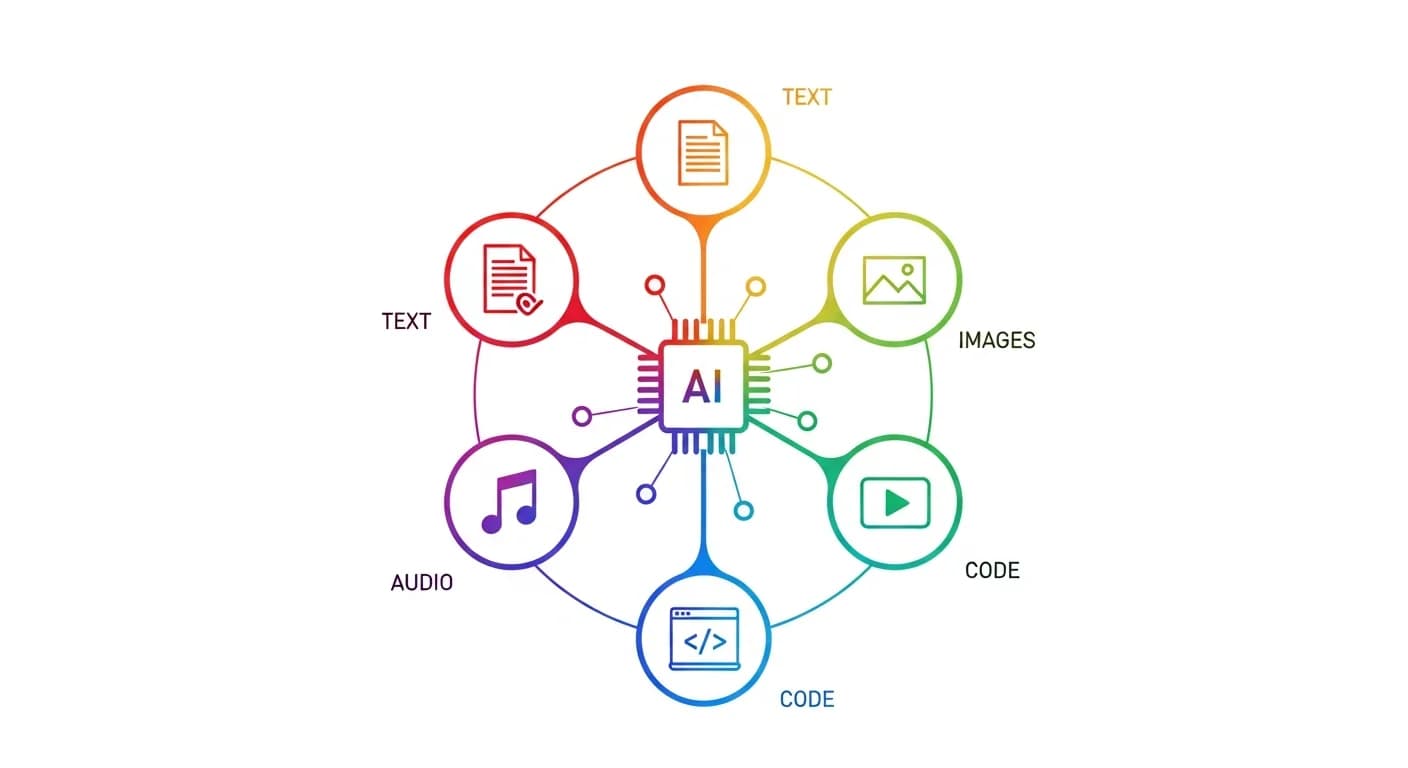
It's an umbrella term covering all AI-produced content:
- Text: Articles, copy, conversations, translations
- Images: Photos, illustrations, art
- Video: Short films, animations, visual effects
- Audio: Voice, music, narration
- Code: Software development, automation scripts
AIGC vs. Traditional Content Creation
| Aspect | Traditional Content | AIGC |
|---|---|---|
| Creator | Human | AI (+ human oversight) |
| Creation time | Hours to days | Seconds to minutes |
| Cost | Higher | Lower |
| Scalability | Difficult | Easy |
| Uniqueness | High | Requires adjustment |
Business Applications of AIGC
Primary use cases:
- Content marketing: Articles, social posts, newsletters
- Advertising creative: Copy, visual assets
- Product descriptions: E-commerce content
- Customer service: Automated replies, FAQs
- Software development: Code generation, debugging
For a deeper look at AIGC trends and business applications, check out our feature article.
Major Generative AI Tools
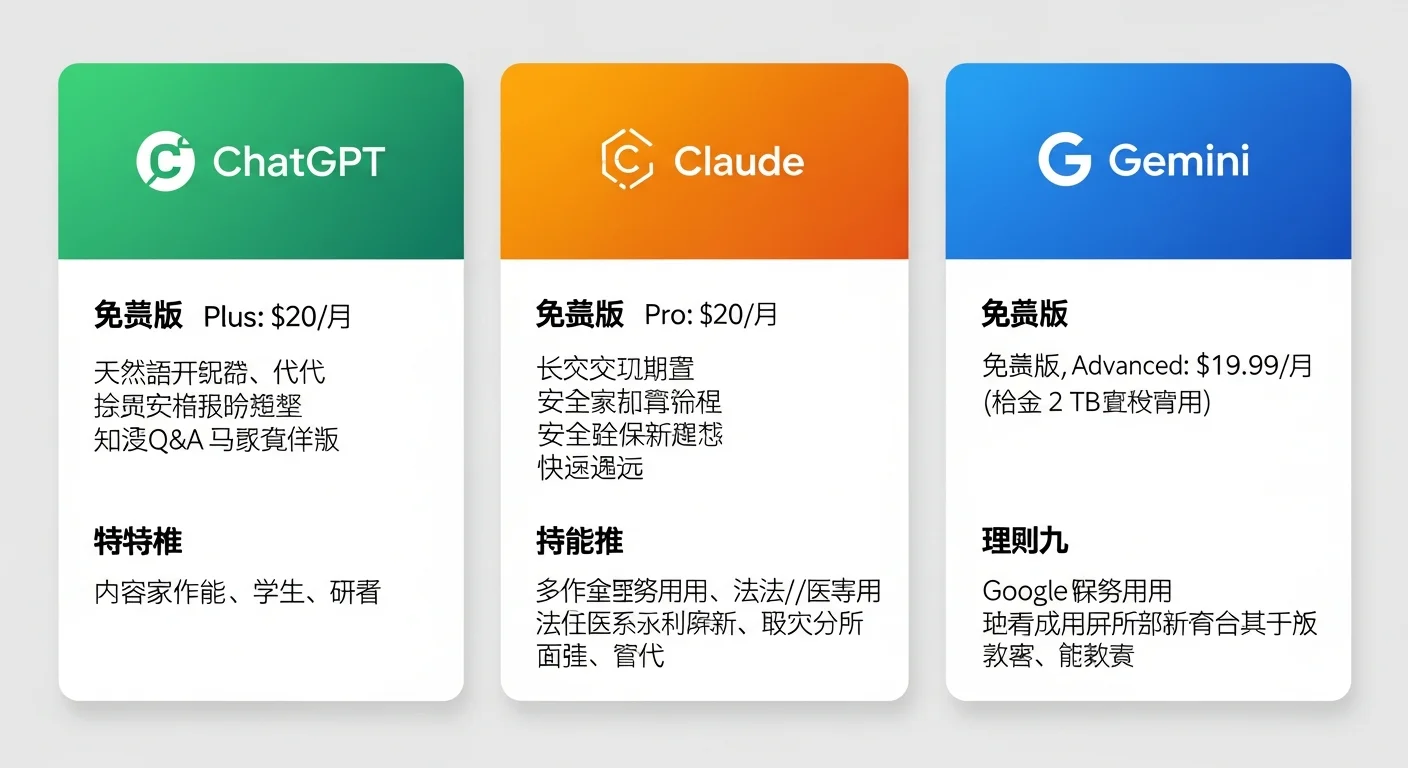
ChatGPT (OpenAI)
Key details:
- Developer: OpenAI
- Latest model: GPT-6 series (launched September 2026) and GPT-5.x series (GPT-4 left ChatGPT in April 2025, followed by GPT-4o in February 2026 and GPT-4.5 in June 2026)
- Pricing: A free tier plus several paid subscription tiers; check OpenAI's official pricing page for current plans and rates
Features:
- Largest user base
- Richest ecosystem
- Plugins for custom workflows (custom GPTs retire on 2026-12-11 and can be migrated to plugins)
- Can analyze images and documents
Best for: General users, content creation
Claude (Anthropic)
Key details:
- Developer: Anthropic
- Latest model: Claude Fable 5.1, Opus 5.5, Sonnet 5.5 (the Claude 3 and 3.5 generations have been retired)
- Pricing: Free / Pro $20/mo
Features:
- 1M token ultra-long context (up to 128K token output)
- Strong long-form generation
- Excellent analysis and reasoning
- Greater emphasis on safety
Best for: Long-form needs, research and analysis
Gemini (Google)
Key details:
- Developer: Google
- Latest model: Gemini 3.x series (Gemini 1.0 and 1.5 have been fully shut down)
- Pricing: A free tier plus paid tiers; the plan formerly called Gemini Advanced (AI Premium) was renamed Google AI Pro in May 2025, alongside Google AI Plus and Ultra — check Google's official pricing page for current plans and rates
Features:
- Google services integration
- Access to up-to-date information
- Strong multimodal capabilities
- Supports extended conversations
Best for: Need latest information, Google users
Other Generative AI Tools
Image generation:
- Midjourney: Artistic-style images
- GPT Image: OpenAI's current image generation model (its predecessor DALL·E was discontinued in 2026)
- Stable Diffusion: Open-source image generation
Video generation:
- Runway: AI video editing
- Pika: AI video generation
- (OpenAI's Sora was once a leading tool in this category, but the service was shut down in 2026)
Code generation:
- GitHub Copilot: Code assistance
- Cursor: AI code editor
Generative AI Use Cases
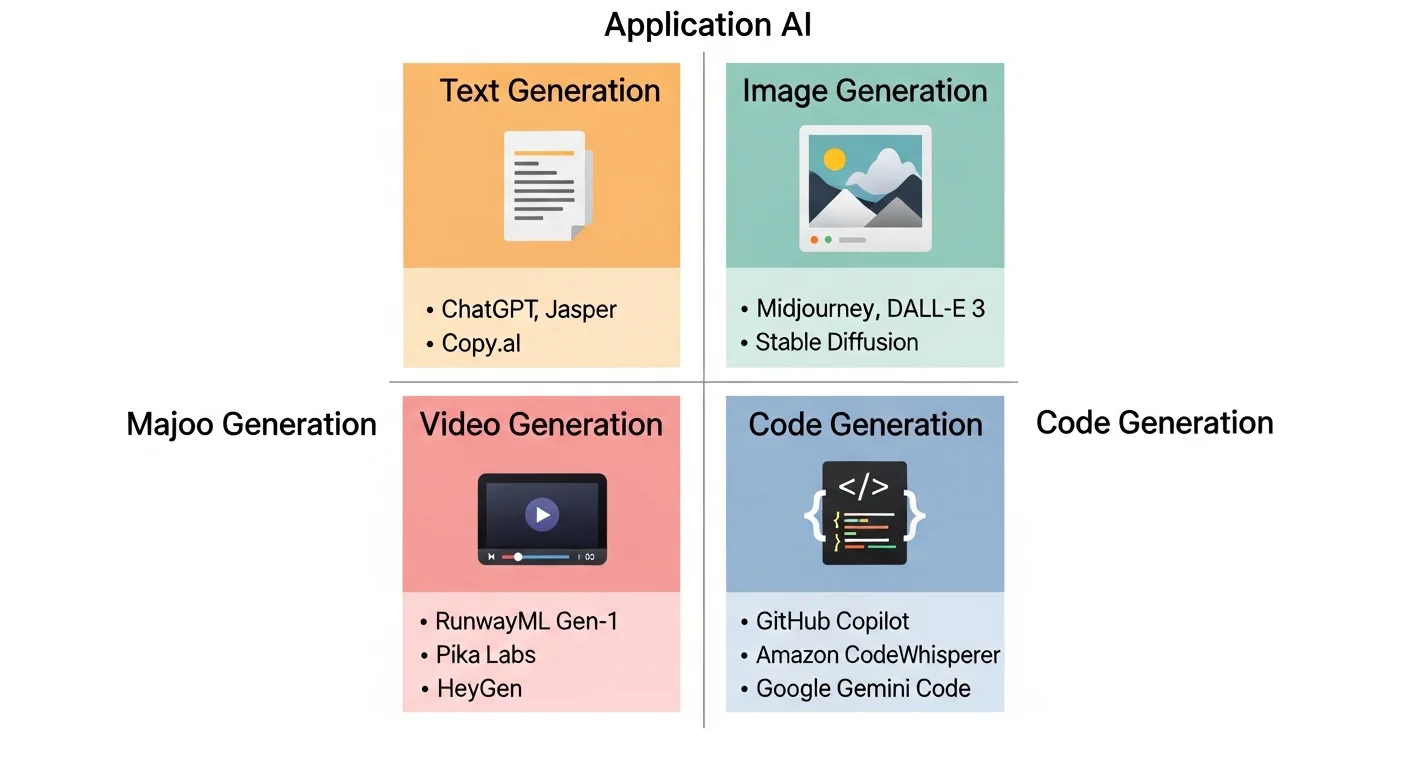
Text Generation
Applications:
- Article writing
- Marketing copy
- Translation
- Summarization
- Chatbots
Representative tools: ChatGPT, Claude, Jasper
For more AI writing applications, check out our complete guide.
Image Generation
Applications:
- Marketing materials
- Product design
- Art creation
- Concept art
- Social media graphics
Representative tools: Midjourney, GPT Image, Stable Diffusion
Video Generation
Applications:
- Short video production
- Animation generation
- VFX compositing
- Advertising creative
Representative tools: Runway, Pika (OpenAI's Sora was shut down in 2026)
Code Generation
Applications:
- Code writing
- Debug assistance
- Documentation generation
- Test generation
Representative tools: GitHub Copilot, Cursor, Replit
Want to use generative AI to boost content production?
Challenges and Limitations of Generative AI
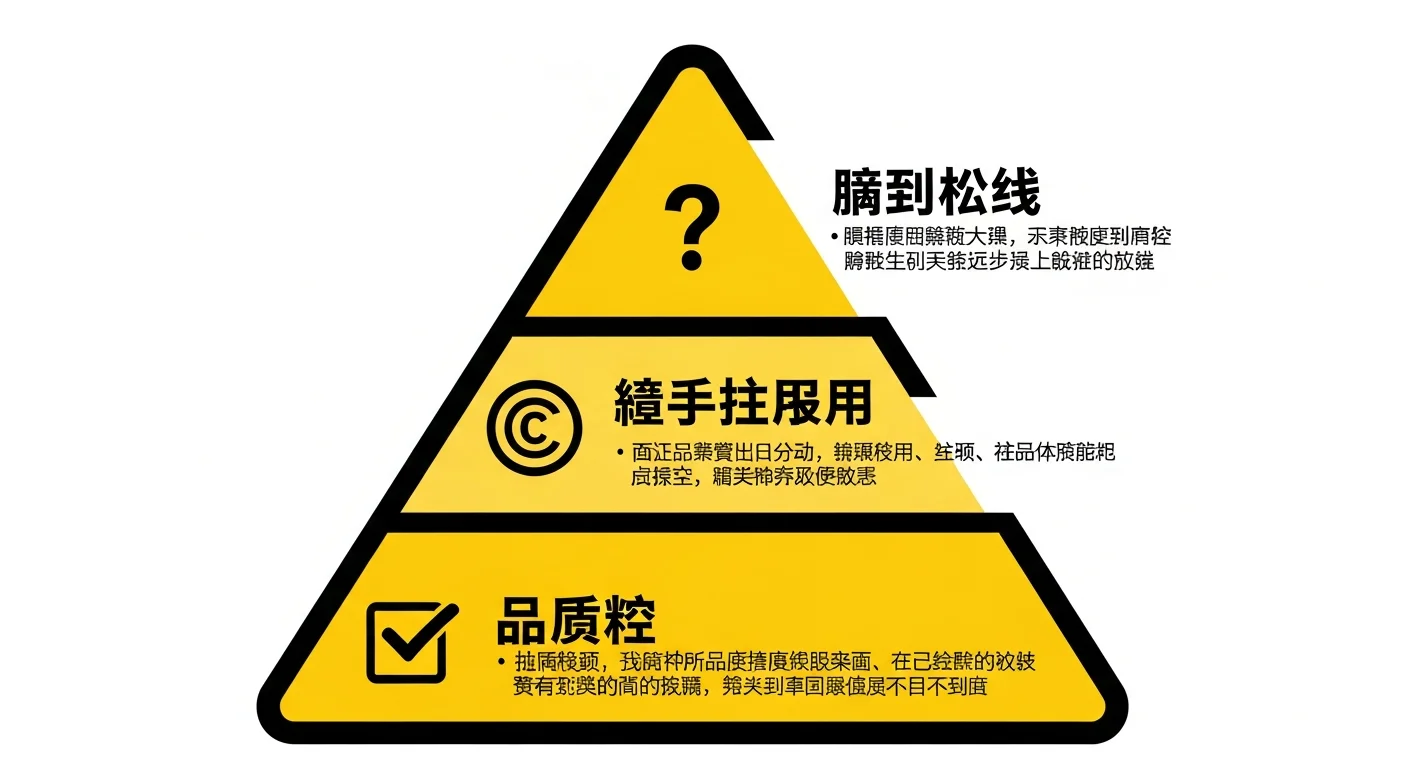
Hallucination Problems
What are hallucinations?
AI producing content that "sounds very convincing but is actually wrong."
Common occurrences:
- Fabricating non-existent sources
- Inventing incorrect data
- Confusing similar concepts
- Stating outdated information
Solutions:
- Fact-checking is mandatory
- Don't blindly trust AI output
- Pay extra attention to data and citations
Copyright and Ethical Considerations
Disputed issues:
- Training data copyright: Is it infringement to train AI on others' work?
- Output ownership: Who owns AI-generated content?
- Deepfake risks: AI used to create fake videos and news
Current status:
- Regulations are still evolving
- Different countries take different positions
- Businesses need to proceed cautiously
The Importance of Quality Control
Why AI output can't be used directly:
- May contain factual errors
- Lacks personal perspectives and experience
- Style may not match your needs
- May be similar to other existing content
Best practice:
AI draft + human review and optimization = high-quality content
Generative AI FAQ
Q: What types of generative AI exist?
A: By output type: (1) Text generation (LLMs); (2) Image generation (diffusion models); (3) Video generation; (4) Audio generation; (5) Code generation. Each has specialized models and tools.
Q: Will generative AI replace humans?
A: Not in the short term. AI excels at efficiency and scalability; humans excel at creativity, judgment, and emotion. The future trend is "human-AI collaboration." Some jobs will change, but new ones will be created.
Q: How do I learn to use generative AI?
A: Recommended steps: (1) Try free tools first (ChatGPT, Claude); (2) Learn to write effective prompts; (3) Apply AI in your actual work; (4) Understand tool limitations; (5) Keep up with new developments.
Q: Is generative AI safe?
A: There are risks to be aware of: (1) Don't input confidential data; (2) Verify the accuracy of AI output; (3) Watch for copyright issues; (4) Understand each tool's data usage policies.
How to Embrace the Age of Generative AI
Generative AI is changing how we work and create.
Key takeaways from this article:
- Definition: AI technology capable of "creating" new content
- Principles: Based on large language models, producing content through prediction
- Tools: ChatGPT, Claude, Gemini — each with unique strengths
- Applications: Text, image, video, and code generation
- Limitations: Hallucination issues, copyright disputes, need for human oversight
Our recommendations:
- Get started: Begin experimenting with free tools
- Learn techniques: Prompt writing is the key skill
- Stay vigilant: Verify output, watch for risks
- Keep learning: This field is evolving rapidly
Generative AI is a tool — use it wisely and it will dramatically boost your efficiency.
More related content:
AI article service — save time and rank higher.