![Keyword Analysis Tutorial | How to Find High-Value Keywords From Data [2026]](/_next/image?url=%2Fblog%2Fimages%2Fkeyword-research%2Fkeyword-analysis-tutorial-01.webp&w=3840&q=75)
You've found a bunch of keywords, but don't know which ones to choose?
That's exactly what keyword analysis is designed to solve.
Keyword research gives you many options. Keyword analysis helps you select the most valuable targets from those options. Good analysis ensures you invest your resources in the keywords with the highest return.
This article teaches you how to systematically analyze keywords and make the right optimization decisions.
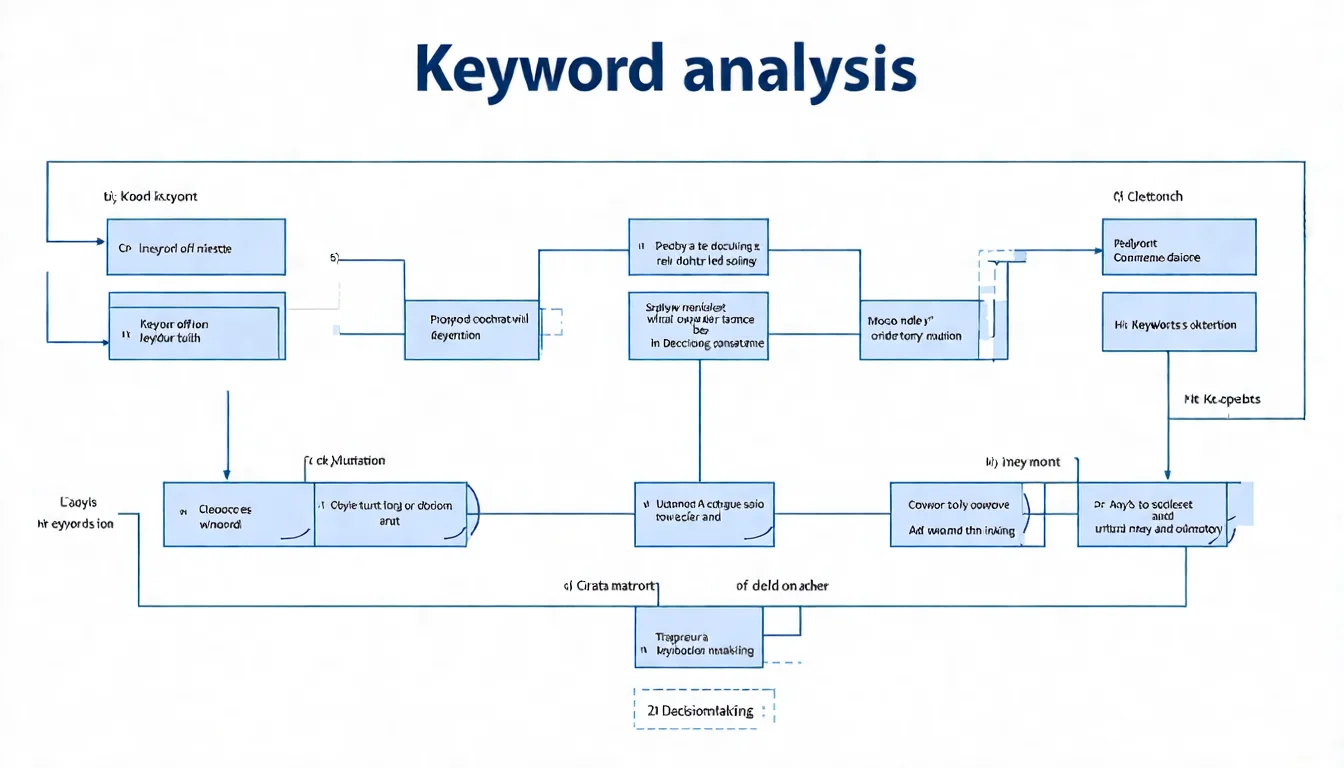
Keyword Analysis Fundamentals
What Is Keyword Analysis
Keyword analysis is the process of evaluating the value and feasibility of keywords.
It answers three core questions:
- Is this keyword worth pursuing? (Does it have value?)
- Can this keyword be ranked for? (Is there an opportunity?)
- Should this keyword be a priority? (How important is it relative to others?)
Through analysis, you can invest your limited resources in the keywords with the highest value.
Key Metrics for Keyword Analysis
Analyzing keywords requires looking at four main metrics:
1. Search Volume
How many people are searching for this keyword?
- High search volume = High demand, but competition may also be high
- Low search volume = Lower demand, but potentially easier to rank
2. Competition
How difficult is it to rank for this keyword?
- High competition = More time and resources needed
- Low competition = Relatively easier to achieve rankings
3. CPC (Cost Per Click)
How much are advertisers willing to pay for this keyword?
- High CPC = High commercial value
- Low CPC = Potentially lower commercial value
4. Search Intent
What is the searcher's true purpose?
- Informational intent = Wanting to learn
- Commercial intent = Wanting to compare options
- Transactional intent = Ready to buy
For a more comprehensive keyword research workflow, check out the keyword research guide.
Search Volume Analysis
Search volume is the most fundamental metric, but interpreting it requires some know-how.
How to Evaluate Search Volume
What monthly average search volume means
This number represents "on average, how many people search for this keyword per month."
General benchmarks:
| Search Volume Range | Classification |
|---|---|
| 10,000+ | High volume |
| 1,000 - 10,000 | Medium volume |
| 100 - 1,000 | Low volume |
| < 100 | Long-tail keyword |
But these are just guidelines -- actual thresholds vary by industry. In some B2B sectors, a search volume of 100 is considered quite high.
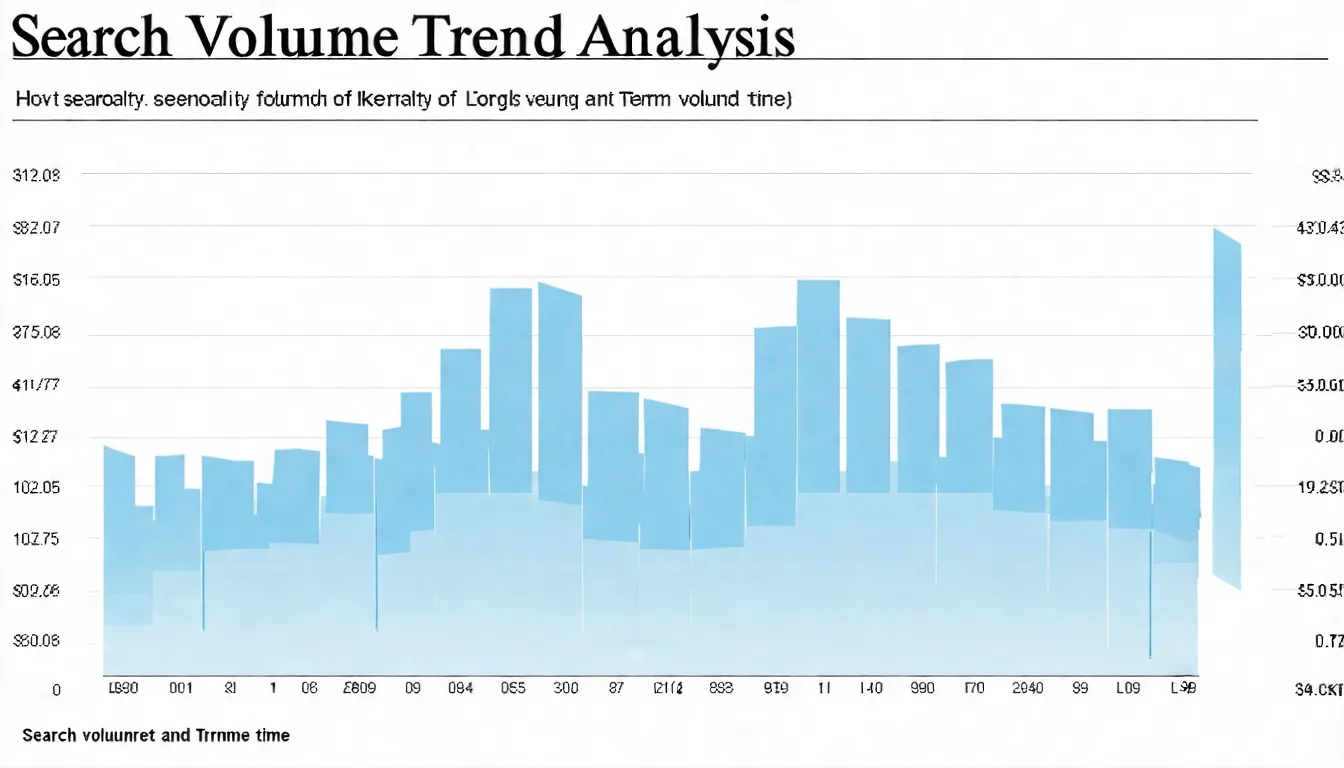
Search volume trends
Beyond the absolute numbers, also look at trends:
- Rising trend: Worth investing in; demand is increasing
- Stable trend: Reliable long-term traffic
- Declining trend: May be a sunset industry; proceed with caution
- Seasonal variation: Time your content publication accordingly
Use Google Trends to clearly see trend changes.
Regional differences
The same keyword can have very different search volumes across regions.
For example:
- "Bubble tea" has high search volume in Taiwan
- The same concept uses different terms in other markets
When analyzing keywords, make sure you're checking data for your target market.
Search Volume Trade-offs
The trap of high search volume
Many people want to target high-volume keywords, but high search volume usually means:
- More competitors
- Stronger competitors
- More time and resources required
For new or small websites, high-volume keywords are often not the best choice.
The value of low search volume
Long-tail keywords may have low search volume, but they offer:
- Less competition
- Clearer intent
- Higher conversion rates
- Significant cumulative traffic
Finding the right balance
The best strategy is:
- Short-term targets: Low-volume, low-competition long-tail keywords
- Long-term targets: Gradually take on medium-to-high volume keywords
To learn more about long-tail keyword strategies, check out long-tail keyword strategy.
Competition Analysis
Competition determines whether you can rank at all.
Understanding Competition Metrics
SEO Difficulty Scores
Many tools provide a "Keyword Difficulty" or "SEO Difficulty" score, typically from 0-100.
| Difficulty Range | Meaning |
|---|---|
| 0-30 | Low difficulty; new sites have a chance |
| 30-50 | Medium difficulty; requires some foundation |
| 50-70 | High difficulty; requires a strong website |
| 70+ | Very high difficulty; territory of top-tier sites |
But these are just references -- each tool calculates differently.
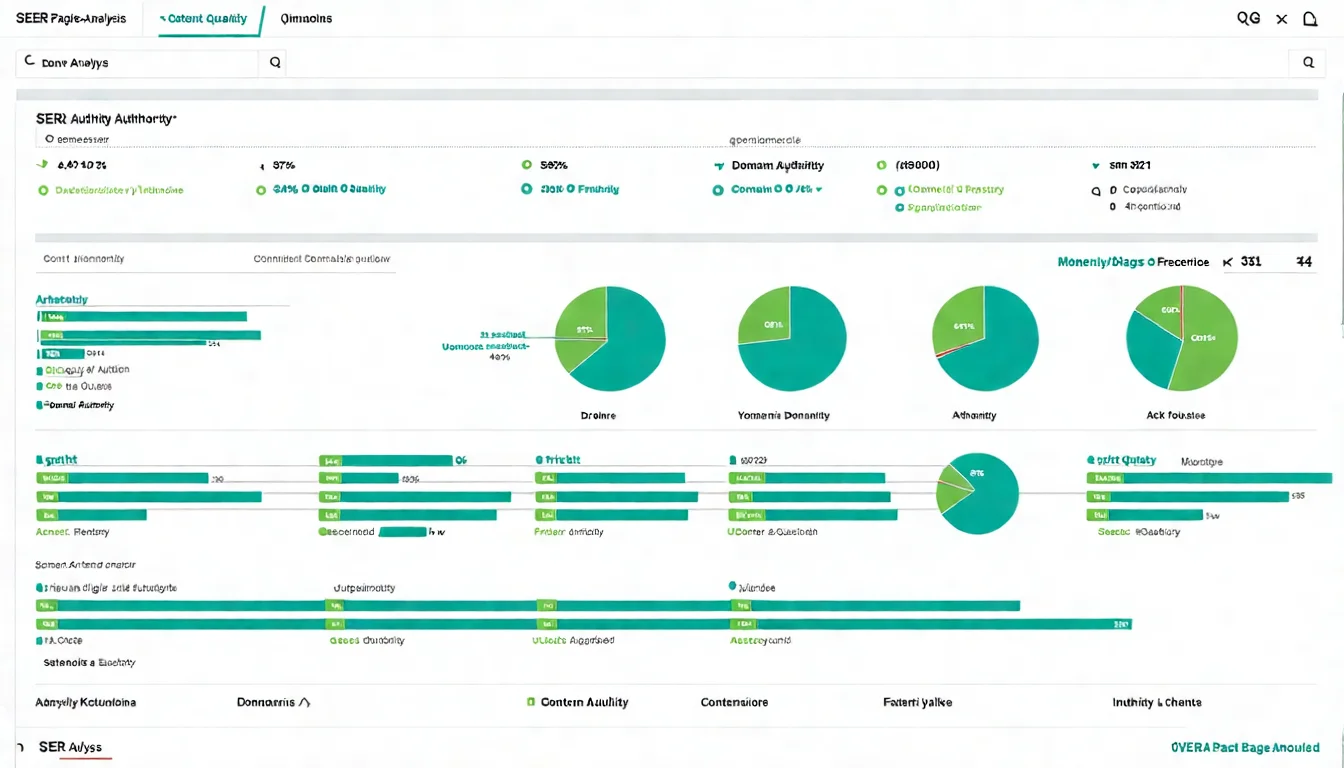
Competitor website analysis
A more accurate approach is to directly analyze the top 10 ranking websites:
Look at these indicators:
- Domain Authority (DA): Overall website authority
- Page Authority (PA): Authority of that specific page
- Backlink count: How many other sites link to that page
- Content quality: Article length, depth, and freshness
If the top 10 results are all major websites (Wikipedia, government sites, well-known brands), competition is very high.
SERP feature observation
Features on the search results page (SERP) also affect competition:
- Featured snippets: May reduce organic click-through rates
- People Also Ask: Google may directly answer the question
- Ads: Many ads indicate high commercial competition
- Map results: Local search intent
Assessing Ranking Feasibility
Compare website authority
Compare your website against the top 10 ranking sites:
- DA gap < 10: Competitive opportunity
- DA gap 10-20: Need better content
- DA gap > 20: Difficult in the short term
Compare content quality
Authority isn't the only factor -- content quality matters too:
- Can you write something better than the current results?
- Are there questions they haven't answered?
- Do you have newer, more comprehensive information?
If your content can be significantly better, you have a chance.
Estimate required resources
Make a realistic resource assessment:
- How many supporting articles do you need?
- How many backlinks are required?
- How long will it take to see results?
With limited resources, choose the keywords with the best return on investment.
Keyword analysis too complex? Let AI handle everything from analysis to article creation.
Search Intent Analysis
Search intent is the most commonly overlooked yet most important analysis dimension.
Identifying Search Intent
Observe search result types
The most accurate method is to actually search for the keyword and see what Google shows:
- All tutorial articles → Informational intent
- All product comparisons → Commercial intent
- All purchase pages → Transactional intent
- Mixed results → Unclear intent
Google has already determined the search intent through its algorithm. The ranking results are your best reference.
Analyze what users really need
Ask yourself: What does someone searching for this keyword actually want?
For example, searching "coffee maker":
- May want to buy a coffee maker (transactional intent)
- May want to learn about coffee maker types (informational intent)
- May want to compare brands (commercial intent)
Search results reveal which intent is dominant.
Match the right content type
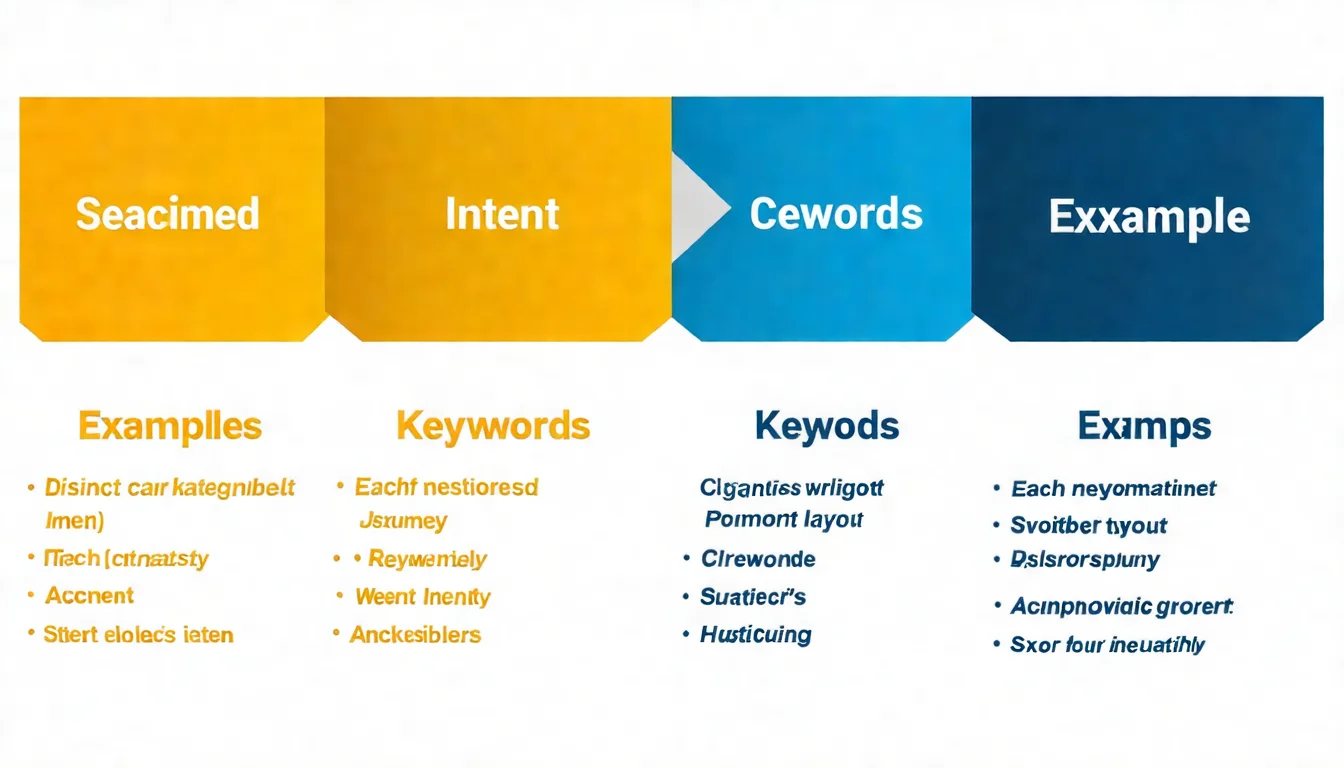
Different intents require different types of content:
- Informational intent → Tutorials, guides, explainer articles
- Commercial intent → Comparisons, reviews, recommendation lists
- Transactional intent → Product pages, pricing pages
If the intent doesn't match, even if you rank, you'll quickly lose your position.
Matching Intent to Content
Informational intent → Tutorial articles
Searchers want to learn something or find answers.
Suitable content:
- "What is XX" comprehensive explainers
- "How to XX" step-by-step tutorials
- "XX guide" complete guides
These keywords have lower conversion rates but build brand awareness.
Commercial intent → Comparison reviews
Searchers are comparing options and making purchase decisions.
Suitable content:
- "XX vs YY" comparison articles
- "Best XX" review lists
- "XX reviews" user experience summaries
These keywords have higher conversion rates and are worth prioritizing.
Transactional intent → Product pages
Searchers are ready to buy.
Suitable content:
- Product detail pages
- Pricing and plan pages
- Purchase/contact pages
These keywords are the most competitive but have the highest conversion rates.
Comprehensive Analysis and Decision-Making
After reviewing individual metrics, how do you make a combined assessment?
Building a Scoring System
Weighted scoring for each metric
Here's a recommended scoring system:
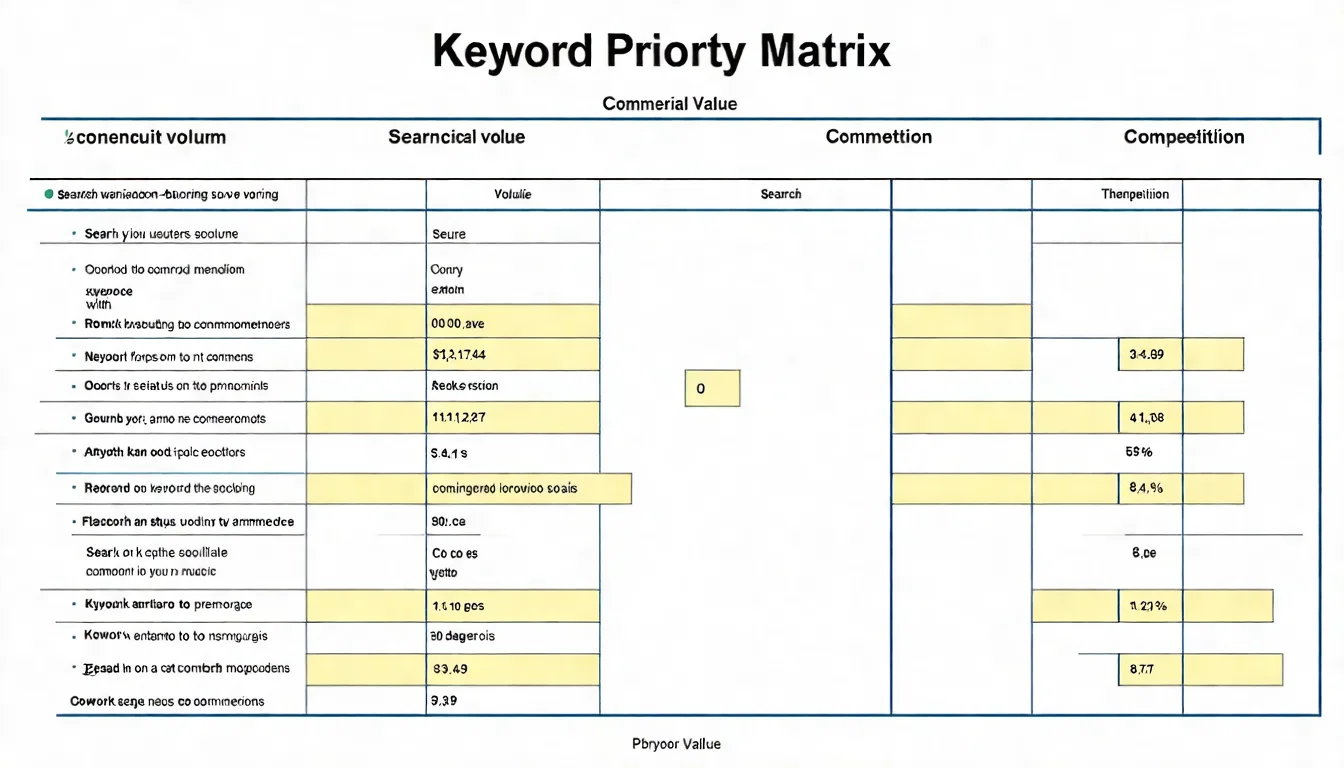
| Metric | Weight | Scoring Method |
|---|---|---|
| Search Volume | 30% | Score 1-5 based on volume |
| Competition | 30% | Score 1-5 based on difficulty (lower difficulty = higher score) |
| Commercial Value | 20% | Score 1-5 based on CPC or conversion potential |
| Intent Match | 20% | Score 1-5 based on content type match |
Calculating the composite priority score
Composite score = (Search Volume score x 0.3) + (Competition score x 0.3) + (Commercial Value score x 0.2) + (Intent Match score x 0.2)
The higher the score, the higher the priority.
Establishing execution order
Rank by score from high to low:
- High-scoring keywords: Start immediately
- Medium-scoring keywords: Add to your plan
- Low-scoring keywords: Set aside for now
Creating an Execution Plan
Short-term target keywords
Selection criteria:
- Low competition
- Medium search volume
- Clear intent
These keywords produce faster results, building confidence and a traffic foundation.
Long-term target keywords
Selection criteria:
- Higher search volume
- Medium to high competition
- High commercial value
These keywords require sustained content and link building, taking longer but delivering greater value.
Resource allocation recommendations
Suggested resource distribution:
- 70% of resources on short-term, quick-win keywords
- 30% of resources on long-term, high-value keywords
As your website grows, gradually adjust this ratio.
Why Is Keyword Analysis the Key to Good Decision-Making?
Keyword analysis frees you from guesswork and replaces it with data-driven decisions.
Key takeaways from this article:
- Four core metrics: Search volume, competition, CPC, and search intent
- Search volume analysis: Look at both absolute values and trends; account for regional differences
- Competition analysis: Check tool scores and actual ranking websites
- Search intent analysis: Observe search results and match the correct content type
- Comprehensive decision-making: Build a scoring system and create an execution plan
Recommended action steps:
- Pull out your keyword list
- Analyze each keyword using the methods in this article
- Calculate a composite score for each keyword
- Prioritize and start executing
Once the analysis is done, the next step is keyword optimization execution.
For a more comprehensive keyword research workflow, check out the keyword research guide.
Have keyword questions? Get free answers on LINE.
![Best Free Keyword Research Tools | 2026 Complete Comparison [10 Tools]](/_next/image?url=%2Fblog%2Fimages%2Fkeyword-research%2Ffree-keyword-tools-01.webp&w=3840&q=75)
![The Complete Keyword Research Guide | Learn to Find the Right Keywords From Scratch [2026]](/_next/image?url=%2Fblog%2Fimages%2Fkeyword-research%2Fkeyword-research-guide-01.webp&w=3840&q=75)
![How to Find Keywords: 5 Proven Methods to Discover the Right Keywords [2026]](/_next/image?url=%2Fblog%2Fimages%2Fkeyword-research%2Fhow-to-find-keywords-01.webp&w=3840&q=75)