"Did we hit our KPIs this month?"
Every time you hear that question, does your heart rate spike just a little? KPIs are the core language of modern business management, yet many people set KPIs that are either too vague to track or too unrealistic to ever achieve.
This guide will teach you how to set effective marketing KPIs -- especially SEO-related KPIs -- so that every effort you make is backed by data.
Want professional help setting SEO KPIs? Get a free KPI template via LINE consultation and let our expert team help you define achievable goals.
What Is a KPI? Basic Concepts Explained
Definition and Significance of KPIs
KPI stands for Key Performance Indicator -- a measurable value that indicates how effectively you are achieving your objectives.
In simple terms, a KPI is the numerical standard that tells you "how well you're doing." It reveals:
- How you're currently performing
- How far you are from your goal
- What adjustments you need to make
In SEO data analysis, KPIs serve as the critical bridge between "what you did" and "what results you achieved."
KPI vs KGI vs OKR: What's the Difference?
These three terms are often used interchangeably, but they have distinct meanings:
| Metric Type | Full Name | Purpose | Example |
|---|---|---|---|
| KGI | Key Goal Indicator | Ultimate goal | Annual revenue of $3M |
| KPI | Key Performance Indicator | Process metric | 500K monthly visits |
| OKR | Objectives & Key Results | Goal management framework | O: Become market leader / KR: 30% market share |
How they relate:
- KGI is the ultimate goal you want to achieve (the destination)
- KPI is the milestone along the way (the signpost)
- OKR is a complete goal management methodology
For marketing professionals, KPIs are the most commonly used. When your KPIs are on track, your KGI will naturally follow.
What Makes a Good KPI (The SMART Framework)
Effective KPIs should follow the SMART framework:
S - Specific
- Bad: "Improve website performance"
- Good: "Increase organic search traffic"
M - Measurable
- Bad: "Get more traffic"
- Good: "Reach 100,000 organic search visits per month"
A - Achievable
- Bad: Current monthly traffic is 10,000, target set at 1,000,000
- Good: Current monthly traffic is 10,000, target set at 30,000
R - Relevant
- Bad: Tracking keywords that drive traffic but never convert
- Good: Tracking keywords related to your business that drive conversions
T - Time-bound
- Bad: "We'll get there someday"
- Good: "Achieve this by end of Q2"
SEO KPI Setup Process
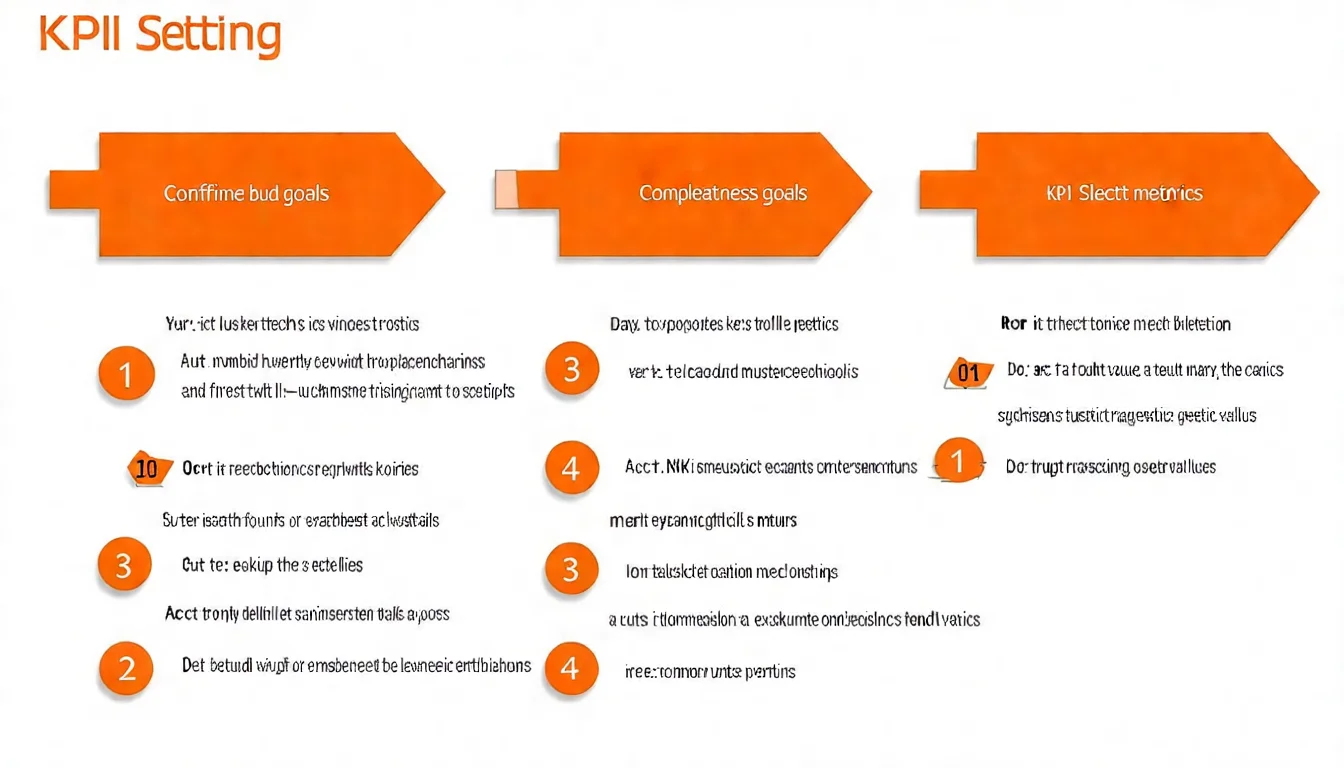
Step 1: Identify Your Business Objectives
KPIs don't exist in a vacuum -- they must be linked to business objectives.
Start by asking: "What does leadership care about most?"
| Business Type | Core Objective | How SEO Contributes |
|---|---|---|
| E-commerce | Revenue | Driving purchase-intent traffic |
| B2B | Lead inquiries | Bringing in decision-maker traffic |
| Media | Ad revenue | Generating high pageview volume |
| SaaS | User signups | Attracting potential users with need |
Break your business objectives down into the parts that SEO can influence -- that's the direction for your KPIs.
Step 2: Select the Right SEO Metrics
Based on your business objectives, choose the most relevant metrics:
If the goal is revenue:
- Orders from organic search
- Organic search revenue
- Rankings for purchase-intent keywords
If the goal is brand awareness:
- Branded keyword search volume
- Branded keyword traffic
- Search visibility
If the goal is traffic:
- Total organic search traffic
- New users
- Pageviews
Remember: tracking too many metrics is the same as tracking none. Choose 3-5 key metrics and focus on those.
Step 3: Set Specific Targets and Timelines
Once you have your metrics, you need to set concrete target values.
Methods for setting targets:
-
Baseline method: Use current performance as a baseline and set a growth percentage
- Current: 50,000 monthly visits
- Target: 30% growth, i.e., 65,000
-
Competitor benchmarking: Reference competitor data to set targets
- Competitor A estimated monthly traffic: 80,000
- Target: Reach 80% of that, i.e., 64,000
-
Business requirements method: Work backward from business needs
- Need 100 orders per month
- Conversion rate: 2%
- Required traffic: 100 / 2% = 5,000
- Considering other channels, SEO needs to deliver 3,000 visits
Setting timelines:
- Short-term goals: 1-3 months
- Mid-term goals: One quarter
- Long-term goals: 6 months to 1 year
Step 4: Establish a Tracking System
After setting your KPIs, you need a tracking system to monitor progress.
Tracking tools:
- Google Analytics 4: Traffic and conversion data
- Google Search Console: Rankings, impressions, clicks
- Third-party tools: Ahrefs, Semrush, etc. for rank tracking
For more tool recommendations, see SEO Performance Tracking Tools.
Tracking frequency:
- Daily tracking: Major ranking changes, traffic anomalies
- Weekly tracking: Progress review, issue identification
- Monthly tracking: Formal reports, strategy adjustments
Common SEO KPI Examples
The tables below describe how to set each target -- they are not industry benchmarks you can copy. Reasonable numbers depend heavily on your industry, site size, existing traffic baseline, and competitive landscape. Always derive targets from your own baseline; never commit someone else's numbers to your leadership.
Traffic KPIs
| KPI Name | Definition | Data Source | How to Set the Target |
|---|---|---|---|
| Organic search traffic | Non-paid traffic from search engines | GA4 | Use your recent monthly average as the baseline, then set a growth rate you can realistically sustain |
| New users | First-time visitors | GA4 | Track the trend in your own new-vs-returning mix rather than applying a fixed percentage |
| Traffic growth rate | Growth compared to previous period | GA4 | Compare against your own prior month/quarter; size the growth rate to your content output and competition |
Example: "Increase Q2 organic search traffic from the current 80,000 to 100,000, a 25% growth"
Ranking KPIs
| KPI Name | Definition | Data Source | How to Set the Target |
|---|---|---|---|
| Top 3 keyword count | Target keywords ranking in top 3 | GSC/Tools | Build on the count you already hold, sized to how many pages you can publish or optimize each month |
| Top 10 coverage rate | Percentage of target keywords in top 10 | Tools | Measure your current coverage as the baseline, then set a quarter-over-quarter improvement |
| Search visibility | Composite ranking performance score | Ahrefs/Semrush | Watch whether the trend keeps rising; absolute scores are not comparable across tools |
Example: "By year-end, have 35 of 50 target keywords ranking in the top 10 (70% coverage)"
Conversion KPIs
| KPI Name | Definition | Data Source | How to Set the Target |
|---|---|---|---|
| Organic search conversions | Key events from search traffic (e.g., form submissions, purchases) | GA4 | Work backward from the deal volume the business actually needs |
| Organic search conversion rate | Conversions / traffic | GA4 | Use your own historical rate as the baseline: hold it steady first, improve second |
| Organic search revenue | Revenue generated from search traffic | GA4 | Derive it from your revenue goal and average order value -- this varies enormously by industry |
Example: "Increase Q3 organic search inquiries from 50 per month to 80 per month"
Technical SEO KPIs
| KPI Name | Definition | Data Source | How to Set the Target |
|---|---|---|---|
| Indexed pages | Pages indexed by Google | GSC | Confirm the pages that should be indexed actually are |
| Core Web Vitals pass rate | Pages passing CWV assessment | GSC | Take your current pass rate as the baseline and work the failing pages down over time |
| Crawl errors | Error pages encountered by crawlers | GSC | Fix them as they appear; don't let them accumulate |
Example: "Ensure all product pages pass Core Web Vitals by end of Q2"
Marketing KPI Templates and Tools
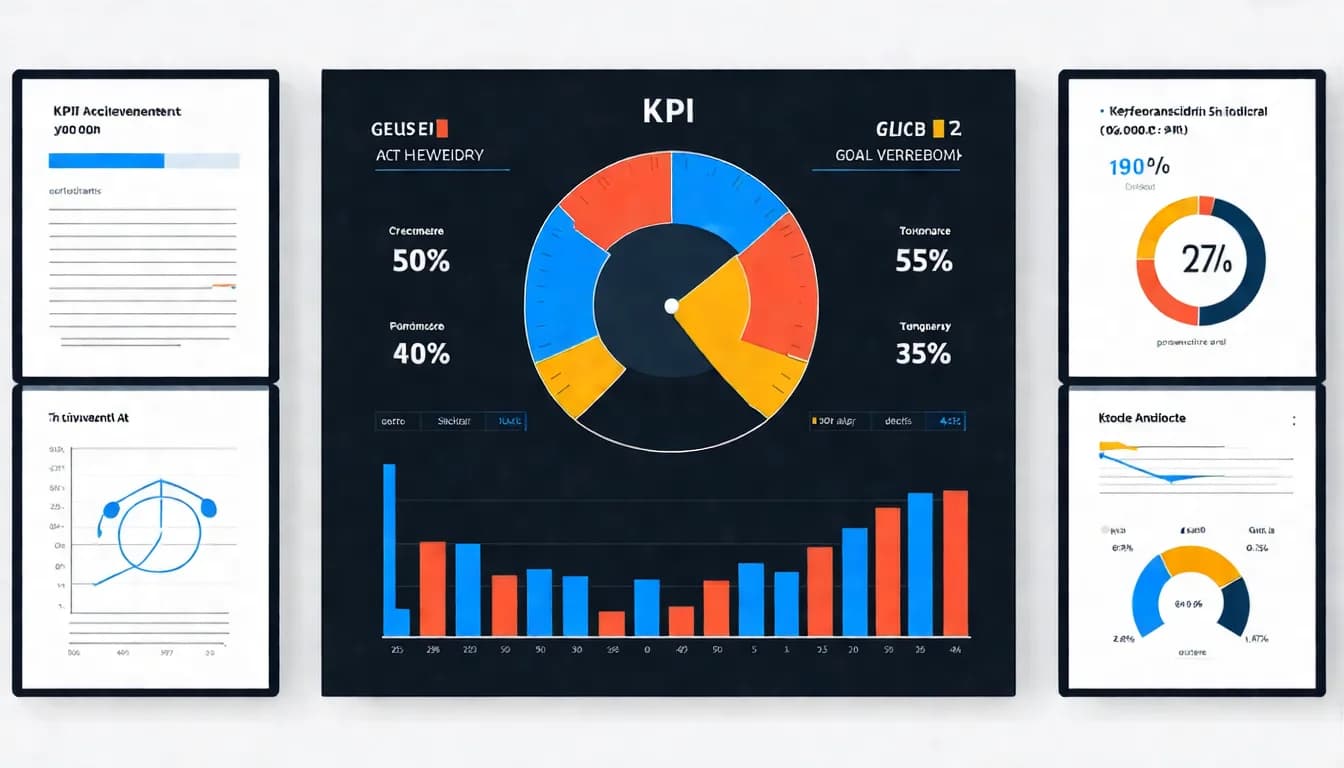
Building a KPI Dashboard
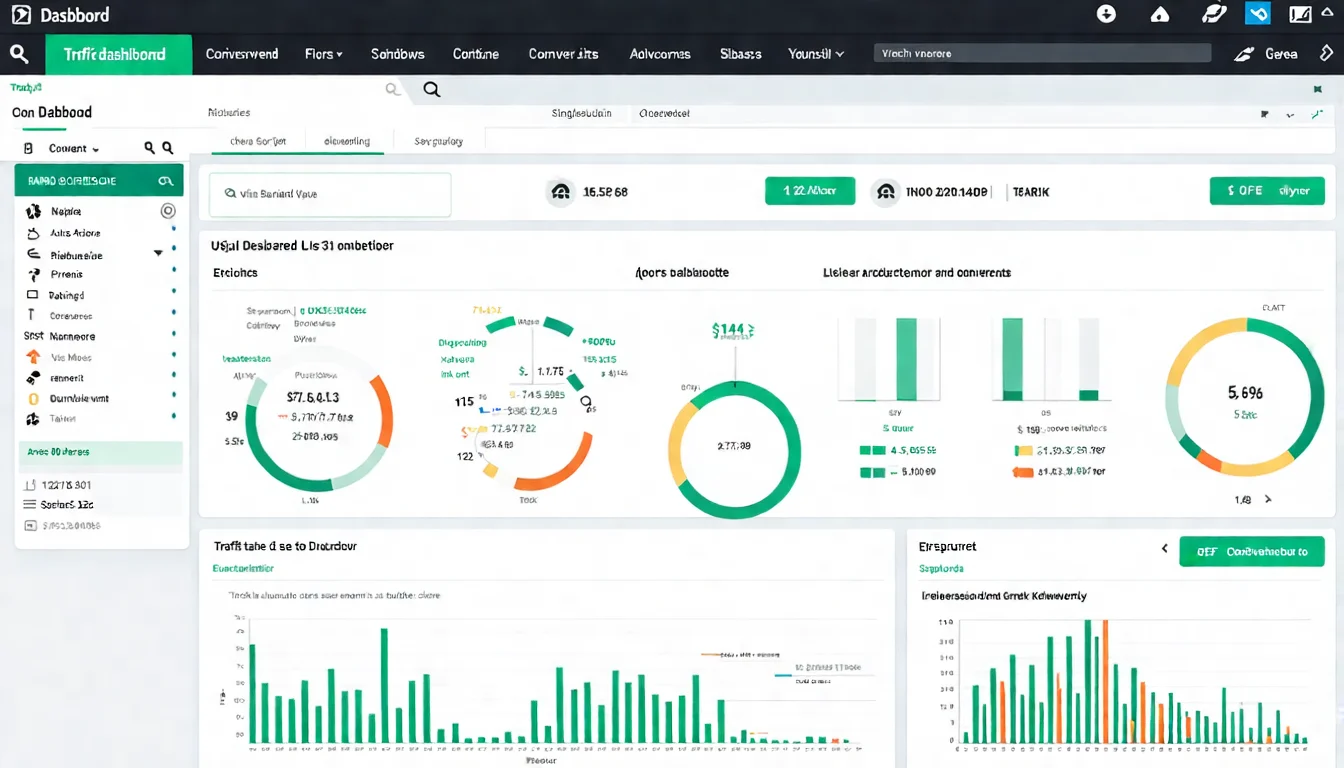
Create an automated dashboard to make KPI tracking effortless.
Recommended structure:
Page 1: Overview
- Core KPI status (green/yellow/red light)
- This month vs. last month comparison
- This month vs. target comparison
Page 2: Traffic Analysis
- Organic search traffic trends
- Traffic source distribution
- Top landing pages
Page 3: Ranking Tracking
- Keyword ranking changes
- Newly entered top 10 keywords
- Keywords with declining rankings
Page 4: Conversion Analysis
- Conversion trends
- Conversion path analysis
- High-converting pages
Google Sheets KPI Template
If you prefer simpler tools, Google Sheets can also serve as a basic KPI tracker.
Basic columns:
| KPI Item | Baseline | Target | This Month | Achievement | Status |
|---|---|---|---|---|---|
| Organic traffic | 50,000 | 65,000 | 58,000 | 89% | 🟡 |
| Top 10 rankings | 20 | 30 | 27 | 90% | 🟡 |
| Conversions | 100 | 130 | 145 | 112% | 🟢 |
Automation tips:
- Use the Google Analytics API to auto-import data
- Set conditional formatting: green for on-track, red for off-track
- Create triggers to auto-send weekly/monthly reports
Automated Report Setup
Combine Google Data Studio (renamed back from Looker Studio in April 2026) + GA4 + GSC to build auto-updating reports.
Setup steps:
- Create a new report in Data Studio
- Connect GA4 and Search Console data sources
- Design the dashboard layout
- Set up scheduled delivery (auto-send weekly reports every Monday)
The benefit is that data updates automatically -- no manual work each time.
Hitting content KPIs requires consistent, quality output. Let AI help you produce content consistently and easily achieve your content marketing KPIs.
KPI Tracking and Adjustment
Regularly Review KPI Progress
Make KPI tracking a habit with the following schedule:
Daily (5 minutes):
- Quick check for any anomalies
- Address major ranking changes immediately
Weekly (30 minutes):
- Review the week's progress
- Compare against targets
- Plan next week's priorities
Monthly (2-3 hours):
- Complete data analysis
- Write monthly report
- Adjust next month's strategy
When Should You Adjust KPIs?
KPIs aren't set in stone. Adjust them in the following situations:
Targets are too easy to reach: If you consistently exceed targets every month, they're set too low -- raise them.
Targets are completely unattainable: If you're putting in effort but still falling far short, the target may be unrealistic. Review and lower it.
External conditions change: Google algorithm updates, competitive shifts, and market changes may all require KPI adjustments.
Business strategy changes: If the company shifts strategy (e.g., from chasing traffic to chasing conversions), KPIs should follow.
Always document the reason for KPI adjustments for future reference.
Finding Insights in KPI Data
KPI data isn't just about checking whether targets are met -- it's about analyzing what the data means.
Traffic KPI met, but conversion KPI missed:
- You may be attracting the wrong visitors
- Landing pages need optimization
- Keyword selection may be off
Ranking KPI met, but traffic KPI missed:
- The ranked keywords may have too little search volume
- Click-through rate may be too low -- optimize titles
- Other elements on the results page may be absorbing the clicks -- ranking does not guarantee you get the click
All KPIs missed:
- Strategy may need a major overhaul
- Execution may be lacking
- External factors (algorithm updates)
Cross-analyzing KPI data helps you find root causes, not just acknowledge that targets were missed.
FAQ
What If KPIs Are Set Too High or Too Low?
If set too high:
- First analyze whether the target is unrealistic or execution is lacking
- If the target is the issue, discuss with leadership and adjust downward
- When adjusting, explain the reasoning and new assessment basis
- Use this experience when setting future KPIs
If set too low:
- Confirm it's genuinely too easy (consistently exceeded for 2-3 months)
- Raise the target -- consider setting a "baseline target" and a "stretch target"
- Document achievement patterns to build KPI-setting experience
How to Explain Missed KPIs to Leadership?
Be honest, but constructive:
Don't say this: "We missed KPIs this month because competition is too fierce."
Say this instead: "This month's traffic KPI achievement rate was 85%, falling 15% short. Our analysis shows the causes were X and Y. We've developed an improvement plan: 1, 2, 3. We expect to make up the gap next month."
The key points are:
- Acknowledge the facts
- Analyze the causes
- Propose solutions
- Set expectations
How Often Should SEO KPIs Be Reviewed?
| Review Frequency | Suitable KPIs | Purpose |
|---|---|---|
| Daily | Major ranking changes, traffic anomalies | Immediate issue detection |
| Weekly | Traffic trends, conversion numbers | Progress tracking |
| Monthly | Full KPI review | Formal reporting, strategy adjustments |
| Quarterly | Long-term trends, strategy review | Big-picture assessment |
SEO is a long-term endeavor -- checking data daily and stressing out isn't recommended. Weekly reviews are sufficient to stay on track; monthly reports serve as formal evaluations.
How to Make KPIs Your Marketing Compass
Well-designed KPIs are like installing a navigation system for your marketing efforts.
Here's a recap of the key steps for setting KPIs:
- Start from business objectives to ensure KPIs have commercial value
- Follow the SMART framework to set specific, trackable metrics
- Choose 3-5 key KPIs -- don't try to track everything
- Build an automated tracking system and review regularly
- Continuously optimize your strategy based on data analysis
Remember, KPIs aren't meant to prove you're working -- they're meant to ensure your work is creating value.
The secret to hitting KPIs: consistent content output. Consult us about AI content solutions now and let our expert team help you achieve your content marketing KPIs.