"What's the ROI?" -- it's the one question every boss asks in every marketing meeting.
ROI (Return on Investment) is one of the most widely used performance metrics in business. Whether you're evaluating an ad campaign, an SEO project, or a marketing initiative, ROI helps you answer the most fundamental question: "Was this investment worth it?"
Need help calculating SEO ROI? Get a free ROI calculator template via LINE consultation and let our expert team help you assess your investment returns.
ROI Definition and Core Concepts
What Does ROI Mean?
ROI stands for Return on Investment -- a metric that measures the profitability of an investment.
Simply put, ROI answers: How much do you earn for every dollar invested?
This metric matters because it helps you:
- Compare different investment options
- Evaluate whether past investment decisions were sound
- Provide a basis for future resource allocation
The Origin and Evolution of ROI
The ROI concept first appeared in the 1920s, developed by DuPont's finance team to evaluate departmental performance. This seemingly simple formula remains a critical tool for business decisions today.
With the rise of digital marketing, ROI applications have expanded significantly:
- Advertising investment effectiveness
- Content marketing performance measurement
- SEO project value justification
- Social media marketing performance tracking
Why ROI Is an Essential Business Metric
ROI has become the most commonly used business metric for several reasons:
1. Simple and intuitive A single percentage tells the whole story. "ROI of 200%" means you earned twice your cost.
2. Enables comparison Investments of different sizes and durations can all be compared on the same scale using ROI.
3. Guides decisions High-ROI investments should be scaled up; low-ROI investments should be reviewed or discontinued.
4. Promotes accountability With ROI, marketing teams must justify every dollar spent.
ROI Calculation Formula and Examples
Standard ROI Formula
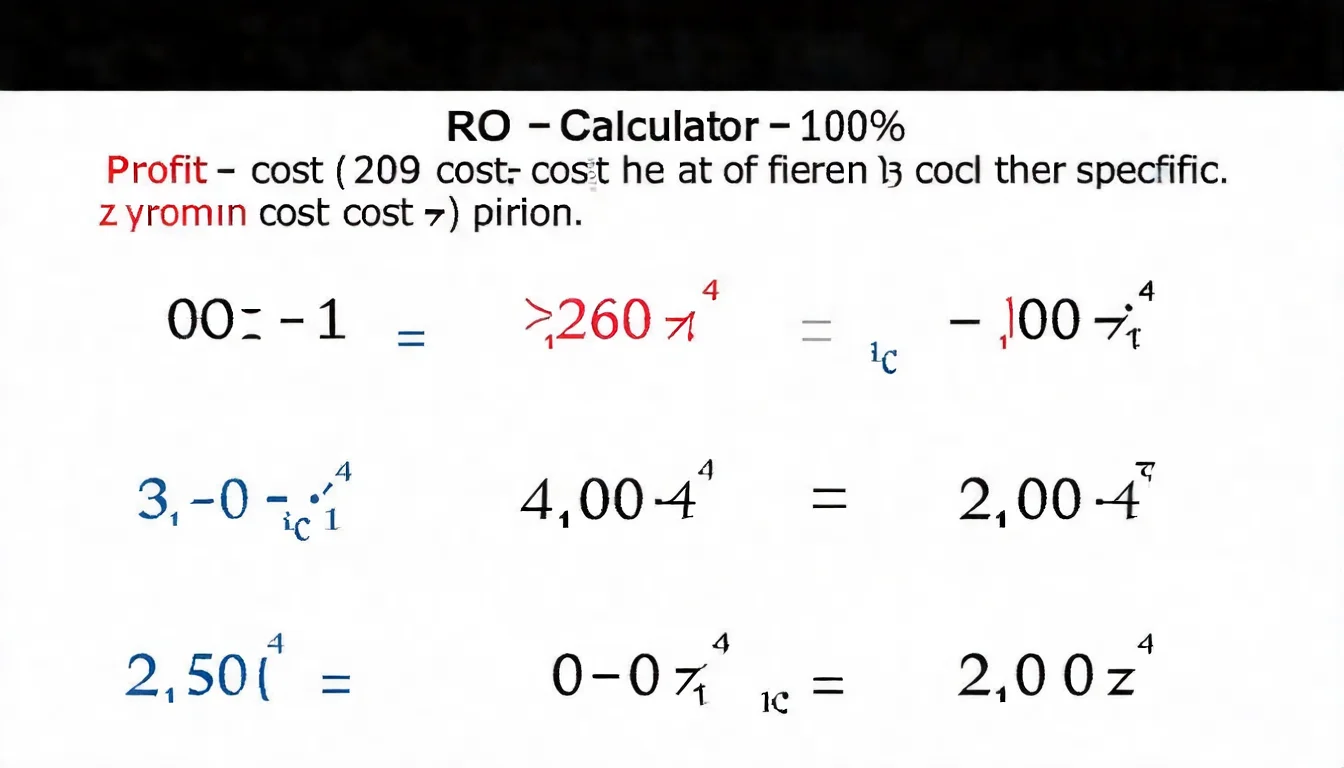
The basic ROI calculation:
ROI = (Revenue - Cost) / Cost x 100%
Or equivalently:
ROI = Net Profit / Investment Cost x 100%
Example:
- Investment cost: $10,000
- Revenue earned: $25,000
- Net profit: $25,000 - $10,000 = $15,000
- ROI = $15,000 / $10,000 x 100% = 150%
This means for every $1 invested, you earned $1.50 in profit.
Marketing ROI Calculation Example
Calculating marketing ROI requires careful definition of "cost" and "revenue."
Costs may include:
- Advertising spend
- Labor costs
- Tool subscriptions
- Content production fees
- Campaign execution costs
Revenue calculation methods:
- Direct sales revenue (most common for e-commerce)
- Lead value x number of conversions (common for B2B)
- Customer lifetime value x number of new customers
Complete example:
A brand runs a Facebook ad campaign:
| Item | Amount |
|---|---|
| Ad spend | $5,000 |
| Creative production | $1,000 |
| Total cost | $6,000 |
| Direct sales revenue | $18,000 |
| Gross margin | 40% |
| Gross profit | $7,200 |
Marketing ROI = ($7,200 - $6,000) / $6,000 x 100% = 20%
Note: This calculation uses "gross profit" rather than "sales revenue" for greater accuracy.
How to Calculate SEO ROI
SEO ROI is more complex to calculate because SEO benefits accumulate over time.
SEO costs:
- SEO consultant fees or in-house staff salaries
- Content production costs
- Tool subscriptions (Ahrefs, SEMrush, etc.)
- Technical optimization development costs
SEO revenue: Derive conversion data from organic search traffic through SEO data analysis, then convert it to monetary value.
Calculation example:
| Item | Amount |
|---|---|
| SEO consultant fees (annual) | $24,000 |
| Content production | $12,000 |
| Tool costs | $4,000 |
| Total cost | $40,000 |
| Orders from organic search | 2,000 |
| Average order value | $50 |
| Gross margin | 30% |
| Gross profit from SEO | $30,000 |
Year 1 SEO ROI = ($30,000 - $40,000) / $40,000 x 100% = -25%
Negative? Don't panic -- SEO is a long-term investment. In year 2, assuming costs drop to $30,000 (less initial setup) and revenue grows to $60,000:
Year 2 SEO ROI = ($60,000 - $30,000) / $30,000 x 100% = 100%
This is why SEO ROI should be evaluated over the long term.
What Is a Good ROI? Industry Benchmarks
ROI Standards by Industry
There's no absolute "good" or "bad" ROI -- it depends on industry characteristics:
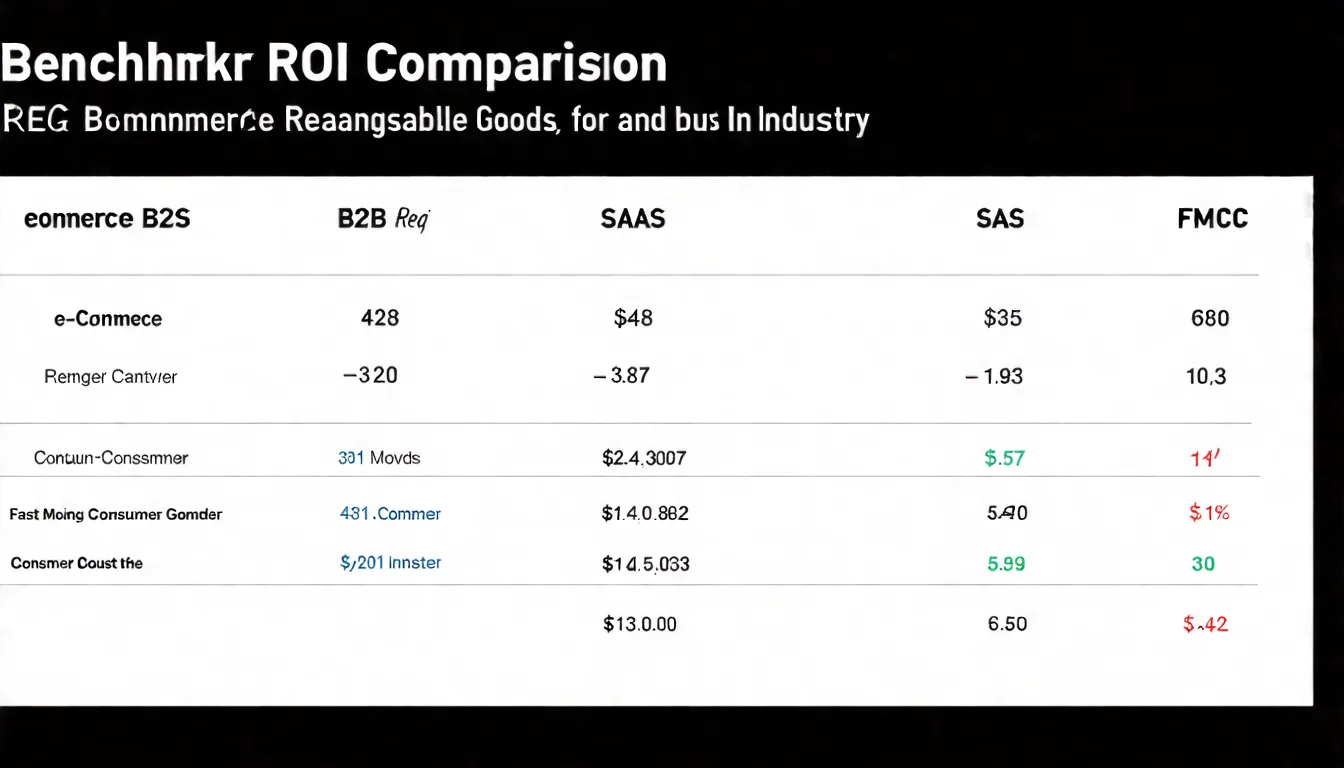
| Industry | Reasonable ROI Range | Notes |
|---|---|---|
| E-commerce/Retail | 100-400% | Intense competition, limited margins |
| B2B Services | 200-500% | High average order value, long conversion cycles |
| SaaS Software | 300-800% | High margins, emphasis on customer lifetime value |
| Finance/Insurance | 400-1000% | High transaction values, long-term revenue |
| Consumer Goods | 50-150% | High volume sales, low per-unit profit |
Reasonable ROI Ranges for Marketing Activities
Different marketing channels have different ROI expectations:
Paid advertising
- Google Ads: 200-400% is solid
- Facebook Ads: 150-300% meets expectations
- Display ads: 100-200% is passing
Content marketing and SEO
- Year 1: May be negative or break even
- Year 2 onward: 200-500%
- Long-term cumulative: Can reach 500-1000%
Email marketing
- Average ROI as high as 4,200% ($42 earned per $1 spent)
- However, this includes existing email lists with very low marginal cost
How to Set ROI Targets
Setting ROI targets requires considering:
1. Break-even point Calculate the ROI needed just to avoid losing money. If your gross margin is 30%, you need at least 233% ROI to break even.
2. Opportunity cost What could this money earn elsewhere? Your ROI should at least exceed the opportunity cost.
3. Growth stage Startups can accept lower ROI (trading for growth); mature businesses should pursue high ROI.
4. Competitive environment In highly competitive markets, set more conservative ROI targets.
Want to boost your content marketing ROI? Let AI help you reduce content costs and achieve higher returns with less investment.
ROI vs ROAS vs ROE: What's the Difference?
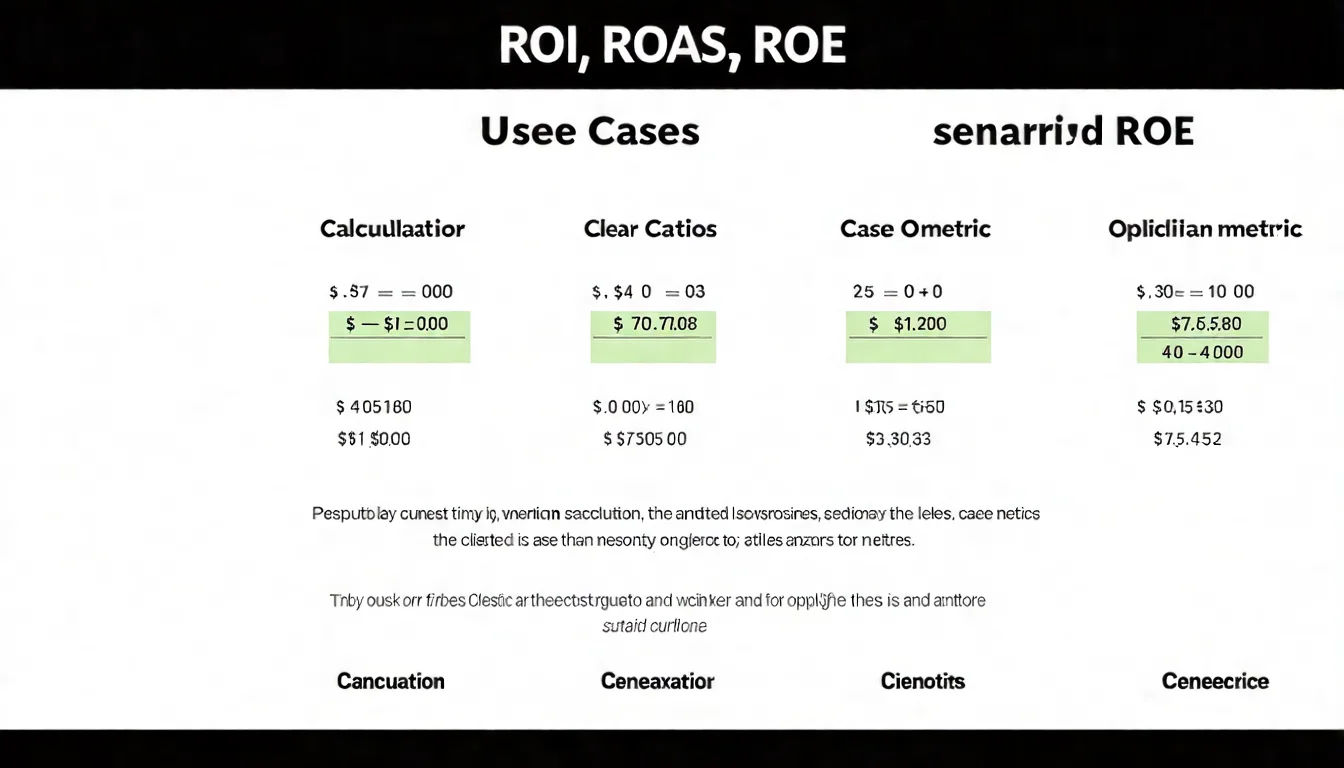
The Difference Between ROI and ROAS
ROAS (Return on Ad Spend) specifically measures advertising investment effectiveness.
| Comparison | ROI | ROAS |
|---|---|---|
| Full name | Return on Investment | Return on Ad Spend |
| Formula | (Revenue - Cost) / Cost x 100% | Revenue / Ad Spend |
| Result format | Percentage (e.g., 200%) | Multiplier (e.g., 3 or 3:1) |
| Cost coverage | All related costs | Ad spend only |
| Purpose | Overall investment effectiveness | Advertising effectiveness |
Side-by-side example:
- Ad spend: $10,000
- Other costs: $5,000
- Total revenue: $45,000
ROAS = $45,000 / $10,000 = 4.5 (or 450%)
ROI = ($45,000 - $15,000) / $15,000 x 100% = 200%
See the difference? ROAS only considers ad spend, while ROI considers all costs. Relying on ROAS alone may overestimate effectiveness.
ROI vs ROE
ROE (Return on Equity) measures shareholder equity returns and is primarily used in financial analysis.
| Comparison | ROI | ROE |
|---|---|---|
| Full name | Return on Investment | Return on Equity |
| Formula | Net Profit / Investment Cost | Net Profit / Shareholder Equity |
| Primary use | Evaluating specific investments | Evaluating overall company profitability |
| Scenarios | Project and campaign assessment | Corporate financial analysis, stock selection |
| Users | Marketing professionals, project managers | Financial analysts, investors |
ROE has little relevance to day-to-day marketing work -- it's typically used by finance departments.
When to Use Which Metric?
Use ROI when:
- Evaluating overall marketing campaign effectiveness
- Comparing the investment value of different projects
- Reporting investment performance to leadership
Use ROAS when:
- Optimizing ad spend efficiency
- Comparing performance across ad platforms
- Making daily ad bidding decisions
Use ROE when:
- Evaluating overall company performance
- Making investment decisions (stock picking)
- Analyzing financial statements
For SEO and content marketing, ROI is recommended since these investments involve not just "ad spend" but also content, tools, and human resources.
ROI Application Scenarios
Digital Marketing ROI Assessment
Digital marketing's advantage is data traceability, making ROI calculation relatively straightforward:
Steps:
- Set up conversion tracking (GA4, ad platforms)
- Calculate all marketing costs
- Track conversions by channel
- Convert to revenue figures
- Apply the ROI formula
Common pitfalls:
- Attribution issues: A user may see an ad but purchase through search -- who gets credit?
- Cross-device tracking: The same person browsing on mobile and buying on desktop may be counted as two
- Delayed conversions: A user sees an ad today but purchases next week -- the data may not capture it
Measuring ROI for SEO Investments
The challenge with SEO ROI is that benefits accumulate gradually.
Recommended approach:
- Establish clear tracking mechanisms (learn more about tracking tools)
- Set conversion goals for organic search
- Track all input costs (including time costs)
- Calculate cumulative ROI monthly
- Focus on long-term trends rather than short-term fluctuations
Content Marketing ROI Calculation
Content marketing ROI is the most complex to calculate because content value persists over time.
Cost calculation:
- Content strategy planning time
- Writing, design, and production costs
- Publishing and promotion costs
- Maintenance and update costs
Revenue calculation methods:
- Direct conversions: Orders or inquiries driven by content
- Indirect contribution: Content in assisted conversion paths
- Long-term value: Evergreen content that continuously drives traffic
Adjusted formula:
Content Marketing ROI = Sum(Revenue from each piece of content) / Sum(Content production costs) x 100%
Practical Strategies to Improve ROI
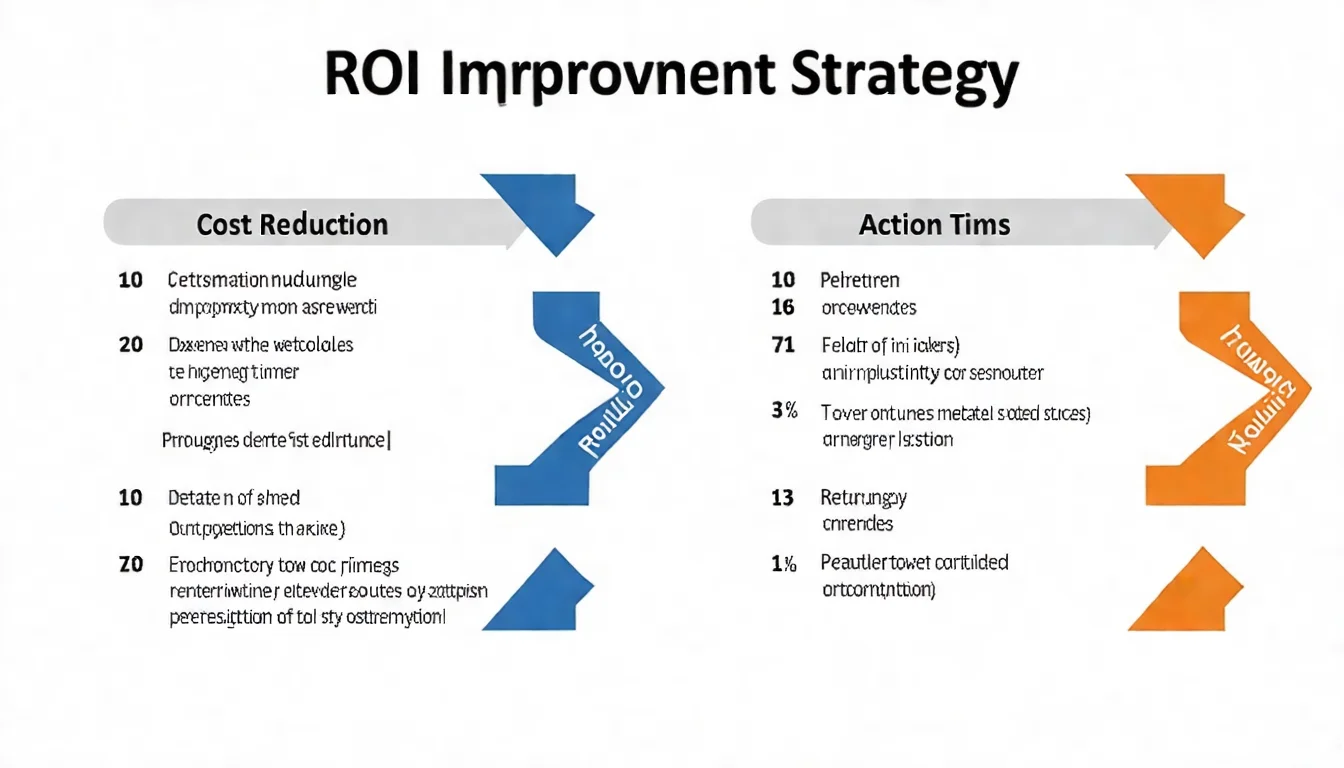
Methods to Reduce Costs
1. Leverage automation tools
- Automated ad bidding rules
- AI-assisted content generation
- Automated report creation
2. Optimize budget allocation
- Cut low-ROI channels
- Scale high-ROI channels
- A/B test to find optimal combinations
3. Improve team efficiency
- Establish standard operating procedures
- Use project management tools
- Outsource non-core tasks where appropriate
Strategies to Increase Revenue
1. Improve conversion rates
- Optimize landing page design
- Simplify the checkout process
- Strengthen persuasive copywriting
2. Increase average order value
- Design upgrade packages
- Recommend add-on products
- Offer bundle deals
3. Extend customer relationships
- Build loyalty programs
- Nurture email lists
- Provide excellent after-sales service
Conversion Rate Optimization Tips
Improving conversion rates is the fastest way to boost ROI, since costs stay the same while revenue increases.
Quick-win optimization areas:
- CTA button text and color testing
- Form field simplification
- Trust badge additions
- Social proof reinforcement (reviews, case studies)
- Page load speed optimization
Every 1% increase in conversion rate, with traffic unchanged, means a 1% increase in revenue -- and a corresponding ROI boost.
FAQ
Can ROI Be Negative?
Yes, and it's quite common.
A negative ROI means the investment is currently at a loss. For example, ROI = -20% means for every $100 invested, only $80 was recovered -- a $20 loss.
However, a negative ROI doesn't necessarily mean the investment failed:
- New projects may start negative and turn positive later
- Some investments have non-monetary benefits (brand awareness)
- Look at cumulative long-term ROI, not just a single period
What Does 100% ROI Mean?
ROI = 100% means:
- You've earned back your entire investment
- Plus an additional amount equal to your investment
- Total revenue is twice the cost
Verification:
- Cost: $100
- Revenue: $200
- ROI = ($200 - $100) / $100 x 100% = 100%
Note: Some people mistakenly think 100% ROI means "just breaking even." That's incorrect -- breaking even is ROI = 0%.
How to Report ROI to Leadership?
Tips for reporting ROI:
1. Lead with the conclusion "This campaign's ROI was 250%, exceeding our 200% target."
2. Include the calculation Make the numbers transparent to build credibility.
3. Compare with past performance "ROI improved 30% compared to last quarter's similar campaign."
4. Explain contributing factors What drove high ROI, or what needs improvement if ROI was low.
5. Recommend next steps Based on ROI data, suggest whether to scale up, maintain, or adjust direction.
How to Apply ROI Thinking to Marketing Decisions
ROI isn't just a number -- it's a mindset.
By mastering the ROI concept, you can:
- Account for every dollar invested
- Make more rational resource allocation decisions
- Demonstrate the value of marketing to leadership
- Continuously optimize investment returns
Whether evaluating advertising, SEO projects, or content marketing, ROI is your best compass.
Achieve the highest ROI with minimal costs. Consult us about AI content solutions now and let our expert team help you reduce content costs and maximize returns.