On-Page SEO is the ranking factor you have complete control over.
No matter how Google's algorithm changes, optimizing your page elements will always be the foundation of SEO.
This article covers the latest on-page optimization techniques for 2026, along with a complete checklist.
Page optimization too tedious? Reach out via LINE and let experts help.
👉 Free LINE Consultation: @006ljkda
On-Page SEO Fundamentals
What Is On-Page SEO?
On-Page SEO Defined:
On-page SEO refers to optimizations performed directly on a web page, including both content and HTML element optimization.
In Simple Terms:
Everything you can change on your own web page falls within the scope of on-page SEO.
On-Page SEO Includes:
| Category | Items |
|---|---|
| Content | Text content, keyword usage, content structure |
| HTML Tags | Title, Meta Description, heading tags |
| Media | Images, videos, charts |
| Links | Internal links, external links |
| Technical | URL, Schema, page speed |
On-Page vs. Off-Page SEO
On-Page SEO:
- You have complete control
- Done on your own website
- Examples: content, titles, meta tags
Off-Page SEO:
- Happens outside your website
- Requires others' involvement
- Examples: backlinks, brand mentions
The Relationship Between the Two:
Quality On-Page SEO → Better user experience → Natural link acquisition → Off-Page SEO boost
On-Page is the foundation; Off-Page is the amplifier.
What's New in 2026?
On-Page SEO Trends for 2026:
-
Semantic SEO matters more
- Not just keyword matching
- Must cover the topic's semantic context
- Google's content understanding capabilities are stronger
-
User experience carries more weight
- Core Web Vitals remain important
- Content readability affects rankings
- Mobile experience is a priority
-
Adapting to AI search
- Content structure must be clear
- Increase chances of being cited by AI
- Use formats that directly answer questions
- Since Google I/O in May 2026, Gemini 3.5 Flash has been the global default model for AI Mode; Google says AI Mode passed 1 billion monthly active users in its first year, with query volume doubling each quarter
- The redesigned AI search box accepts text, images, files, video, and Chrome tabs as input, so content needs to be findable through multimodal queries
-
Demonstrating E-E-A-T on the page
- Author information must be clear
- Expertise should be visible
- Trust elements must be in place
Title and Meta Optimization
Title Tag Best Practices for 2026
What Is a Title Tag?
The title tag is the title displayed in search results and browser tabs.
2026 Title Tag Optimization Tips:
1. Length Control
- Google publishes no official character-count standard; search results are truncated by pixel width
- Wide characters (e.g. Chinese) take more pixels, so fewer of them fit — go by the actual SERP truncation point
- Too long gets truncated
- Too short may not convey the full message
2. Keyword Placement
- Place the primary keyword near the front
- Don't stuff keywords
- Natural readability is paramount
3. Brand Name
- Can be placed at the end
- Format: "Title | Brand Name"
- Well-known brands get a bonus
4. Attracting Clicks
- Use numbers ("5 Ways to...")
- Use the year ("2026")
- Communicate value ("Complete Guide")
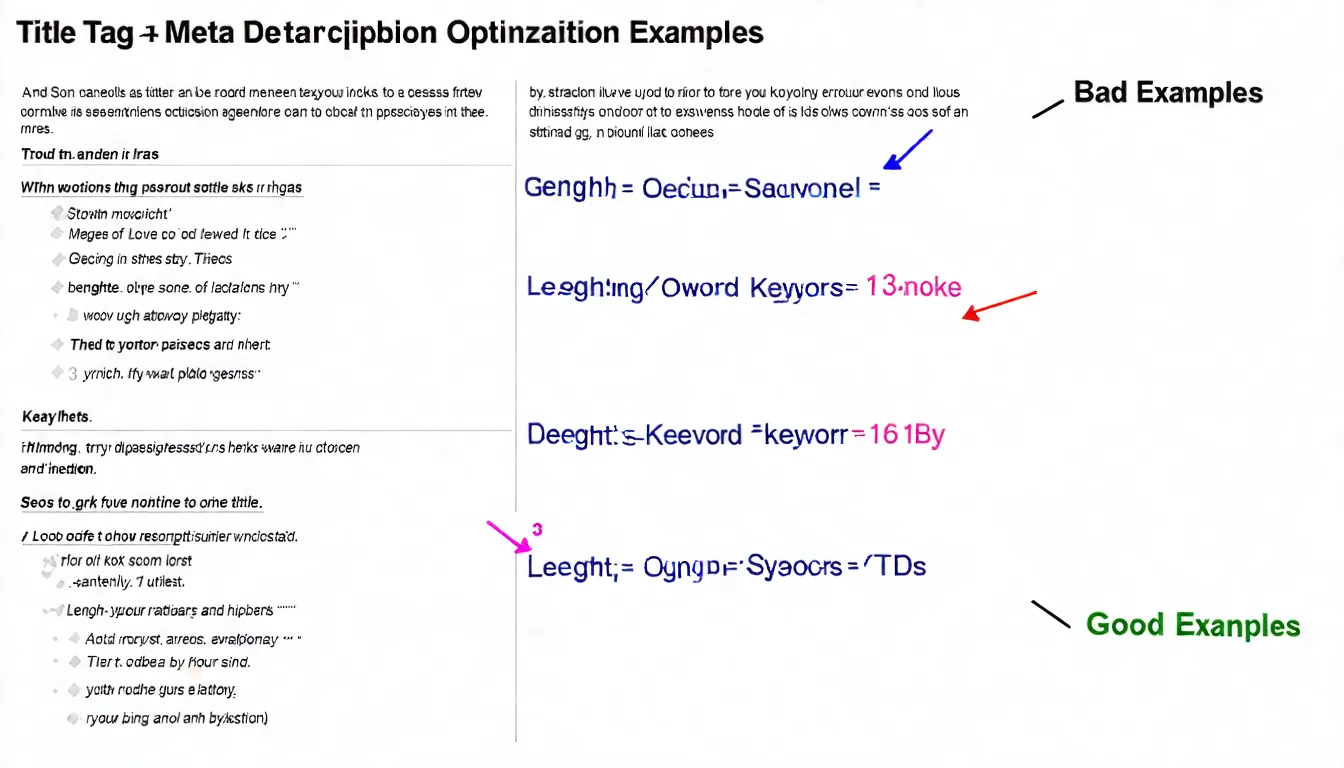
Good Title Examples:
✓ On-Page SEO 2026 Complete Guide: Optimization Techniques & Checklist
✓ 5 On-Page SEO Tips to Boost Rankings Fast [2026 Updated]
Bad Title Examples:
✗ On-Page SEO On Page SEO Page SEO Site Optimization SEO Tutorial
✗ About SEO
Meta Description Writing Tips
What Is a Meta Description?
The descriptive text displayed below the title in search results.
2026 Meta Description Tips:
1. Length
- Again, no official character-count standard; truncation is by pixel width
- Mobile displays show less
- Put important information first
2. Content Focus
- Summarize the page content
- Include the primary keyword (naturally)
- Add a call to action
3. Uniqueness
- Every page should have a different one
- Don't copy and paste
- Reflect the specific content of that page
Good Meta Description Example:
✓ How should you handle On-Page SEO in 2026? This article covers the latest optimization techniques including title, meta, and content structure optimization, plus a complete checklist.
Note: Google sometimes modifies your Meta Description automatically, but writing a good one is still important.
Heading Tags (H1-H6) Usage
The Role of Heading Tags:
- Establish content structure
- Help readers scan
- Help Google understand content
Usage Rules:
H1 Tag
- Use only one per page
- Usually the article's main title
- Include the primary keyword
H2 Tags
- Main section headings
- Can use multiple
- Cover major subtopics
H3-H6 Tags
- Subsection headings
- Use hierarchically
- Don't skip levels
Correct Structure Example:
H1: On-Page SEO 2026 Complete Guide
  H2: On-Page SEO Fundamentals
    H3: What Is On-Page SEO
    H3: Why It Matters
  H2: Title and Meta Optimization
    H3: Title Tag Best Practices
    H3: Meta Description Writing
  H2: Content Optimization
    H3: Content Structure
    H3: Keyword Usage
Content Optimization
Content Structure Planning
Why Does Structure Matter?
- Helps readers read (user experience)
- Helps Google understand (SEO)
- Increases chances of being cited (AI Overviews)
Elements of Good Content Structure:
1. Clear Hierarchy
Use heading tags to establish clear levels.
2. Short Paragraphs
- 2-4 sentences per paragraph
- One key point per paragraph
- Use white space to separate
3. Lists and Tables
- Present key points as bullet lists
- Use tables for comparisons
- Use numbered lists for steps
4. Visual Elements
- Images to support explanations
- Charts to present data
- Appropriate white space
Keyword Placement Strategy
Keyword Usage Principles for 2026:
Don't:
- Deliberately stuff keywords
- Force keywords for density
- Excessively repeat keywords
Do:
- Integrate naturally into content
- Use synonyms and related terms
- Focus on semantics rather than exact match
Recommended Keyword Placement:
| Location | Importance | Notes |
|---|---|---|
| Title Tag | High | Primary keyword |
| H1 | High | Primary keyword |
| First 100 words | High | Natural occurrence |
| H2/H3 | Medium | Related keywords |
| Body text | Medium | Natural integration |
| URL | Medium | Short version |
| Image Alt | Low-Medium | Descriptive use |
Internal Link Optimization
The Role of Internal Links:
- Help Google crawl your site
- Pass page authority
- Help users navigate
- Reduce bounce rate
Internal Link Best Practices:
1. Use Descriptive Anchor Text
✓ Learn more On-Page SEO techniques
✗ Click here
2. Link to Related Content
- Link to pages with related topics
- Build topic clusters
- Connect pillar pages to supporting articles
3. Don't Overdo It
- Use links naturally
- Don't put a link in every paragraph
- Links should be helpful to users
4. Check for Broken Links
- Audit regularly
- Fix or remove broken links
Multimedia Content Optimization
Image Optimization:
- File size: Compress images to reduce load time
- File name: Use descriptive file names (seo-checklist.jpg)
- Alt text: Describe the image content, naturally incorporate keywords
- Format: Use modern formats like WebP
Video Optimization:
- Provide text descriptions or transcripts
- Use Schema markup
- Be mindful of the impact on page speed
Optimization starts with great content. Let AI help you produce it.
Technical On-Page Elements
URL Structure Optimization
Characteristics of a Good URL:
- Short: Don't make it too long
- Descriptive: The URL should hint at the content
- Include keywords: Naturally incorporated
- Use hyphens: Separate words with
-
URL Examples:
✓ example.com/on-page-seo-guide
✓ example.com/seo/on-page-optimization

✗ example.com/page?id=12345
✗ example.com/on_page_seo_guide_complete_tutorial_2026_updated
Image Optimization (Alt, File Names, Compression)
Image SEO Checklist:
| Item | Approach |
|---|---|
| File name | Use descriptive names, e.g., on-page-seo-checklist.jpg |
| Alt text | Describe the image, e.g., "On-Page SEO checklist chart" |
| File size | Compress to a reasonable size without sacrificing quality |
| Format | Prefer WebP, fallback to JPG/PNG |
| Dimensions | Adjust to actual display size |
| Lazy loading | Implement lazy loading |
Alt Text Writing Examples:
✓ On-Page SEO optimization flowchart showing steps from title to content
✓ 2026 SEO ranking factors pie chart

✗ image
✗ seo seo-optimization seo-tutorial on-page-seo
Schema Markup Application
What Is Schema Markup?
Schema is structured data markup that helps Google understand your content type.
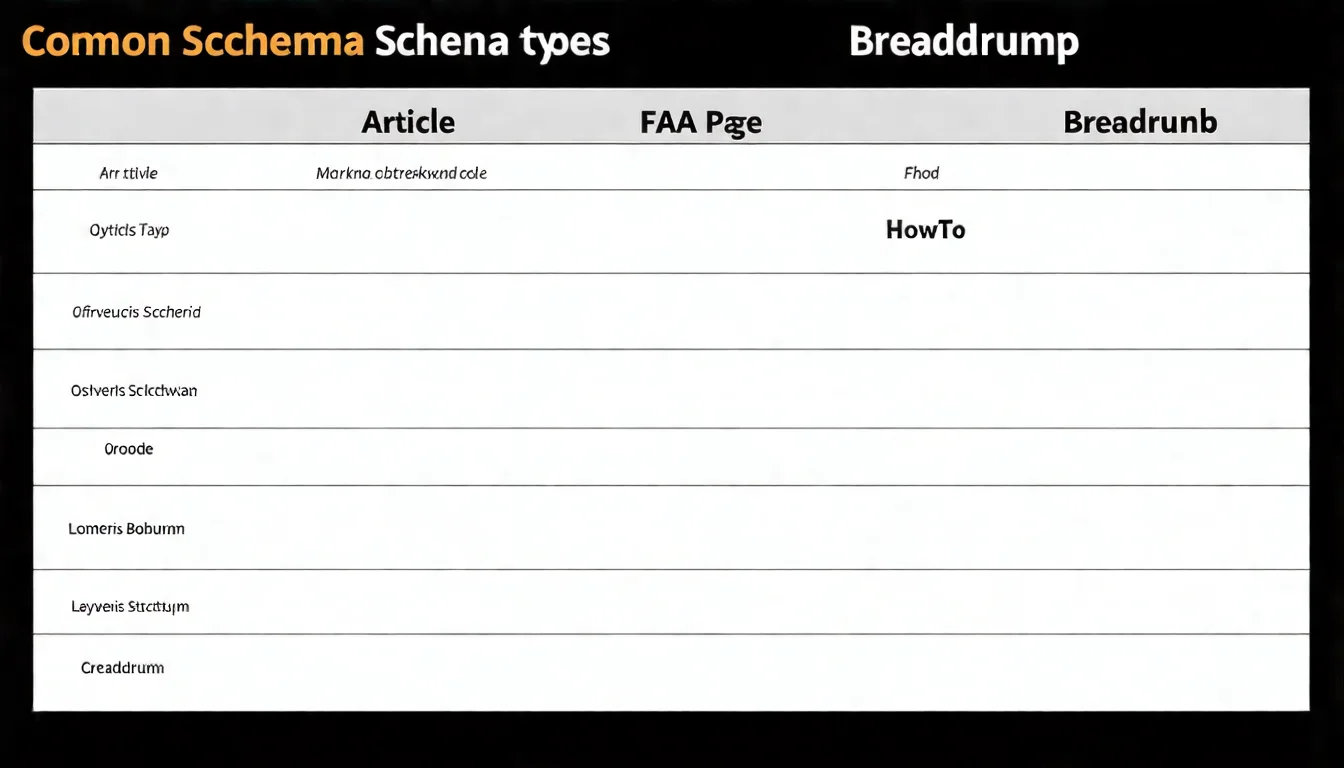
Common Schema Types:
| Type | Purpose | Effect |
|---|---|---|
| Article | Article content | Rich results display |
| FAQPage | Frequently asked questions | No rich result anymore (Google stopped showing them on 2026-05-07); only structured-semantics / AI-readability value remains |
| Breadcrumb | Breadcrumb navigation | Shows site structure |
| Organization | Organization info | Brand information display |
Benefits of Schema:
- Increases visual appeal of search results
- Improves click-through rates
- Helps Google understand content
Page Speed Optimization
Why Does Speed Matter?
- It's a Google ranking factor
- Affects user experience
- Impacts conversion rates
Core Web Vitals Standards:
| Metric | Good | Needs Improvement | Poor |
|---|---|---|---|
| LCP | <2.5s | <4s | >4s |
| INP | <200ms | <500ms | >500ms |
| CLS | <0.1 | <0.25 | >0.25 |
Speed Optimization Methods:
- Image optimization: Compress, resize, lazy loading
- Code optimization: Minify CSS/JS
- Caching: Set up browser caching
- CDN: Use a content delivery network
- Hosting: Choose quality hosting
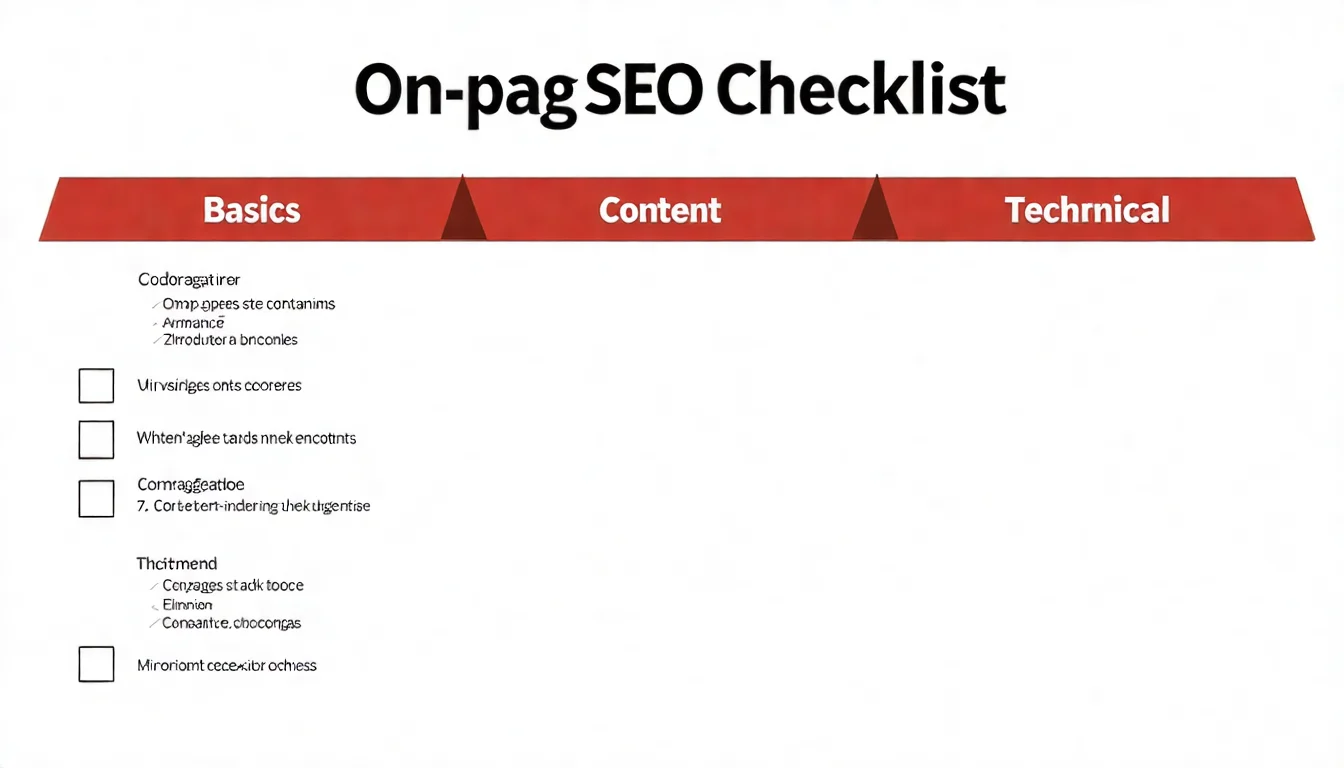
On-Page SEO Checklist
Basic Checklist
Check Every Page For:
- Title Tag is not truncated in the SERP (judge by actual pixel width, not a fixed character count)
- Title includes the primary keyword
- Meta Description is not truncated in the SERP, with the important information up front
- Only one H1 tag
- H1 includes the primary keyword
- URL is short and includes the keyword
- URL uses hyphens as separators
- Page uses HTTPS
Content Checklist
Content Quality Checks:
- Content solves the user's problem
- Content has sufficient depth
- Primary keyword appears in the first 100 words
- Uses related keywords and synonyms
- Heading tag hierarchy is correct
- Paragraphs are short and readable
- Uses lists or tables
- Includes relevant internal links
- Link anchor text is descriptive
- External links point to credible sources
Technical Checklist
Technical Element Checks:
- Images have alt text
- Images are compressed
- Core Web Vitals pass: LCP ≤2.5s, INP ≤200ms, CLS ≤0.1 (75th percentile)
- Mobile display works correctly
- No broken links
- Relevant Schema is implemented
- Canonical tag is correct
- Google crawling is not blocked
Advanced On-Page Techniques
Featured Snippets Optimization
What Are Featured Snippets?
The featured summary at the top of search results that directly answers the user's question.
How to Win Featured Snippets:
1. Answer Questions Directly
Provide a concise answer at the beginning of the content.
## What Is On-Page SEO? {#what-is-on-page-seo}

On-Page SEO refers to optimizations performed directly on a web page,
including content, HTML tags, images, and other elements, with the goal
of improving search rankings.
2. Use the Right Format
| Question Type | Best Format |
|---|---|
| Definition questions | Paragraph |
| How-to questions | Numbered list |
| List questions | Bullet points |
| Comparison questions | Table |
3. Target Question-Based Keywords
- What is...
- How to...
- Why does...
People Also Ask Optimization
What Is People Also Ask?
The "People also ask" section that appears in search results.
How to Optimize:
-
Research related questions
- Look at PAA boxes in search results
- Use tools to find related questions
-
Answer these questions in your content
- Use H2 or H3 as the question
- Follow with a concise answer
-
Don't count on FAQ Schema
- Google's FAQ rich results stopped being displayed as of 2026-05-07
- Adding FAQPage markup carries no penalty, but it has no direct causal link to winning PAA placements
- PAA placements still come mainly from question-style H2/H3 headings followed by a concise answer
Semantic SEO and Entity Optimization
What Is Semantic SEO?
Optimizing not just for keywords but for entire topics and concepts.
Implementation Methods:
1. Cover All Aspects of the Topic
When writing about "On-Page SEO," also cover:
- Title optimization
- Meta optimization
- Content optimization
- Technical optimization
- And related subtopics
2. Use Related Vocabulary
Naturally use synonyms and related terms:
- On-Page SEO
- On-site optimization
- Page optimization
- Web page optimization
3. Answer Related Questions
Anticipate related questions users might have and answer them in your content.
Why On-Page SEO Is the Foundation of All SEO
Key Takeaways:
-
On-Page SEO is within your control
- Done on your own website
- No external help needed
- It's the foundation of SEO
-
2026 Focus Areas
- Semantic SEO matters more
- User experience is key
- AI search requires structured content
-
Fundamentals always matter
- Title and Meta optimization
- Clear content structure
- Solid technical foundation
-
Use the checklist
- Ensure nothing is missed
- Check every piece of content
- Continuously optimize and improve
Action Steps:
- Use this article's checklist to review your important pages
- Identify areas that need improvement
- Prioritize fixing the highest-impact issues
- Establish a continuous optimization workflow
Learn more about SEO trends in our comprehensive guide.
For technical SEO, check out our technical SEO guide.
On-Page SEO starts with quality content. Contact us via LINE for AI article solutions.