![What Is Parasite SEO? 38 Fake Sites Are Poisoning AI Insurance Answers [2026]](/_next/image?url=%2Fblog%2Fimages%2Fseo-basics%2Fparasite-seo-ai-01.webp&w=3840&q=75)
Someone asks an AI which insurance policy is the better deal. The AI hands back an answer that looks completely professional.
The problem? That answer traces back to a site with no license and no business giving insurance advice at all.
This isn't hypothetical. In July 2026, a study exposed an operation running at real scale: a batch of fake sites smuggling unauthorized insurance content into AI search answers. This black hat tactic has a name — parasite SEO.
This article covers three things: what parasite SEO actually is, how it poisons the answers AI gives you, and what you should do if you run a legitimate brand.

Key takeaway: Parasite SEO borrows someone else's authority to smuggle content into a top position; in the AI era it evolved from chasing rankings to poisoning answers. In 2026, Somantra research analyzed 2.4 million AI search citations and pinned down 38 unlicensed sites feeding insurance advice into ChatGPT and Google AI Overviews (Insurance Business, 2026). A legitimate brand's defense isn't to join in — it's to monitor how AI talks about you.
What Is Parasite SEO? Borrowing Authority to Steal Rankings
Parasite SEO means hosting your own content on a site or platform that already carries authority, borrowing its trust score so the content ranks or gets seen fast.
Here's an analogy. You open a new shop and nobody walks in. So you quietly slip your products onto the shelves of a busy department store — shoppers see the store's name, they trust that name, but the thing they pay for is yours.
That's the logic of the parasite. You borrow someone else's trust and pocket your own traffic.
Common parasite hosts include:
- High-authority content platforms (blogging sites, Q&A sites, guest-post slots)
- Large communities or forums that let users post
- Neglected, poorly managed old domains that can be stuffed with content
In the search-engine era, parasite SEO aimed to steal Google rankings. Why is it black hat? Because it bypasses the honest path — where content earns trust on its own — and smuggles in a shortcut instead. To understand exactly where the line between the honest and shady paths sits, start with this white hat vs. black hat SEO comparison.
In the AI search era, the same play swapped targets. It no longer just wants to fool Google. It wants to fool the AI.
How Did 38 Fake Sites Poison AI's Insurance Answers?
On July 17, 2026, Somantra — a Sydney-based AI search visibility platform — published a report titled The AI Search Anomaly: How 38 Domains Contaminated Insurance Advice Across AI Search Engines.
What it exposed is worth a look from anyone who works with content.
The team analyzed 2.4 million AI search citations and traced a cluster of 38 unlicensed sites. These sites hold no insurance license and have no standing to give insurance advice, yet they mass-produced insurance content and worked to get AI systems to cite them as trusted sources (Insurance Business, 2026).
The result? That unauthorized advice showed up in the answers from ChatGPT and Google AI Overviews.
A few key details:
- Target market: Australia's 2026 insurance renewal season — the time of year when the most people search "how do I pick a policy"
- Observation window: the study's data covers November 2025 to July 2026, with suspicious domains peaking in the January 2026 renewal season
- Distribution channels: the two mainstream AI answer systems, ChatGPT and Google AI Overviews
In other words, this wasn't one person posting a single fake article. This was a coordinated operation with timed launches, a chosen market, and sustained output. A few days later, on 22 July 2026, the insurance-industry outlet Insurance Business (Australia) also reported the story, corroborating the study's core claims.
One thing to keep straight: this is a study of one specific market over one specific window, not "every AI answer on Earth is broken." But it demonstrates one thing — parasite SEO has found a path to poison AI.
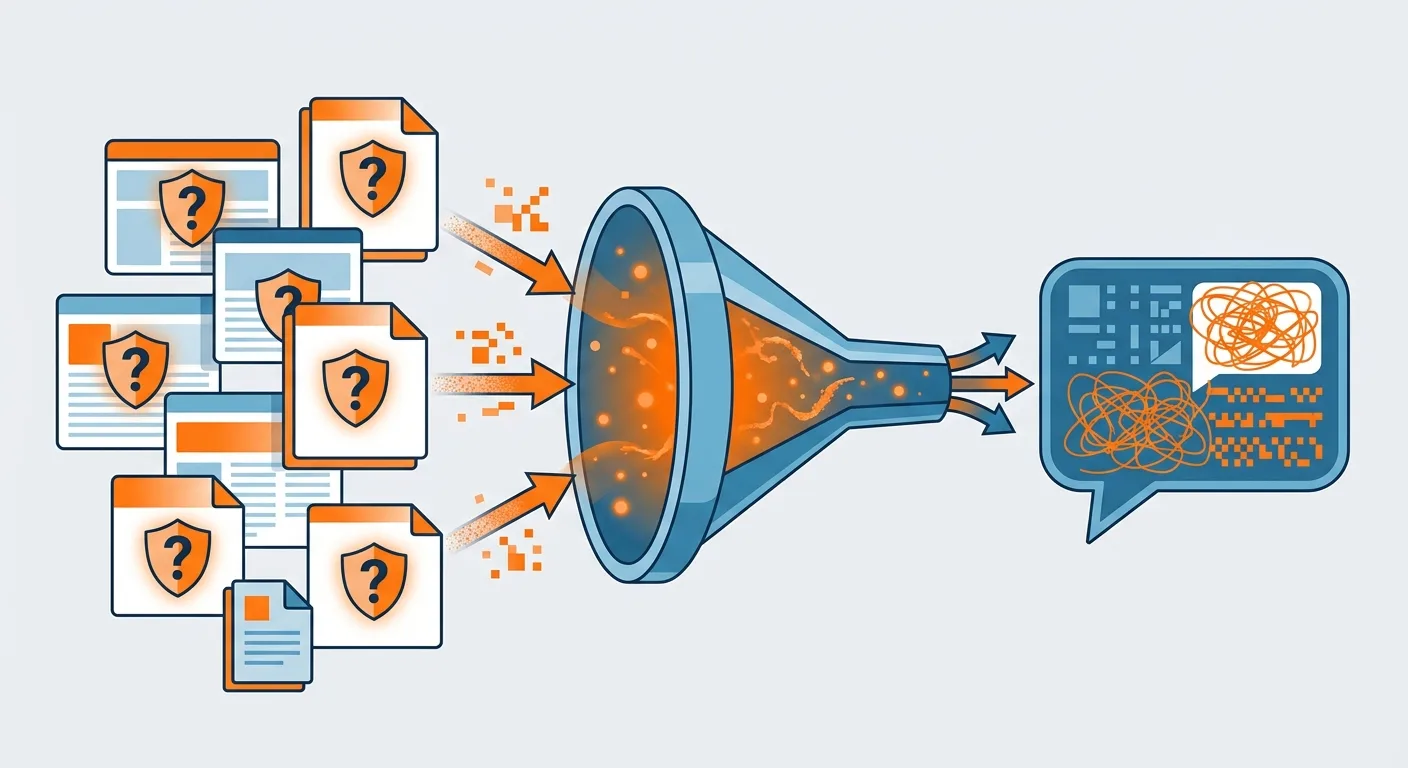 Caption: Three stages of parasite contamination — (1) unlicensed sites mass-produce insurance content (2) the content gets scraped and treated as a source (3) unauthorized advice surfaces in ChatGPT and Google AI Overviews.
Why Is Parasite SEO Black Hat? How It Differs From White Hat
Parasite SEO is black hat for one core reason: it earns trust through manipulation and impersonation, not because the content is genuinely valuable.
The deepest line between white hat and black hat isn't how fancy the tactic looks — it's whether you walk the honest path where content deserves to be trusted. White hat means getting your brand facts right and complete, so AI and readers naturally treat you as a credible source. Black hat takes the shortcut — borrowing someone else's authority, exploiting system gaps, and jamming untrustworthy content into the answer.
Lay out the insurance case and all three black hat traits are there:
- Faked credentials: no license, yet pretending to be qualified to give advice
- System manipulation: content deliberately engineered to fool the AI's source judgment
- Harm to users: readers get advice they shouldn't trust, thinking it's a professional opinion
This shares the same DNA as old-school black hat like keyword stuffing and link spam — the battlefield just moved from Google rankings to AI answers. For the full list of black hat tactics and how to spot them, that white hat vs. black hat SEO comparison lays it out more completely.
Here's the harsh reality worth saying: black hat persists because it genuinely works in the short term. Parasite content really does get cited by AI for a while. But AI platforms are being pushed to take responsibility for wrong answers — and that road only gets harder to walk.
How Does Google Penalize Parasite Content? The Latest Site Reputation Policy Change
On the traditional search side, Google introduced its site reputation abuse policy back in 2024 to stop exactly this parasite practice: publishing third-party content on a trusted website to exploit its reputation and rank higher. On August 28, 2026, Google announced it is adjusting how the policy is enforced in the European Economic Area (EEA) (Google Search Central, 2026):
- From August 30, 2026, for searchers outside the EEA: a manual action under this policy still directly affects search results for the affected section of the site; the rest of the site is not affected
- For searchers inside the EEA: the impact of the manual action won't apply; the affected section may be separated in Google's systems so that, over time, it ranks independently from the rest of the site
- Notification and appeals: site owners will continue to be notified in Search Console when a manual action is applied, and can submit a reconsideration request if they believe it was an error; following the reconsideration request, eligible sites can also bring disputes to mediation
The split depends on where the searcher is, not where the site is. Searchers in Taiwan are outside the EEA, so once parasite content is actioned, that section's rankings are directly affected for them. Renting a subfolder on someone else's site to climb the rankings is no less risky than before.
Want to confirm AI is describing your brand correctly?
Not knowing how AI describes you is the most dangerous blind spot of the AI era. AI SEO Hacker's GEO service includes monthly AI citation testing and brand-description checks, helping you catch the risk of being misrepresented or impersonated.
Why Does Parasite Content Fool AI? Breaking Down the Poisoning Mechanism
Parasite content fools AI because the way AI assembles answers hands it an opening in the first place.
When an AI search engine answers a question, it doesn't read a single authoritative source — it scrapes a large pile of pages and stitches together an answer that looks complete. When authoritative first-party information on a topic is thin or hard to scrape, the AI settles for the next best thing: content that "looks the part," including parasite pages and content farms.
The parasite operation grabs exactly this seam. It tends to:
- Mass-produce content on a topic to fake the impression that "this source really knows its stuff"
- Mimic an expert tone and apply structured formatting so AI parses and cites it more easily
- Pick topics where authoritative info is sparse but search volume is high (the insurance renewal season is a textbook example)
When we run AI citation checks for clients, the most common problem we see isn't the brand being spoken about badly — it's an information vacuum. When your own site never spells out the brand facts clearly, AI can't find your authoritative account, so it stitches together other people's versions, sometimes pulling in sources that shouldn't be trusted. A vacuum is the breeding ground for parasite content.
So the flip side of poisoning is opportunity. Fill in your authoritative content and you're placing the right material right where the AI can reach it — which makes it far less likely to pick up whatever's lying on the ground.
How Do Legitimate Brands Protect Themselves? Three Things to Do Now
For a legitimate brand facing parasite SEO, the point of self-defense isn't to start exploiting gaps too — it's to seal off the "nobody explains you clearly" problem. Three moves you can start this month.
First, don't join the parasite game. Seeing that black hat works short-term is tempting. But parasite content's fate is to evaporate overnight as platforms tighten policy, and it can drag your brand's reputation down with it. Long-term, that ledger always runs a loss — for the same reason white hat vs. black hat spells out: you're betting your entire brand's future.
Second, monitor how AI talks about you. You have to know how AI describes you before you can ask it to get you right. The method is simple:
- Write a fixed set of prompts ("what is your brand," "how are the reviews," "is it reliable," "how does it compare to competitors")
- Run each one monthly across Google AI Overviews, ChatGPT, and Perplexity
- Log three columns: whether you were mentioned, whether it was accurate, and which source it cited
That "cited source" column matters most — it tells you directly where AI learned about you. If the source is a suspicious site you don't recognize, the parasite-contamination warning light is on. To run this check in more detail, how to check whether AI cites your website has the full steps.
Third, fill in authoritative first-party content. Killing the information vacuum is the single most effective way to prevent parasite contamination. Write your brand facts on your own site completely and freshly (who you are, what you do, what you don't do), keep it consistent across the web, and let AI crawlers in. When information is abundant, AI is too busy citing you to bother reaching for parasite content.
If you do discover your brand being described wrong by AI, or poisoned by an impersonated source, the handling flow is in what to do when AI gets your brand wrong — that piece lays out the priority order of fixing the source, reporting to the platform, and legal routes.
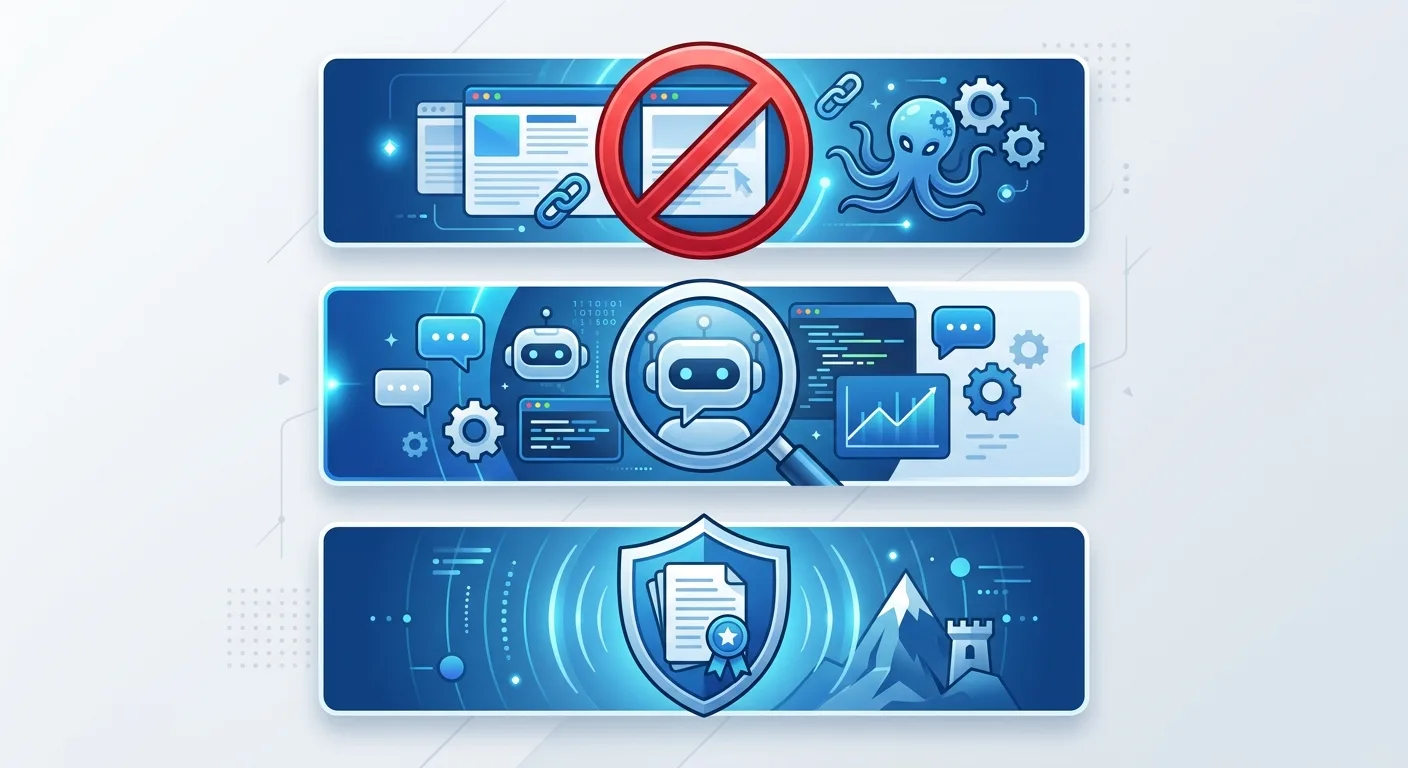 Caption: Three self-defense moves for legitimate brands — (1) don't join the parasite game (2) monitor monthly how AI talks about you (3) fill in authoritative first-party content to kill the information vacuum.
Frequently Asked Questions
How is parasite SEO different from regular black hat SEO?
Parasite SEO is one type of black hat tactic, distinguished by "borrowing someone else's authority." Traditional black hat like keyword stuffing or link spam mostly manipulates your own site; parasite SEO hosts content on a high-authority third-party platform or site to borrow its trust score for a top position. The 38 unlicensed sites in Somantra's 2026 study did exactly this — producing insurance content polished enough to be cited by ChatGPT and Google AI Overviews, using the platform's authority to vouch for themselves.
Can AI answers really come from unqualified sources?
Yes. When an AI search engine builds an answer, it stitches together a large pile of pages rather than trusting one authoritative source. When authoritative first-party info on a topic is thin, AI is prone to citing "professional-looking" parasite pages. After analyzing 2.4 million AI citations, Somantra found that the insurance advice from 38 unlicensed sites did flow into mainstream AI answer systems (Insurance Business, 2026). So an AI answer is not automatically trustworthy — check the source yourself.
Could my brand also be poisoned by parasite content?
The highest-risk brands are the ones with an "information vacuum" — sites that never spell out brand facts clearly, with scattered accounts across the web. When AI can't find your authoritative version, it stitches together other people's, sometimes pulling in sources it shouldn't. The way to check is to run a fixed prompt set monthly across Google AI Overviews, ChatGPT, and Perplexity and see which source AI cites for you. If a suspicious site you don't recognize shows up, that's the warning sign.
What should I do if I find my brand described wrong or citing an impersonated source?
The priority order is fixing the source, reporting to the platform, and publishing an authoritative self-account, with legal routes reserved for serious cases. First find the erroneous source, correct it or request removal, and at the same time add correct, complete brand facts on your own site so AI has a legitimate version to cite. For the full set of channels and how the German court ruling shifted platform liability, what to do when AI gets your brand wrong breaks it down further. Whichever route you take, your testing records (screenshots, dates, sources) are the foundation.
What's the single most effective thing to prevent parasite poisoning?
Kill the information vacuum. AI most often fabricates or misattributes when it "can't find enough authoritative first-party information." Write your brand facts completely and freshly on your own site, keep your entity consistent across the web, and confirm AI crawlers can get in — when information is abundant, AI is too busy citing the real thing to let parasite content squeeze in. This lines up neatly with the direction of GEO (generative engine optimization): for a brand that does its content well, defense and visibility are the same set of moves.
Parasite SEO Is Black Hat's New Battlefield, but the Honest Path Hasn't Changed
Parasite SEO isn't new. It just changed battlefields. From stealing Google rankings to poisoning AI answers, the bones of the tactic stay the same — borrow someone else's authority, exploit the system's gaps, cash in short-term traffic.
Those 38 fake sites in 2026 demonstrated how far black hat can go in the AI era. But they also remind legitimate brands of one thing: you don't have to follow, and you shouldn't. What you should do is take care of your own house.
Three points to close on:
- Parasite SEO climbs on someone else's authority, evolving into a black hat tactic that poisons answers in the AI era
- Somantra's research proved that insurance advice from 38 unlicensed sites flowed into ChatGPT and Google AI Overviews
- A legitimate brand's defense is to not join in, monitor monthly how AI talks about you, and fill in authoritative first-party content
AI answers "who are you" on your behalf every single day. Rather than worrying about being buried under parasite content, make your own legitimate account so clear and complete that it becomes the moat black hat can't cross.

🎯 Take Action Now
Want to know how AI currently describes your brand, and whether it's being poisoned by suspicious sources? AI SEO Hacker's GEO service includes monthly AI citation testing and brand-description checks, protecting both your visibility and your reputation the legitimate, white-hat way.
👉 Free consultation on LINE|Fill out the inquiry form
Further Reading
- What Is Black Hat SEO? White Hat vs. Black Hat: A Complete Comparison
- What to Do When AI Gets Your Brand Wrong: AI Reputation Management
- How to Check Whether AI Cites Your Website
![What Is Black Hat SEO? White Hat vs. Black Hat: A Complete Comparison [2026]](/_next/image?url=%2Fblog%2Fimages%2Fseo-basics%2Fwhite-hat-vs-black-hat-seo-01.webp&w=3840&q=75)
![What Is SEO? The Complete Beginner's Guide to Search Engine Optimization [2026]](/_next/image?url=%2Fblog%2Fimages%2Fseo-basics%2Fwhat-is-seo-01.webp&w=3840&q=75)
![How to Choose an SEO Company: A Complete Guide to Costs and Performance Evaluation [2026]](/_next/image?url=%2Fblog%2Fimages%2Fseo-basics%2Fhow-to-choose-seo-company-01.webp&w=3840&q=75)