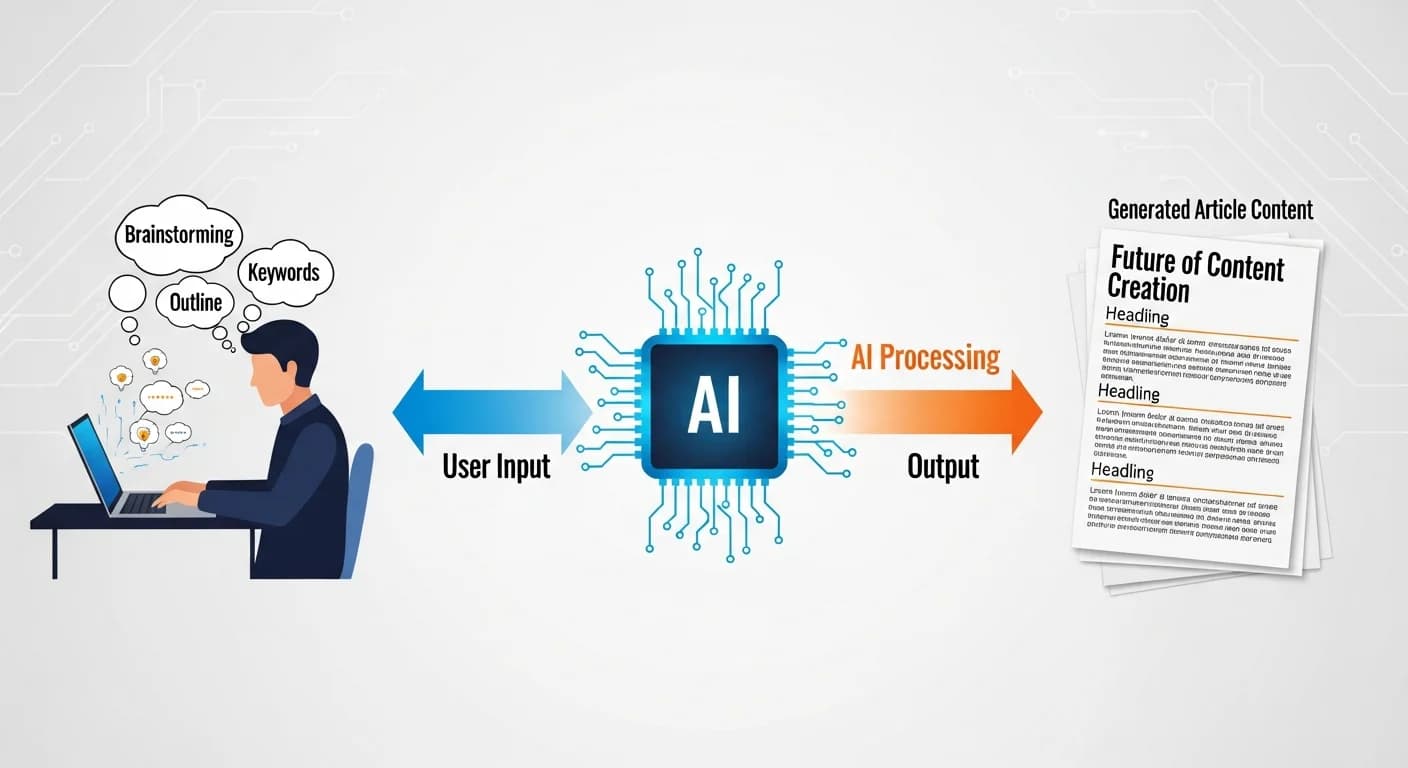
Have an old article that needs updating?
Or maybe you've finished a piece but it doesn't feel quite right, and you're not sure where to start improving it?
AI article rewriting can help you quickly elevate your existing content, giving outdated articles a fresh new life.
This guide walks you through tool selection, hands-on techniques, and how to keep your rewritten content original.
What Is AI Article Rewriting?
Use Cases and Scenarios
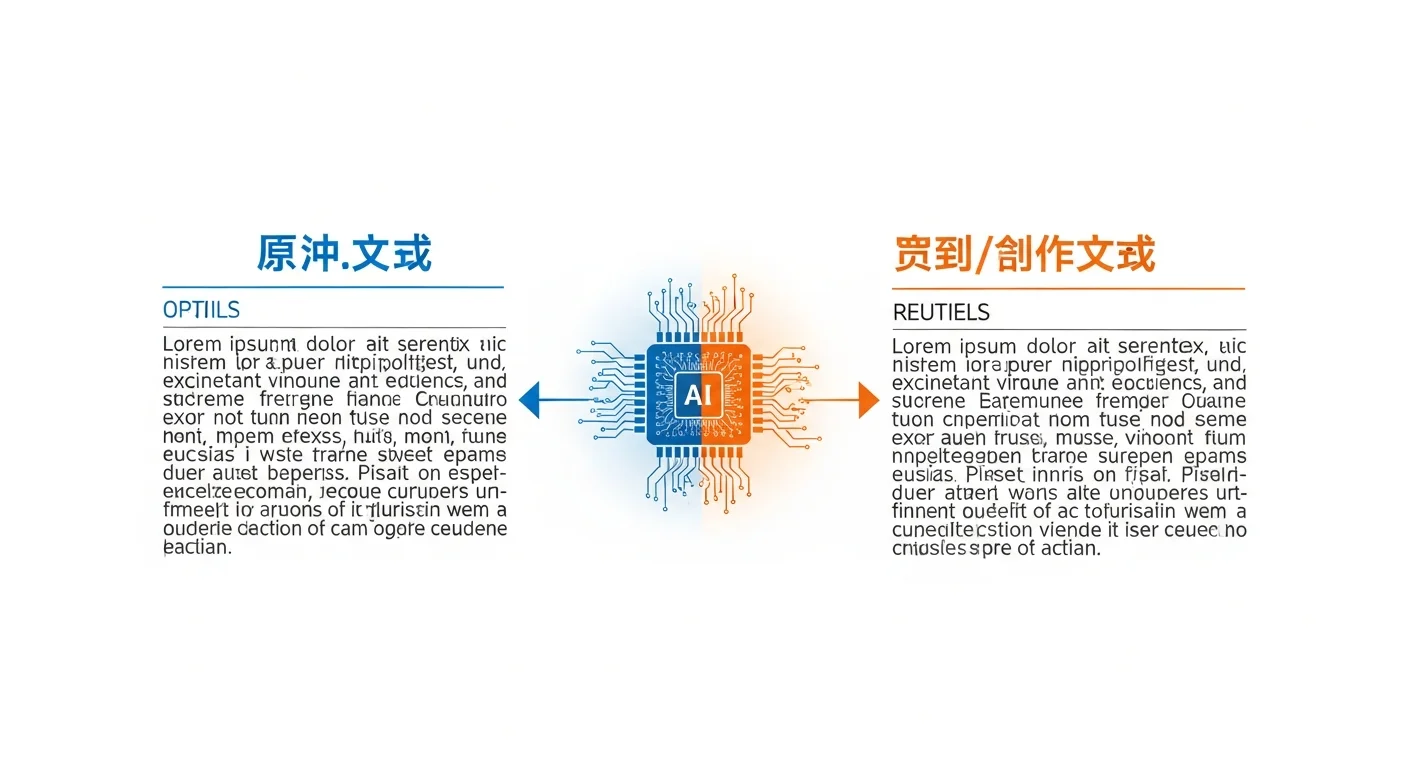
AI article rewriting uses AI tools to re-express existing written content while preserving the original meaning.
Common use cases:
- Updating old content: Breathing new life into outdated articles
- Tone adjustment: Converting formal writing to a casual voice
- Readability improvement: Simplifying complex, technical content
- Content repurposing: Adapting a single piece into multiple versions
- Error correction: Fixing grammar and expression issues
Content that benefits from rewriting:
- Articles published more than a year ago
- Underperforming content on topics that still have value
- Articles that need retargeting to a different audience
- Content whose tone doesn't match your brand voice
Rewriting vs. Original Writing
| Aspect | Original Writing | Rewriting |
|---|---|---|
| Starting point | From scratch | Existing content |
| Time required | Longer | Shorter |
| Creativity needed | High | Medium |
| Best for | New topics | Updating old content |
| Value added | New information | Better expression |
The essence of rewriting: It's not plagiarism — it's "expressing the same idea more effectively."
Ethical Considerations for Rewriting
Acceptable rewriting:
- Your own past content
- Content you have permission to use
- Public domain information
- Citations for research purposes
What you shouldn't do:
- Copy someone else's content and change just a few words
- Claim it's entirely original
- Rewrite copyrighted works for sale
- Use rewriting to bypass plagiarism detection
Best practice: Rewriting should add your own perspective and value — not just rephrase things.
For more on AI writing principles, check out our comprehensive guide.
AI Article Rewriting Tools

ChatGPT / Claude Rewriting Features
ChatGPT and Claude are the most powerful general-purpose rewriting tools.
Pros:
- Highly flexible: You can specify all kinds of rewriting approaches
- Contextual understanding: They don't just swap words — they grasp meaning
- Multiple tones: You can specify your target style
- Free to use: Basic features are free
How to use:
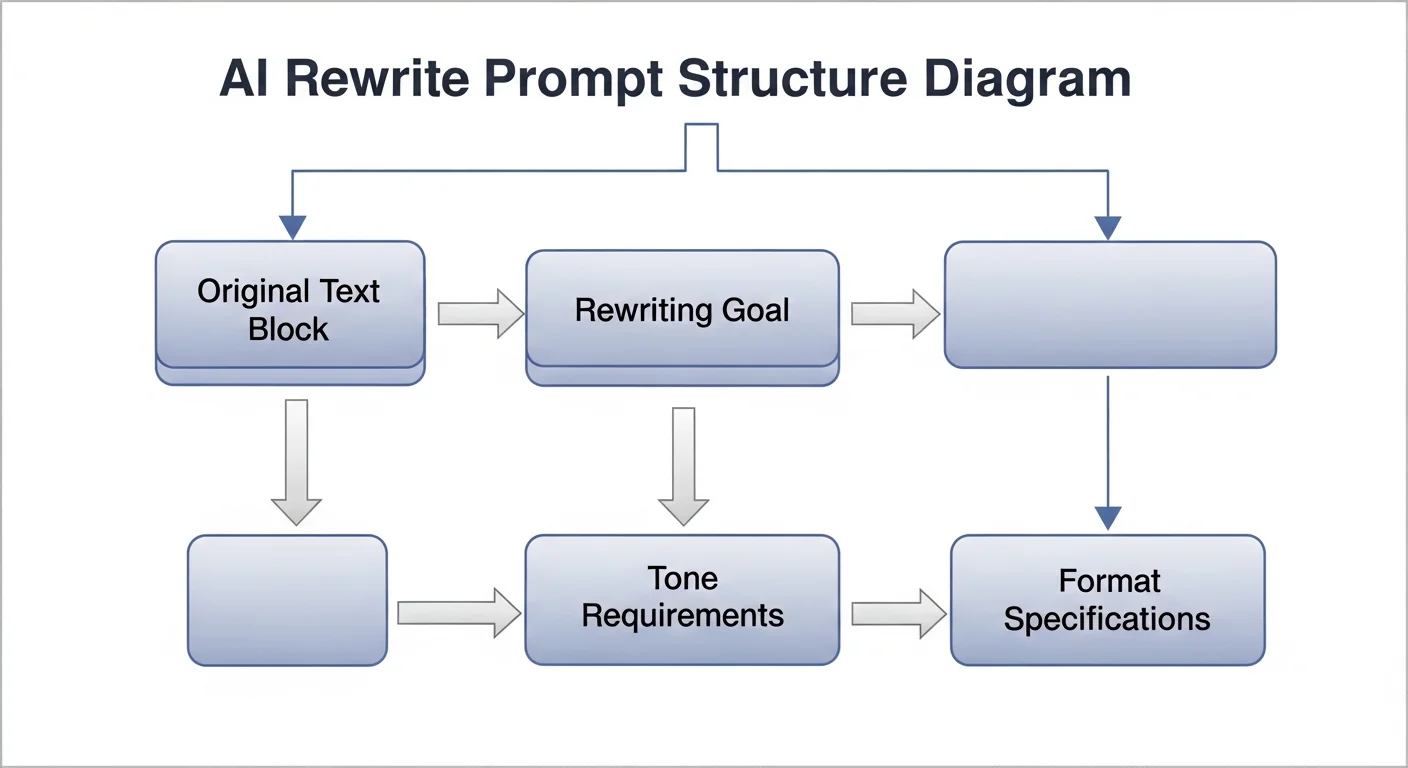
Please rewrite the following article:

[Paste original text]

Rewriting requirements:
- Preserve the original meaning
- Use a more casual tone
- Shorten by 20%
- Add subheadings
Recommendation: ★★★★★
QuillBot
A specialized rewriting tool designed specifically for text rewriting.
Key features:
- Multiple modes: Standard, Fluency, Formal, Simple, Creative, etc.
- Instant rewriting: See results as you type
- Synonym choices: Choose from different word options
- Integrations: Chrome and Word plugins
Pricing: Free version limited to 125 words per paraphrase / Premium $8.33/mo (billed annually)
Pros and cons:
- ✅ Professional rewriting features
- ✅ Intuitive interface
- ❌ Weaker multilingual support
- ❌ Free version is quite limited
Recommendation: ★★★★☆
Wordtune
An AI writing assistant that excels at sentence-level optimization.
Key features:
- Sentence rewriting: Multiple expression suggestions
- Tone adjustment: Switch between formal and casual
- Length control: Expand or shorten text
- Grammar correction: Automatic error fixing
Pricing: Free version with 10 rewrites per day / Paid Advanced from about $6.99/mo, Unlimited $9.99–$19.99/mo
Pros and cons:
- ✅ Specialized sentence optimization
- ✅ High-quality suggestions
- ❌ Not suited for long-form content
- ❌ Limited multilingual support
Recommendation: ★★★☆☆
Free Rewriting Tools Comparison
| Tool | Free Allowance | Multilingual | Standout Feature |
|---|---|---|---|
| ChatGPT | Usage limits | ★★★★★ | Most flexible |
| Claude | Usage limits (reset every 5 hours) | ★★★★★ | Great for long-form |
| QuillBot | 125 words/use | ★★☆☆☆ | Professional rewriting |
| Wordtune | 10 uses/day | ★★☆☆☆ | Sentence optimization |
| Rytr | 10,000 characters/mo | ★★☆☆☆ | Budget-friendly |
Conclusion: For most users, ChatGPT or Claude are the best starting points.
Need high-quality content optimization? Leave it to the professionals.
👉 Free consultation on LINE: @006ljkda
Hands-On AI Rewriting Techniques
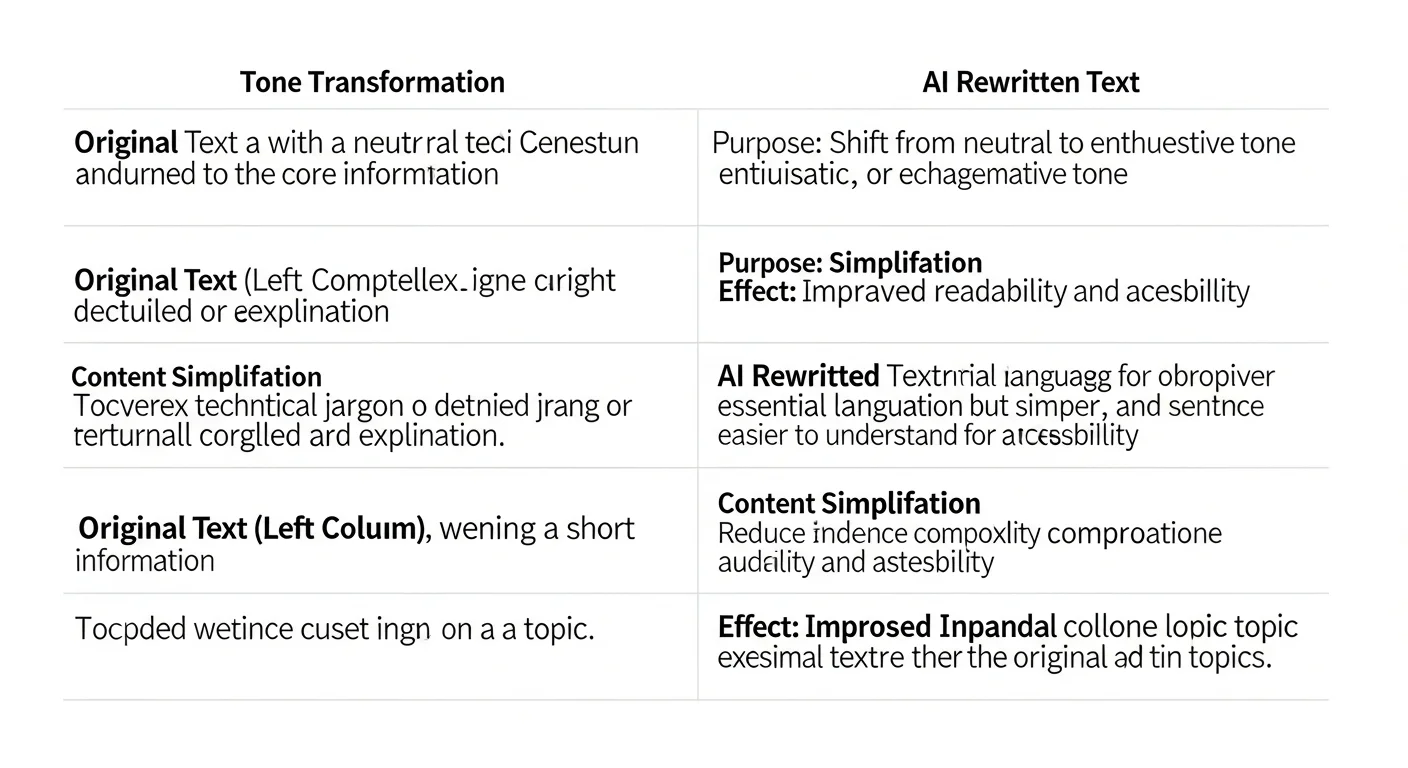
Changing Tone and Style
Common tone conversions:
-
Formal → Casual
Original: "Our company is committed to providing high-quality services" Rewritten: "We genuinely care about your experience"
-
Academic → Plain language
Original: "Studies indicate a positive correlation between sleep deprivation and cognitive decline" Rewritten: "Not getting enough sleep really does make you less sharp"
-
Cold → Warm
Original: "Please contact customer service if you have any questions" Rewritten: "Got questions? Feel free to reach out anytime — we're here to help"
Prompt example:
Please rewrite the following corporate copy in a warm,
conversational tone, as if chatting with a friend:

[Original text]
Simplifying Complex Content
Technique 1: Break up long sentences
Original: "According to numerous research findings, long-term and regular aerobic exercise can effectively improve cardiovascular health, reduce the risk of chronic diseases, and have a positive impact on mental well-being."
Rewritten: "Regular exercise has plenty of benefits. Research shows it improves heart health, lowers the risk of chronic disease, and boosts your mood."
Technique 2: Use analogies
Original: "Blockchain is a distributed ledger technology" Rewritten: "Blockchain is like a shared notebook where everyone in the class keeps a copy — and nobody can tamper with it"
Technique 3: Remove jargon
Identify technical terms and replace them with words your general audience will understand.
Expanding and Adding Information
How to use AI to expand content:
This passage is too brief. Please expand it:

[Original text]

Expansion requirements:
- Add 1-2 specific examples
- Include supporting data
- Increase content by about 50%
- Maintain the original tone
Directions for expansion:
- Add case studies or stories
- Include supporting data
- Explain context or background
- Provide practical application tips
- Add frequently asked questions
Improving Readability
Readability improvement priorities:
- Paragraph length: 3-5 lines per paragraph
- Sentence length: 20-30 words per sentence
- Visual elements: Add lists and headings
- Transition words: However, therefore, additionally...
Prompt example:
Please optimize the readability of the following article:

[Original text]

Requirements:
- Paragraphs no longer than 5 lines
- Add appropriate subheadings
- Convert complex explanations to lists
- Add transition words for clearer logic
How to Make Rewritten Articles More Original
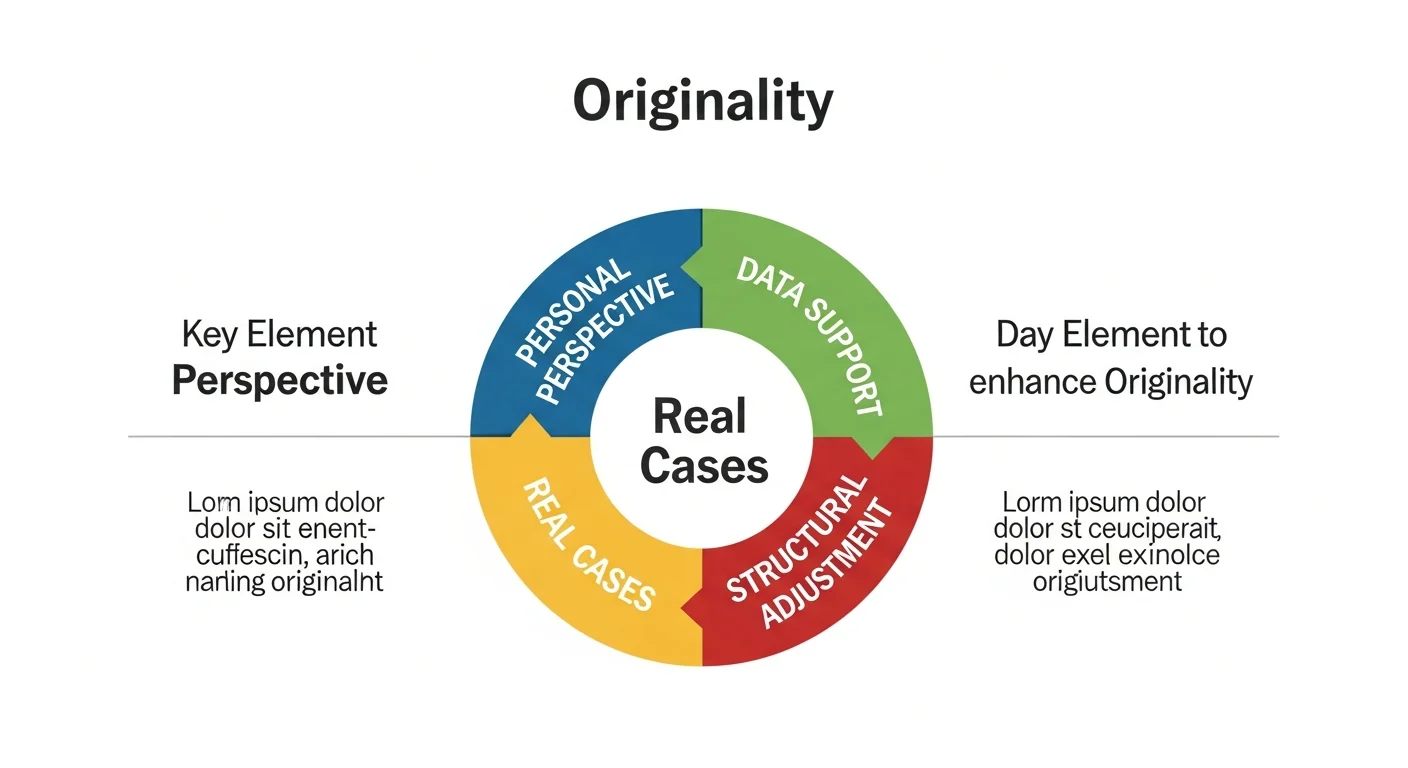
Add Your Personal Perspective
The biggest problem with AI rewriting: It lacks uniqueness.
Solutions:
-
Add your experience
"Based on my 5 years of hands-on experience..." "One mistake I used to make was..."
-
State your position
"I think this approach has a major flaw..." "If you ask me, the most effective method is..."
-
Offer exclusive insights
Analyze angles others haven't covered Combine perspectives from your professional background
Add Data and Case Studies
Making content more persuasive:
-
Include statistics
Original: "Many people use AI for writing" Rewritten: "According to [research firm]'s [year] survey, [X]% of marketers use AI-assisted writing"
(Before citing a statistic, go back to the original survey to confirm its definition and year — don't recycle percentages of unknown origin.)
-
Add real case studies
"One of our clients used this method and saw 150% traffic growth in three months"
-
Quote experts
"[Expert name] said in [source/venue]..." (verify the original source before quoting — don't paraphrase from memory)
Restructure the Article
Changing structure to increase originality:
- Reorder: Rearrange paragraph sequence
- Merge and split: Reorganize content blocks
- Change format: Convert from informational to tutorial-style
- Add new sections: Cover aspects the original didn't address
Example:
Original structure:
- What is X
- Benefits of X
- How to use X
Revised structure:
- The problem you're facing
- Why X solves it
- 3 steps to get started with X
- Advanced tips
Common AI Rewriting Questions
Will rewritten articles have copyright issues?
It depends on the extent and source:
- Your own content: No issue at all
- Public domain information: Safe to rewrite and use
- Others' protected content: Could still infringe even after rewriting
Safe practices:
- Add substantial original material
- Properly attribute cited sources
- Start with your own content whenever possible
Note: The widely repeated claim that rewriting "70%" (or 30%, or 10%) of a text makes it safe is a myth — copyright has no percentage threshold.
Will rewritten articles be flagged as plagiarism?
It depends on:
- The degree of rewriting
- Whether original elements are added
- Whether sources are properly credited
Avoiding plagiarism flags:
- Don't just swap synonyms
- Add your own analysis and viewpoints
- Restructure the organization
- Supplement with new information
Detection tools:
- Copyscape: Checks for similar content
- Turnitin: Academic plagiarism detection
- Grammarly: Includes plagiarism checking
How to evaluate rewriting quality?
Checklist:
✅ Is the original meaning preserved? ✅ Is readability improved? ✅ Are there grammar errors? ✅ Has new value been added? ✅ Is the similarity to the original too high?
Recommended workflow:
- AI produces the rewrite draft
- Manual check of original meaning
- Add original elements
- Run plagiarism detection
- Final polish
For more AI article generator tips, check out our tool reviews.
Original content services — save time with professional quality.
AI Article Rewriting FAQ
Q: Will AI rewriting lower article quality?
A: Not necessarily — it depends on how you use it. (1) Purely mechanical word-swapping will lower quality; (2) Purposeful rewriting (simplifying, improving tone) will raise quality; (3) Adding human review and original elements makes it even better. The key is treating AI as a tool, not a magic wand.
Q: How much rewriting counts as original?
A: There is no percentage threshold to apply ("rewrite 70% and you're safe" is a myth). Generally: (1) Some structural adjustments; (2) Your own viewpoints and case studies added; (3) Information the original didn't have. The focus should be on "adding value," not just "saying it differently."
Q: Which AI rewriting tool is best?
A: It depends on your needs: (1) For general rewriting: ChatGPT or Claude; (2) For professional English rewriting: QuillBot; (3) For sentence-level optimization: Wordtune. For most users, ChatGPT and Claude are the best choices. For more, see our guide on AI writing detection and humanization.
Why AI Rewriting Is Optimization, Not Laziness
The goal of AI article rewriting is to make existing content better — not to take shortcuts by copying and pasting.
Key takeaways from this article:
- Tool selection: ChatGPT/Claude work best for most users
- Rewriting techniques: Tone, simplification, expansion, readability
- Originality elements: Add perspectives, data, case studies
- Ethical considerations: Rewrite your own content and add new value
Our recommendations:
- Start by practicing on your old articles
- Don't just change the surface — add real value
- Always conduct manual review
- Think of rewriting as an "upgrade," not a "copy"
For more AI writing techniques and AI copywriting applications, check out our other articles.
All-in-one AI article service — rewriting and optimization included.