![AI Search Traffic Analysis: Tools and Methods for Tracking ChatGPT and AI Referrals [2026]](/_next/image?url=%2Fblog%2Fimages%2Fgeo%2Fai-search-traffic-analysis-01.webp&w=3840&q=75)
Open GA4 and you can see traffic from Google and traffic from Facebook. What about traffic from ChatGPT?
Most site owners can't answer. Not because it isn't there — because nobody looks. Visitors from AI platforms sit inside the referral report, mixed in with the noise, never pulled out on their own. It's 2026, this traffic stream keeps growing — at very different rates depending on the AI platform — and if you don't start tracking it now you'll miss the most important evidence for judging your GEO investment.
This guide covers three things: filtering AI traffic out of GA4, cross-checking it against Search Console's AI report, and avoiding the three most common attribution traps.

💡 Want to know how much AI traffic your site gets? We'll take a look. Free consultation
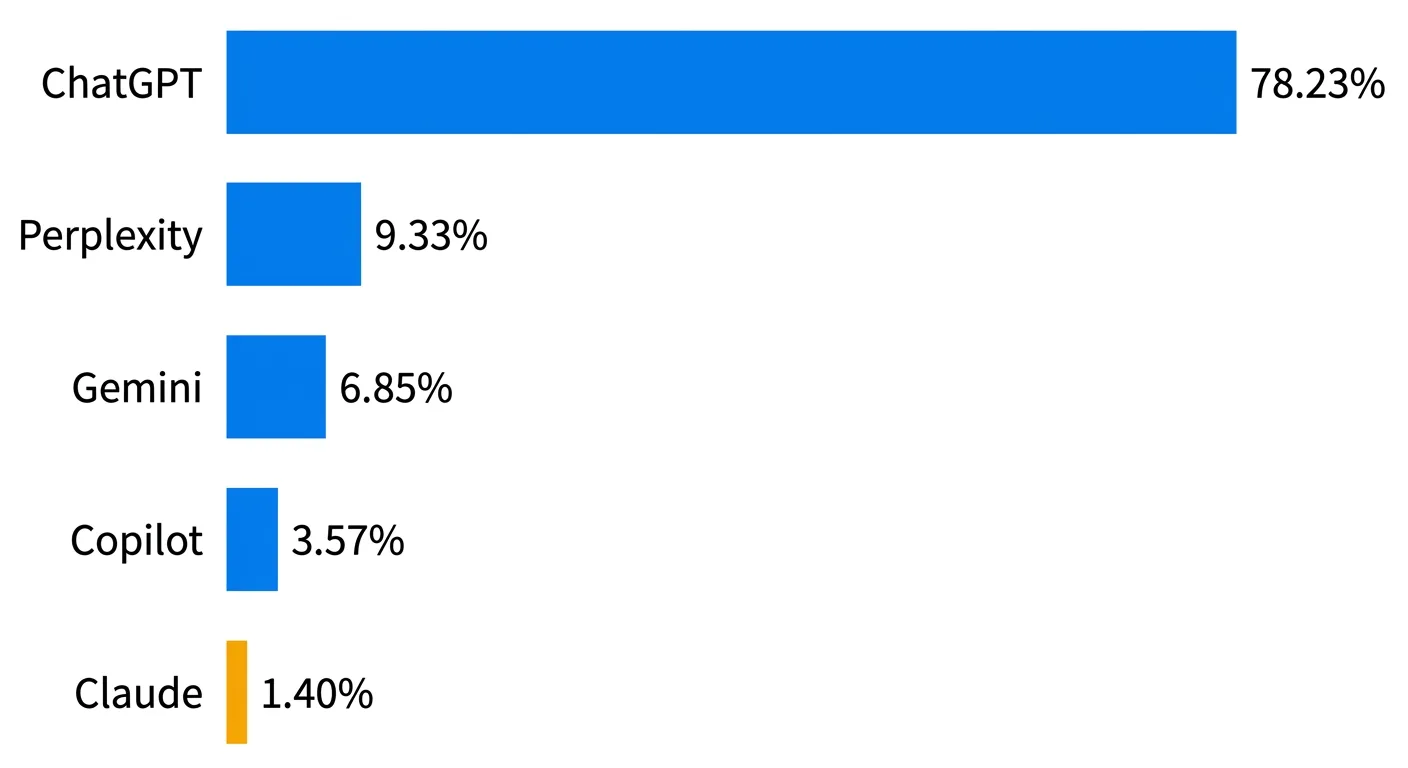
Key takeaway: AI platform referrals are dominated by ChatGPT (78.23% share), while Claude grew nearly 4x in Jan–Apr 2026 — the fastest-growing AI traffic source (SE Ranking data, Search Engine Journal, 2026). This guide sets up AI traffic tracking in GA4 and cross-checks it with GSC.
What Is AI Search Traffic, and How Does It Differ from Organic?
AI search traffic is what arrives when a user gets an answer on ChatGPT, Perplexity, or Gemini and clicks a citation link in that answer through to your site. In GA4, its technical identity is referral — not organic search.
That identity difference is exactly why most people miss it: you watch the "organic search" report while AI traffic sits in a different drawer.
Compared with regular organic traffic, AI traffic has two traits:
- Stronger intent: the visitor already read the AI's full answer before deciding to click — usually to verify details or take action, not to browse
- Small but fast-growing: don't expect it to replace Google traffic yet. SE Ranking, tracking its own Google Analytics dataset, found AI platform referrals remain a small share in absolute terms — but Claude referrals grew nearly 4x in Jan–Apr 2026 (Search Engine Journal, 2026)
Why track something small? Because in the four-tier GEO framework it's the only tier that "walks through your door" — exposure, citations, and mentions all happen elsewhere; referral is the one your own data can fully verify. Full framework in How to measure GEO performance.
How to Filter AI Platform Referrals in GA4
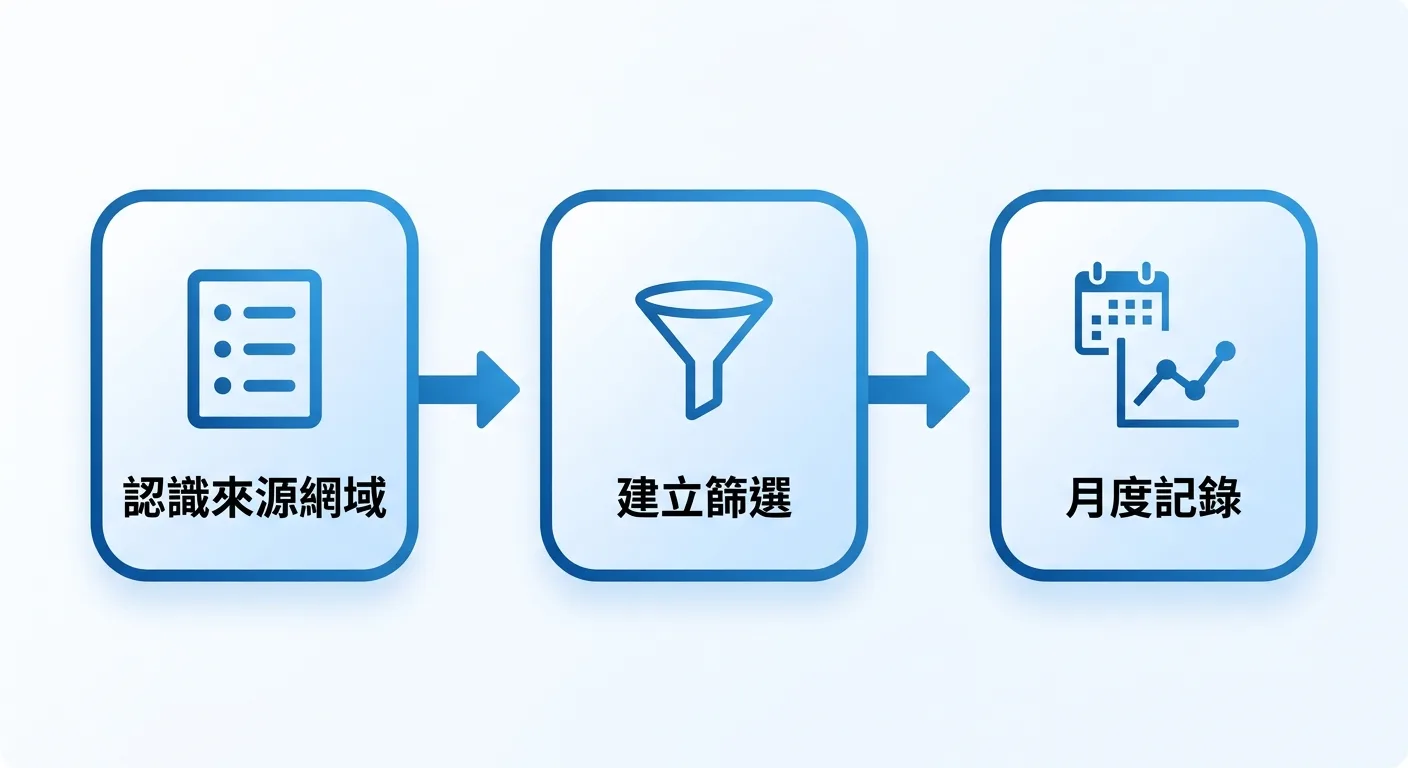
The core move in one line: in traffic acquisition reports, filter referral source domains down to AI platforms.
Step 1: Know the Common AI Source Domains
| AI platform | Common referral domains |
|---|---|
| ChatGPT | chatgpt.com, chat.openai.com |
| Perplexity | perplexity.ai |
| Gemini | gemini.google.com |
| Claude | claude.ai |
| Copilot | copilot.microsoft.com |
Two reminders. First, validate this table against your own data: open GA4's traffic acquisition report, scan the source list, and note which AI-related domains actually appear — referral domains change when platforms update, so the list needs periodic refreshing (that's pitfall two below). Second, absence doesn't prove absence — the traffic may genuinely not have arrived yet, or it may be hiding in direct (pitfall one).
Step 2: Build a Reusable Filter
Three ways to make the view repeatable, ordered by effort:
- Fastest: type the source domains into the search box on the traffic acquisition report — fine for ad-hoc checks
- Recommended: build a saved Exploration with a "session source matches AI domain list (regex)" condition and open it monthly
- Advanced: create a custom segment or custom channel group, making AI traffic a standing category parallel to organic and social
Our own monthly reports use option two: one saved Exploration, one maintained source regex, five minutes a month. Option three looks nicer but costs maintenance every time a platform changes domains — small businesses don't need it.
Step 3: Record Monthly, on a Fixed Cadence
Same principle as manual citation testing: single months mean nothing, trends do. Record three numbers monthly: AI traffic sessions, share of total traffic, engagement (or conversion) rate. Interpretation starts at three months.
A template this simple works — one spreadsheet:
| Month | AI sessions | % of total | Engagement | Notes |
|---|---|---|---|---|
| April | (number) | (share) | (rate) | baseline month |
| May | (number) | (share) | (rate) | 3 new articles published |
| June | (number) | (share) | (rate) | — |
The notes column is the key. Log each month's GEO actions (new posts, structure changes, crawler settings) beside the numbers; three months later, data and actions line up — more interpretive value than any tool's automated report.
Cross-Checking the GSC AI Report with GA4
Since June 2026, Google Search Console offers a generative AI performance report showing your content's exposure inside Google's AI features (Google official, 2026). It pairs perfectly with GA4's AI traffic data — one watches "exposure in the AI world", the other watches "actual arrivals".
The cross-check answers questions neither side can answer alone:
| GSC AI exposure | GA4 AI referral | Reading | Next move |
|---|---|---|---|
| High | High | The GEO flywheel is turning | Replicate what works |
| High | Low | Seen but not clicked | Mostly normal (zero-click era); check whether cited content invites clicks |
| Low | High | Traffic comes from non-Google AI | ChatGPT/Perplexity side is working; reinforce the Google side |
| Low | Low | AI visibility foundation missing | Back to crawlability and content structure |
Note the scope difference: the GSC AI report covers Google's own AI features (AI Overviews etc.), while GA4 referrals capture non-Google AI platforms (ChatGPT, Perplexity) — the two barely overlap, which is exactly why you need both for the full picture. GSC AI report usage in the complete guide; GSC basics in the Search Console tutorial.
A practical cadence: same week each month, pull GSC AI exposure first, then GA4 AI referrals, into one monthly sheet. For a small business this takes under half an hour and is the most direct basis for deciding whether GEO budget scales up or changes direction.
Three Common Attribution Pitfalls in AI Traffic Data
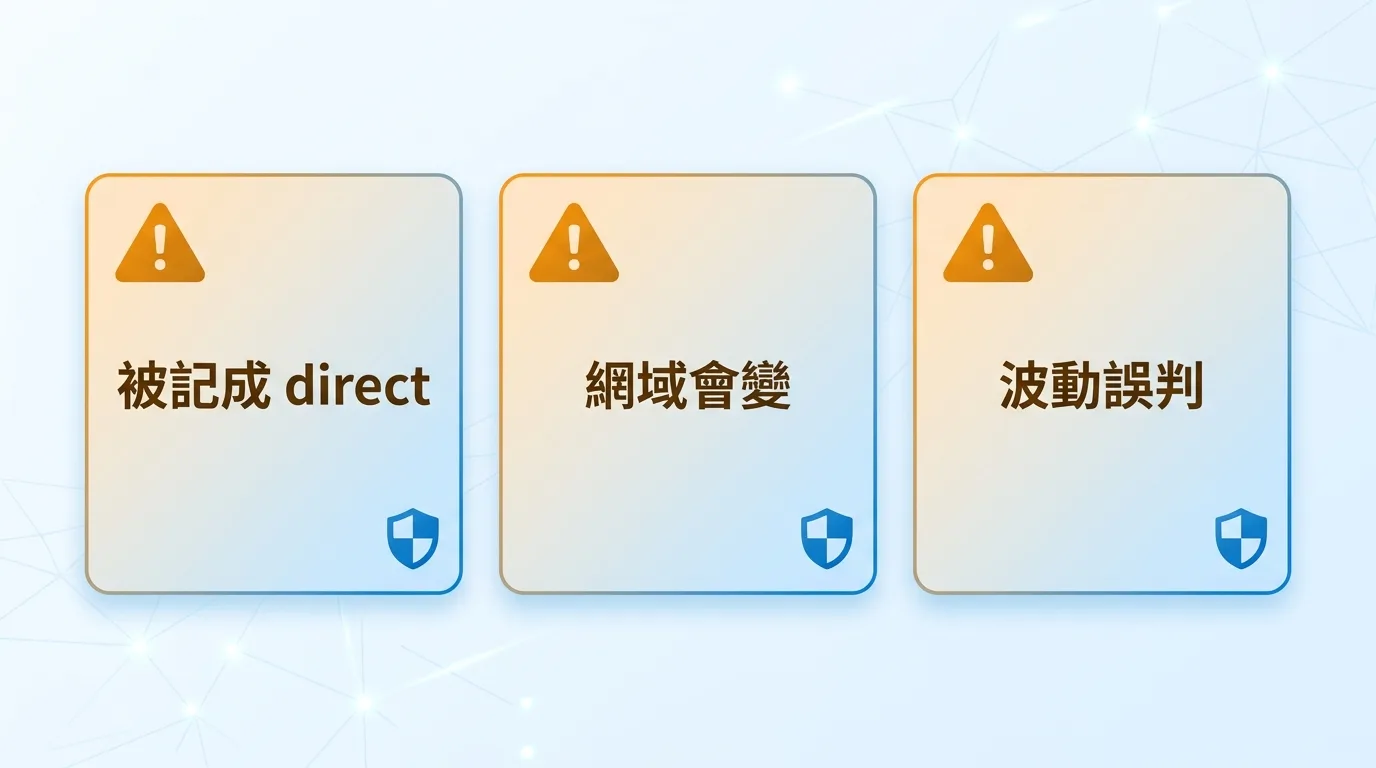
These three traps cause the most misreads we see — each one makes you underestimate or misjudge AI traffic.
Pitfall 1: AI Traffic Recorded as Direct
When users open your link from an AI app's in-app browser, or a platform strips referrer data, the visit lands in direct — not referral. Result: your visible AI traffic is an undercount.
Counter: watch for unexplained growth in direct traffic. If direct climbs after you start GEO and nothing else explains it, AI may be the invisible driver.
Pitfall 2: Referral Domains Change
Platforms rebrand, switch domains, change link behavior — and your domain list goes stale. Run a hardcoded list for a year and you'll miss every new platform.
Counter: quarterly, scan GA4's full referral source list for new AI-related domains and update your filter regex.
Pitfall 3: Small Base, Big Swings, Overreaction
AI traffic bases are small; a 50% weekly drop might be three visitors. Deciding on single data points is coin-flipping.
Counter: monthly cadence, three-month trends, watch share rather than absolutes. Same discipline as GEO measurement overall — in the AI era, stretch the time axis.
AI Referral Traffic in 2026: What the Data Says
The verifiable market data, laid out to calibrate expectations.
The referral landscape (SE Ranking, tracking its own Google Analytics dataset, 16-month totals): ChatGPT 78.23%, Perplexity 9.33%, Gemini 6.85%, Copilot 3.57%, Claude 1.40% (Search Engine Journal, 2026).
Growth momentum: in Jan–Apr 2026, Claude referrals grew nearly 4x (fastest), Gemini grew 63%, ChatGPT only 1.53% — the map is being redrawn (Search Engine Journal, SE Ranking data, 2026).
The backdrop: in the same period, 68% of US Google searches ended with zero clicks, and only 232 of every 1,000 searches clicked out to open-web sites (Search Engine Journal, 2026). The traditional traffic pool is shrinking while the AI pool grows.
The read, in three lines: ChatGPT is today's main battlefield; the map is unsettled, so early multi-platform positioning is cheapest; absolutes are still small — let trends convince you, don't let absolutes discourage you. Same conclusion as our analysis in How AI affects SEO: this is the cheapest moment to claim position.
Numbers Not Telling You Anything?
Filters built, data flowing, meaning unclear? AI SEO Hacker builds AI traffic tracking you can actually read — GEO recommendations included.
FAQ
Does AI traffic count as organic or referral in GA4?
Referral. When users click citation links from ChatGPT, Perplexity, and similar platforms, GA4 attributes the visit by source domain as referral traffic — it never enters "organic search". That's why most people can't see their AI traffic: it isn't in the report they habitually watch. You have to filter for it by source domain.
Should AI traffic get its own KPI?
Make it an "observation metric", not a performance KPI. AI referral bases are small and volatile; as a target it forces bad decisions. The sensible approach: log AI traffic share and trend monthly, read it alongside the exposure and citation tiers of the GEO framework (see How to measure GEO performance), and revisit KPI status after a year.
Will AI traffic replace Google organic traffic?
Not in the short term — but the structural shift is real. Jan–Apr 2026 US data shows 68% of Google searches end with zero clicks (Search Engine Journal, 2026), with attention moving from "clicking links" to "reading AI answers". The right strategy isn't either/or — it's making content findable by both traditional and AI search. That's why GEO runs alongside SEO.
Which AI platform sends the most traffic?
Currently ChatGPT — 78.23% of AI platform referrals per SE Ranking (16-month totals); but the fastest growers are Claude (nearly 4x in Jan–Apr 2026) and Gemini (+63% in the same period) (Search Engine Journal, 2026). The map will shift — tracking multi-platform trends beats betting on one.
Turning AI Traffic from Noise into Evidence
Three takeaways: AI traffic lives in GA4's referral drawer — pull it out deliberately; GSC's AI report covers Google while GA4 covers the rest — cross-check for the full picture; small volumes demand trend-reading and the three attribution pitfalls demand respect.
Whether your GEO investment pays off will ultimately be answered by data. Build the filter today — three months from now, you'll be one of the few site owners who can show an AI traffic trend chart.

🎯 Take Action
AI traffic is taking off, and whoever's content is ready first wins. AI SEO Hacker offers AI-driven SEO/GEO article services that make your site a source AI wants to cite.
Free consultation | View service plans
Further Reading
- Search Console AI Performance Report: The Complete Guide
- How to Measure GEO Performance: AI Search Visibility Metrics
- Google Search Console Tutorial: From Setup to Reading Reports
- How AI Affects SEO: Content Strategy for the AI Search Era
- The Complete SEO Data Analysis Guide

![How to Measure GEO Performance: AI Search Visibility Metrics Explained [2026]](/_next/image?url=%2Fblog%2Fimages%2Fgeo%2Fgeo-performance-measurement-01.webp&w=3840&q=75)