Have you noticed that more and more people are skipping Google and going straight to ChatGPT or Perplexity? This shift is disrupting the entire search ecosystem. If your website content can't be understood and cited by AI, you may be missing out on massive exposure opportunities.
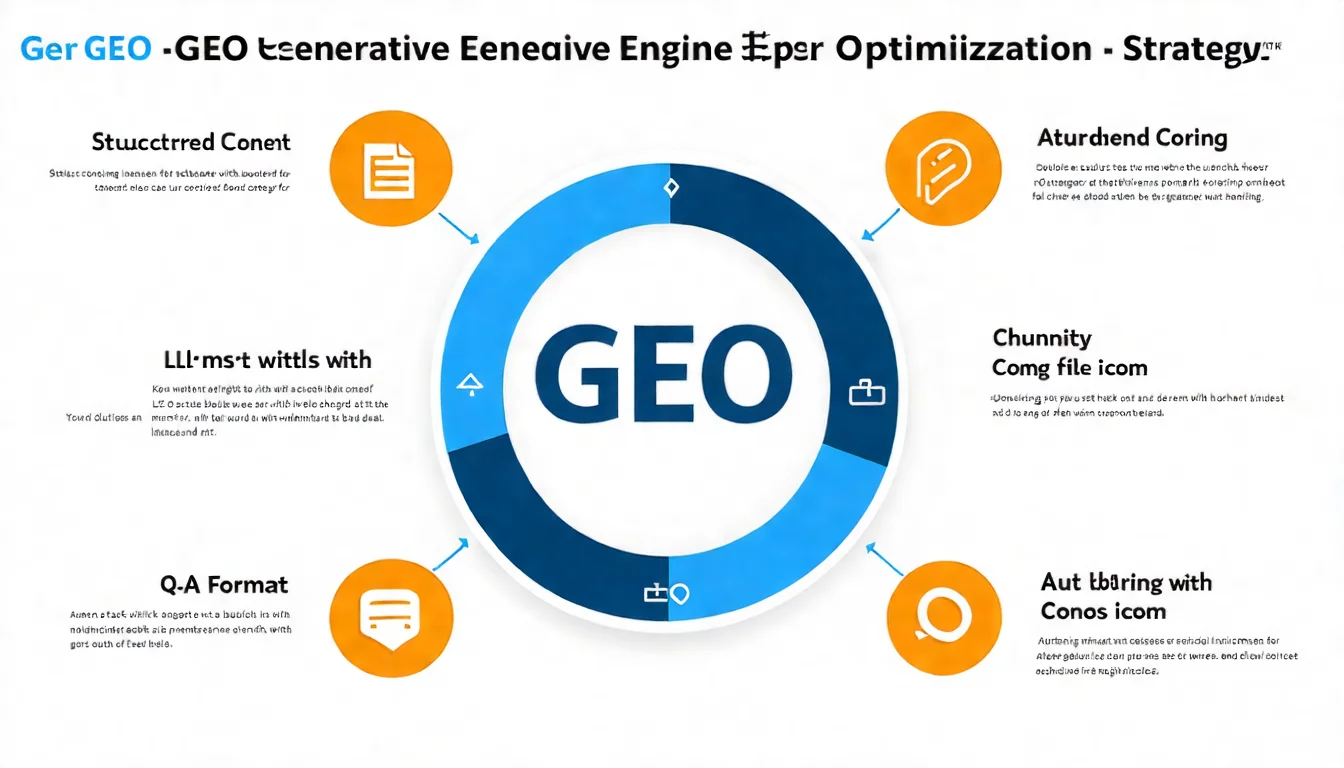
GEO (Generative Engine Optimization) was born to address this challenge. It's a new content optimization strategy designed for the AI era. This article takes you from zero, covering what GEO is, why it matters, and how to implement it — keeping your content competitive in the age of AI.
Whether you're a marketer, content creator, e-commerce owner, or business leader, mastering GEO will be an essential skill in 2026.
Want AI search engines to find your website? Free AI content optimization consultation via LINE
What Is GEO (Generative Engine Optimization)?
Definition and Origin of GEO
GEO stands for Generative Engine Optimization. It is a strategy specifically designed to optimize content for AI search engines, with the goal of making your content easier for ChatGPT, Perplexity, Claude, Gemini, and other AI tools to understand and cite.
Traditional SEO optimizes for Google rankings so users find you in search results. GEO optimizes for "the chance of being cited by AI" — when users ask AI a question, AI searches the web for information to answer, and if your content is selected as a citation source, you gain exposure and traffic.
The GEO concept originated in an academic paper published in November 2023 (arXiv:2311.09735, later accepted at KDD 2024), and was picked up by marketing circles from there. With the rapid adoption of ChatGPT Search, Perplexity, and other AI search tools in 2025-2026, GEO has evolved from "future trend" to "present necessity."
Why the AI Era Needs GEO
According to figures OpenAI published in February 2026, 900 million people worldwide now use ChatGPT weekly (up from 800 million in October 2025), and this number is growing rapidly. More importantly, user search behavior is changing:
| Traditional Search Behavior | AI Search Behavior |
|---|---|
| Open Google | Open ChatGPT / Perplexity |
| Enter keywords | Ask questions in natural language |
| Browse multiple search results | Get a compiled answer directly |
| Judge which results are trustworthy | AI compiles and labels sources for you |
When AI answers user questions, it cites web content as sources. Being cited means exposure — users see your website recommended by AI and click through to your site.
If your website isn't optimized for AI, even if your content is excellent, it may lose citation opportunities to other sites because the structure isn't clear or the format isn't suitable for AI comprehension.
How Do GEO and SEO Differ?
Many people ask: "I'm already doing SEO — do I still need GEO?" The answer is: They're complementary, and doing both is recommended. Let's look at their core differences.
Search Engine vs Generative Engine
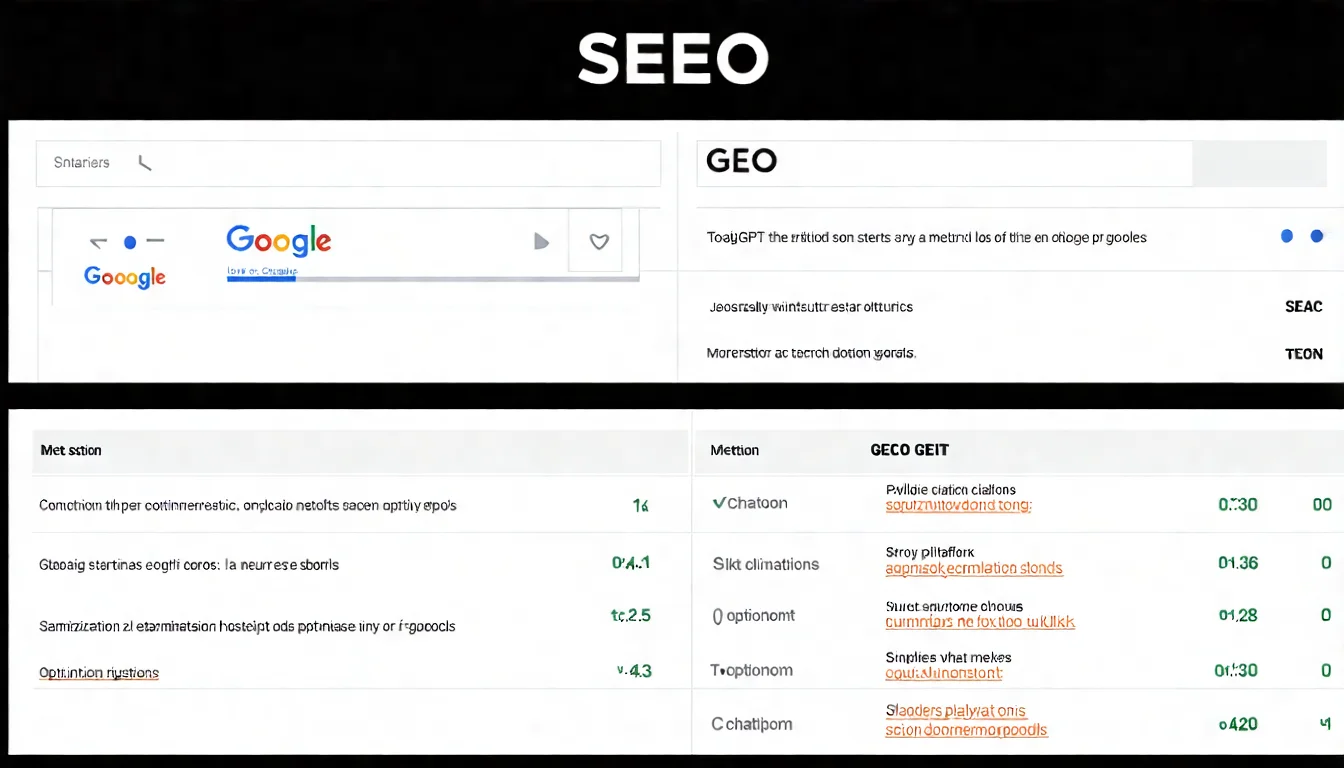
SEO targets "search engines" — traditional search platforms like Google, Bing, and Yahoo. Users enter keywords and the search engine displays a results list that users click through to view content.
GEO targets "generative engines" — AI tools like ChatGPT, Perplexity, Claude, and Gemini. Users ask questions in natural language, and AI directly generates answers with citation sources attached.
Fundamentally Different Ranking Logic
| Comparison | SEO | GEO |
|---|---|---|
| Target platform | Google, Bing, etc. | ChatGPT, Perplexity, etc. |
| Optimization goal | Improve search rankings (1st, 2nd, 3rd) | Increase probability of being cited by AI |
| Core strategy | Keyword optimization, backlinks | Semantic structure, content chunking, citation value |
| Performance metrics | Ranking position, CTR, traffic | Citation count, AI recommendation rate |
| Algorithm focus | Helpful, trustworthy content, links, technical health | Content readability, structural clarity, authority |
SEO is about competing for "limited ranking positions" — page one has only 10 spots. If you rank first, everyone else moves down.
GEO is about increasing "chances of being selected by AI" — AI may cite multiple sources simultaneously, and your goal is making AI believe your content is worth citing.
How They Complement Each Other
The good news: Doing GEO well typically helps SEO, and vice versa.
- Clear heading structure benefits both
- High-quality original content is the shared foundation
- Sound technical architecture lets both types of crawlers fetch smoothly
The caveat: Some SEO techniques may not apply to GEO, such as excessive keyword density focus or neglecting content semantic completeness.
For a deeper dive into the differences, see GEO vs SEO: Complete Comparison.
How Do AI Search Engines Work?
To optimize for GEO, you first need to understand how AI search engines find and cite your content.
Data Sources for ChatGPT and Perplexity
AI search tools obtain data primarily through two methods:
1. Real-time web search When you use ChatGPT Search or Perplexity, these tools search the web in real time, find relevant web content, then compile it into an answer. In this process, AI uses specialized crawlers to fetch web pages.
Common AI crawlers include:
- OAI-SearchBot: OpenAI's crawler for real-time search
- GPTBot: OpenAI's crawler for model training
- ChatGPT-User: fetches pages when a ChatGPT user asks for them in the moment
- OAI-AdsBot: OpenAI's crawler for advertising-related fetches
- Claude-SearchBot: Anthropic's crawler for Claude search indexing
- Claude-User: fetches pages when a Claude user asks for them in the moment
- PerplexityBot: Perplexity's dedicated crawler
2. Pre-indexed databases Beyond real-time search, AI also uses pre-built knowledge bases. These are web pages that AI companies have mass-crawled and processed.
To ensure AI can correctly crawl your site, verify that robots.txt isn't blocking these crawlers. For detailed setup methods, see AI Crawler Configuration Guide.
How AI Decides What to Cite
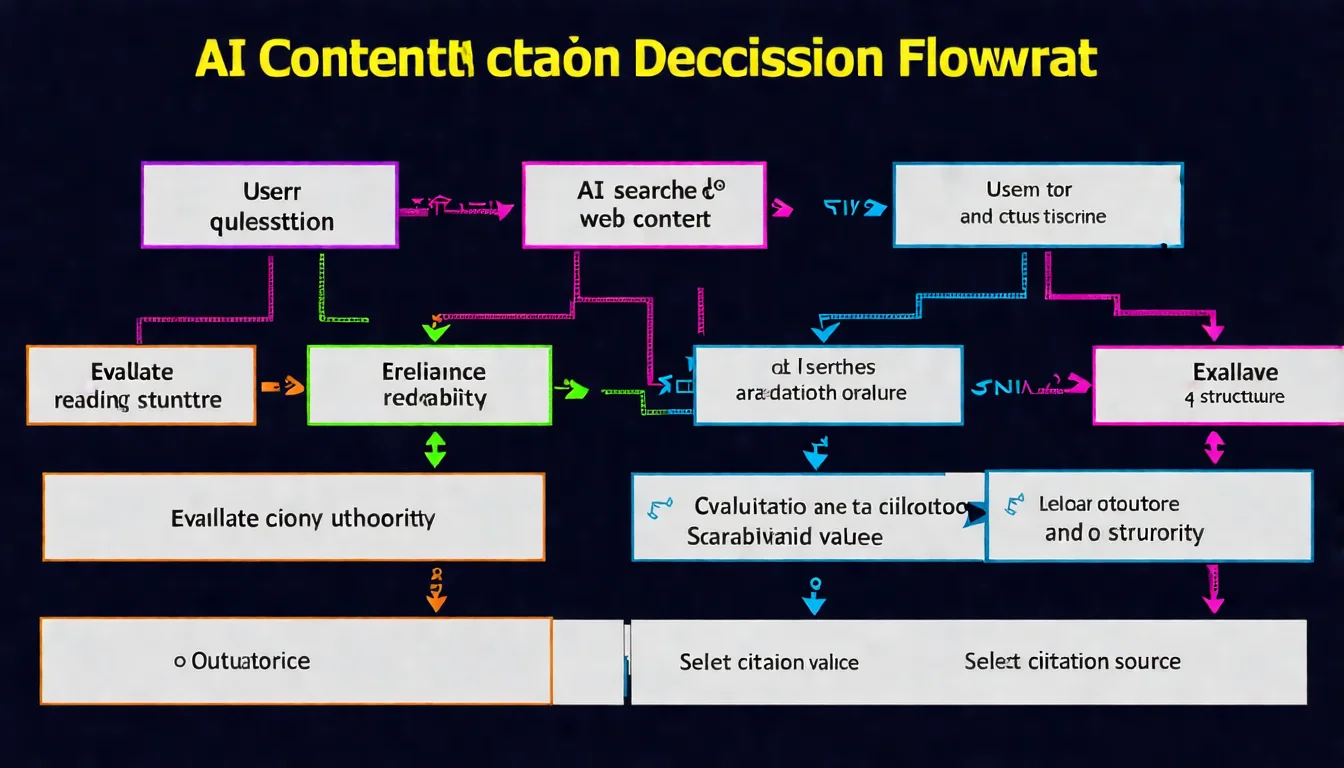
When AI decides which content to cite, it primarily considers:
Relevance
- Does the content directly answer the user's question?
- Is the topic highly relevant to the search intent?
Readability and structure
- Does content use clear heading hierarchy (H1, H2, H3)?
- Are paragraphs concise with clear key points?
- Are there lists, tables, and other easy-to-understand formats?
Authority and credibility
- Does content cite credible data sources?
- Does the website have expertise in this field?
- Does the author have relevant professional background?
Citation value
- Does content provide specific data, steps, or examples?
- Is the information timely and unique?
- Are there other authoritative sources corroborating the information?
5 Core GEO Optimization Strategies
Now let's get practical and look at how to actually implement GEO optimization. Here are the 5 core strategies:
Strategy 1: Structured Content and Schema Markup
AI loves clearly structured content. When your article has defined heading hierarchy, distinct paragraphs, and organized information, AI can more quickly understand and extract key information.
Implementation tips:
- Use clear H1/H2/H3 heading hierarchy
- Content under each heading should be highly relevant to that heading
- Use lists (ul/ol) to organize key points
- Use tables for comparisons or data
- Add FAQ Schema to make Q&A content more readable for AI
FAQ Schema example:
{
  "@context": "https://schema.org",
  "@type": "FAQPage",
  "mainEntity": [
    {
      "@type": "Question",
      "name": "What is GEO?",
      "acceptedAnswer": {
        "@type": "Answer",
        "text": "GEO (Generative Engine Optimization) is Generative Engine Optimization, targeting AI search tools for content optimization so content is more easily cited by ChatGPT, Perplexity, and other AI tools."
      }
    }
  ]
}
Strategy 2: llms.txt and AI Crawler Configuration
llms.txt is a website description file specifically for AI to read, similar to robots.txt but with a different function. robots.txt controls crawler access permissions; llms.txt tells AI "what your website is and what content it provides."
Before setting up llms.txt, though, set your expectations correctly: as of 2026, the official crawler documentation from OpenAI, Anthropic, and Google all points to robots.txt only — no major AI provider has stated that it parses llms.txt in production. An Ahrefs study published in June 2026 analyzed about 137,000 domains, roughly 28% of which publish an llms.txt file — and 97% of those files received no requests of any kind during the whole of May 2026. Its more established use today is helping developers and coding assistants read your documentation quickly. Treat it as a low-cost optional item with no demonstrated returns so far, not as a guarantee of more citations.
llms.txt basic example:
> AI-driven SEO article writing service

AI SEO Hacker provides professional AI article writing services, helping businesses rapidly produce high-quality, rankable SEO content.

## Main Services {#main-services}
- SEO article writing
- Keyword research
- Content strategy planning

## Important Pages {#important-pages}
- [Service introduction](/services)
- [Blog](/blog)
For complete setup instructions, see llms.txt Complete Setup Guide.
Strategy 3: Content Chunking
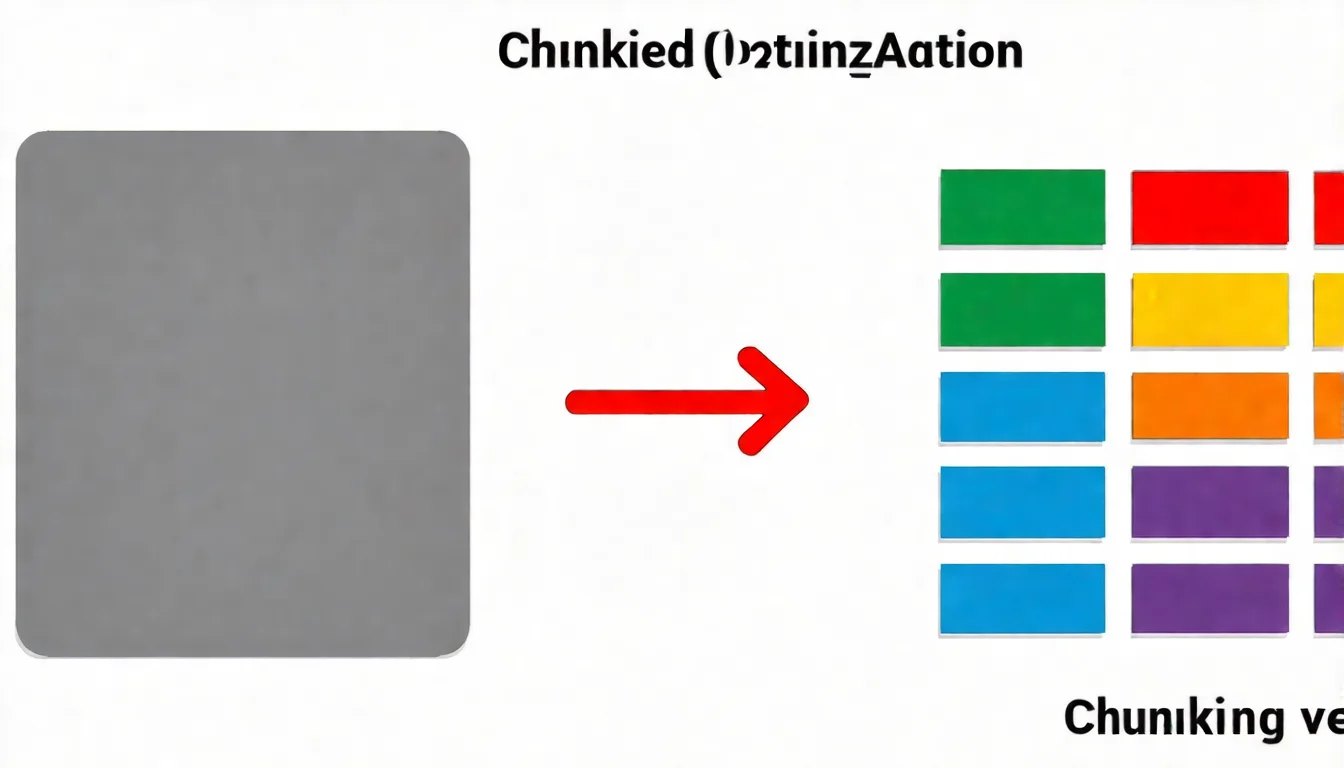
When AI processes long-form content, it splits articles into small blocks (chunks) to understand. If you proactively structure and clearly segment your content, AI can more accurately extract and cite it.
4 Chunking Principles:
| Principle | Description |
|---|---|
| Semantic completeness | Each block is a complete concept that can be understood independently |
| Appropriate length | Recommended 150-300 words per block; too long or too short isn't ideal |
| Clear headings | Each block has a clear heading summarizing the content topic |
| Logical coherence | Blocks follow a logical order with clear overall structure |
Implementation tips:
- Organize content into "question + answer" FAQ format
- Keep one point per paragraph, avoiding paragraphs longer than 5 sentences
- Add key takeaways at the beginning of articles
- Include brief summaries at section ends
For more on chunking implementation, see Content Chunking for AI.
Strategy 4: Build Authority and Citation Sources
AI tends to cite authoritative content. To increase your content's citation probability, you need to build a professional image and credibility.
Methods to build authority:
- Cite credible data: Use official statistics, research reports, and data from authoritative institutions with source attribution
- Showcase professional background: Describe relevant experience and professional qualifications in author bios
- Provide concrete examples: Use real cases to illustrate points and increase persuasiveness
- Maintain content timeliness: Regularly update articles to ensure accuracy
Example:
According to figures OpenAI published in February 2026, ChatGPT's global
weekly active users reached 900 million, up from 800 million in October 2025.
(Source: OpenAI, February 2026)
Strategy 5: Q&A Content Structure
Q&A content is the golden format for GEO. When users ask AI questions, AI searches for content that "directly answers questions." If your article is written in Q&A format, the probability of being cited increases dramatically.
Advantages of Q&A content:
- Directly matches user search intent
- Clear structure, easy for AI to extract
- Fits FAQ Schema format for structured data bonuses
- Also benefits Google Featured Snippets
Q&A content example:
### What Is GEO? {#what-is-geo}

GEO (Generative Engine Optimization) is Generative Engine Optimization,
targeting ChatGPT, Perplexity, and other AI search tools for content optimization.
The goal is to make your content easier for AI to understand and cite,
gaining exposure and traffic.

### How Is GEO Different from SEO? {#how-is-geo-different-from-seo}

The main difference between GEO and SEO lies in the target platform:
- SEO targets traditional search engines like Google and Bing
- GEO targets AI tools like ChatGPT and Perplexity
Think researching this yourself is too complex? Let AI handle your content optimization — saves time with professional results.
How to Get Started with GEO Optimization (Implementation Steps)
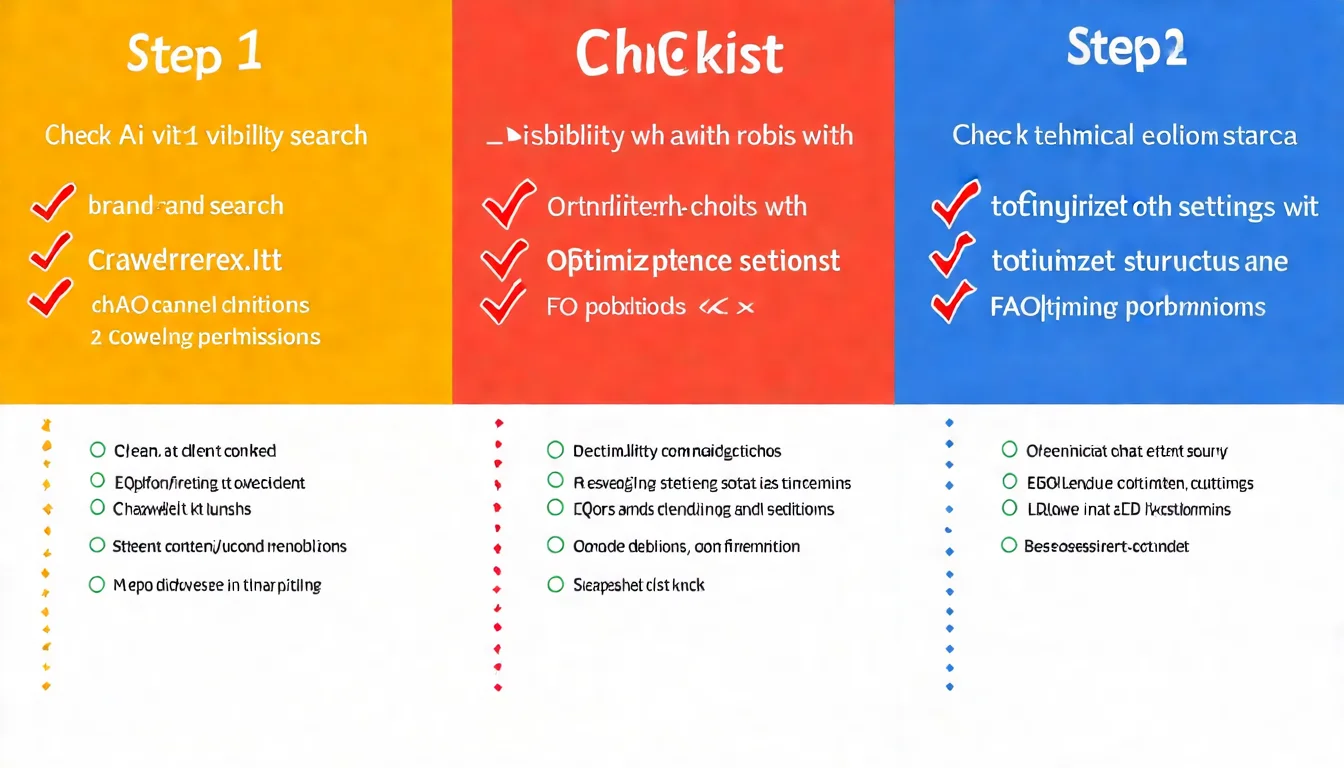
Theory covered — now let's look at practical execution. Here are 3 beginner steps:
Step 1: Check AI Visibility
First, understand how your website currently performs in AI search.
How to check:
-
Search for your brand or product in AI tools
- Open ChatGPT, Perplexity
- Search your brand name, product name, or service
- Observe whether AI mentions your website
-
Search questions you want to rank for
- Ask AI questions related to your target keywords
- Example: "recommend SEO services"
- See which websites AI cites
-
Check robots.txt settings
- Visit
https://yourwebsite.com/robots.txt - Confirm you're not blocking GPTBot, OAI-SearchBot, ClaudeBot, or other AI crawlers
- Visit
-
Review AI crawler requests
- Check your server logs (or CDN logs) for visits from AI crawlers such as GPTBot and ClaudeBot
- Search Console's Crawl Stats only shows Google's own crawlers, not third-party AI crawlers
Step 2: Set Up llms.txt and Crawler Permissions
Ensure AI can correctly crawl your website.
llms.txt setup steps:
- Create an
llms.txtfile using a plain text editor - Write your website description using Markdown syntax
- Upload to your website root directory (
https://yourwebsite.com/llms.txt) - Visit the URL in your browser to confirm content displays correctly
robots.txt configuration example (allowing AI crawlers):
User-agent: GPTBot
Allow: /

User-agent: OAI-SearchBot
Allow: /

User-agent: ClaudeBot
Allow: /

User-agent: Claude-SearchBot
Allow: /

User-agent: PerplexityBot
Allow: /
For detailed setup tutorials, see:
Step 3: Optimize Content Structure
Begin GEO optimization of existing content.
Optimization checklist:
- Are heading levels clear? (H1 unique, H2/H3 logical)
- Is there an FAQ section answering common questions?
- Are paragraphs short? (3-5 sentences max)
- Are lists and tables used to organize information?
- Are there specific data and examples as evidence?
- Are credible sources cited?
Content types to prioritize:
- Highest-traffic existing pages
- Pages directly related to your core business
- Pages already ranking in SEO
- Product or service introduction pages
GEO Strategies for Businesses
If you're an SME owner or marketer, here are some practical recommendations for your market.
SME Advantages in GEO
You might think: "Big companies have more resources — how can we compete?"
The good news: AI values content quality, not website size.
SMEs actually have advantages in GEO:
- Fast decision-making: No layers of approval needed; execute immediately
- Focused expertise: Deep content in vertical niches is more likely to be cited by AI
- Flexible adjustment: Can quickly test and optimize strategies
GEO Strategies by Industry
| Industry Type | Key GEO Strategy |
|---|---|
| B2B Manufacturing | Product technical FAQ, industry knowledge content |
| Professional Services | Expert Q&A, case study sharing |
| E-commerce Retail | Product comparisons, buying guides, review integration |
| Education & Training | Educational content, FAQ |
For more business-specific GEO strategies, see Enterprise GEO Strategy Guide.
For e-commerce-specific GEO optimization, see E-commerce GEO Optimization Guide.
FAQ
Q1: Will GEO replace SEO?
No — they're complementary.
SEO remains an important traffic channel. Google disclosed officially in March 2025 that its search handles over 5 trillion queries a year — roughly 13.7 billion a day. GEO is an "additional" exposure channel, giving you one more way to gain traffic in the AI era.
We recommend doing both because:
- Many optimization strategies help both
- Multi-channel approach reduces risk
- The two reach different user segments, expanding your reach
Q2: Do small websites need GEO?
Yes — and they may have even better chances.
AI values content quality, not website size or domain authority. A small website focused on a specific field, with professional and clearly structured content, absolutely has the potential to be cited by AI.
In fact, in niche markets, small websites may be cited more easily than large general sites because their content is more focused and specialized.
Q3: How long until GEO optimization shows results?
Technical setup takes effect quickly; content optimization requires ongoing accumulation.
- llms.txt setup: The file is readable as soon as you upload it, but don't expect results from it — major AI providers' crawler documentation currently points to robots.txt only and does not state that they parse llms.txt, and an Ahrefs study published in June 2026 found that, among sites publishing llms.txt, 97% of the files received zero requests during May 2026
- robots.txt setup: AI crawlers follow new rules within days
- Content optimization: Needs AI to re-index your content, usually days to weeks
- Overall results: In our experience, clear progress usually starts to show within 3-6 months; Google's own guidance is that some changes take effect in a few hours while others can take several months, so wait at least a few weeks before assessing
Q4: How do I track GEO performance?
GEO performance is now officially measurable. On June 3, 2026, Google launched the generative AI performance report in Search Console, covering five dimensions — impressions, pages, countries, devices, and dates (clicks are not included yet). It first opened to a subset of websites (first seen in the UK, then users in India, the US, Switzerland, and other regions reported seeing it — Search Engine Roundtable), and as of August 31, 2026 is available to all websites worldwide. Beyond that, you can:
- Regularly test in AI tools: Search your brand, products, or target keywords and observe citations
- Track AI referral traffic: Monitor traffic from chatgpt.com, perplexity.ai, and other sources in GA4 (note that the old chat.openai.com domain now permanently redirects to chatgpt.com, so update your filters accordingly)
- Use third-party AI visibility monitors: Commercial tools such as Otterly and Profound track how often your brand is mentioned and cited in AI answers
- Set up content tracking: Use UTM parameters to track conversions from AI-cited content
For the full measurement framework and how to read each metric, see How to Measure GEO Performance: AI Search Visibility Metrics.
Q5: Can I prevent AI from using my content?
Yes, but weigh the trade-offs.
The most basic approach is blocking specific AI crawlers in robots.txt:
User-agent: GPTBot
Disallow: /

User-agent: ClaudeBot
Disallow: /
If you only want to opt out of Gemini training use, robots.txt also has a dedicated Google-Extended user-agent for that.
In addition, Google introduced a Settings → Search generative AI control in Search Console in June 2026. It lets a site opt out of AI Overviews, AI Mode, and Discover AI features, and Google explicitly states the setting is not used as a ranking signal and does not affect regular search rankings. It opened to selected UK sites first and, as of August 31, 2026, is available to all websites worldwide.
However, blocking AI means your content won't be cited by these AI tools, losing potential exposure. Unless your content has special copyright or privacy considerations, we recommend allowing AI crawlers.
Want to know your website's AI visibility? LINE consultation for professional assessment
Key Takeaways: AI Era Content Strategy Summary
Let's quickly review this article's key points:
What is GEO?
- Generative Engine Optimization
- Optimizing content for AI search tools (ChatGPT, Perplexity, etc.)
- Goal is getting content understood and cited by AI
5 Core GEO Strategies:
- Structured content and Schema markup: Use clear heading hierarchy, lists, tables
- llms.txt and AI crawler configuration: Use robots.txt to make sure AI crawlers can reach your site; llms.txt is a low-cost optional extra
- Content chunking: Split content into semantically complete blocks
- Build authority and citation sources: Cite credible data, demonstrate expertise
- Q&A content structure: Use Q&A format to directly answer user questions
GEO and SEO relationship:
- Complementary, not replacement
- Many strategies help both
- Recommended: Do both simultaneously to maximize exposure
Actions you can take now:
- Check your website's AI visibility
- Make sure robots.txt isn't blocking AI crawlers (add llms.txt optionally)
- Start optimizing content structure from your most important pages
Ready to Get AI to Find Your Content?
From SEO to GEO, AI-era content strategy requires professional planning. AI SEO Hacker provides comprehensive AI content optimization services:
- Website AI visibility assessment
- llms.txt and technical configuration
- GEO optimization content strategy planning
- High-quality content production optimized for AI citation
Free consultation via LINE | View service plans
Further Reading
For deeper dives into various aspects of GEO, we recommend these articles:
- GEO vs SEO: Complete Comparison: Detailed comparison and integration strategies
- llms.txt Complete Setup Guide: Step-by-step llms.txt setup
- AI Crawler Configuration Guide: robots.txt AI crawler settings
- Content Chunking for AI: Help AI better understand your content
- Enterprise GEO Strategy Guide: Practical guide for your market
- E-commerce GEO Optimization Guide: E-commerce-specific optimization strategies
- Search Console AI Performance Report: The Complete Guide: GEO visibility is now officially measurable — how to access and read the report
- How to Measure GEO Performance: AI Search Visibility Metrics: the four-tier framework of exposure, citation, mention, and referral
References
- llms.txt Official Standard
- OpenAI Official Crawler Documentation
- Anthropic Claude Crawler Information
- Perplexity AI Crawler Information
- Aggarwal et al., "GEO: Generative Engine Optimization", Princeton University (co-authors include Georgia Tech), arXiv:2311.09735, 2023; published at KDD 2024

![What Is Persistent Search? Google's Autonomous Search Explained [2026]](/_next/image?url=%2Fblog%2Fimages%2Fgeo%2Fpersistent-search-explained-01.webp&w=3840&q=75)