You're probably already familiar with SEO (Search Engine Optimization), but you've likely been hearing more and more about GEO (Generative Engine Optimization). How do these two differ? Which one should you tackle first? Or should you do both simultaneously?
In the 2026 digital marketing landscape, AI search tools like ChatGPT and Perplexity are experiencing rapid user growth, fundamentally changing how people access information. This article provides an in-depth comparison of the core differences between GEO and SEO to help you develop the right content optimization strategy.
Whether you're a marketing professional already doing SEO or a newcomer to content optimization, you'll come away with a clear understanding of how to allocate your resources.
Want to master both SEO and GEO? Free AI content strategy consultation via LINE
What Is SEO? A Quick Review
Before diving into the comparison, let's quickly review the core concepts of SEO.
Core Concepts of Search Engine Optimization
SEO (Search Engine Optimization) aims to improve a website's organic search rankings on Google, Bing, and other traditional search engines so users can find your site when searching relevant keywords.
SEO has been evolving for over 20 years and is one of the most mature digital marketing methods. It covers three core areas:
Technical SEO
- Website speed optimization
- Mobile friendliness
- Site architecture and crawlability
- SSL security
On-Page SEO
- Keyword research and placement
- Title tags and meta descriptions
- Content quality and relevance
- Internal linking structure
Off-Page SEO
- Backlink building
- Brand mentions
- Social signals
- Domain authority
Key SEO Ranking Factors
Google's algorithm considers hundreds of factors to determine rankings, but the most critical include:
| Ranking Factor | Description | Importance |
|---|---|---|
| Content quality and relevance | Does content answer user questions? Is information comprehensive? | Very High |
| Backlinks | Quantity and quality of links from other websites | Very High |
| User experience | Site speed, mobile experience, interactivity | High |
| Technical health | Crawlability, index status, structured data | Moderate |
E-E-A-T (Experience, Expertise, Authoritativeness, Trustworthiness), which often comes up in this context, isn't in this table: Google states plainly that E-E-A-T is not itself a ranking factor. It's the framework the quality rater guidelines use to evaluate content quality. Google's systems look for content that demonstrates these qualities, so it shapes how you write rather than being a score you can earn.
In our experience, clear SEO progress usually starts showing within 3-6 months; Google's own guidance says some changes take effect in a few hours while others can take several months, and suggests waiting a few weeks before assessing results. Once rankings stabilize, they can continuously drive free organic traffic.
What Is GEO? An Introduction to Generative Engine Optimization
GEO Definition
GEO (Generative Engine Optimization) is a content optimization strategy targeting AI search tools.
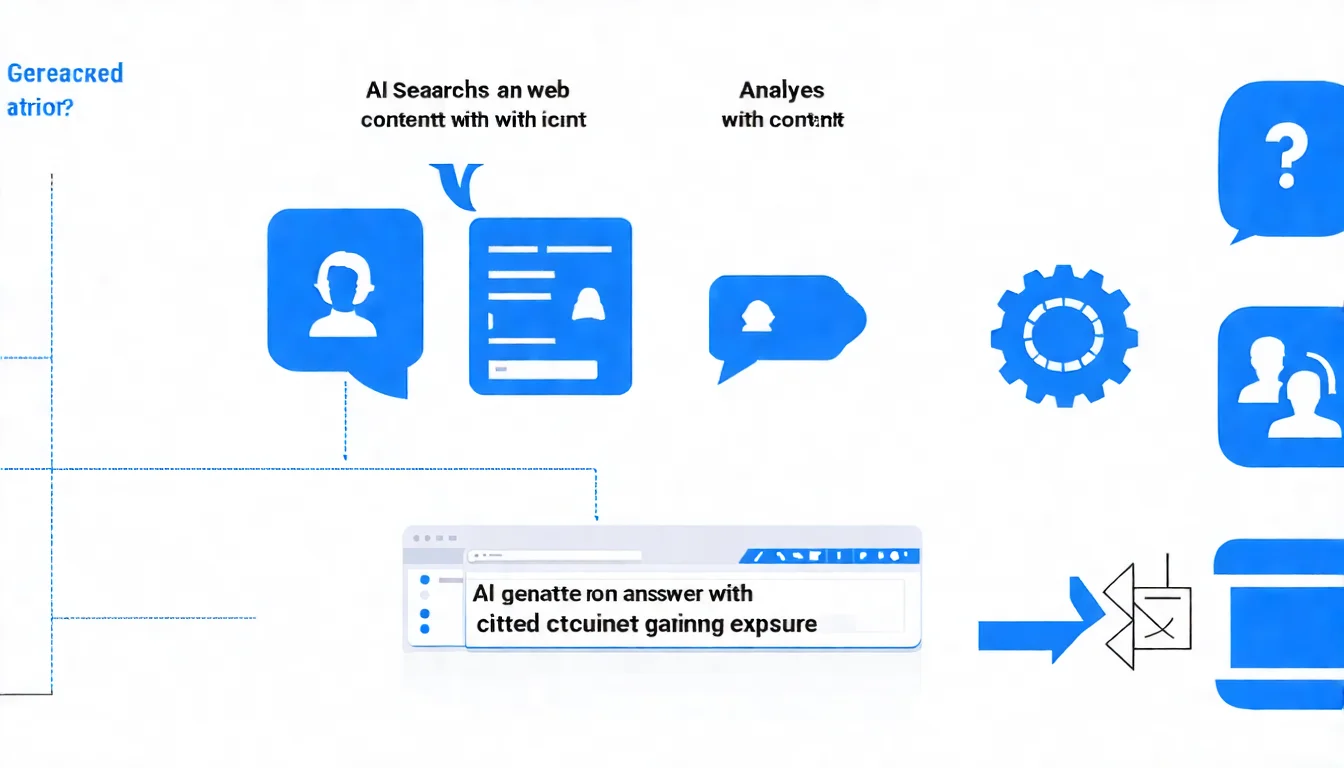
Unlike SEO, GEO's goal isn't "what position to rank" but "being cited by AI." When users ask AI a question, AI searches the web for relevant content, compiles it into an answer, and responds. If your content is selected as a citation source, you gain exposure.
GEO targets AI search tools including:
- ChatGPT (using OAI-SearchBot crawler)
- Perplexity (using PerplexityBot crawler)
- Claude (using Claude-SearchBot crawler)
- Google Gemini
- Microsoft Copilot
For a comprehensive understanding of GEO, see What Is GEO: Complete Guide.
The Rise of GEO
GEO emerged directly alongside the proliferation of AI search tools:
2024: ChatGPT launched its search functionality, beginning real-time web content searches 2025: Perplexity and other AI search tools kept growing their user bases 2026: AI search usage continues to grow as more users develop the habit of asking AI directly
These changes mean:
- How users access information is changing
- Content optimized for traditional SEO isn't necessarily suitable for AI comprehension
- Being cited by AI has become a new exposure channel
- Early GEO adoption provides a competitive advantage
GEO vs SEO: 5 Core Differences Compared
Let's dive deep into the differences between GEO and SEO across various dimensions.
Difference 1: Target Platforms
SEO target platforms:
- Google (global market share ~91% per StatCounter, August 2026)
- Bing
- Yahoo
- Other traditional search engines
GEO target platforms:
- ChatGPT / ChatGPT Search
- Perplexity AI
- Claude
- Google Gemini
- Microsoft Copilot
This is the most fundamental difference. The two platforms' operational logic, user behaviors, and presentation methods are completely different.
Difference 2: Rankings vs Citations
| Item | SEO | GEO |
|---|---|---|
| Optimization goal | Ranking position (1st, 2nd, 3rd) | Probability of being cited by AI |
| Competitive logic | Competing for limited ranking spots | Increasing chances of being selected |
| Definition of success | Higher ranking is better | Being cited equals success |
SEO is a "ranking game" — page one has only 10 positions. If you rank first, others can only be behind you. This is a zero-sum game.
GEO is more like "opportunities to be recommended" — AI may simultaneously cite multiple sources, and your goal is to make AI believe your content is worth citing. This isn't entirely zero-sum; multiple websites can be cited simultaneously.
Difference 3: Keywords vs Semantic Understanding
SEO keyword strategy:
- Research target keyword search volume
- Place keywords in titles, H1, body text
- Monitor keyword density and variations
- Track rankings for specific keywords
GEO semantic strategy:
- Ensure content semantics are clear and complete
- Use natural language to directly answer questions
- Structure content for easy AI comprehension
- Make each paragraph's topic clear and focused
Simply put, SEO emphasizes "optimizing for specific keywords," while GEO emphasizes "overall content comprehensibility."
Difference 4: Click-Through Rate vs Citation Rate
SEO core metrics:
- Ranking position
- Impressions
- Click-through rate (CTR)
- Traffic
- Conversion rate
GEO core metrics:
- Frequency of AI citations
- Completeness of citations
- Traffic from AI recommendations
- Brand mentions in AI responses
SEO tracking tools are mature (Google Search Console, Ahrefs, etc.), while GEO tracking methods are still developing, primarily relying on manual testing and traffic source analysis.
Difference 5: Optimization Timeline
| Item | SEO | GEO |
|---|---|---|
| Technical setup | Requires ongoing optimization | Mostly a one-time setup (e.g., allowing AI crawlers in robots.txt) |
| Content results | In our experience, clear progress usually starts showing within 3-6 months | Also measured in months, and harder to predict |
| Maintenance needs | Continuous monitoring and adjustment | Continuous new content production |
| Competitive changes | Algorithm updates, competitor changes | AI model updates, citation criteria changes |
GEO's technical setup (like allowing AI crawlers in robots.txt) only needs to be done once, but there's no shortcut to getting content cited by AI: you can't control when AI crawls or which page it cites. In our experience, the observation period is also measured in months, and it's harder to predict than SEO rankings.
Still deciding which to prioritize? Consult an expert for your plan via LINE
Why You Need Both SEO and GEO
After seeing the differences, you might ask: "Which one should I focus on?"
The answer is: Doing both simultaneously yields the greatest benefit.
Diversify Traffic Sources
Putting all your eggs in one basket is risky. If you only rely on Google traffic:
- Google algorithm updates could cause dramatic ranking fluctuations
- Competitors could surpass your rankings
- Search behavior changes could reduce search volume for your keywords
By pursuing both SEO and GEO simultaneously, you can:
- Get traffic from both traditional search and AI search channels
- Reduce dependency risk on any single channel
- Reach users with different search habits
Future Search Trends
AI search usage is growing rapidly:
- Younger generations (18-35) are more inclined to use AI tools
- Professional and complex questions are more often answered by AI
- Google itself is integrating AI features (AI Overviews, AI Mode)
- Voice search and AI assistant integration on mobile devices is deepening
Starting GEO now lets you build a competitive advantage early, so when AI search becomes mainstream, you're already prepared.
Optimization Strategy Overlap
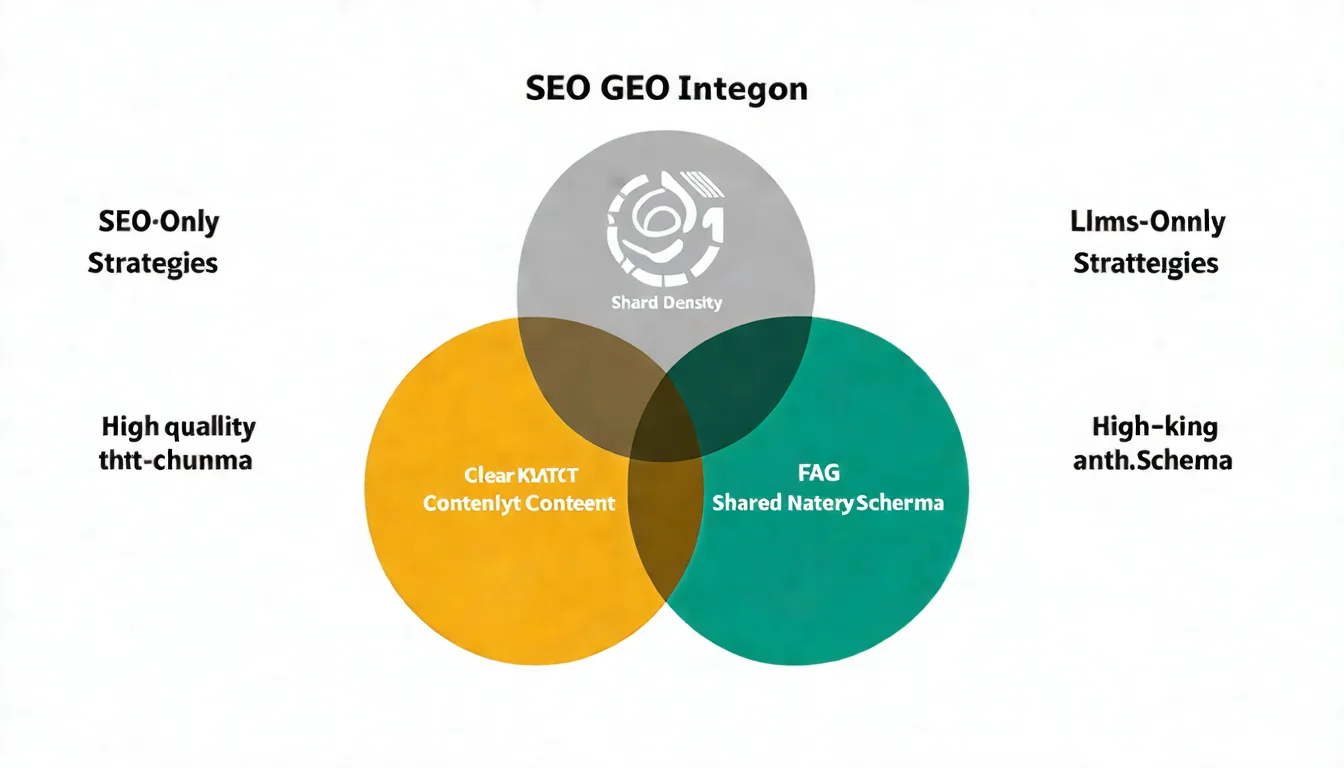
The good news is: Many optimization strategies help both SEO and GEO.
| Optimization Strategy | SEO Benefit | GEO Benefit |
|---|---|---|
| Clear heading structure | Helps Google understand content | Helps AI extract information |
| High-quality original content | Improves ranking scores | Increases citation value |
| FAQ sections | Chance for Featured Snippets | Ideal for direct AI citation |
| Structured data markup | Richer search results | Helps AI understand content types |
| Fast website speed | Improves user experience scores | Lets crawlers fetch more smoothly |
This means much of your work can accomplish both goals simultaneously.
What Google Actually Says: Will GEO Replace SEO?
"So was all my SEO work for nothing?" That's the question clients throw at us most. In July 2026, Taiwan's Global Views Monthly magazine interviewed several Google executives, and the piece answered exactly that.
The Google experts' position was clear: SEO fundamentals still matter and haven't been made obsolete by AI. The underlying technology once used to make sense of search results is now the very engine driving AI search modes. Put another way, the content quality, site structure, and organized data you've built through SEO — AI reads all of it, and it puts all of it to use.
So what should you add for the AI era? They pointed to three directions: produce more multimodal content (beyond text, images and video need to be understandable too), integrate the first-party data you already hold, and break down departmental walls so marketing, tech, and product work together. One line stuck with me — the ones who move early are the ones who get to overtake on the curve.
The answer was never "pick one." SEO is the foundation, GEO is the floors you build on top. Tear out the foundation, and the building won't stand.
Practical Advice: How to Integrate SEO and GEO Strategies
Now let's look at how to practically integrate both strategies.
Content-Level Integration
Consider both keywords and semantic structure when writing
- Naturally incorporate target keywords in titles and opening paragraphs
- Simultaneously ensure clear logic and semantic completeness
- Focus each paragraph on one topic to avoid clutter
Add FAQ sections
FAQ is extremely valuable for both SEO and GEO:
- SEO: May earn Google Featured Snippets
- GEO: Q&A format is ideal for direct AI citation
### Q: What is GEO? {#q-what-is-geo}

GEO (Generative Engine Optimization) is Generative Engine Optimization,
targeting AI search tools for content optimization. The goal is to get
content cited by ChatGPT, Perplexity, and other AI tools.
Use clear heading hierarchy
- H1: Article main title (one per article)
- H2: Major sections
- H3: Subsections
- Headings should summarize the paragraph's content
Provide specific data and examples
- Cite data from credible sources (with attribution)
- Include real-world case studies
- Use tables and lists to organize information
These practices make your content more specific and trustworthy, which helps its value for both SEO and GEO citations.
For more content structure optimization techniques, see Content Chunking for AI.
Technical-Level Integration
robots.txt configuration
Ensure you're not blocking traditional search engines or AI crawlers:
User-agent: Googlebot
Allow: /


User-agent: GPTBot
Allow: /

User-agent: OAI-SearchBot
Allow: /

User-agent: ClaudeBot
Allow: /

User-agent: PerplexityBot
Allow: /
llms.txt setup (optional)
llms.txt is a proposed format: a single Markdown file that introduces your website to AI tools. It's cheap to set up, but there's no evidence it improves AI search visibility, and Google states that you don't need to create AI text files or other machine-readable files to appear in AI Overviews or AI Mode. If you do set one up, the basic format looks like this:
> One-sentence positioning

Detailed description of what your website offers...
For complete setup instructions, see llms.txt Setup Guide.
Schema structured data
Add structured data that benefits both:
- FAQ Schema
- Article Schema
- Organization Schema
- BreadcrumbList Schema
AI crawler configuration
Confirm your website allows AI crawler access. See AI Crawler Configuration Guide for details.
FAQ
Q1: Will GEO replace SEO?
Not in the short term — the two will coexist and complement each other.
Google disclosed in March 2025 that it sees more than 5 trillion searches a year (roughly 13.7 billion a day), and traditional search remains the primary traffic source. While AI search usage is growing rapidly, it currently plays a "supplementary" rather than "replacement" role.
Possible future developments:
- Both search methods coexist long-term
- Google itself integrates more AI features
- Users choose different tools based on needs
- GEO's importance continues to grow
Recommended strategy: Pursue both simultaneously — don't bet on a single channel.
Q2: Should I do SEO or GEO first?
It depends on your website's current situation:
| Situation | Recommendation |
|---|---|
| Newly built website, weak SEO foundation | Build SEO foundation first |
| SEO already has some rankings and traffic | Can start adding GEO |
| Have resources for both | Running both in parallel is optimal |
If you need to prioritize:
- First priority: Check that robots.txt isn't blocking search engines or AI crawlers (quick to complete); you can add llms.txt along the way, but don't treat it as a priority
- Second priority: Ensure existing content structure is clear
- Third priority: Consider both SEO and GEO when creating new content
Q3: Do small websites need GEO?
Yes — but the opportunity lies in content and structure, not in skipping authority.
Google states that its AI features (AI Overviews, AI Mode) follow the same SEO best practices: a page must be indexed and eligible to be shown in Google Search with a snippet before it can appear as a supporting link. In other words, site authority and backlinks haven't stopped mattering because of AI.
Where small sites can make headway:
- Specific content that answers questions directly (small sites can do this)
- Building credibility in a specialized field (can be built in specialized fields)
- Clear, easy-to-understand structure (unrelated to site size)
A small website focused on a specific field, with professional and clearly structured content, still has a real chance of being cited by AI — provided the SEO fundamentals are in place first.
Q4: How do I measure the ROI of GEO and SEO?
SEO ROI measurement (more mature):
- Traffic growth
- Keyword ranking changes
- Conversions from organic search
GEO ROI measurement (still developing):
- Traffic from AI recommendations (referral sources in GA4)
- Brand mention frequency in AI tools
- Click-through rate on cited content
Recommended simple tracking setup:
- Tag traffic from
chatgpt.com,perplexity.aiin GA4 - Monthly brand keyword searches to observe AI responses
- Record cited pages and content
GEO and SEO: How to Choose? Key Points at a Glance
Let's review this article's key points:
GEO and SEO relationship:
- Complementary, not replacement
- Different target platforms, different optimization logic
- Many strategies help both
5 core differences:
- Target platforms: Google vs AI search tools
- Optimization goals: Ranking position vs citation probability
- Core strategy: Keyword optimization vs semantic structure
- Performance metrics: Click-through rate vs citation rate
- Optimization timeline: both take months; GEO is harder to predict
Integration recommendations:
- Content level: FAQ, clear headings, specific data
- Technical level: robots.txt, Schema (llms.txt optional)
Action items:
- Assess your website's current situation
- Check basic technical configurations (robots.txt, Schema)
- Consider both SEO and GEO when producing new content
For how businesses can practically execute GEO strategies, see Enterprise GEO Strategy.
From SEO to GEO, All in One
Not sure where to start? AI SEO Hacker provides comprehensive content optimization strategy planning:
- SEO and GEO integrated strategy
- Technical setup and content optimization
- High-quality content production optimized for AI citation
Free consultation via LINE | View service plans
Further Reading
- What Is GEO? 2026 Complete Guide to Generative Engine Optimization
- llms.txt Complete Setup Guide
- AI Crawler Configuration Guide
- Content Chunking for AI
- Enterprise GEO Strategy
References
- Google Search Central Official Documentation
- Google SEO Starter Guide
- Google: AI features and your website
- OpenAI Crawler Documentation
- StatCounter Global Stats - Global Search Engine Market Share Statistics
- Aggarwal et al. (Princeton University et al.), "GEO: Generative Engine Optimization", arXiv:2311.09735, 2023; accepted to KDD 2024

![What Is Persistent Search? Google's Autonomous Search Explained [2026]](/_next/image?url=%2Fblog%2Fimages%2Fgeo%2Fpersistent-search-explained-01.webp&w=3840&q=75)