![How to Write SEO Articles: A Complete Copywriting Guide with Structure and Techniques [2026]](/_next/image?url=%2Fblog%2Fimages%2Fseo-basics%2Fhow-to-write-seo-article-01.webp&w=3840&q=75)
You spent hours writing an article, published it, and... nobody reads it?
It's not that your writing is bad — it's that your article isn't "visible" to search engines.
SEO articles aren't some mysterious technology. They simply involve considering certain elements during writing that both search engines and readers appreciate.
This article covers: what SEO articles are, how to plan their structure, essential copywriting techniques, and common mistakes to avoid.
Master these, and your articles will win over both search engines and readers.

What Is an SEO Article?
Defining SEO Articles
An SEO article is content optimized for both search engines and readers.
Simply put, it serves two goals:
- Help search engines understand it: Through proper structure and keyword placement, Google knows what the article is about
- Satisfy readers: Provide valuable content that solves their problems
Many people think SEO articles are robotic, keyword-stuffed texts.
That's wrong.
A true SEO article reads smoothly and offers real value — it just incorporates a few technical details during the writing process.
SEO Articles vs. Regular Articles
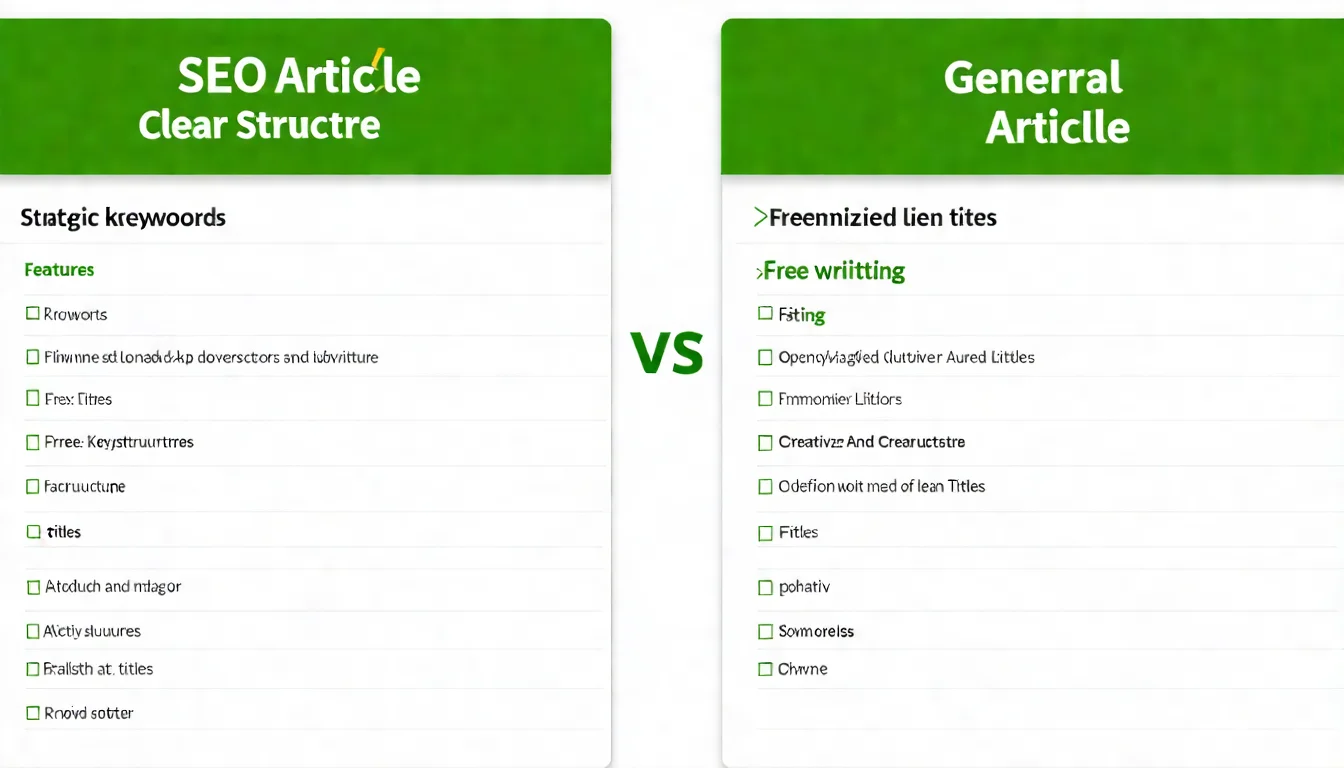
| Factor | SEO Articles | Regular Articles |
|---|---|---|
| Keywords | Strategically placed, naturally integrated | Used casually, no planning |
| Structure | Clear hierarchy, distinct headings | More freeform, may lack sections |
| Headlines | Include keywords, designed for clicks | Creative, sometimes abstract |
| Purpose | Gain rankings and traffic | Share, document, express |
| Audience | Targets people searching specific keywords | May not have a defined audience |
This doesn't mean SEO articles can't be creative.
It means building on creativity by adding elements that search engines can also understand.
Want to learn more SEO basics? Check out What Is SEO? The Complete Beginner's Guide.
Want to produce high-quality SEO articles at scale? AI handles everything from structure to content, all in one place. View pricing plans
Planning Your SEO Article Structure
A solid structure is the skeleton of an SEO article. Get the skeleton right, and the content can stand tall.
Article Structure Design
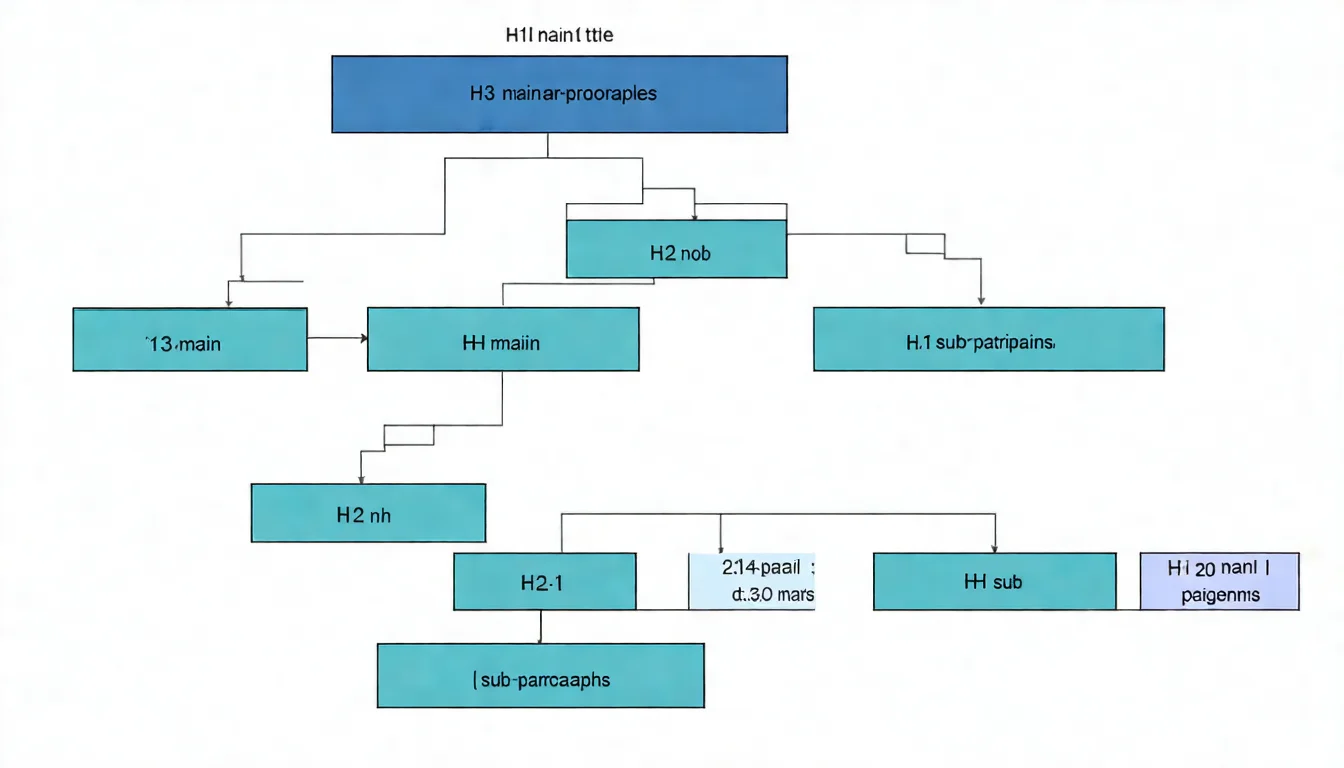
Standard structure for an SEO article:
Opening paragraph (addresses search intent, hooks the reader)

## H2 First Key Point {#h2-first-key-point}
### H3 Sub-point A {#h3-sub-point-a}
### H3 Sub-point B {#h3-sub-point-b}

## H2 Second Key Point {#h2-second-key-point}
### H3 Sub-point A {#h3-sub-point-a}
### H3 Sub-point B {#h3-sub-point-b}

## H2 Third Key Point {#h2-third-key-point}
...

## H2 FAQ {#h2-faq}

## H2 Conclusion {#h2-conclusion}
Summary + call to action
Structure design principles:
1. Get to the point quickly
The first 3 sentences determine whether readers keep going.
- Address the reader's pain point or question
- Hint that this article can solve the problem
- Create curiosity or a sense of urgency
2. Clear content sections
- Each H2 corresponds to one major point
- H3 is used for sub-topics under H2
- Keep paragraphs short — 3-5 sentences is ideal
3. Conclusion with CTA
- Summarize key points
- Give readers a next step
- Include relevant further reading
Using Heading Tags
Heading tags (H1-H6) help search engines understand content hierarchy.
H1: Article Main Headline
- Only one per article
- Must include the primary keyword
- Usually similar to the Title Tag (but doesn't have to be identical)
H2: Major Section Headings
- Typically 3-7 per article
- Each H2 corresponds to a search intent or key point
- Can include secondary keywords
H3: Sub-section Headings
- One level below H2
- Used for finer categorization
- Can include long-tail keywords
Key principles:
- Headings should ideally follow sequential order without skipping levels (good for readers and screen readers; Google says heading order itself doesn't matter for Search)
- Headings should have real meaning, not just serve as decoration
- Incorporate keywords naturally — no stuffing
SEO Copywriting Techniques
With the structure in place, let's focus on writing the content well.
Headline Writing Techniques
The headline is the first thing users see in search results. Great headline = high click-through rate.
Headline writing essentials:
1. Include the primary keyword
Place it near the beginning when possible.
Good: How to Write SEO Articles: A Complete Guide [2026]
Bad:  2026's Latest Guide About Writing SEO Articles and Everything You Need
2. Control the length
50-60 characters is a common industry rule of thumb, not a Google rule; Google sets no title length limit but truncates long titles to fit the device width.
3. Add click-attracting elements
| Element | Examples |
|---|---|
| Numbers | "10 tips," "5 steps" |
| Year | "[2026]," "2026 updated" |
| Questions | "How to?," "What is?" |
| Symbols | brackets, pipes, exclamation marks |
| Benefits | "boost rankings," "free" |
4. Communicate value
Let readers know what they'll gain by clicking.
Good headline examples:
How to Write SEO Articles: Complete Copywriting Guide with Structure + Tips [2026]
[Must-Read] 10 SEO Writing Techniques to Improve Your Article Rankings
Why Isn't Your Article Ranking? 5 Common SEO Writing Mistakes
Bad headline examples:
Article
My SEO Thoughts
Some Ideas and Suggestions About How to Write a Good SEO Article (too long)
Writing Meta Descriptions
The Meta Description is the text below the headline in search results. While it doesn't directly impact rankings, it affects click-through rates.
Writing essentials:
- Length: Google doesn't specify a character limit — snippets are truncated dynamically based on device and pixel width (and Google often rewrites them anyway), so put the most important message first instead of leaving it in the part that may get cut
- Include keywords: They'll appear bolded
- Describe the content: Let people know what they'll find
- Add a call to action: "Learn now," "Get started today"
Examples:
Good: Want to write articles that rank? This guide teaches you SEO article
      structure and copywriting techniques — step-by-step with examples.

Bad:  This is an article about SEO.
Body Copy Techniques
1. Integrate keywords naturally
Keywords should appear in:
- The opening paragraph
- H2 and H3 headings
- Naturally throughout the body text
- The closing paragraph
Remember: it must read naturally. If it feels forced, you've over-optimized.
2. Keep paragraphs short and readable
- 3-5 sentences per paragraph
- Avoid paragraphs longer than 150 words
- One point per paragraph
On mobile, long paragraphs become walls of text that are hard to read.
3. Use lists and tables
- Lists make key points scannable
- Tables are great for comparisons and organizing information
- They increase "skimmability"
4. Provide real value
- Don't just discuss concepts — include concrete examples
- Provide actionable steps
- Use data to support your points
5. Use simple, clear language
- Write as if explaining to a five-year-old
- Avoid excessive jargon
- Explain technical terms when necessary
SEO article writing taking too long?
Let AI handle content production so you can focus on strategy and creativity. Spend your saved time on what matters most.
Analyzing SEO Article Examples
Let's look at what makes a good SEO article.
Characteristics of a Good SEO Article
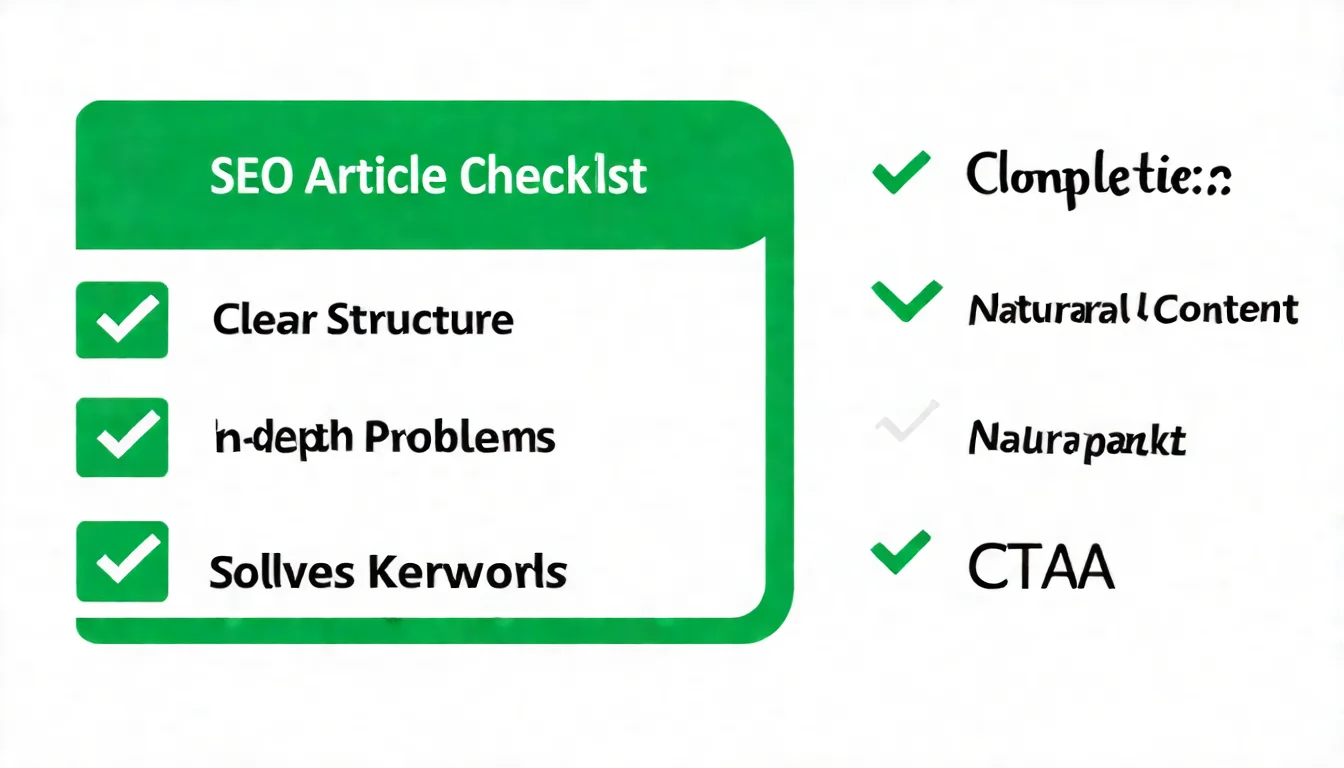
1. Clear structure, answers found quickly
Good SEO articles let readers scan and find the information they need.
Headings clearly indicate the content — no need to read from top to bottom.
2. Comprehensive content with sufficient depth
More complete and in-depth than competitor articles.
If competitors list 5 tips, you list 10. If they only explain concepts, you provide practical examples.
3. User-oriented, solves real problems
It's not written for your own satisfaction — it's written for people with problems.
Answer their questions. Address their pain points.
4. Keywords naturally integrated
Reads smoothly, never feels like keywords were forced in.
5. Clear CTA
Tells readers what to do next.
Common Mistakes to Avoid
1. Keyword stuffing
Bad example:
SEO articles are an important SEO technique in SEO optimization. To write
good SEO articles, you need to understand the SEO principles of SEO articles
so your SEO articles achieve good SEO results.
Done right:
SEO articles are a powerful way to drive search traffic. To create content
that ranks, you need to master the right writing techniques — satisfying
both search engines and readers.
2. Thin content
All concepts, no substance.
Bad:  SEO is important. You should do SEO.
Good: SEO can bring you free traffic. According to BrightEdge's 2019 Channel
      Report, organic search accounted for about 53% of trackable website
      traffic, versus about 15% for paid search.
When you cite a statistic, always name the source and the year so readers can verify it and know which point in time it describes (the figure above is 2019 data — traffic mix has shifted since AI search became mainstream). If you can't find the origin of a number, leave it out.
3. Ignoring readability
Paragraphs too long, no sections, no lists.
On mobile, it becomes a wall of text. Readers close the tab immediately.
4. Headline doesn't match content
The headline says "10 tips" but the content only has 5.
Readers feel misled and leave, and their trust in you takes a hit.
5. Forgetting search intent
Someone searching "how to write SEO articles" wants a tutorial. Giving them a sales page misses the mark entirely.
SEO Article Writing Checklist
After writing your article, run through this checklist:
Headlines and Meta
- Headline includes the primary keyword
- Headline is concise with the most important words first (50-60 characters is a rule of thumb)
- Headline has click-attracting elements
- Meta Description front-loads the key message so truncation doesn't hurt
- Meta Description includes the keyword
Content Structure
- Only one H1, includes the keyword
- 3-7 H2 headings with clear structure
- Headings follow sequential order, no skipping
- Opening 3 sentences are compelling
- Conclusion includes summary and CTA
Content Quality
- Solves the reader's problem
- More comprehensive than competitors
- Includes concrete examples and data
- Language is simple and clear
- Paragraphs are short (3-5 sentences)
Keywords
- Primary keyword appears in the headline
- Keyword appears in the opening paragraph
- Keywords are naturally distributed throughout
- No keyword stuffing
Word Count
- Long enough to answer the reader's question completely, with nothing important left out
- No padding or repetition added just to increase length (Google sets no word-count threshold; word count is not a ranking factor)
Want to learn more optimization techniques? Check out the Complete On-Page SEO Guide.
How to Start Writing Your First SEO Article
SEO articles aren't difficult — they just require considering a few extra elements during writing.
Let's recap today's key takeaways:
1. The nature of SEO articles
- Optimized for both search engines and readers
- Not keyword stuffing, but strategic placement
2. Structure planning
- Clear heading hierarchy (H1-H3)
- Get to the point quickly, end with a CTA
3. Writing techniques
- Headlines should include keywords and be compelling
- Content should be thorough and valuable
- Keywords should be naturally integrated
4. Avoid common mistakes
- Don't stuff keywords
- Don't write thin content
- Don't ignore readability
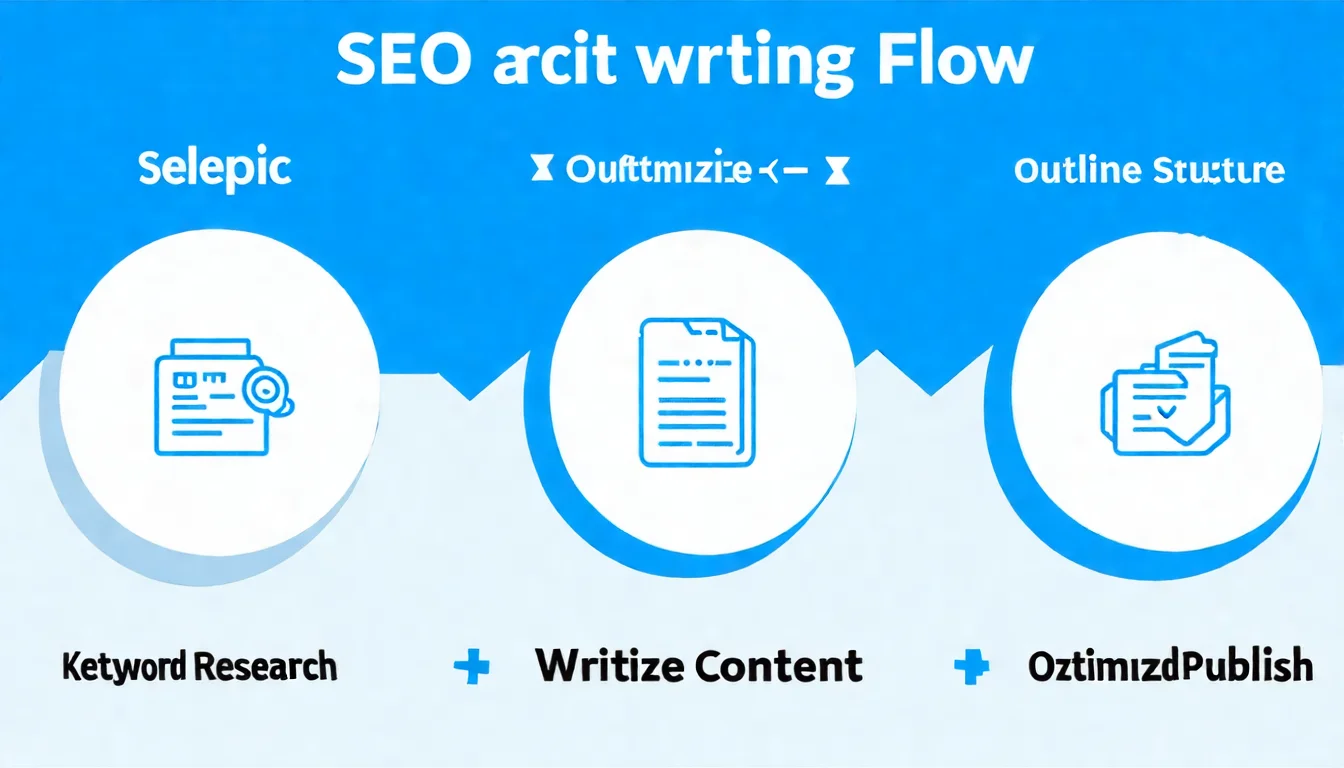
Your action plan:
- Choose a topic you're knowledgeable about
- Do keyword research to find your target keyword
- Analyze top-ranking competitor articles
- Plan a more comprehensive structure than theirs
- Write using today's techniques
- Track performance after publishing, and keep optimizing
Remember: writing is a skill, and practice makes perfect.
Your first SEO article may not be perfect, but as long as you keep writing and optimizing, you'll get better over time.
Have SEO writing questions?
Not sure if you're doing it right? Feel free to reach out for a free LINE consultation — we'll help you review!
Further Reading
- What Is SEO? The Complete Beginner's Guide
- SEO Tutorial for Beginners: Learn SEO from Scratch
- What Is On-Page SEO? A Complete Guide to On-Site Optimization
- Combining AI Writing with SEO
References
- Google Search Central - Creating Helpful Content
- Google Search Central - Snippets in search results
- BrightEdge - Organic Share of Traffic Increases to 53% (May 2019 data)
- Backlinko - How to Write a Blog Post
- Ahrefs - SEO Copywriting
![What Is On-Page SEO? A Complete Guide to On-Site Optimization [2026]](/_next/image?url=%2Fblog%2Fimages%2Fseo-basics%2Fon-page-seo-guide-01.webp&w=3840&q=75)
![What Is SEO? The Complete Beginner's Guide to Search Engine Optimization [2026]](/_next/image?url=%2Fblog%2Fimages%2Fseo-basics%2Fwhat-is-seo-01.webp&w=3840&q=75)
![What Is Parasite SEO? 38 Fake Sites Are Poisoning AI Insurance Answers [2026]](/_next/image?url=%2Fblog%2Fimages%2Fseo-basics%2Fparasite-seo-ai-01.webp&w=3840&q=75)