![AI Content Detection Guide | How to Tell If an Article Is AI-Generated [2026]](/_next/image?url=%2Fblog%2Fimages%2Fcontent-marketing%2Fai-content-detection-guide-01.webp&w=3840&q=75)
When using AI to write articles, the biggest concern is getting caught.
Will your boss find out? Will Google penalize you? Will your professor fail you?
This article reveals the truth about AI content detection: how these tools work, how accurate they really are, and what you should actually worry about.
What Is AI Content Detection?
How AI Detection Tools Work
AI content detection tools are software designed to determine whether a piece of writing was generated by AI.
How do they make that judgment?
AI detection tools primarily analyze two metrics:
1. Perplexity
This measures how "unpredictable" the text is.
- AI-generated text tends to be very "smooth" with low perplexity
- Human-written text is more "varied" with higher perplexity
In simple terms, if every word is easily predictable from the previous one, it's likely AI-written.
2. Burstiness
Humans naturally alternate between long and short sentences and make abrupt shifts.
- AI-generated sentences tend to be uniform in length
- Human writing has much greater variation in sentence length
By combining these two metrics, detection tools produce a probability score for how likely content is to be AI-generated.
Why Does AI Content Detection Matter?
Academic Integrity
Schools and research institutions need to verify that student and researcher work is original. AI-written papers may violate academic integrity policies.
Content Quality Assurance
Editors and reviewers need to assess whether submissions reflect genuine human thought. Purely AI-generated content may lack depth and unique perspectives.
SEO Considerations
While Google has stated it won't "penalize AI content" per se, a flood of low-quality AI content could harm a site's reputation.
For more on content marketing strategy, see our complete guide.
Top AI Content Detection Tools Reviewed
There are many AI detection tools on the market. Here are the most commonly used ones.
GPTZero
Overview
- Pricing: Free tier / paid tiers (Professional and others, billed monthly or annually, with annual billing cheaper) — check the official pricing page for current figures
- Focus: Detection tool designed for education
Pros:
- Most widely used in academic settings
- Provides detailed detection reports
- Supports batch detection
Cons:
- Free version has word count limits
- Lower accuracy on short texts
Best For: Teachers, academic institutions
Originality.AI
Overview
- Pricing: Pro from $14.95/month (about $12.95/month billed annually), plus an Enterprise plan and pay-as-you-go credits — see the official pricing page
- Focus: Combined plagiarism and AI detection
Pros:
- Relatively high accuracy
- Detects content from ChatGPT, Claude, and other AI models
- Dual plagiarism + AI detection
Cons:
- The free Basic plan covers AI detection only (3 scans per day, up to 2,000 words per scan); plagiarism checking and the full toolset require a paid plan
- Higher-tier plans get expensive
Best For: Content teams, publishers
Copyleaks AI Detector
Overview
- Pricing: Free trial / Paid plans
- Focus: Enterprise-grade solution
Pros:
- Multi-language support
- Easy API integration
- Supports multiple file formats
Cons:
- More complex interface
- Primarily aimed at enterprise users
Best For: Enterprises, large organizations
ZeroGPT
Overview
- Pricing: Free tier available, plus MAX and EXPERT paid subscriptions and tiered API access — see the official site
- Focus: Basic detection without paying
Pros:
- Usable on the free tier (each check is capped — the site shows a 15,000-character limit)
- Simple interface
- Instant results
Cons:
- Average accuracy
- Basic features only
Best For: General users, quick checks
Winston AI
Overview
- Pricing: 14-day free trial (2,000 credits); paid plans start at Essential $18/month (about $10/month billed annually) — see the official pricing page
- Focus: Marketing copy claims 99.87% accuracy (Winston 5.0, in-house testing)
Pros:
- User-friendly interface
- Detailed reports
- Can detect text within images
Cons:
- Accuracy claims may be overstated
- Not the cheapest option
Best For: Users who need detailed reports
Concerned about AI article quality? Let a professional team optimize it for you.
👉 Free LINE Consultation: @006ljkda
AI Detection Accuracy Comparison
Real-World Accuracy Testing
Key insight: No AI detection tool is 100% accurate.
The one publicly available head-to-head test we could verify is a 3,000-sample benchmark GPTZero published in September 2025 — note that GPTZero published it themselves, so it is not a neutral third party and should be read with that discount:
| Tool | Accuracy | False Positive Rate |
|---|---|---|
| GPTZero | 99.3% | 0.24% |
| Copyleaks | 90.7% | 5.26% |
| Originality.AI | 83.0% | 4.79% |
Source: GPTZero vs Copyleaks vs Originality benchmark. ZeroGPT and Winston AI were not included in that test, and we could not find credible third-party accuracy data for them, so we list no figures.
How to interpret these numbers:
- "Accuracy" = how often the tool got it right overall (counting both human-written and AI-written samples)
- "False Positive Rate" = probability of incorrectly flagging human-written content as AI
- Vendor-published figures tend to run optimistic; separately, Stanford HAI research on several detectors found that a substantial share of essays written by non-native English speakers were misclassified as AI-generated
False Positive Analysis
Common false positive scenarios:
- Technical content: Articles heavy with specialized terminology are often misidentified as AI
- Translated content: Translated articles tend to have more regular structure
- Non-native writing: Writing by non-native speakers may trigger false positives
- Formulaic writing: Content following strict templates
What does this mean?
- Detection results should be treated as reference points, not definitive verdicts
- Being flagged as AI content doesn't mean it was definitely AI-written
- Passing detection doesn't guarantee human authorship
How to Reduce AI Detection Probability
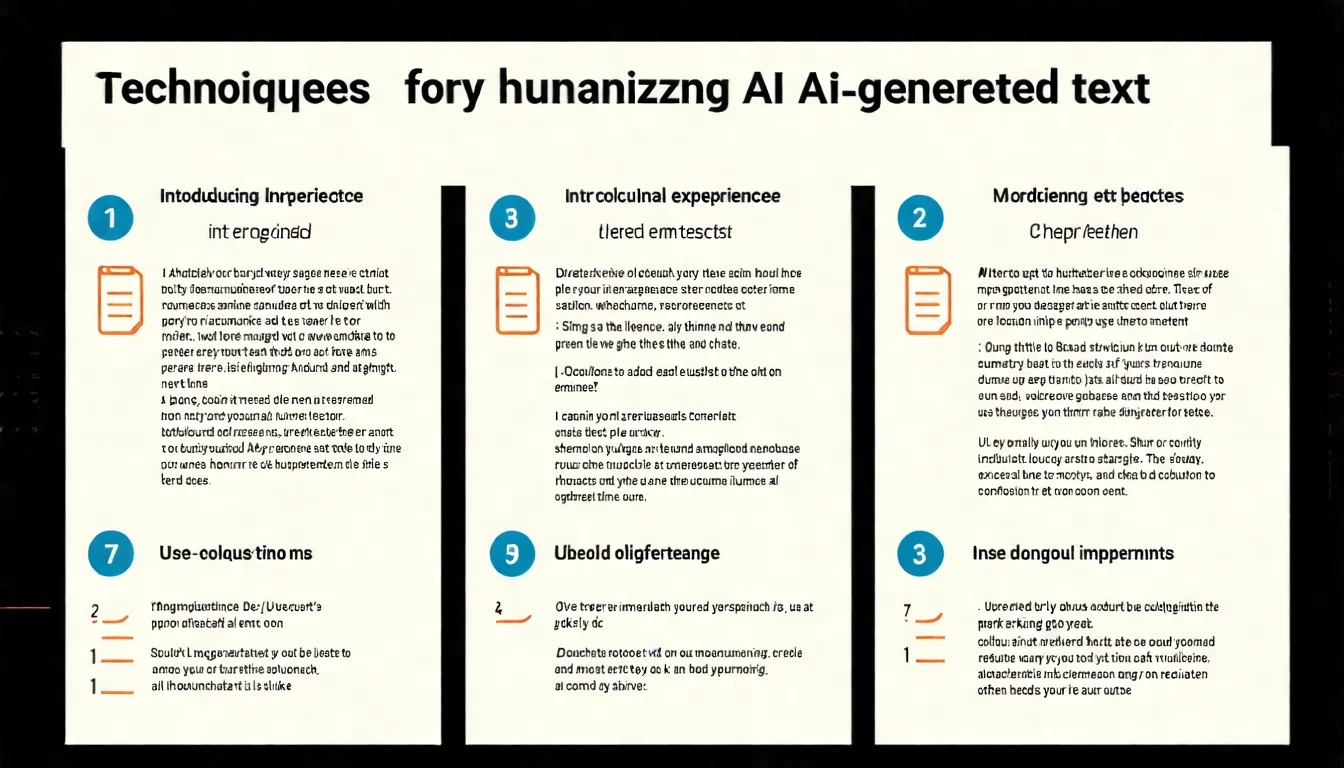
If you use AI to assist your writing, these techniques can make your articles sound more natural.
Content Structure Adjustments
Break AI's predictable patterns
AI-generated articles typically have very uniform structure: paragraphs of similar length and arguments that unfold in similar ways.
How to adjust:
- Vary paragraph lengths — mix long and short
- Rearrange the order of arguments
- Include tangential thoughts or associations
Add personal experience
AI has no real-world experience — this is the most obvious differentiator.
How to incorporate it:
- Share actual cases you've encountered
- Describe your thoughts and feelings
- Include first-person perspectives
Humanize Your Writing Style
Use conversational language
AI tends toward formal, standard language. Human conversation is filled with colloquialisms and informal expressions.
For example:
- AI: "This methodology is highly effective."
- Human: "This trick actually works amazingly well."
Inject emotion and attitude
AI text is usually very "neutral," while human writing carries clear emotional undertones.
For example:
- AI: "This is a common problem."
- Human: "This issue is incredibly frustrating — I've been burned by it myself."
Introduce "imperfection"
Human writing contains certain "imperfect" qualities:
- Occasional long sentences
- Unexpected word choices
- Sudden topic shifts
The goal isn't to write poorly — it's to avoid being too "perfect."
The Importance of Professional Human Review
Why is human review non-negotiable?
No matter how well AI writes, human review is essential:
- Ensure factual accuracy: AI may generate incorrect information
- Add expert insights: Supplement with perspectives AI can't provide
- Adjust tone and style: Ensure brand consistency
- Optimize SEO: Confirm natural keyword integration
Best practice:
AI handles the first draft + humans handle optimization = maximum efficiency and quality
For more on choosing AI article generation tools, see our tool reviews.
AI articles + human review = quality assurance.
Google's Official Stance on AI Content
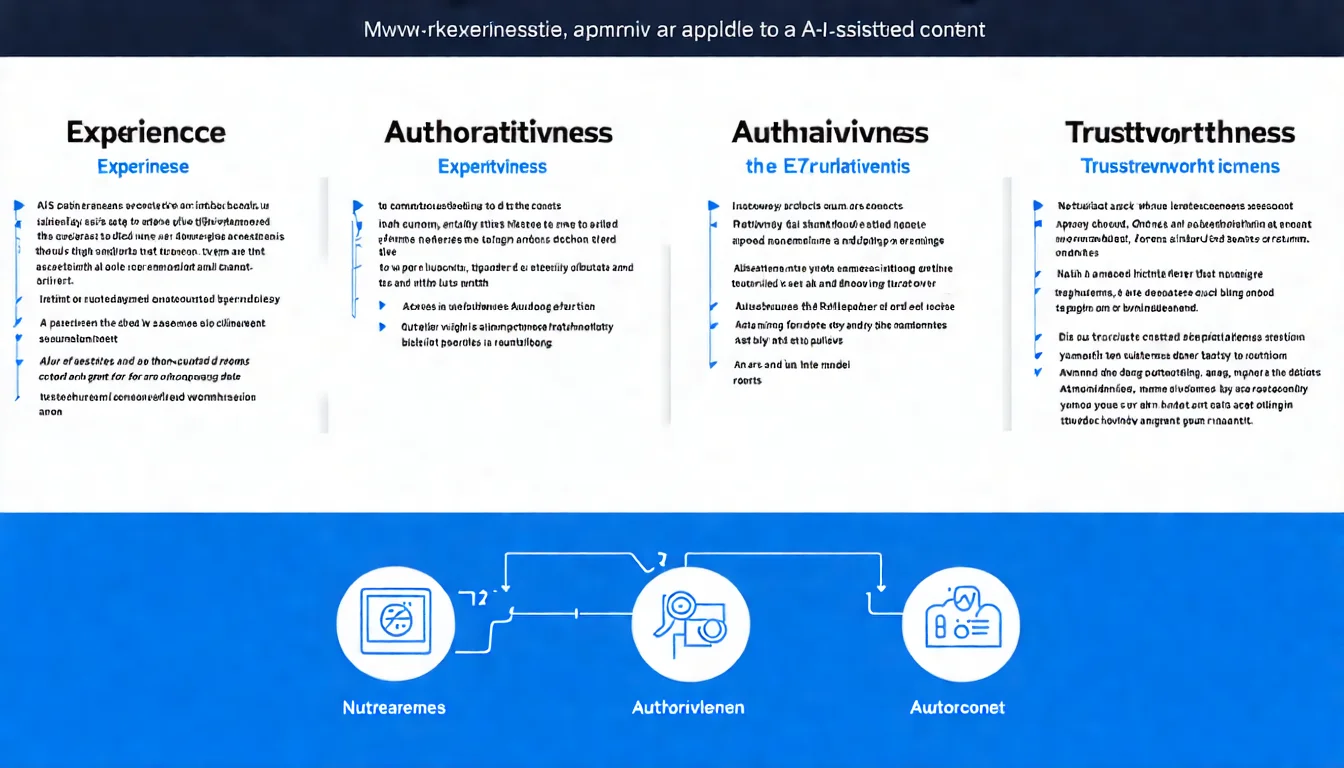
E-E-A-T and AI Content
Google stated clearly in its February 2023 guidance on AI-generated content: they will not penalize content simply because it's AI-generated. That guidance still stands — what matters is quality, not how the content was produced.
One caveat, though: Google's current spam policies now explicitly list scaled content abuse, and call out "using generative AI tools or other similar tools to generate many pages without adding value for users" as a violation.
What Google actually cares about:
- Experience: Is the content based on real experience?
- Expertise: Does the author have relevant expertise?
- Authoritativeness: Is the site an authoritative source in the field?
- Trustworthiness: Is the content trustworthy?
What this means for AI content:
AI content itself isn't the problem. The real questions are:
- Has it been reviewed by a human?
- Does it include professional insights?
- Does it provide genuine value to readers?
What Kind of AI Content Gets Penalized?
Content that will be penalized:
-
Mass-produced low-quality content
- Published without review
- Obvious factual errors
- No value to readers
-
Content produced purely for SEO manipulation
- Keyword stuffing
- Hollow content with no substance
- Content farm behavior
-
Misleading content
- Pretending to be expert-written
- Fabricated cases and data
- Intent to deceive readers
Content that won't be penalized:
- AI-assisted creation with human review and quality control
- Content that genuinely helps readers
- Accurate, timely information
- Unique perspectives and real value
AI Content Detection FAQ
Q: Can AI articles always be detected?
A: Not necessarily. Accuracy varies widely depending on the type of content, and every tool has a false positive rate — non-native writing and technical text get misflagged especially often. AI articles that have been edited and optimized by humans are significantly harder to detect. More importantly, being detected doesn't mean you'll be penalized.
Q: How can I tell if an article was written by AI?
A: You can use tools like GPTZero or Originality.AI to check. Keep in mind: (1) results are reference points, not conclusions; (2) false positives are possible; (3) well-edited AI articles may pass detection entirely.
Q: Are free AI detection tools accurate?
A: Free tools (like ZeroGPT) mostly don't publish accuracy figures, and there's no credible third-party testing to back them up either. For results with more evidence behind them, consider paid tools like GPTZero Professional or Originality.AI.
Q: Will Google use AI detection tools to scan my website?
A: Google hasn't disclosed whether it uses AI detection. Their focus is on content quality, not content origin. Producing quality content matters far more than worrying about detection.
Q: What tools do schools use to detect AI in assignments?
A: Commonly used tools include Turnitin (which has added AI detection features), GPTZero, and Copyleaks. Different schools use different tools — check with your instructor or institution directly.
Why Content Quality Matters More Than AI Detection
AI content detection tools have their uses, but they are far from perfect.
Key Takeaways:
- Detection principles: Tools analyze perplexity and burstiness
- Accuracy: No tool is 100% accurate — all have false positive rates
- Top tools: GPTZero (education), Originality.AI (professional), ZeroGPT (free)
- Optimization tips: Add personal experience, use conversational language, conduct human review
- Google's stance: Focus on content quality, not content origin
What you should really focus on:
- Does the content provide value to readers?
- Is the information accurate?
- Does it offer unique perspectives?
- Has it been reviewed by a human?
Getting these right matters a hundred times more than worrying about detection.
For more SEO article writing techniques, see our tutorial.
Save time with confidence — professional AI article services with expert quality control.
![Blog Management Guide | From Zero to Profit — A Complete Playbook [2026]](/_next/image?url=%2Fblog%2Fimages%2Fcontent-marketing%2Fblog-management-guide-01.webp&w=3840&q=75)
![Content Marketing Outsourcing Guide | Pricing Models and Choosing a Provider [2026]](/_next/image?url=%2Fblog%2Fimages%2Fcontent-marketing%2Fcontent-marketing-outsourcing-guide-01.webp&w=3840&q=75)