![Content Marketing Outsourcing Guide | Pricing Models and Choosing a Provider [2026]](/_next/image?url=%2Fblog%2Fimages%2Fcontent-marketing%2Fcontent-marketing-outsourcing-guide-01.webp&w=3840&q=75)
Want to do content marketing but don't have the time or team?
Writing articles yourself is too time-consuming, and hiring someone raises concerns about quality?
Content marketing outsourcing is a common choice for businesses, but quotes vary enormously from one provider to the next. What exactly are you paying for?
This guide breaks down the common ways content outsourcing is priced, how to tell whether a quote is fair, and how to choose the right provider.
When Should You Consider Outsourcing?
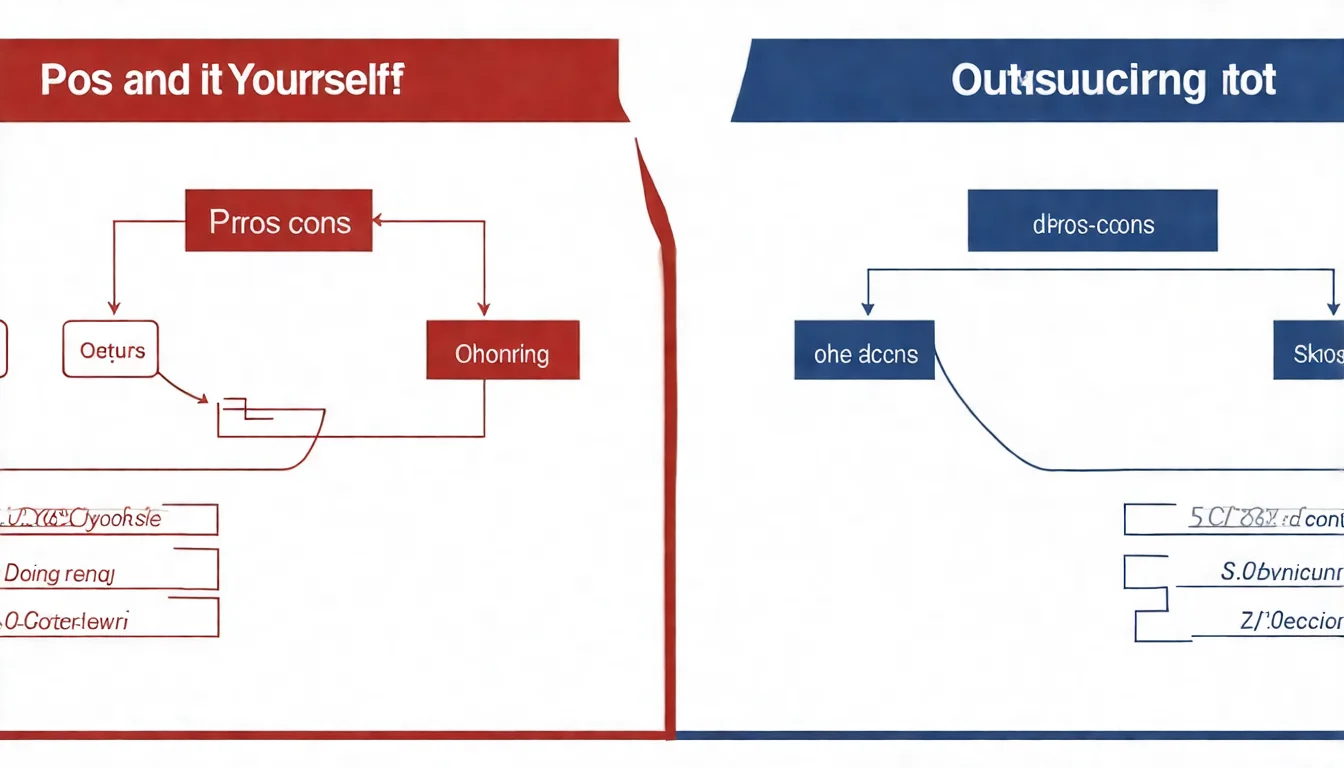
DIY vs. Outsourcing Comparison
First, let's clarify: outsourcing isn't always better, and DIY isn't always cheaper.
Pros of doing it yourself:
- Full control over content direction
- Deep understanding of your product and customers
- Save on outsourcing costs
Cons of doing it yourself:
- High time investment
- May lack SEO expertise
- Limited production capacity
Pros of outsourcing:
- Saves time
- Access to professional expertise
- Consistent output volume
Cons of outsourcing:
- Requires budget
- Communication overhead
- Provider may not fully understand your industry
When Outsourcing Makes Sense
1. You're short on time
You have higher priorities (product development, business development) and can't spare time for writing.
2. You lack specialized talent
Your team doesn't have SEO and content marketing expertise — outsourcing to professionals is more efficient.
3. You need rapid output
You have a clear goal (e.g., producing a batch of topic-cluster articles in a quarter), and outsourcing ensures you hit the target.
4. You want consistent quality
Professional providers have mature workflows that deliver more reliable quality.
When Outsourcing Doesn't Make Sense
1. Limited budget
If your monthly marketing budget can't cover even a single outsourced article, it's more practical to learn and do it yourself first.
2. Content requires deep domain expertise
Highly specialized content (medical, legal, deeply technical) may be difficult for external writers to produce at the required level.
3. You already have an in-house team
If you already have a marketing team, training them may deliver more long-term value than outsourcing.
For more on content marketing fundamentals, see our complete guide.
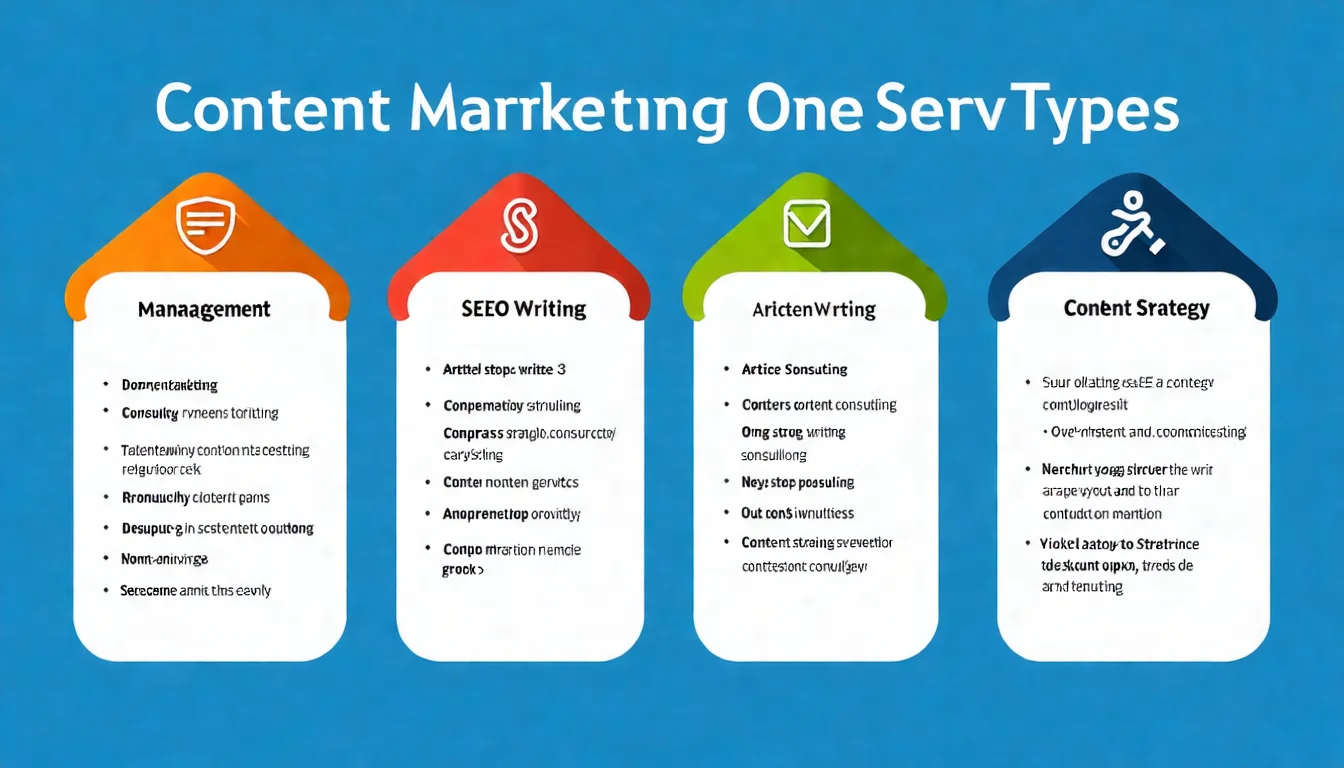
Types of Content Marketing Outsourcing Services
The market offers a wide variety of services. Figure out which type you actually need first.
SEO Management Services
What's included:
- Keyword research and strategy planning
- Technical SEO optimization
- Content planning and production
- Link building
- Regular reporting and optimization
Best for: Businesses wanting comprehensive SEO and ongoing management.
Article Writing Services
What's included:
- Writing articles based on provided keywords
- Basic SEO optimization
- May include image sourcing
Best for: Those who already know what to write but lack time, or who have SEO knowledge and just need content.
Content Strategy Consulting
What's included:
- Content strategy development
- Keyword research
- Content architecture design
- Internal team training
Best for: Those with execution capability but lacking strategy, or wanting to build an internal team.
Full-Service Content Marketing
What's included:
- Strategy planning
- Content production
- Publishing management
- Performance tracking
- Continuous optimization
Best for: Businesses wanting an "all-inclusive" solution with no in-house content resources. It covers the widest scope and typically requires the largest budget of the four.
Want to learn about AI-powered content outsourcing? Get a free consultation via LINE.
👉 Free LINE Consultation: @006ljkda
Common Ways Content Outsourcing Is Priced
Everyone wants to ask "how much," but the smarter first question is "how is it calculated." The same brief can be quoted in completely different ways by different providers — understand the pricing logic first, and only then can you compare.
Per Article
How it works: One price per article, often further tiered by word-count band or topic difficulty.
- Best for: Clear, low-volume needs where you want a predictable budget.
- Pros: Transparent unit price, easy to control the total, and you can trial the relationship one article at a time.
- Cons: It may not be economical at high volume; revisions, images, and extra optimization are often billed separately — always confirm exactly what "one article" covers.
Per Word
How it works: Word count multiplied by a per-word rate.
- Best for: Cases with strict length requirements, or where article length varies a lot.
- Pros: A consistent basis for both long and short pieces.
- Cons: It can tempt writers to pad word count at the expense of readability. More words don't mean better SEO or a better read — don't equate length with quality.
Per Project
How it works: One bundled price covering a single audit, a batch of articles, or a whole topic cluster.
- Best for: Clear, milestone-based goals (a one-off content audit, a quarter's cluster plan).
- Pros: Scope and deliverables are tied together, so responsibility is clear.
- Cons: Scope has to be pinned down up front; adding things mid-way usually means renegotiating.
Monthly Retainer
How it works: A fixed monthly fee for ongoing production, optimization, and tracking.
- Best for: Brands in it for the long haul that need someone continuously watching the data and adjusting.
- Pros: A stable relationship lets the provider build up understanding of your industry — ideal for long-game SEO.
- Cons: Read the lock-in and exit terms carefully; without regular performance reports, a retainer becomes a black box.
The point isn't which model is "cheaper" — it's which fits your output rhythm and budget predictability. Low-volume, occasional needs are easier to gauge per article; long-term efforts optimized on rolling results are better served by a retainer.
How Do You Tell If a Quote Is Fair?
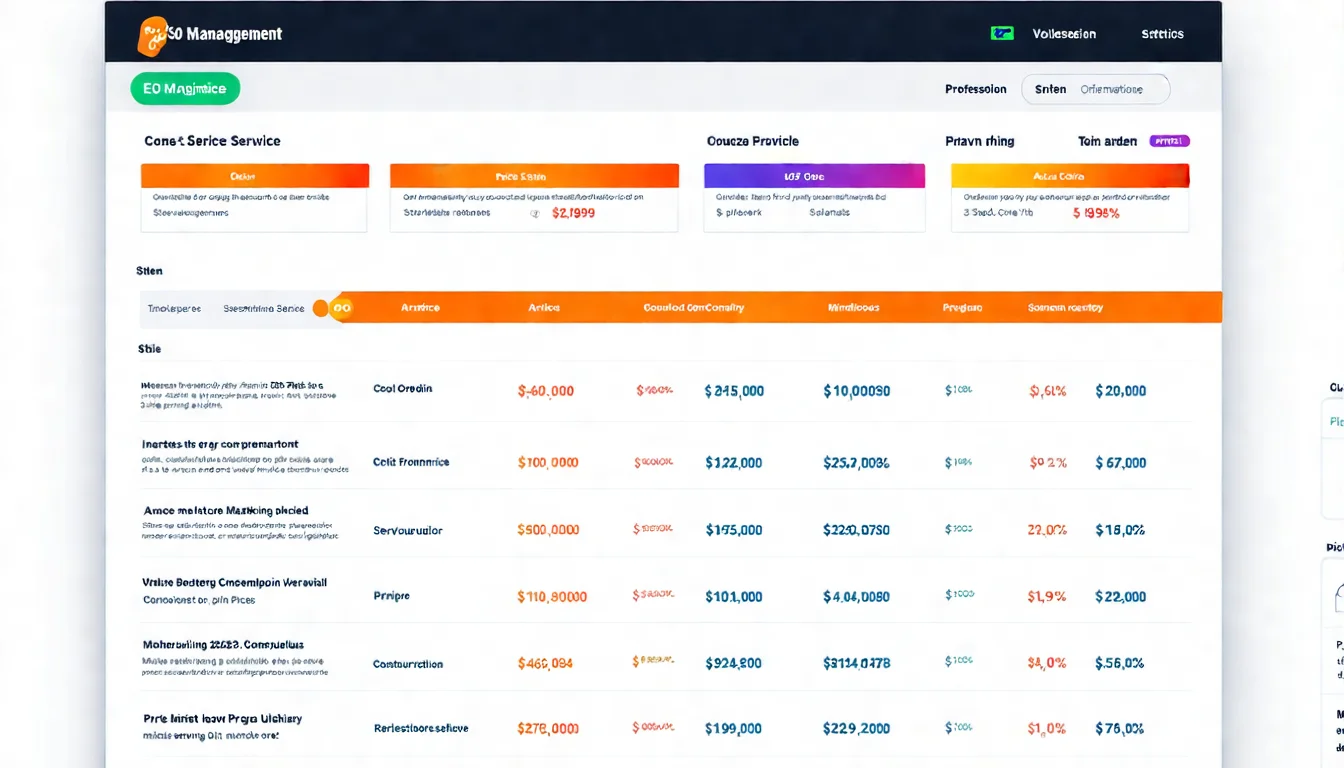
Start with one principle: when two quotes differ a lot, it's usually not that one is expensive and the other cheap — it's that they include entirely different things. So the first step in judging a quote isn't comparing numbers; it's laying each quote out against the items below, then comparing.
1. Revision rounds
How many revisions are included? Is there a surcharge beyond that? When this isn't spelled out, the haggling starts the moment you're unhappy with the first draft.
2. Depth of SEO / GEO optimization
Is it just "write to the keyword," or does it include keyword research, title and structure optimization, internal linking, schema, and chunked writing that's easy for AI search to cite (GEO — generative engine optimization)? "We do SEO" can mean wildly different things.
3. Images and assets
Are images included? Are they original, licensed stock, or AI-generated? Any copyright risk? This shows up in both the price and how safe the content is to reuse.
4. Licensing and content ownership
Does the copyright of the finished article belong to you? Can you freely edit and reuse it? Some low-price plans retain ownership or restrict usage — a nasty surprise to discover after the fact.
5. Turnaround and output rhythm
How long per article? How many pieces per month, reliably? Does rushing come at the cost of quality?
6. Reporting and communication
How often do they report on performance, and against what metrics? Is there a fixed point of contact?
How to compare side by side: Put the items above into a table and have every provider fill in the same columns. You'll find the "cheapest" one is often cheapest because it skips three or four of them. The real question isn't "how much," but "how far does this price go, and what does it leave out."
How to Choose the Right Outsourcing Partner
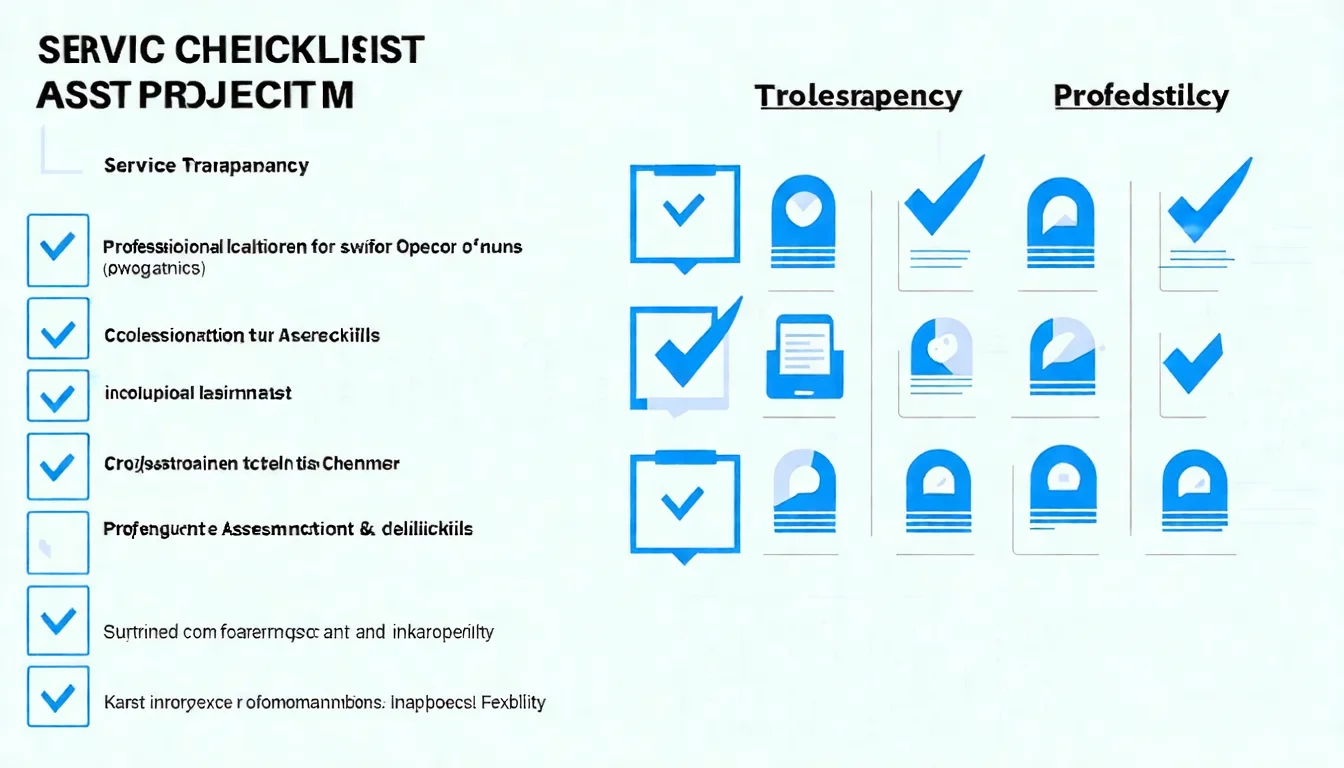
Once you've compared quotes, the final call is "who do I trust with my brand." Judge a partner on four things.
Look at the portfolio and real results
Ask to see live articles, evidence of ranking or traffic growth, and ideally experience in a similar industry. If you can, contact past clients for references. Providers who are all talk and can't show the goods — cut them.
Check whether they understand SEO and GEO
Content today needs to rank on Google and be readable and citable by AI search (ChatGPT, Perplexity, Google AI Overviews). Ask how they think about GEO and whether "getting cited by AI" is part of their writing process. If they can't answer, they're stuck in old-school SEO thinking.
See how well they communicate
If early communication is already sluggish and evasive, it only gets worse after you sign. Watch whether they proactively clarify your needs and can explain their process and deliverables clearly.
Check whether they use AI — and how they check it
Using AI isn't the problem; using AI without review is. Get specifics: which part does AI handle, which part gets human review, how do they fact-check, and how do they keep it on brand? A good provider explains the workflow openly; be wary of anyone who's cagey about it.
Common Traps
Trap 1: "We guarantee #1 rankings"
No one can "guarantee" Google rankings. Anyone promising that is either dishonest or using black-hat techniques.
Trap 2: Suspiciously cheap quotes
Articles priced far below what comparable providers charge likely have quality issues — content mills, or unreviewed AI output.
Trap 3: Over-long, no-exit contracts
Be cautious of long lock-in contracts with no exit clause. Start with short-term engagements.
Trap 4: No performance reports
If a provider won't share regular reports, they may have no real results to show.
Contract points not to overlook
Before signing, at least pin down these:
- Scope of service: Clearly specify what's included and what's not.
- Content ownership: Confirm the produced content belongs to you.
- Payment terms: Understand payment schedules and methods.
- Termination clause: Under what conditions can you terminate, and are there penalties?
- Confidentiality: Ensure your business information is protected.
The AI Advantage in Content Outsourcing
In the AI era, content outsourcing has a new option.
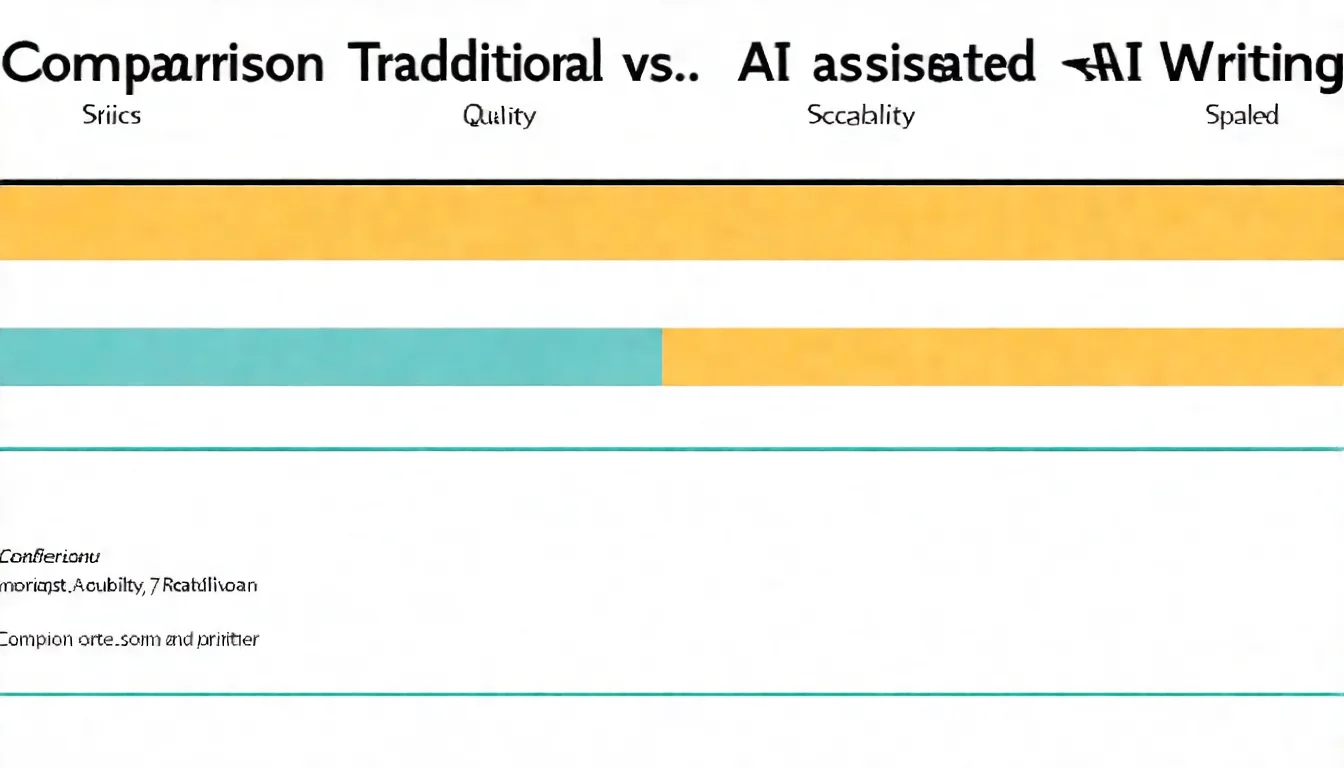
Traditional Writing vs. AI-Assisted Writing
| Aspect | Traditional Writing | AI-Assisted Writing |
|---|---|---|
| Price | Higher | Lower (more efficient) |
| Speed | Slower | Faster |
| Quality | Depends on writer | Depends on review process |
| Scalability | Limited by workforce | Scales rapidly |
Characteristics of AI-assisted writing:
- AI generates the draft; humans handle review and optimization
- Noticeably more efficient than purely manual writing
- More affordable than traditional services
- Quality depends on the rigor of human review
Cost-Effectiveness of AI Content
Same budget, more output:
At the same monthly budget, an AI-assisted workflow usually produces more articles than traditional writing. How much more depends on each provider's billing model and how deep their review process goes — there is no one-size-fits-all ratio.
Or flip it — same output volume, but AI is cheaper.
Balancing Quality and Speed
AI content does not equal low quality.
The key factors:
- Well-designed prompt engineering
- Professional human review
- Fact-checking and optimization
A quality AI-assisted writing service ensures:
- Content accuracy
- Proper SEO optimization
- Brand voice consistency
For more on AI article generation tools and how they work, see our reviews.
Transparent pricing, AI-powered content services.
Content Outsourcing FAQ
Q: How is outsourced content quality guaranteed?
A: A reputable provider will have: (1) a clear review process; (2) revision policies; (3) past case studies for reference. Before committing, request a trial article to evaluate quality.
Q: How long before I see results?
A: SEO content typically takes several months to show noticeable ranking and traffic improvements. This is the nature of SEO, not a limitation of outsourcing. A good provider should set these expectations upfront.
Q: Can I outsource just part of the work?
A: Absolutely. For example, outsource only article writing while handling strategy and publishing in-house. Or outsource only keyword research and execute everything else yourself. Choose based on your resources and capabilities.
Q: Can I request revisions on outsourced articles?
A: You should be able to. Most providers include a certain number of revisions. The contract should clearly state the revision policy, such as "includes 2 rounds of revisions."
Q: What information do I need to provide to the provider?
A: Typically: (1) target keywords or topics; (2) brand voice and style guidelines; (3) target audience description; (4) reference materials or competitor examples. The more complete the brief, the better the output.
Conclusion and Next Steps
Content marketing outsourcing can save you time and effort, but choosing the wrong provider wastes money and potentially harms your brand. Instead of agonizing over "what the going rate is," build your judgment — quotes change, but the way you read a quote doesn't.
Key Takeaways:
- Evaluate the need: Consider time, budget, and expertise requirements
- Understand the pricing model: Per article, per word, per project, or retainer — pick what fits your rhythm
- Judge the quote: Don't compare on total price; compare what the price includes
- Choose the right partner: Portfolio, SEO/GEO know-how, communication, AI quality control
- Avoid the four traps: Guaranteed rankings, suspiciously cheap, over-long lock-in, no reports
Recommendations:
- Clarify your needs and budget first
- Compare several providers' quotes, aligned on the same columns
- Start with a small project
- Establish clear evaluation criteria
- Don't just look at price — consider value
For more SEO article writing tips and content marketing strategies, see our other articles.
Discover AI SEO Hacker's service plans — save time, effort, and money.
![AI Content Detection Guide | How to Tell If an Article Is AI-Generated [2026]](/_next/image?url=%2Fblog%2Fimages%2Fcontent-marketing%2Fai-content-detection-guide-01.webp&w=3840&q=75)
![Blog Management Guide | From Zero to Profit — A Complete Playbook [2026]](/_next/image?url=%2Fblog%2Fimages%2Fcontent-marketing%2Fblog-management-guide-01.webp&w=3840&q=75)