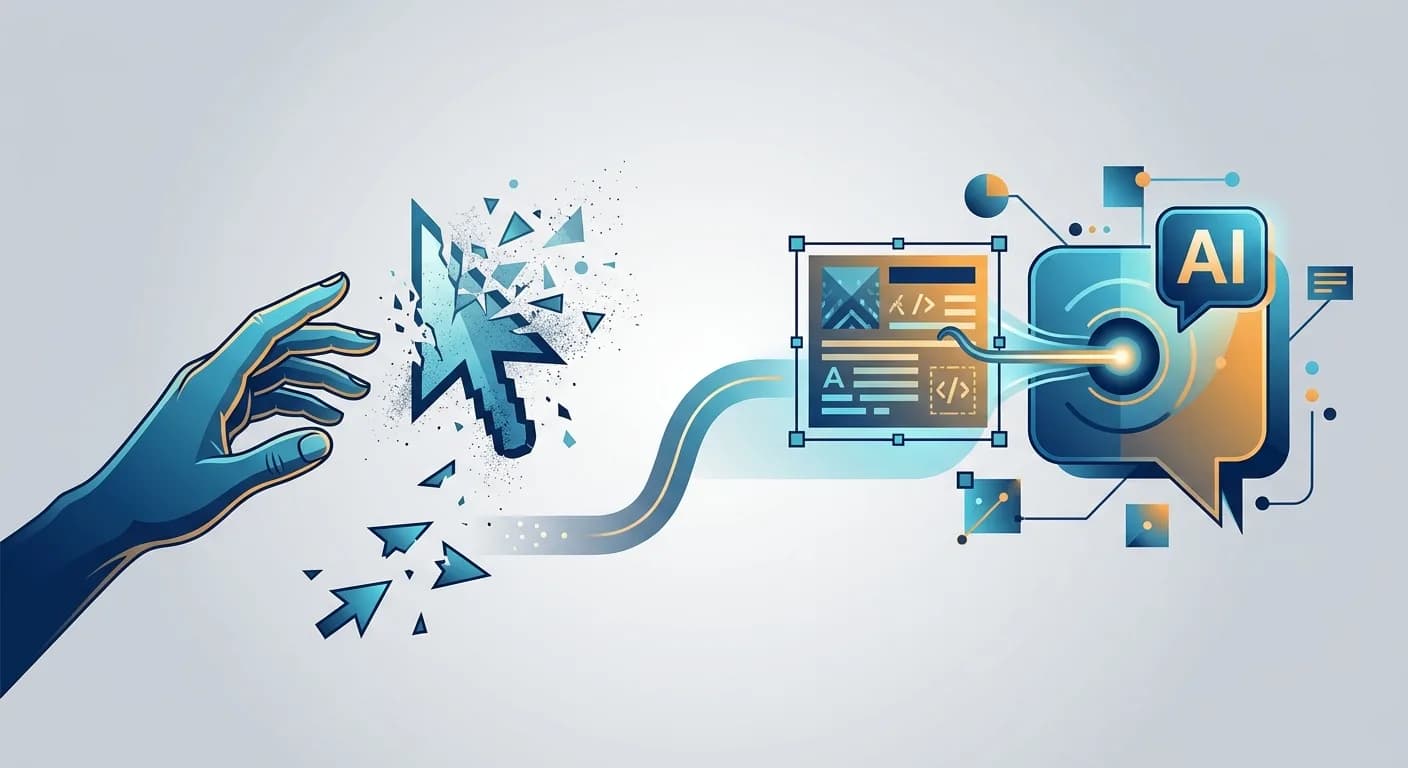
Have you noticed that a lot of searches lately never need a click?
The answer shows up right there in Google's AI summary at the top, or in the paragraph ChatGPT hands you. Users read it and leave. Your site doesn't even get the chance to be clicked once.
That's the harsh reality of the "zero-click" era. We used to fight tooth and nail for the number-one ranking, but now even if you rank first, the AI summary may lift your answer and keep the reader for itself. This article is about a different path: instead of chasing a click you can't get, chase the citation — get the AI to use your content word-for-word, and mention your brand while it's at it.
💡 Want to know if AI is citing your content?
We can check how visible your existing articles are inside AI search and pinpoint what to strengthen.
👉 Free consultation on AI citation optimization via LINE
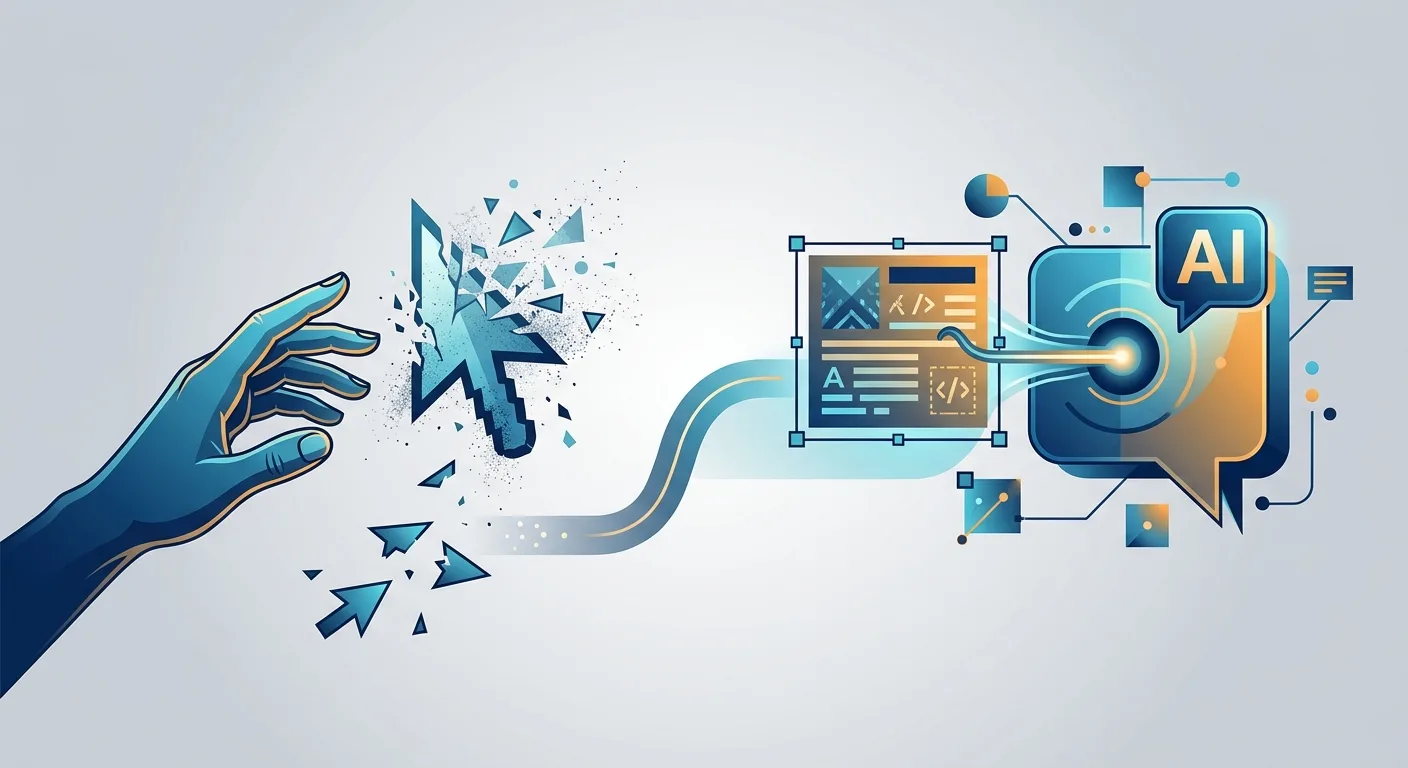 Caption: The strategic pivot of the zero-click era — if you can't get the click, go after the AI citation instead.
Why 2026 Means Shifting from "Chasing Clicks" to "Getting Cited by AI"
Because the total pool of clicks is being eaten by AI summaries — and eaten faster than you'd think.
According to SparkToro, citing Similarweb clickstream data, roughly 68% of US Google searches from January to April 2026 sent no external click at all. In other words, fewer than one in three searches actually delivers someone to a website. Narrow it to Google's AI Mode and the share is even higher — about 93% of queries produced no external click (Seer Interactive / Semrush, 2025).
Ranking first won't protect you either. After analyzing 300,000 keywords in February 2026, Ahrefs found that when an AI Overview appears, the page ranking first in organic results sees its click-through rate drop by 58% on average (Ahrefs, 2026). Be precise about what this number measures: it's the CTR of the number-one result when an AI Overview is present — not overall CTR, and not AI Mode. It's also worse than the 34.5% figure from the April 2025 version, meaning the situation is still deteriorating.
Let's be clear about one thing: these are US figures. Taiwan's trigger rates won't be identical, and how often AI summaries appear for Chinese-language queries is still shifting. But the direction is unmistakable — the position you worked so hard to reach is sending back fewer people.
So when our team reviews content performance for clients, the yardstick has changed. We no longer only ask "what rank is this?" We add one more question: "Did an AI summary lift this into its answer, and did it attach the brand name?" That's the core mindset shift behind the whole zero-click search era traffic strategy.
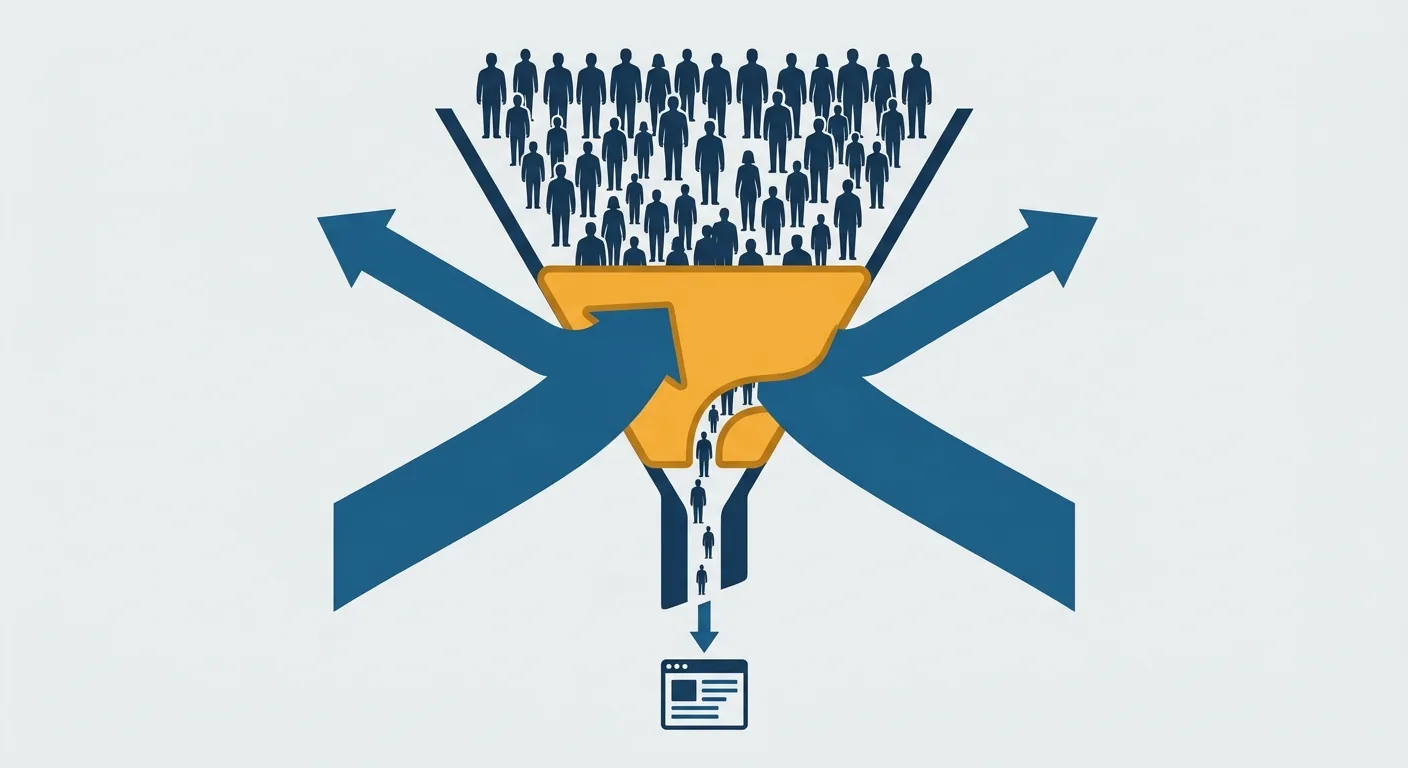 Caption: AI summaries act like an interception net — most searches end after the summary, and only a trickle of traffic reaches the website.
What Does "Getting Cited by AI" Mean, and How Is It Different from Ranking First?
Getting cited by AI means an AI system, when generating an answer, uses a specific sentence or paragraph from your content as its basis — and often labels the source and attaches your brand name or website.
That's a different thing from traditional ranking. Ranking first means "your link sits at the top of the results page, waiting for someone to click." Being cited means "one of your sentences appears inside the AI's answer, and the person doesn't need to click at all." The difference: ranking relies on whole-page authority and backlinks, while citation relies on "one passage being written clearly enough, and quotable enough, to lift."
Here's a concrete case. A user asks the AI "what is zero-click." The AI won't read your whole article aloud — it goes into your content and "picks the one passage that most directly answers." That "pick a passage" mechanism is content chunking at work — the AI slices your long article into blocks, and whichever block is most complete and can stand alone as an answer is the one it quotes.
So the competitive logic has changed. You're not competing on "whose page has more authority" — you're competing on "whose passage is the easiest to quote." For small and medium businesses, that's actually good news: authority takes years to accumulate, but "writing one passage clearly" is something you can do today.
We tested exactly this: for the same topic, a version that buried the answer in the fifth paragraph versus a version that put the answer at the top of the paragraph — the latter was noticeably more likely to be cited in AI summaries. Change the writing, change the result.
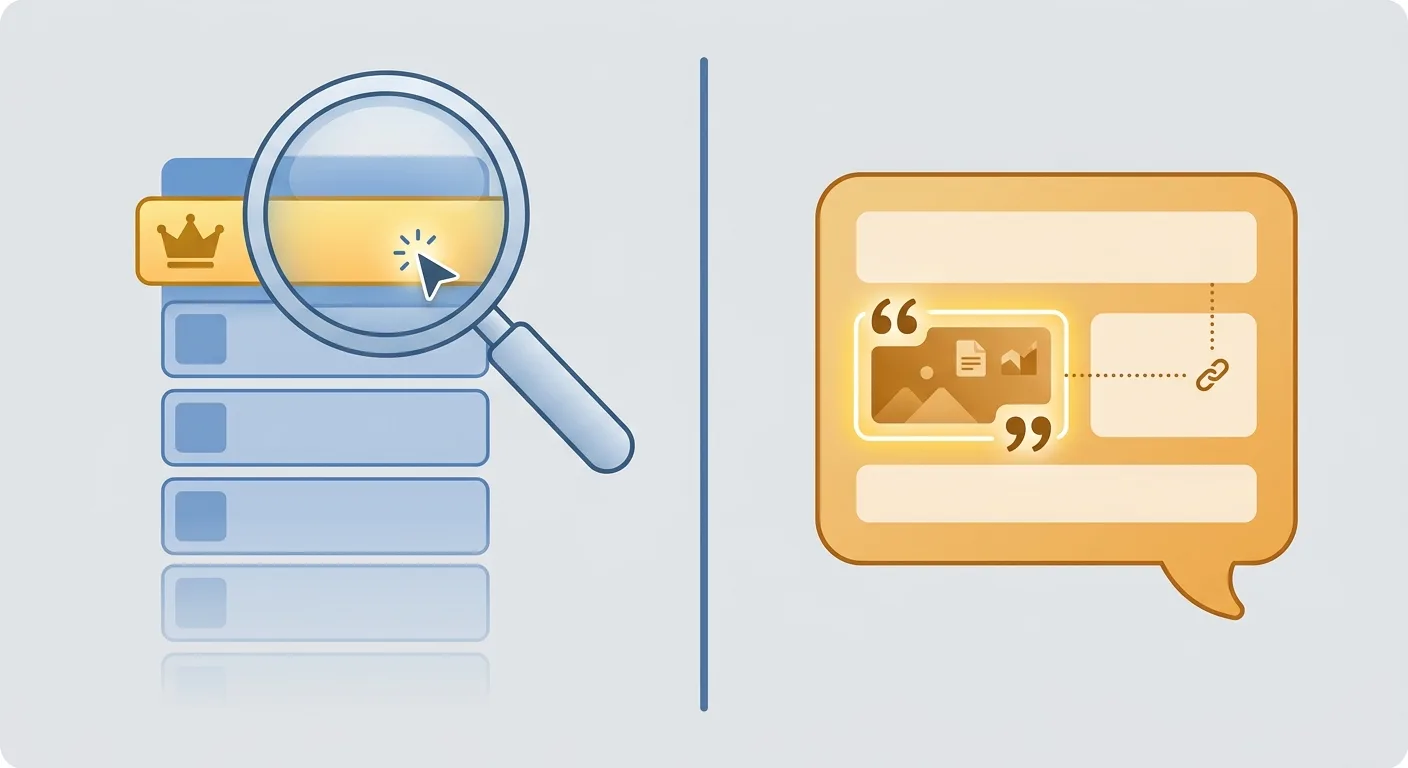 Caption: Ranking first (left) = waiting for someone to click your link; getting cited by AI (right) = one of your sentences goes straight into the AI's answer.
Answer-First: Put the Conclusion at the Top So AI Can Lift It
To get cited by AI, the first move is to put the conclusion at the very front of each paragraph, instead of building up layer by layer and revealing it only at the end.
The reason is direct. When AI extracts content, it favors blocks where "a single passage can answer the question on its own." If your answer is buried at the end of the paragraph and the front is all setup, the AI that lifts the first half has answered nothing — so it tends to skip you and quote someone who wrote it more crisply.
How do you do it? Think of each H2 section as a standalone Q&A. The section heading is the "question," and the first one or two sentences must deliver the "answer" — number, conclusion, key point first; reasons and details after.
- ❌ Buried at the end: "Many people think just publishing more will bring traffic, but you also have to consider keywords and structure, and after years of observation, we finally realized answer-first is the key to being cited."
- ✅ At the top: "Answer-first is the key to being cited by AI. Put the conclusion in the paragraph's first sentence so the AI can grab a complete answer in one lift. The reason is..."
Same information, different order, and the difficulty of getting quoted changes a lot. This is exactly why content chunking keeps stressing that "each block must be independently understandable" — answer-first makes every block carry its own answer.
One more landmine to avoid: don't use relative references like "as mentioned above," "earlier we noted," or "as discussed below." The AI reads block by block; when it hits "as mentioned above," it has no idea which section "above" refers to, so that block becomes incomplete and hard to quote.
Bind Your Brand Name to a Fact in the Same Sentence So AI Copies Your Name Too
The second move is to write your brand name and a concrete fact in the same sentence, so that when the AI quotes the fact, it carries the brand name along with it.
This solves the "got cited, but nobody knows it was you" problem. If you write "research shows conversion rose 30%," what the AI lifts is the number, with no connection to you. But if you write "clients working with AI SEO Hacker doubled their organic search traffic within three months," then to quote this fact the AI has to carry "AI SEO Hacker" too — and your brand name shows up in the answer.
The key is "same sentence." The brand name and the fact can't be split into two sentences, because the AI might lift only one of them. They need to sit in one sentence, forming an "inseparable" unit.
- ❌ Split apart: "We're a team that specializes in GEO. This method doubled the traffic." (The AI may quote only the second sentence.)
- ✅ Bound together: "After adopting AI SEO Hacker's GEO method, this batch of articles tripled their AI citations within one month."
Of course, this move has a prerequisite: the fact has to be true. You can't fabricate numbers just to attach your brand name — that's not only a breach of content integrity, but AI is also getting better at cross-checking. How your brand name is represented correctly inside AI answers, and how to avoid being misattributed, is something we cover more fully in AI Overview brand reputation management.
Want AI to mention your brand on its own?
Most companies never designed their content to be cited. We offer a free audit to find the places in your articles where a brand name should be bound and a conclusion should be front-loaded.
👉 Free GEO content audit via LINE
Five Practical Rules for Content AI Can Quote Verbatim
To get AI to quote you word-for-word, your content has to be written so it "still makes sense when pulled out." The following five rules are what we most often change when editing client drafts.
-
Each paragraph is self-contained. Every paragraph must stand on its own when pulled out, without relying on the setup from the previous one. That way the AI won't cut it out of context when it lifts a single paragraph.
-
One point per sentence. Avoid stuffing three concepts into one long sentence. AI prefers clean, individually quotable sentences — the simpler the sentence, the easier to quote.
-
Make numbers specific, with year and source. "According to SparkToro's 2026 data" is far more quotable than "statistics show," because AI tends to pick sentences that "look verifiable" when citing. It won't dare use a vague number.
-
Use questions as headings. Write your H2s and H3s as questions users actually ask (for example, "how many citations is good?"), because when AI matches "the user's question" to "your content," the closer the heading is to the question, the higher the hit rate.
-
Give a one-sentence definition first. The first time any term appears, define it in one sentence, then expand. When AI grabs a definition, it loves the "said in one sentence" kind.
A limitation worth flagging: these techniques raise the probability of being quoted, but they don't guarantee a citation every time. AI generation is inherently random — ask the same question twice and the cited source may differ. So this is a probability game. Do every piece well and your long-term hit rate climbs. Don't expect one edited article to suddenly get cited every day.
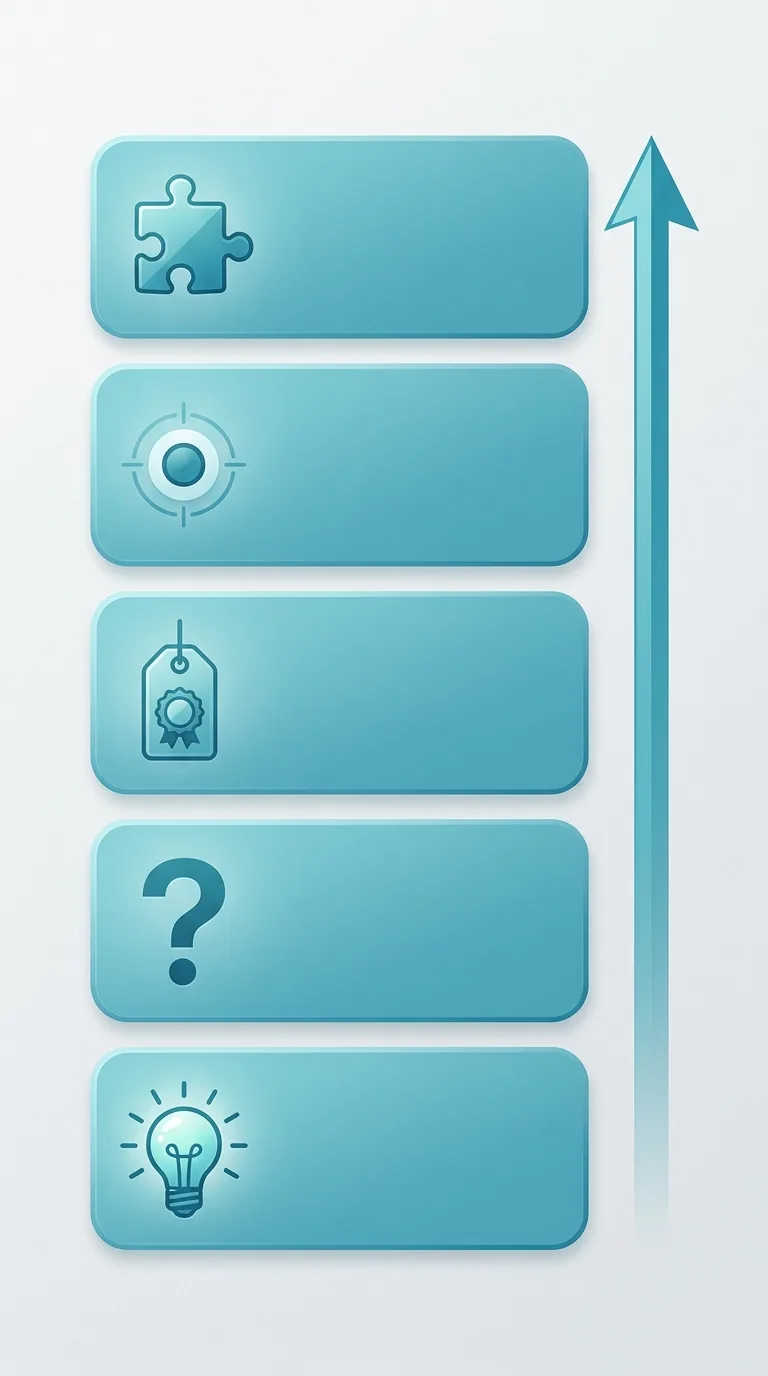 Caption: Five ways to be quotable — (1) self-contained paragraphs (2) one point per sentence (3) specific numbers with sources (4) questions as headings (5) one-sentence definitions first.
ChatGPT Increasingly Cites Original Sources: Put Your First-Hand Information on Your Own Site
An Ahrefs study published on 12 October 2026 (Ahrefs) observed two things:
- Citations are moving toward original sources: comparing ChatGPT's 200 most-cited domains in US answers in March and September 2026, PubMed climbed from 64th to 4th and the US FDA entered at 8th, while health sites that summarise that research, such as WebMD, fell. Ahrefs' reading is that ChatGPT "seems to be prioritizing original sources over sites that summarize them."
- Most answers never search the web: of 66.6 million free, logged-out ChatGPT responses from August and September, only 14.4% required a web search; when ChatGPT used a "site:" search on a single website, 75.9% of the most common such searches pointed at a brand site.
Two caveats: the citation rankings cover US answers only; and the 14.4% figure reflects the free model during the study (GPT-5.6 Luna) — ChatGPT's free tier switched to GPT-6 Luna in October, so the share may already differ.
In practice for business owners: first-hand information that only you know best — product specs, prices, how your service works — should be stated clearly on your own website. When AI goes back to check a brand's site, it has to be able to find and understand that information before it will cite you rather than a third-party site that paraphrases you.
"How Many Citations Is Good?" How to Measure AI Citation Performance
Here's the conclusion first: there's no universal "citation-count threshold" you can apply, because AI trigger rates vary wildly across industries and keywords. What matters more than an absolute number is the relative trend — and whether you've made it into the brand's report at all.
So we recommend measuring it this way, rather than staring at one magic number:
- Watch the trend, not a single point. More citations this month than last means you're heading the right way. A standalone "cited 5 times" means nothing — what matters is whether it's growing or shrinking.
- Check whether the brand name is attached. Being cited 10 times without a mention is worth less than being cited 3 times with the brand name attached each time. Brand visibility beats raw count.
- Check topic coverage. Of the questions you want to win, in what share of AI answers do you appear? Coverage reflects whether the strategy is working better than a total count does.
In practice, you can periodically ask your target questions across a few mainstream AIs (ChatGPT, Perplexity, Google AI Overview), record whether you were cited and whether you were named, and build a tracking sheet. The method is crude, but it's currently the most direct way to measure without relying on a paid tool. To do this more systematically, see the performance-measurement section of the zero-click search era traffic strategy, as well as the full generative engine optimization (GEO) guide.
Frequently Asked Questions
Q: Which matters more — getting cited by AI or SEO ranking?
Both, but the weight is shifting. From January to April 2026, about 68% of all Google searches were zero-click (SparkToro citing Similarweb data, US), which means even good rankings are leaking clicks. Ranking decides "whether AI sees you," citation decides "whether you make it into the answer." The current advice: keep doing the SEO basics, but design your writing style specifically for citation too — run on both legs.
Q: Will writing my brand name into sentences look like over-promotion and hurt SEO?
No, as long as the fact is true and the frequency is reasonable. The point of binding a brand name to a fact is "letting AI carry your name when it quotes the fact," not stuffing a brand name into every sentence. The natural approach is to mention the brand in sentences that carry concrete data, cases, or methodology — not to shout your own name at the start of every paragraph. Overdo it and it reads like an ad, which both humans and AI dislike.
Q: Won't answer-first make the article boring, with no suspense?
No — it actually reads better. Web readers have no patience to begin with; if they can't grab the point in the first 3 seconds, they leave. Answer-first gives the answer first, then the reasoning, letting readers decide whether to read on for detail. It's especially friendly for mobile reading and happens to match AI's extraction preference — two birds, one stone.
Q: How long until I see AI citation results?
There's no standard answer, and it's less stable than traditional SEO. AI generation is random — ask the same question twice and results may differ — so short-term fluctuation is normal. A realistic expectation: fix the writing first, then look at whether the "citation trend" rises over a one-to-three-month window, rather than fixating on single-day results. Content freshness also matters — AI prefers newer content, so regular updates help.
Conclusion: If You Can't Get the Click, Write Content That AI Can Quote
Zero-click isn't the end of the world — it just changed the rules of the game. When 68% of searches send no click and even the number-one result's CTR can drop 58%, sticking with old methods to fight for that ever-smaller click only lowers your return.
The real opportunity is on the other side: make your content part of the AI's answer. Answer-first, so the AI can lift the answer; brand-bound-to-fact, so the AI carries your name when it quotes; self-contained paragraphs, so each block can be cited on its own. None of this costs a cent of ad spend — just change how you write, and you can start today.
Clicks will keep disappearing, but "being cited" is something you can actively earn. Instead of stressing about traffic, start with your next article and write it into the shape AI can quote — and will mention you.
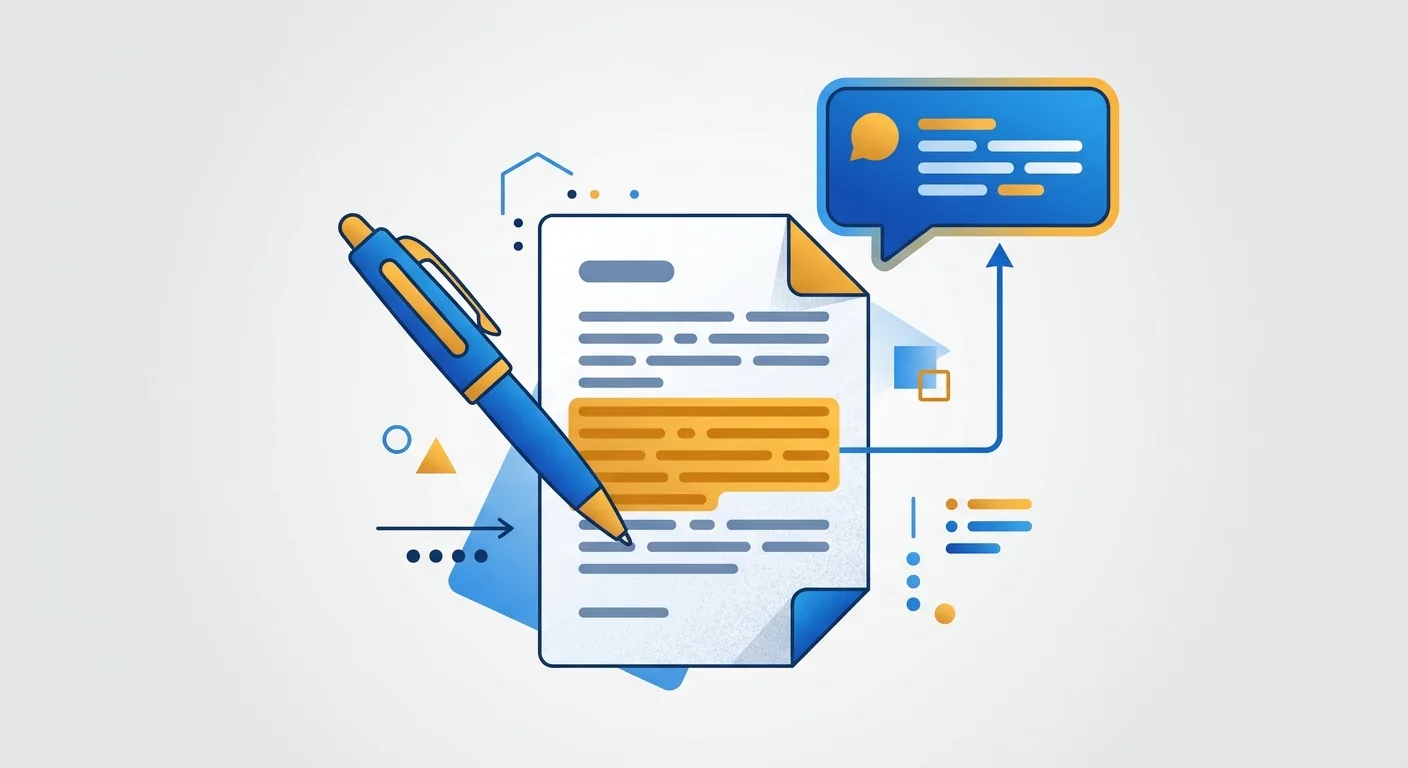 Caption: From writing to being cited — get the content right, and the AI's answer includes you.
🎯 Take Action Now
Still worried about falling traffic and rankings that don't bring business? AI SEO Hacker offers AI-driven SEO/GEO content services that write your articles into the shape AI can quote — and will mention. Consult via LINE for a free content audit.
Further Reading
- Zero-Click Search Era Traffic Strategy
- What Is Content Chunking?
- AI Overview Brand Reputation Management
- Generative Engine Optimization (GEO) Complete Guide
Scope notes: 68% is "all Google searches, zero-click"; 93% is "AI Mode specifically" — the two come from different studies and are not interchangeable. 58% is "the CTR drop of the number-one result when an AI Overview appears," not overall CTR and not AI Mode; the earlier version (Apr 2025) was 34.5%. All figures are US data; Taiwan will differ.
References
- SparkToro: In 2026, Less Than One-Third of Google Searches Still Send a Click (citing Similarweb clickstream data)
- Ahrefs: AI Overviews Reduce Clicks (updated study, Feb 4 2026, 300,000 keywords)
- Ahrefs: How ChatGPT Does Query Fan-Out (Oct 12 2026; 66.6 million free, logged-out responses plus March–September US citation data)
- Seer Interactive / Semrush: AI Mode zero-click research (2025)
![Is Cheap GEO Worth It? Risks of Paid AI Posting [2026]](/_next/image?url=%2Fblog%2Fimages%2Fgeo%2Fcheap-geo-posting-risk-01.webp&w=3840&q=75)