If your store hasn't set up a Google Business Profile yet, start with our complete Google Business Profile tutorial to get the basics done—that piece covers how to open, verify, and fill out the fields correctly.
This article doesn't repeat any of that. It focuses on what happens after setup: in an era where AI answers "which nearby place is good?" for customers, how do you keep your profile working so it doesn't get sidelined?
Plenty of stores opened their profile three years ago and never touched it again. That used to be fine. Now it slowly turns into a problem.
 Caption: Left is a set-and-forget profile, right is one that keeps getting updated—AI tends to cite the latter.
💡 Profile is live, but hasn't been touched in six months? This piece tells you which actions to add back.
Why a Set-and-Forget Profile Fades in the AI Search Era
The bottom line first: when AI answers local questions, it favors stores with fresh, active data—and quietly skips the ones sitting still.
Customers used to find you by opening Google Maps and looking at the three stores in the local pack. Ranking came down to proximity, rating, and relevance. You filled the fields, left them, and your position stayed relatively stable.
Now there's a new layer. A customer asks AI, "Any good restaurants near Beitou to take my elderly parents?" AI generates an answer on the spot, tucking a few stores into it. Much of that answer's raw material comes from Google Business Profile cards.
So here's the question: how does AI decide which stores to pull in?
According to a Whitespark study published in May 2025 (sample of 540 queries across six industries in three US cities—Houston, Phoenix, and Denver), AI Overviews appeared in 68% of local searches, while the traditional local pack showed up in only 39%. The scope matters: this is 2025 US data, not Taiwan and not the latest snapshot. Use it for direction, not as a measured figure for Taiwanese stores.
What's the direction? AI-generated answers are moving a slice of local visibility away from "the map list customers click themselves" toward "the few stores AI picks for them."
SEJ's July 2026 The Death of the Static GBP playbook puts it plainly: the era of the static profile is over. A profile you set and never manage gives AI no reason to cite it first.
Taiwan hasn't produced its own measurement yet. But the logic carries over: AI wants stores that are clearly operating with trustworthy data, and a three-year-old profile struggles to make that case.
The Three Dynamic Signals AI Local Citation Watches: Freshness, Reply Speed, Posts and Photos
The bottom line first: to get AI to cite your store, your profile has to keep signaling "this place is still active," and that mostly comes down to three things.
These three signals come from the SEJ playbook mentioned above, which turns the AI-era GBP ranking factors into an operable list. We'll follow its framework and translate it into terms a local store owner actually uses.
Signal One: Data Freshness
Freshness isn't just "did you fill it in." It's "has it moved recently?" Hours, holiday adjustments, newly added services, seasonal menus—do these fields track reality?
A concrete example: before Lunar New Year you change your hours to reopen on the third day. Now AI can answer correctly when a customer asks "are they open over the holiday?" Leave it unchanged, and AI can only use stale data, so the odds of a wrong answer climb. And AI giving wrong information about your store drives customers straight away—we cover that separately in AI says your store closed down? A Taiwan self-check and fix guide, which teaches cross-platform auditing.
Signal Two: Review Reply Speed
Reviews aren't only for humans to read—they're raw material for AI too. And how fast you reply gets read as a signal of whether you actually run the place.
A two-month-old negative review you still haven't answered tells AI you're a store that doesn't care much about customers. Flip it around: reply to every review within a day or two, and reply specifically, and that record of interaction builds up into a trust signal. For a systematic way to handle both praise and complaints, we've laid it out in our Google review management guide.
Signal Three: Regular Posts and Photos
Posts and photos are the most overlooked part of a profile, yet the best proof that you're "still open for business."
You posted a new-product photo last week and an event notice this week—AI sees a store that keeps doing things. A profile with no photo uploads in three years looks semi-retired. You don't need to post daily, but you do need a rhythm.
 Caption: The three dynamic signals AI local citation watches — 1) data freshness, 2) review reply speed, 3) regular posts and photos.
Want AI to Recommend Your Store?
The profile actions aren't hard—the hard part is having someone track them consistently. AI SEO Hacker audits your profile's freshness gaps and finds out why AI is skipping you right now.
👉 Free LINE Consultation: @006ljkda
How Taiwanese Stores Can Shift a Profile From Static to Active
The bottom line first: treat your profile like "a storefront you walk through weekly," not "a sign you decorate once at opening."
Let me be honest about one thing. Taiwan currently has no public, locally focused measurement of AI local citation. The 68%/39% figures above are US 2025 research—we won't pretend that's the Taiwan reality.
But that doesn't mean waiting. Because the work overlaps with the foundation of traditional local SEO—filling out your profile, updating it often, replying to reviews carefully—these have always helped Google Maps ranking, and now they add an AI-citation outlet. Same effort, and both sides feed on it.
In practice, we suggest Taiwanese stores start from three angles.
First, do a "customer-voice self-check." Open AI Overviews, AI Mode, ChatGPT, Gemini, and Perplexity, and search your own store the way a customer would phrase it: hours, address, whether you offer a specific service. Anything wrong or missing is a hole you need to fill.
Second, set a fixed update rhythm. You don't have to do it daily, but someone should own it and touch the profile once a week. Whether you do this step is the dividing line between static and active.
Third, treat the profile as one part of GEO (Generative Engine Optimization), not an isolated field. It sits in one set with your website, reviews, and name-address-phone consistency across the web. To see how the whole set connects, go back to our complete Local GEO strategy guide—this satellite article is just one piece of that puzzle.
Worth noting: filling out your profile completely is itself a way to grab AI visibility—we cover the data context in more detail in Why Google Is the #2 Cited Domain in AI Mode.
 Caption: Treat your profile like a storefront you walk weekly — 1) AI self-check, 2) update hours, 3) reply to reviews, 4) upload photos.
The AI-Era GBP Maintenance Checklist: Weekly and Monthly Actions
The bottom line first: the checklist below is ready to copy and use, split into weekly and monthly layers—do it and your profile keeps sending dynamic signals.
This checklist doesn't ask for hours. The whole thing runs about twenty minutes a week and another half hour a month; the key is doing it consistently.
Do Weekly (about 20 minutes)
- Search your own store on one AI platform in a customer's voice; spot-check one or two questions and see if the answer is right.
- Reply to every new review from the past seven days—reply to praise too, not only complaints.
- Check whether hours need adjusting for a holiday or a temporary situation.
- Upload at least one recent photo: new product, the space, or an event all work.
Do Monthly (about 30 minutes)
- Publish one or two posts: a promotion, a new service, or a seasonal theme all count.
- Review the category, attributes, services, and products fields for anything stale or missing.
- Test three to five questions on each of the five platforms (AI Overviews, AI Mode, ChatGPT, Gemini, Perplexity) and feed any wrong answers back into the right fields.
- Confirm your store name, address, and phone are consistent everywhere—especially that your website, social profiles, and other directories match the Business Profile.
Do Quarterly (advanced)
- Review your overall rating trend, make real improvements on the points people keep complaining about, then update the profile.
- Retire dated photos and add this season's fresh look.
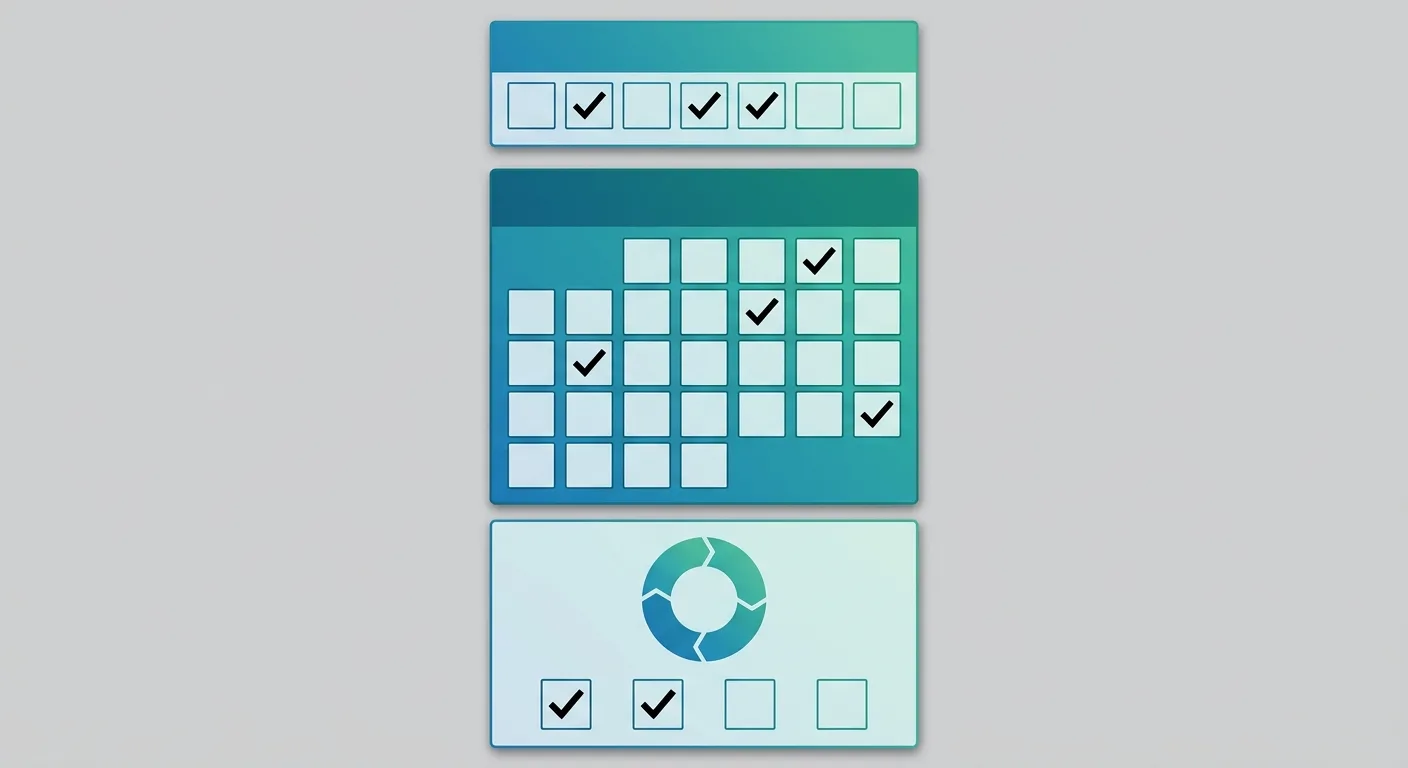 Caption: The AI-era GBP maintenance checklist in three layers — weekly (self-check / reply reviews / update hours / upload photos), monthly (post / check fields / five-platform self-check / NAP consistency), quarterly (rating trend / refresh photos).
Frequently Asked Questions
Q: My profile hasn't been touched in ages—is it too late to fix?
A: It's not too late, and you should start now. AI looks at "has it been updated recently," so if you begin steady maintenance today, the signal gradually returns. Start with hours, photos, and replying to recent reviews—those three show results fastest. You don't have to backfill three years of gaps at once; the point is to keep a rhythm from here.
Q: Is AI local search really affecting business in Taiwan yet?
A: Honestly, Taiwan has no public measurement proving "how big the impact is." The 68%/39% figures here are US 2025 research and only show direction. But the actions overlap with the foundation of traditional local SEO—so even if the AI impact hasn't fully landed, keeping your profile in good shape still helps Google Maps ranking. It's not wasted work.
Q: Does weekly maintenance take a lot of time?
A: No. Following the checklist here, it's about twenty minutes a week, mostly spent replying to reviews and spot-checking a question or two. The real barrier isn't time—it's whether someone owns it. Skip it whenever things get busy and the profile quickly reverts to static. Assign one person and put it in the weekly routine.
Q: How often should I post and add photos?
A: There's no official required frequency. In practice, aim for at least one photo a week and one to two posts a month—enough to keep the impression that the store is still moving. Quality beats quantity: one real on-site photo beats ten stock images. Rather than chasing numbers, post steadily.
Conclusion: Your Profile Is a Living Asset You Maintain Weekly
Back to that first line: stop setting it and forgetting it.
Once AI starts answering local questions for customers, your profile's role changes. It's no longer just a static sign—it's a living asset that has to keep signaling "still open, trustworthy data."
The work isn't complicated, and it doesn't need some new tool. Keep it fresh, reply to reviews fast, post and add photos regularly, then self-check with AI on a fixed cadence. These actions always helped traditional local SEO; now they add an AI-citation opportunity, so the return is actually higher.
This piece is one block in the "Local GEO" cluster. To see how the whole strategy for local stores in the AI era fits together, go back and read the complete Local GEO strategy guide pillar and put your profile back on the full map.
 Caption: A profile is like a plant—it grows only if you keep watering and tending it.
🎯 Take Action Now
Not sure whether your profile looks "fresh" in AI's eyes? AI SEO Hacker offers a Business Profile and site-wide GEO audit to find out why AI is skipping you—free consultation via LINE.
👉 Free LINE Consultation: @006ljkda
Further Reading
- Complete Local GEO Strategy Guide
- Complete Google Business Profile Tutorial
- Google Review Management Guide
- AI Says Your Store Closed Down? Taiwan Self-Check and Fix Guide
- Why Google Is the #2 Cited Domain in AI Mode