Can you guess which domains AI Mode cites the most?
Set the top spot aside for a moment. The #2 domain surprised a lot of people—it's Google itself.
And it didn't climb there through some mysterious algorithm. It climbed there on the strength of Business Profiles that you and I can both fill out.
This article breaks down what that data actually means, and why it makes the tired old task of "filling out your Business Profile" suddenly more worth doing than before.
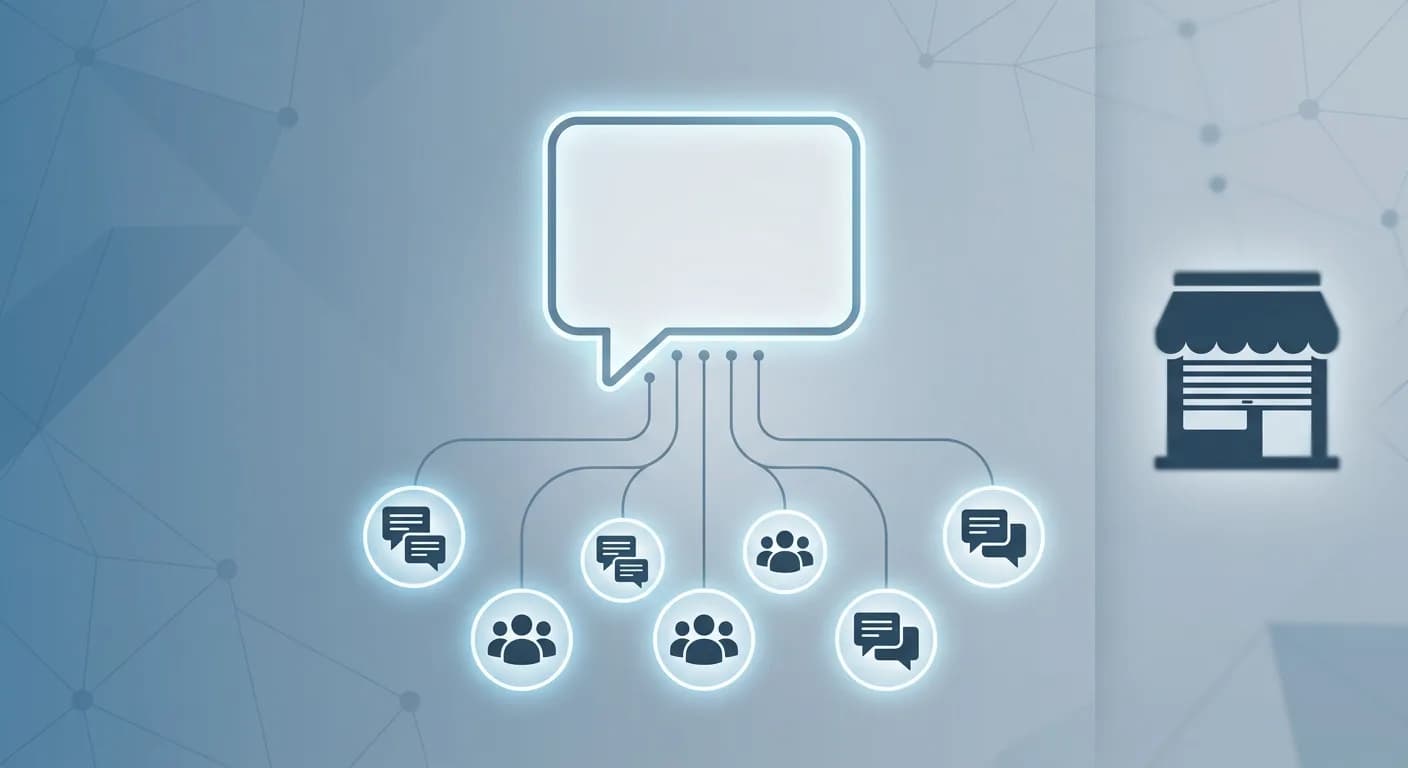
 Caption: AI Mode picks sources to cite in its answers—Google's own cards jumped to #2 in citation share within three months.
Want to know whether your Business Profile looks complete in the eyes of AI? Get a free audit via LINE.
👉 Free LINE Consultation: @006ljkda
Why Google Jumped to AI Mode's #2 Cited Domain in Three Months
Google's own pages (google.com) grew their AI Mode citation share 8.4x between 2026-04-15 and 06-30, vaulting to the #2 most-cited domain (Search Engine Journal, reported 2026-07-20). The first-party source for this figure is AI visibility tracking platform Profound, not a stat SEJ produced itself—worth keeping in mind when you read it.
In plain terms: AI Mode is Google's search feature that generates a full written answer directly. When it answers, it cites different sites as backing, and those cited sources are the "cited domains."
An 8.4x jump sounds dramatic, but it describes the growth in citation share, not "Google owns 80% of citations." In other words, the frequency with which AI picks Google cards for its answers multiplied several times over in just two and a half months.
So what is Google actually citing? Not its search results page, but the information cards it builds itself. The next section unpacks that.
One background number, so you don't mix up the framing. SEJ separately cited a March observation from SE Ranking, when google.com made up around 17% of citations (roughly 20% if you count YouTube). That's an earlier figure from a different source—useful as background only, and not to be conflated with Profound's 8.4x.
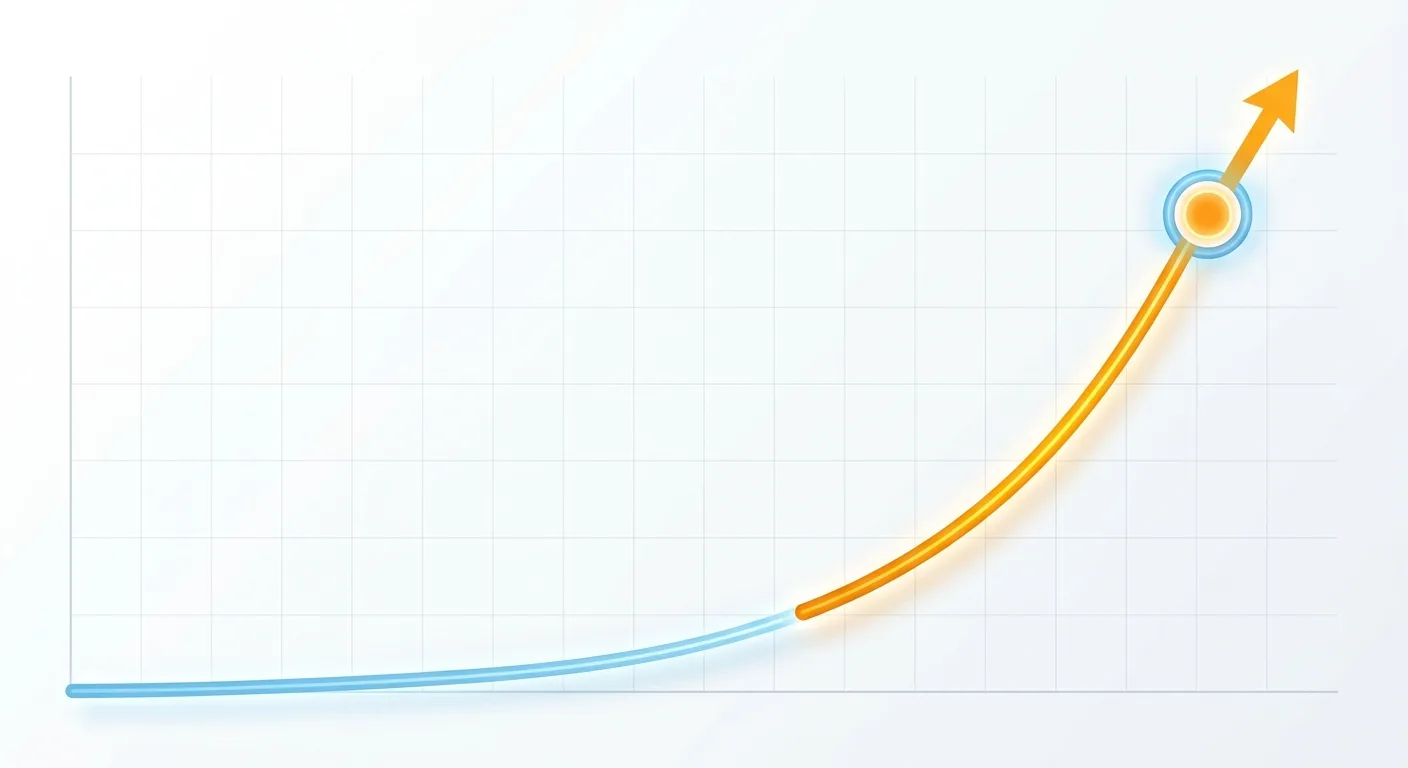 Caption: Google's citation share grew 8.4x between 2026-04-15 and 06-30, rising to AI Mode's #2 cited domain (source: Profound, via SEJ).
The Thing AI Cites Is Your Business Card and Product Knowledge Panel
Google's citation growth came almost entirely from two surfaces it builds itself: Business Profile cards and Product Knowledge Panels. That means AI Mode, when answering local and product questions, loves to pull fields straight off Google cards for its answers.
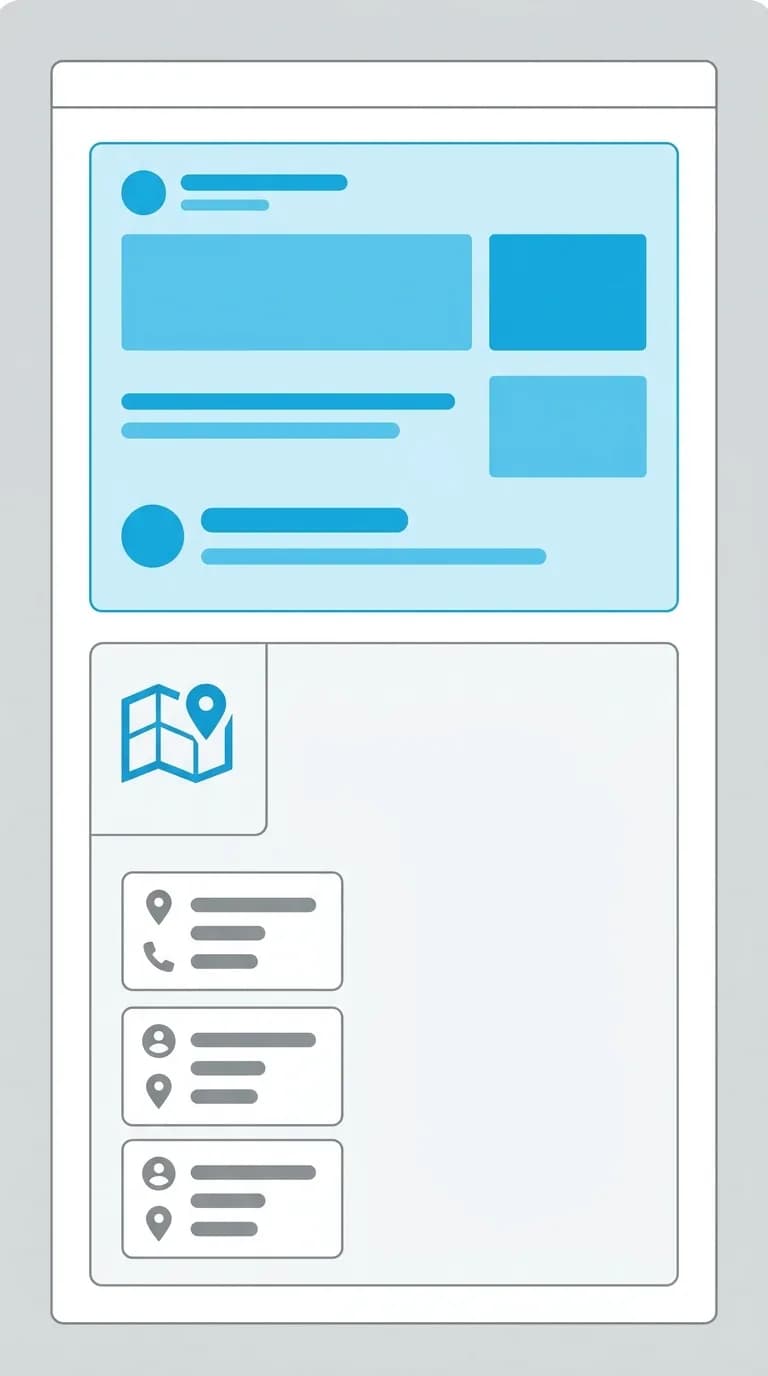
You've definitely seen the Business Profile card. It's the card that pops up next to a store name or on the map: name, address, hours, phone, reviews, photos, all on it.
The Product Knowledge Panel is the product info card Google assembles when you search for a specific product—it may hold specs, a price range, reviews, and where to buy.
Here's the key point many stores still miss. The fields on that card? You filled them in yourself.
Fill them out completely, and AI has correct material to cite. Leave them blank, and AI either skips you or stitches something together from elsewhere and gets your info wrong. When we run AI self-checks for stores, we've hit exactly this: one clinic left the special-hours field blank, and when a customer asked AI Mode "are they open over the holidays," it gave a flat-out wrong answer.
So "getting cited by AI" starts not with some advanced technique, but with that card you may not have touched in months.
For Local Stores: Filling Out Your Profile Goes From "Local SEO" to a "GEO Move"
We used to tell stores to fill out their Business Profile for local SEO—to rank a little higher on Google Maps and in "near me" searches. Now there's a more urgent reason: GEO.
GEO stands for Generative Engine Optimization. In plain terms, it means "getting AI willing to cite you." When AI Mode's second-favorite source is Google's own cards, filling out your card fields feeds material straight into the surface that gets cited most.
How do the two differ? Local SEO chases "ranking"—you want to appear near the top of the map listing. GEO chases "being cited"—you want the AI, when it generates an answer, to include your store and get it right.
The same Business Profile data now does double duty. Fill it once, and it both helps your map ranking and helps you get cited by AI.
In our experience, this shift raised the return on "filling out fields." A niche attribute field (say, "wheelchair accessible") used to just make the card look nicer; now it might be the only basis AI has when someone asks "can I get a wheelchair into this store."
If you want to start from the basics, we've laid out the full create-verify-optimize flow in this complete Google Business Profile tutorial—just fill in the fields one by one.
Want AI Willing to Cite Your Store?
Not sure which Business Profile fields are missing, or which ones are dragging down your AI citations? AI SEO Hacker offers a free audit to find the gaps.
👉 Free LINE Consultation: @006ljkda
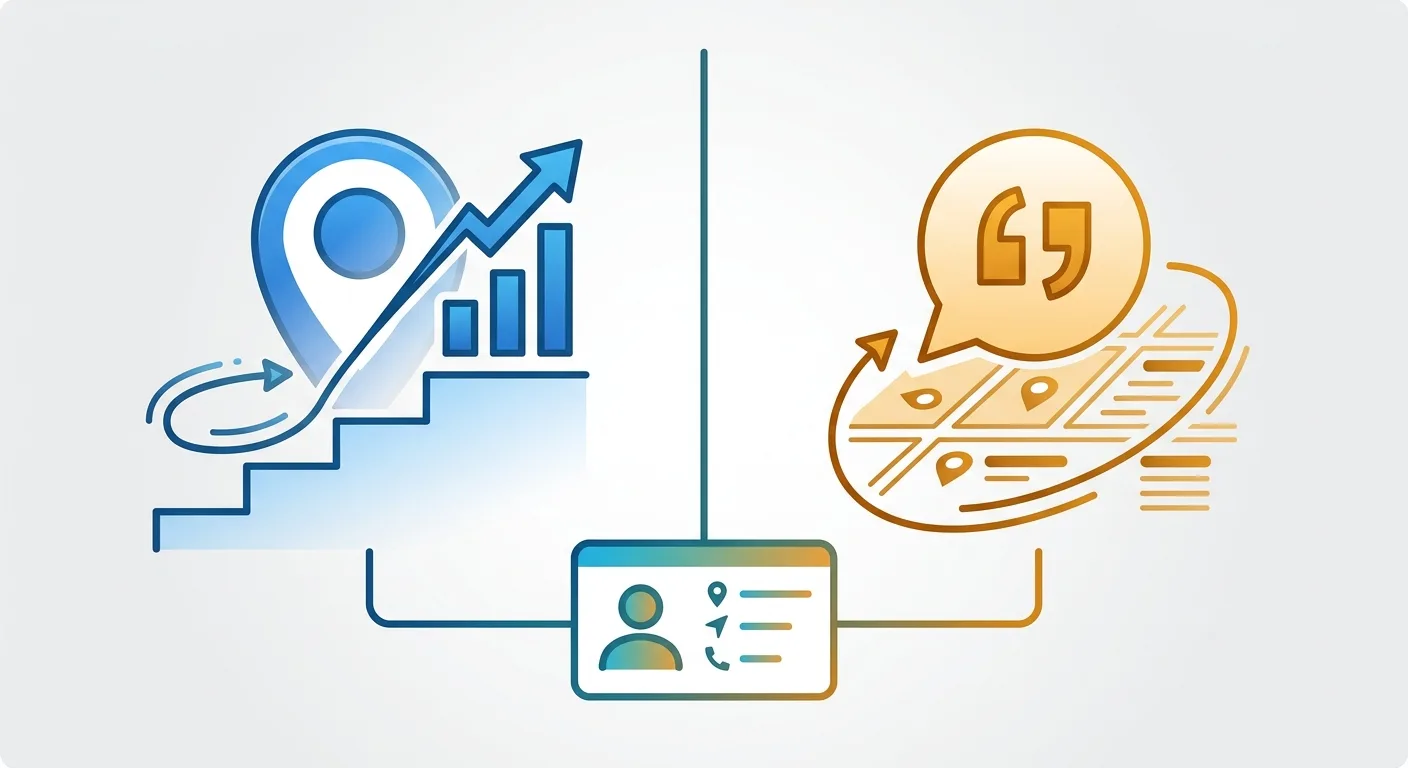 Caption: Local SEO chases "ranking," GEO chases "being cited"—but the same filled-out Business Profile data feeds both.
Which Business Profile Fields to Complete Now (Action Checklist)
To make AI Mode willing to cite you, complete these fields first—they're exactly what the cards and Product Knowledge Panels pull from:
- Primary and secondary categories: Category tells AI "what kind of store" you are. Pick specific, not overly broad.
- Attributes: Parking, wheelchair access, Wi-Fi, vegetarian options, dine-in or takeout—these checkboxes. Leave them blank and AI has no basis to answer the related questions.
- Services and product lists: Fill in service names, product names, descriptions, prices. For physical products, this also feeds the Product Knowledge Panel.
- Business description: Within 750 characters, spell out your main services and what makes you different. The first few sentences matter most—they show first and get read first.
- Hours plus special hours: Regular hours must be accurate, and set special hours for holidays too. This is the item AI is asked about most, and gets wrong most.
- Photos: Exterior, interior, products—all needed, and update them regularly.
Two more sources get overlooked, but feed data straight to AI.
The first is reviews. AI references review content when generating answers, so replying to reviews thoughtfully and stating correct info in those replies feeds material indirectly. For how to do this, see our Google review management guide.
The second is consistency across the web. If your name, address, and phone don't match across your website, Facebook, and various directories, AI is likely to grab the wrong one or skip you entirely when citing. Keeping it consistent is local SEO fundamentals—our complete local SEO guide has the full method.
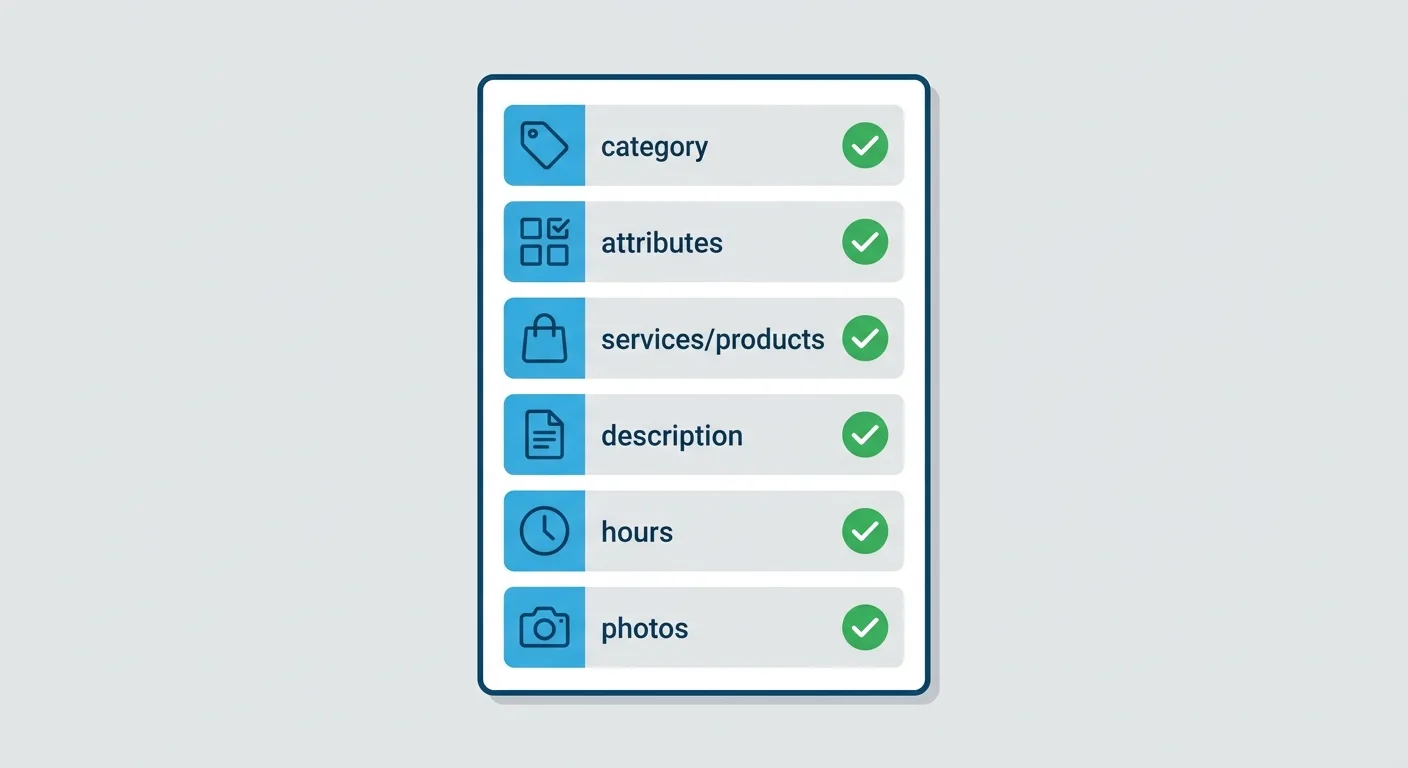 Caption: Complete six fields first—category, attributes, services/products, description, hours, photos—the exact material AI cards pull from.
How to Confirm AI Mode Cites You—and Whether It Gets You Wrong
Filling out fields doesn't mean you're done; you have to check the results. The method is low-tech, but it works.
Search for your own store in AI Mode using the phrasing a customer would use. For example, "Is XX clinic in Xinyi wheelchair accessible" or "Is XX Coffee open over the holidays."
See whether AI's answer is right. If it's wrong or missing something, go back and complete the matching field from the checklist above.
When we run these checks for stores, we usually test five to eight common phrasings per store and map the wrong answers back to fields. This small step takes under ten minutes, yet it often surfaces one or two pieces of wrong info that have been misleading customers.
One limitation worth flagging: AI Mode answers shift, and the same question asked at different times can cite different sources—that's the nature of generative search. So treat the check as a regular habit, not a one-and-done.
FAQ
Google became AI Mode's #2 cited domain—does that mean traditional SEO is dead?
No. The data says AI Mode loves citing Google's own cards, and the material on those cards is what you enter through your Business Profile. Traditional local SEO fundamentals (complete info, consistent NAP, review management) are exactly what feed those cards—so it's more worth doing, not less. Google's citation share grew 8.4x between 2026-04-15 and 06-30 (Profound data, via SEJ 2026-07-20), with the growth coming almost entirely from Business Profiles and Product Knowledge Panels.
I have no physical store and only sell online—do I still need to care about the Product Knowledge Panel?
Yes, as long as you sell concrete products. The Product Knowledge Panel pulls product data, regardless of whether you have a storefront. Fill in product names, descriptions, prices, and specs so AI has your material to cite when answering product questions. Leave those fields blank, and AI either skips you or assembles possibly-wrong product info from elsewhere.
Is the 8.4x growth the same for every industry and every store?
No. The 8.4x is Profound's observation of google.com's overall AI Mode citation share growth (2026-04-15 to 06-30)—a domain-level number, not a guarantee your single store will grow 8.4x. Its value is the trend: AI increasingly cites Google cards, so filling out your card gives being-cited a foundation. Individual results still depend on your industry and how complete your data is.
How do I know whether AI Mode is citing my business data?
Search for your own store in AI Mode using a customer's phrasing, testing five to eight common questions (hours, address, services, whether you have a certain amenity), and see whether the answers are right. If wrong or missing, go complete the matching Business Profile field. Because generative search answers shift, run this self-check periodically rather than once.
Fill Out Your Business Profile: The First Step to Winning AI Mode Citations
Back to that opening number. Google's own pages became AI Mode's #2 most-cited domain, with citation share growing 8.4x in three months, almost entirely from Business Profile cards and Product Knowledge Panels.
For local stores, the translation is simple: AI now loves using the data you put on Google cards as its answers.
So what you should do hasn't gotten more complex—it's gotten more focused.
- Complete the old fields: category, attributes, services, products, hours, photos.
- Reply to reviews thoughtfully, because they're AI reference material too.
- Keep your name, address, and phone consistent across the web.
- Self-check with AI Mode regularly, and complete the field whenever you catch an error.
The same effort that used to buy only a map ranking now buys an AI citation too. It's the highest-return, least tool-chasing task we've seen lately.
To fix the full flow in one go, start with the complete Google Business Profile tutorial, then pair it with the complete local SEO guide to build web-wide consistency.
 Caption: A fully completed Business Profile is the starting point for getting cited by AI Mode.
🎯 Take Action Now
Miss one Business Profile field, and AI has one less chance to cite you. AI SEO Hacker audits your Business Profile and site-wide GEO gaps—free LINE consultation.
👉 Free LINE Consultation: @006ljkda