
Have you noticed that more and more people, before buying, don't open Shopee first — they ask AI, "Which of these two dehumidifiers is the better deal?"
Price comparison has always been what Taiwanese online shoppers care about most. Now that job is slowly shifting from manual comparison to AI.
Here's the question: when AI compares prices for a shopper, can it even read your product? Are the prices and specs it reads correct? This article starts from Taiwan's latest local data and walks you through landing retail GEO, step by step.
 Caption: Taiwanese shoppers increasingly ask AI to compare prices first — products recommended by AI win at the starting line.
💡 Want to know if AI recommends you when it compares prices?
Don't just guess. Taiwan retail GEO has a method you can check and act on.
👉 Free e-commerce GEO consultation via LINE
What Do Taiwanese Online Shoppers Most Want AI to Help With?
The answer is concentrated: price comparison. According to a survey published in late June 2026 by Taiwan's Institute for Information Industry, Market Intelligence & Consulting Institute (MIC), 68.7% of consumers picked "AI price comparison" as the e-commerce AI service they want most — first among all AI features (source: Taiwan's Institute for Information Industry / MIC, June 2026; reported by CNA and Liberty Times).
There's a nuance worth stating clearly. This number is not the fuzzy claim that "nearly 70% of people want AI features." It's that among many AI service options, one single item — price comparison — was named by the most consumers. Others like AI customer service, outfit recommendations, and auto-checkout ranked behind it.
Why does that matter? Because it tells you the shopper's real motivation.
When Taiwanese people buy things, they care a lot about "did I overpay." It's cultural, and it's habit. People used to open several tabs and compare themselves. Now they want AI to finish the comparison in one go. Honestly, that's good news for e-commerce, and also pressure.
The good news is the demand is clear, so you know what to optimize. The pressure is this — if AI can't grab your product information when it compares prices, you don't even qualify to be compared.
When we review content for Taiwanese retailers, this is the most common situation: the price is buried in an image, the specs sit on a campaign banner, and comparison information simply doesn't exist. AI can't read text inside images, so this store is a blank in AI's comparison list.
If you want to catch up on what GEO is first, see our complete guide to generative engine optimization.
SHOPLINE Partners with Jiang Neng Digital Marketing to Bring Retail GEO into Taiwan E-commerce
It's not only shoppers who are changing — the platform side has started moving too. In July 2026, e-commerce platform SHOPLINE partnered with the digital-marketing agency Jiang Neng Digital Marketing (將能數位行銷) to bring retail GEO — generative engine optimization — into real-world Taiwan e-commerce. Several Taiwanese outlets were discussing the same theme in the same period: AI search is reshaping the traffic entry point for online retail.
What does that mean? It means GEO is no longer just a marketing buzzword. It's becoming a service line on an e-commerce platform.
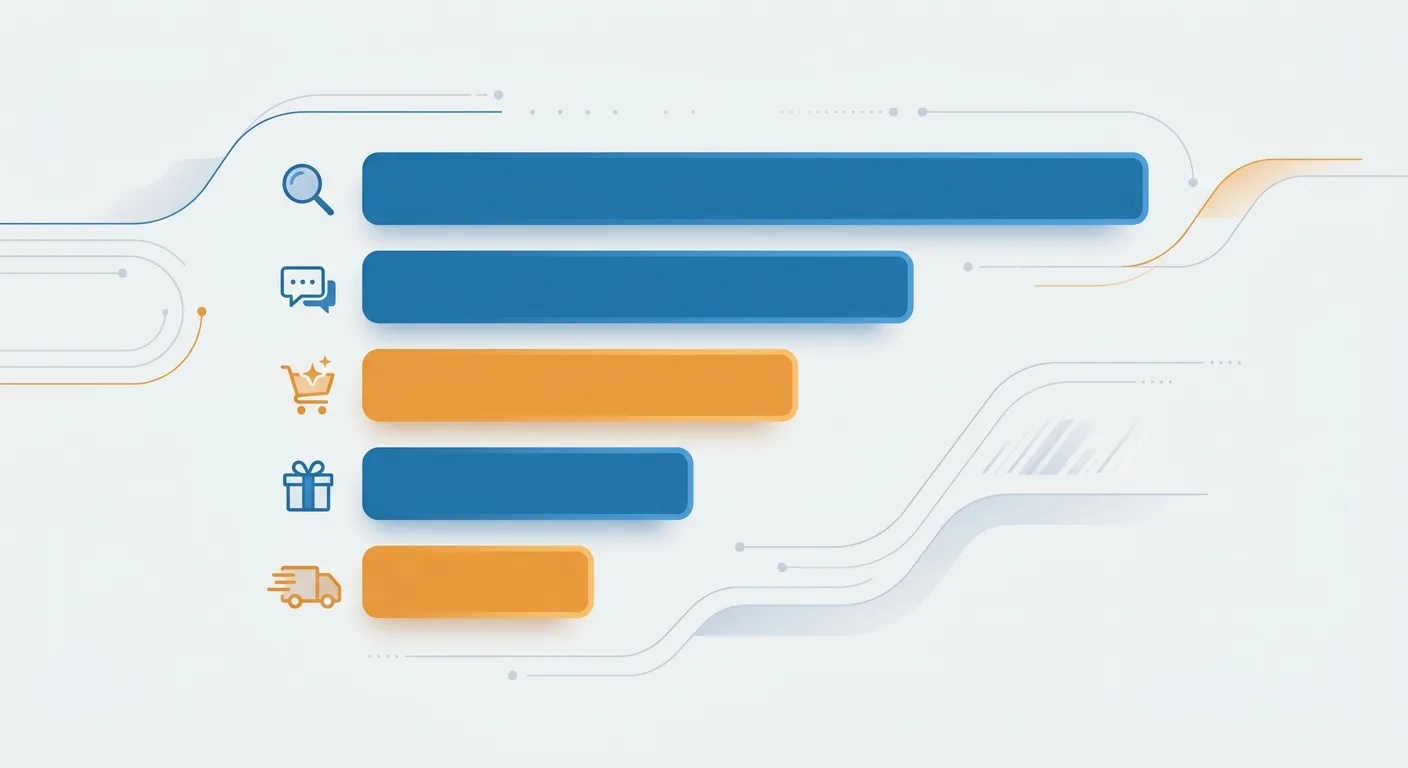 Caption: MIC's June 2026 survey — "AI price comparison" tops the list of most-wanted e-commerce AI services at 68.7%, ahead of every other AI feature.
One thing I'll be straight about. What's public about this partnership is mainly the fact that "they did this." As for the various multiples and growth figures mentioned in the report, there's currently no first-hand source we can check word for word, so this article does not cite those numbers — we won't mislead you with unverified data.
Our position is consistent: we write what we can verify, and skip what we can't. That's the responsible thing to do for you.
The one point worth remembering is this — the shopper side (wanting to compare prices) and the platform side (starting to do GEO) have lined up. Both forces are pushing the same direction at the same time, and the landing window for Taiwan retail GEO is right now.
Why "Comparison-Type" AI Demand Is an Opportunity for Taiwanese SMB Retailers
Because comparison compares information, not ad budget. That's exactly the gap where smaller retailers can turn the tables.
Think about it. Traditional keyword ads go to the highest bidder. Deep-pocketed brands buy the slots, and small shops pick up what's left. But AI price comparison follows a different logic — it compares whose product information is complete, whose specs are clear, whose price is easy to find.
This has no fixed relationship with budget. It has a fixed relationship with whether you've written your product clearly.
A curated goods store in Tainan, as long as it writes the material, size, origin, warranty, and actual selling price of its hero products into text AI can read, may not lose in AI comparison visibility to a big brand that can't be bothered to organize its content. You might be thinking: is it really that simple?
It's not that simple, but the direction is right. The hard part is being consistent, and getting the details right. Still, the starting line really is a lot flatter than in the ad-buying era.
In our experience helping Taiwanese retailers, the ones who catch the GEO dividend often aren't the ones with the strongest product, but the ones who organize their content most diligently. That feeling is a lot like doing traditional SEO in the past.
For a fuller local playbook, see Enterprise GEO Strategy.
Want AI to hit your products when it compares prices?
The opportunity for Taiwanese SMB retailers is in organizing product content into something AI can read. Not sure where to start? We can take a look for you.
👉 Free consultation via LINE | View service plans
Taiwan Retail GEO in 4 Landing Steps
You get the direction. Next comes the doing. These four steps are a landing order Taiwanese retailers can follow right away.
 Caption: Taiwan retail GEO in 4 steps — (1) pick hero products (2) write specs and prices as text (3) add comparison-type FAQ (4) self-check by testing on AI.
Step 1: Pick Hero Products First — Don't Do It All at Once
A common mistake Taiwanese retailers make is trying to optimize hundreds of SKUs across the whole site in one shot. That usually never finishes, and it doesn't hold up.
The right order is to focus. Lock onto your top 20% revenue products, plus your few highest-margin items. These are your cash cows, and optimizing them yields the biggest return.
Get 10 to 20 items done well first, build yourself a template, and copying it to other products later becomes fast.
Step 2: Write Specs and Prices as Text AI Can Read
This is the biggest common flaw for Taiwanese retailers. Prices get baked into campaign graphics, specs get stuffed into designer banners — it looks pretty, but AI can't read a single character.
Remember one line: AI cannot read text inside images.
So every hero product needs, at minimum, a text version of its spec sheet and a clear text price. Material, size, origin, warranty, use cases — write out everything that can be written as text. A table is even better, because AI parses tables especially easily.
Comparison-type demand cares a lot about "comparable fields." Use consistent spec columns across similar products, so AI can actually run the comparison.
Step 3: Add "Comparison-Type" FAQ That Matches Shopper Questions Directly
The way shoppers use AI is by asking questions. "How is this different from that one," "is it good for a gift," "is it enough for a small apartment" — these are all questions.
FAQ is the format AI cites most easily, because its shape is identical to how shoppers ask.
For Taiwanese retail, we suggest writing more comparison-type and scenario-type FAQ items. For example:
- How is this different from the previous generation? (comparison)
- Is it enough for a small studio for one person? (scenario)
- Can it run directly on Taiwan's voltage? (local)
- How does the warranty work, and who repairs it if it breaks? (service)
Answer in the first sentence — don't circle around. Keep each item to 150–300 words so AI can chunk it. For the chunking concept, see Content Chunking for AI.
Step 4: Actually Ask AI Once, and Check Whether You Get Compared
Done doesn't mean effective — you have to verify. The method is crude but accurate: open ChatGPT, Perplexity, and Gemini, and in a shopper's tone, ask a price-comparison question related to your product.
See whether AI mentions you. Whether the information is right. Whether the price is accurate.
In practice, we usually run this test once a week and record each result. Which questions AI starts recommending you for, and which it still can't find, become clear as a trend. That beats waiting on a traffic report by a mile.
Common GEO Landing Mistakes for Taiwanese Retailers
Having covered what to do, let's cover what not to do. GEO is no cure-all, and some pitfalls have tripped up many Taiwanese retailers.
The first pitfall is thinking it works the moment you do it. GEO, like SEO, needs time to accumulate. For AI to re-crawl and re-learn your new content often takes a few weeks. Impatience doesn't help.
The second pitfall is faking content to look good in comparisons. Some stores inflate specs or list prices lower than reality to look better when compared. That's dangerous. AI cross-checks multiple sources, so mismatched information actually costs you points, and when shoppers receive something that doesn't match the description, the complaints and returns are the real damage.
The third pitfall is treating settings like llms.txt as top priority. Honestly, most major AI providers don't really parse this file yet, and Google has said Search doesn't need it. You can do it, but it ranks behind product content, specs, and FAQ. Don't put the cart before the horse.
The fourth pitfall is doing it once and leaving it. Prices change, specs get revised, new products launch. Leave content un-updated and AI grabs stale information, so the "you" it compares is out of date. Freshness is itself a ranking signal.
Bottom line: Taiwan retail GEO has no shortcut. It compares who organizes product information more diligently, more truthfully, and more freshly.
FAQ
Q1: How does Taiwan retail GEO differ from general e-commerce SEO?
Taiwan retail GEO aims to get AI to mention you when it compares prices and makes recommendations, not just to rank your page high on Google.
The difference is the audience. Traditional SEO faces the search engine's ranking; GEO faces AI's citation and recommendation. In the Taiwan market specifically, because 68.7% of consumers most want AI price comparison (Taiwan's Institute for Information Industry / MIC, June 2026), retail GEO especially needs to write "comparable product information" clearly.
Q2: Can small retailers with no budget still do retail GEO?
Yes, and smaller retailers actually have a shot. AI price comparison compares completeness of product information, not ad budget.
As long as you're willing to write your hero products' specs, prices, and comparison details into text AI can read, your visibility has a chance of matching a big brand that can't be bothered to organize content. This has no fixed relationship with how deep your pockets are — it has a fixed relationship with whether you've written your product clearly.
Q3: What does the SHOPLINE and Jiang Neng Digital Marketing partnership mean for me?
It's a signal: retail GEO has moved from concept to an actual service line on a Taiwan e-commerce platform.
In July 2026, SHOPLINE partnered with Jiang Neng Digital Marketing (將能數位行銷) to bring retail GEO into real e-commerce. That means the shopper side wanting to compare prices and the platform side starting to do GEO have lined up. Even if you don't use this platform, the trend tells you the landing window for Taiwan retail GEO is now.
Q4: How do I know whether AI recommends my products when it compares prices?
The most direct method is to ask AI yourself, in a shopper's tone. Open ChatGPT, Perplexity, or Gemini, type a price-comparison question about your product, such as "which is the better deal, Brand A or Brand B dehumidifier," and see whether AI mentions you, whether the information is right, and whether the price is accurate. We recommend testing once a week and recording changes — it surfaces results faster than waiting on a traffic report.
 Caption: Organize your product information well, and your store has a chance to be recommended when AI compares prices.
Where Should Taiwan Retail GEO Start? A Quick Recap
Back to that first question: when AI compares prices for a shopper, can it read you?
Taiwan's signal is already clear. 68.7% of consumers most want AI price comparison, and the platform side has started treating retail GEO as a service. The shopper side and the platform side have lined up — that's a rare landing window.
What you need to do is actually not complicated. Pick hero products, write specs and prices as text, add comparison-type FAQ, then self-test on AI. These four steps can start today.
Comparison compares information, not budget. For Taiwanese SMB retailers, that's a genuinely fair opportunity.
Landing Taiwan Retail GEO, with a Team That Knows the Local Market
Too many products, never enough time to organize content? Let us help turn your hero products into something AI can read and compare.
👉 Free consultation via LINE | View service plans
Further Reading
- E-commerce GEO Optimization Guide: Get AI Shopping Assistants to Recommend Your Products
- Enterprise GEO Strategy
- GEO: Complete Guide to Generative Engine Optimization
- Content Chunking for AI
References
- Institute for Information Industry (MIC), 2026 Online Shopping Behavior Survey (published June 2026)
- CNA (Central News Agency) and Liberty Times coverage of the MIC e-commerce AI survey (June 2026)
- Industry coverage of the SHOPLINE and Jiang Neng Digital Marketing retail GEO partnership (July 2026)
![E-commerce GEO Optimization Guide: Get AI Shopping Assistants to Recommend Your Products [2026]](/_next/image?url=%2Fblog%2Fimages%2Fgeo%2Fecommerce-geo-optimization-01.webp&w=3840&q=75)

![AI Says Your Store Closed? A 5-Platform Check to Fix Wrong Location Info [2026]](/_next/image?url=%2Fblog%2Fimages%2Fgeo%2Fai-wrong-store-info-01.webp&w=3840&q=75)