![What Is a Topic Cluster? Complete Guide to Topic Cluster Strategy [2026]](/_next/image?url=%2Fblog%2Fimages%2Fcontent-marketing%2Ftopic-cluster-strategy-01.webp&w=3840&q=75)
Written dozens of articles but rankings still won't budge?
The problem might not be the quality of your writing — it might be that your content isn't "connected."
Topic Cluster is a content architecture strategy that makes your articles boost each other, collectively elevating your website's authority on specific topics.
This guide explains what a Topic Cluster is, why it works, and how to build your own step by step.
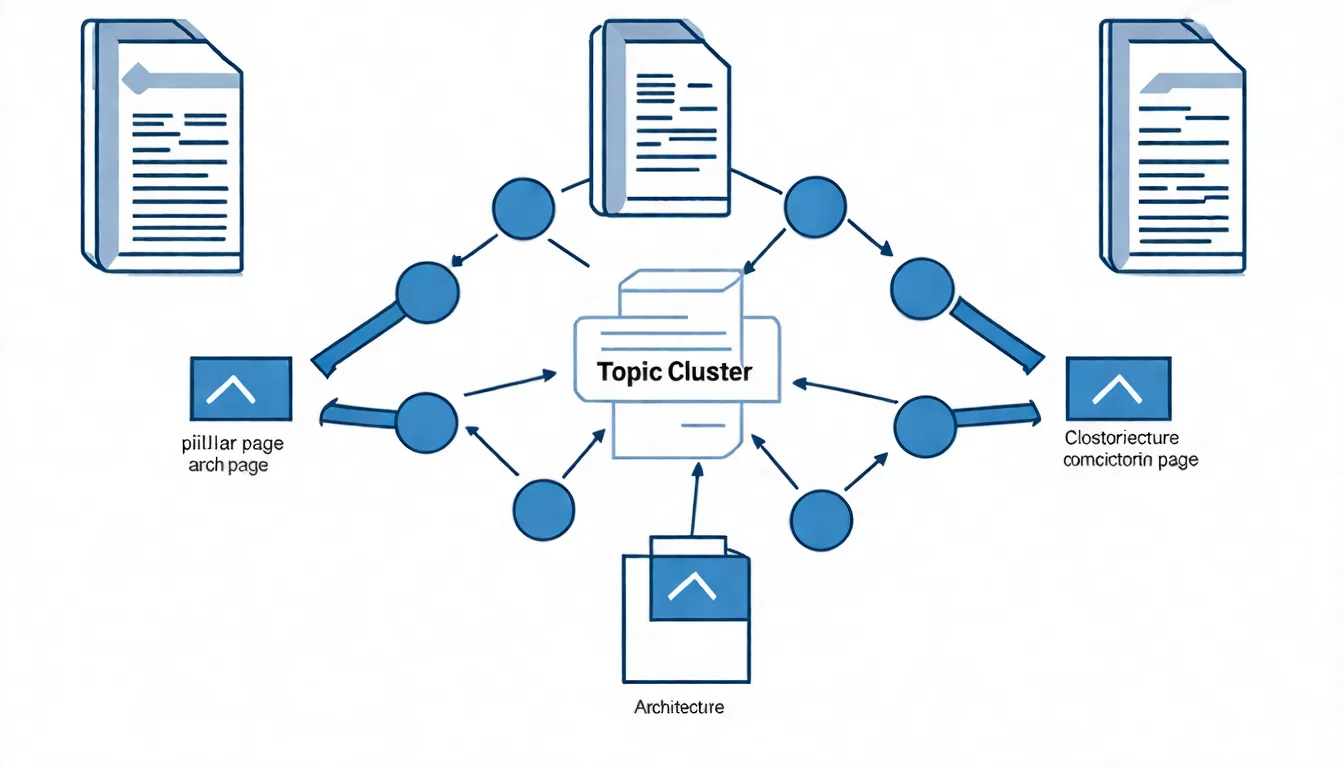
Topic Cluster: Definition and How It Works
What Is a Topic Cluster?
A Topic Cluster is a content architecture centered around a core topic.
In simple terms:
- One Pillar Page: A comprehensive overview of the topic
- Multiple Cluster Pages: Deep dives into individual subtopics
- Internal Links: Connecting all these pages together
This structure creates a "content network" that signals to Google that you have deep expertise on the subject.
Visual representation:
        [Cluster Page 1] <-> [Cluster Page 2]
               \             /
              [Pillar Page]
               /             \
        [Cluster Page 3] <-> [Cluster Page 4]
All cluster pages link to the pillar page, the pillar page links back to all cluster pages, forming a tightly connected network.
The Relationship Between Pillar Pages and Cluster Pages
Pillar Page:
- Provides a comprehensive introduction to a broad topic
- Longer format, covering every angle of the topic
- Targets more competitive primary keywords
- Links to all related cluster pages
Cluster Page:
- Deep dives into a specific subtopic under the core theme
- Moderate length, focused on covering one subtopic thoroughly
- Targets less competitive long-tail keywords
- Links back to the pillar page
Example:
If the core topic is "SEO":
- Pillar Page: "What Is SEO? Complete Beginner's Guide"
- Cluster Page 1: "How to Do Keyword Research"
- Cluster Page 2: "Technical SEO Checklist"
- Cluster Page 3: "Link Building Strategies"
- ...and so on
How Topic Clusters Boost SEO
1. Build topical authority
Google favors specialized sites.
When you have extensive, in-depth content on a topic, Google considers you an expert in that field and is more willing to rank your content.
2. Strengthen internal link value
Internal links pass "authority."
Traffic and links earned by cluster pages transfer to the pillar page through internal links, making the pillar page stronger.
3. Improve overall site rankings
The Topic Cluster effect is holistic:
- Cluster pages rank more easily (lower competition)
- Cluster pages boost the pillar page
- Pillar page ranking improvements feed back to cluster pages
- This creates a positive feedback loop
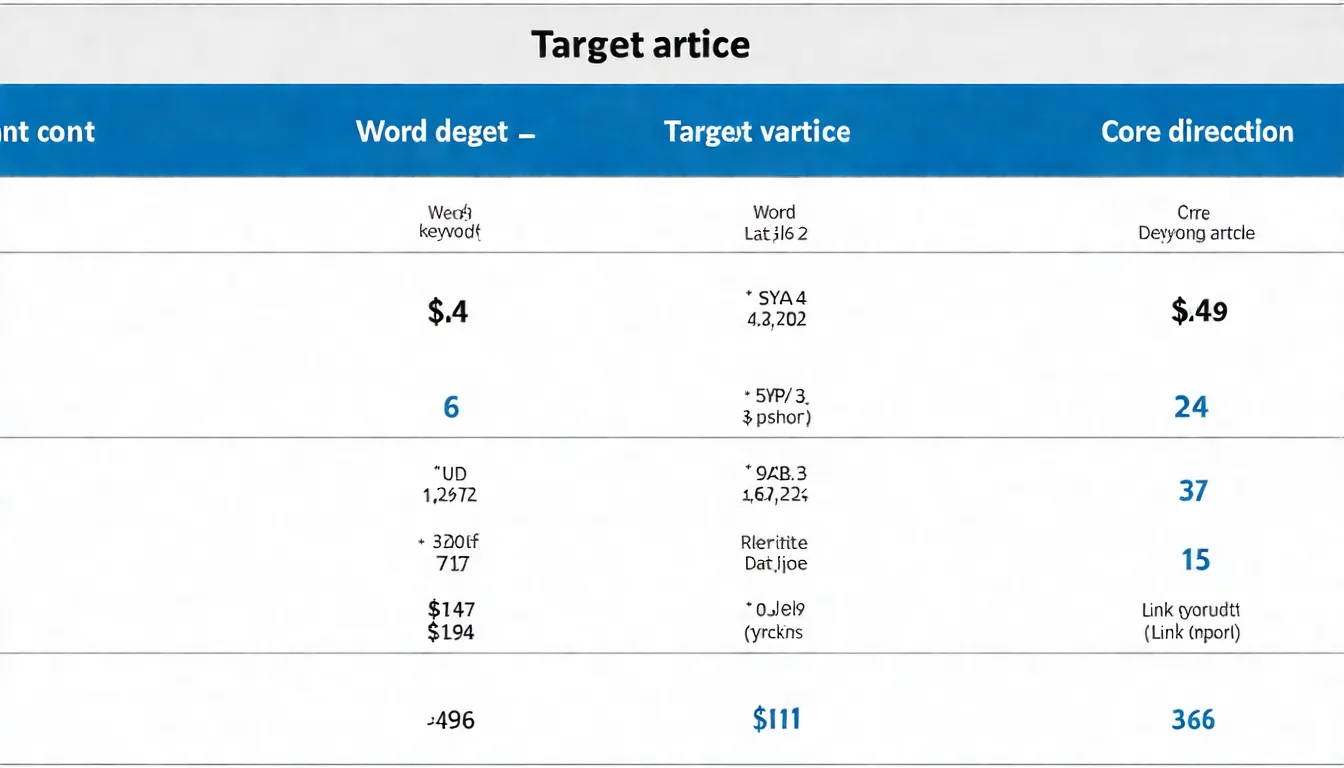
Why Google Loves Topic Clusters
Semantic Search and Topical Authority
Google's search algorithm has evolved.
In the past, Google matched keywords. Today, it evaluates topic comprehension.
This means:
- Google looks beyond individual articles — it evaluates the entire site
- Extensive high-quality content on a topic = expert status
- Expert content deserves better rankings
Topic Clusters align perfectly with this logic.
The SEO Value of Internal Links
Internal links are more than navigation tools.
They tell Google:
- These pages are related
- This page (the pillar) is the most important
- We have deep coverage of this topic
Well-structured internal links can dramatically improve SEO performance.
E-E-A-T and Content Depth
Google's E-E-A-T framework (used in its quality rater guidelines to assess content quality; not a ranking factor in itself):
- Experience
- Expertise
- Authoritativeness
- Trustworthiness
Topic Clusters demonstrate your expertise and authority:
- A comprehensive pillar page showcases broad knowledge
- Multiple cluster pages prove deep specialization
- Systematic content structure increases credibility
For more on content marketing strategy, see our complete guide.
Want to build topical authority? Start with quality content.

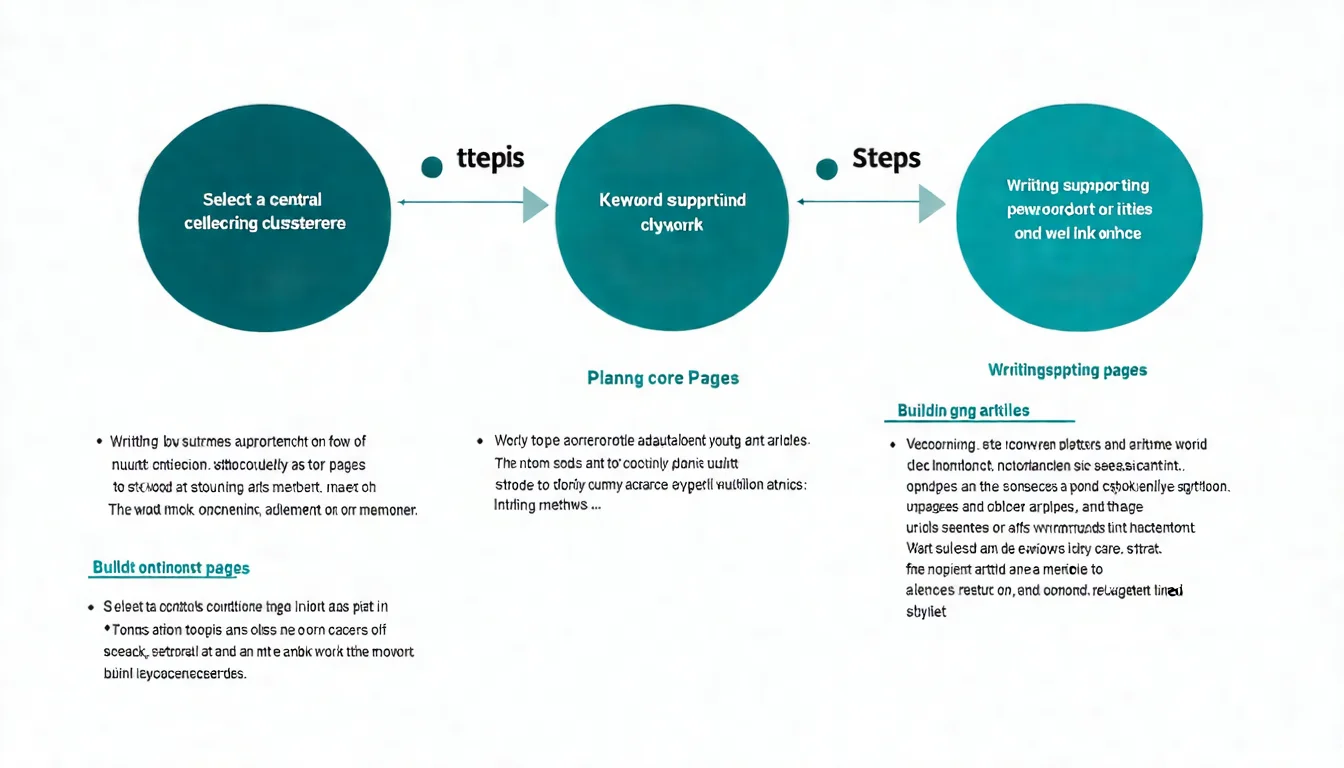
5 Steps to Build a Topic Cluster
Here's the complete process for building a Topic Cluster.
Step 1: Choose Your Core Topic
Core topic criteria:
- Business-relevant: Attracts your target audience
- Room to expand: Can generate multiple subtopics
- Search demand: Primary keyword has search volume
- Competitive advantage: You can create great content on it
Poor core topic examples:
- "Technology" -> Too broad
- "Tech news from January 15, 2026" -> Too narrow
Good core topic examples:
- "SEO Optimization"
- "Content Marketing"
- "E-commerce Management"
Step 2: Keyword Research and Grouping
Find all related keywords:
Use keyword tools to discover all search terms related to your core topic.
For example, "content marketing" related terms:
- What is content marketing
- Content marketing strategy
- Content marketing examples
- Blog management
- SEO article writing
- AI article generation
- ...
Group your keywords:
Categorize keywords by theme:
| Group | Keywords |
|---|---|
| Core Concepts | What is content marketing, content marketing definition |
| Strategy | Content marketing strategy, content marketing plan |
| Execution | SEO article writing, blog management |
| Tools | AI article generator, content marketing tools |
Each group may correspond to one cluster page.
Step 3: Plan Your Pillar Page Architecture
The pillar page should cover the entire topic:
But not in exhaustive detail — rather:
- Touch on each subtopic
- Provide sufficient introduction
- Link to cluster pages for deeper exploration
Architecture example (Content Marketing Pillar Page):
H1: Complete Guide to Content Marketing

H2: What Is Content Marketing?
  (Basic introduction)

H2: Why Content Marketing Matters
  (Value explanation)

H2: Content Marketing Strategy
  (Strategy framework + links to strategy articles)

H2: Content Types and Production
  (Content type overview + links to specific articles)

H2: Content Marketing Tools
  (Tool overview + links to tool review articles)

H2: Measuring and Optimizing Results
  (Measurement methods + links to analytics articles)
Step 4: Write Cluster Pages
Cluster page writing priorities:
- Deep dive into subtopics: More detailed than the pillar page
- Target long-tail keywords: Easier to rank for
- Link back to the pillar page: Strengthen pillar page authority
- Cross-link related cluster pages: Strengthen the cluster
Publishing order recommendations:
- You can publish the pillar page first, then roll out cluster pages
- Or accumulate several cluster pages first, then publish the pillar
- The key is consistent production to form a complete cluster
For more writing tips, see SEO Article Writing tutorial.
Step 5: Build Your Internal Link Network
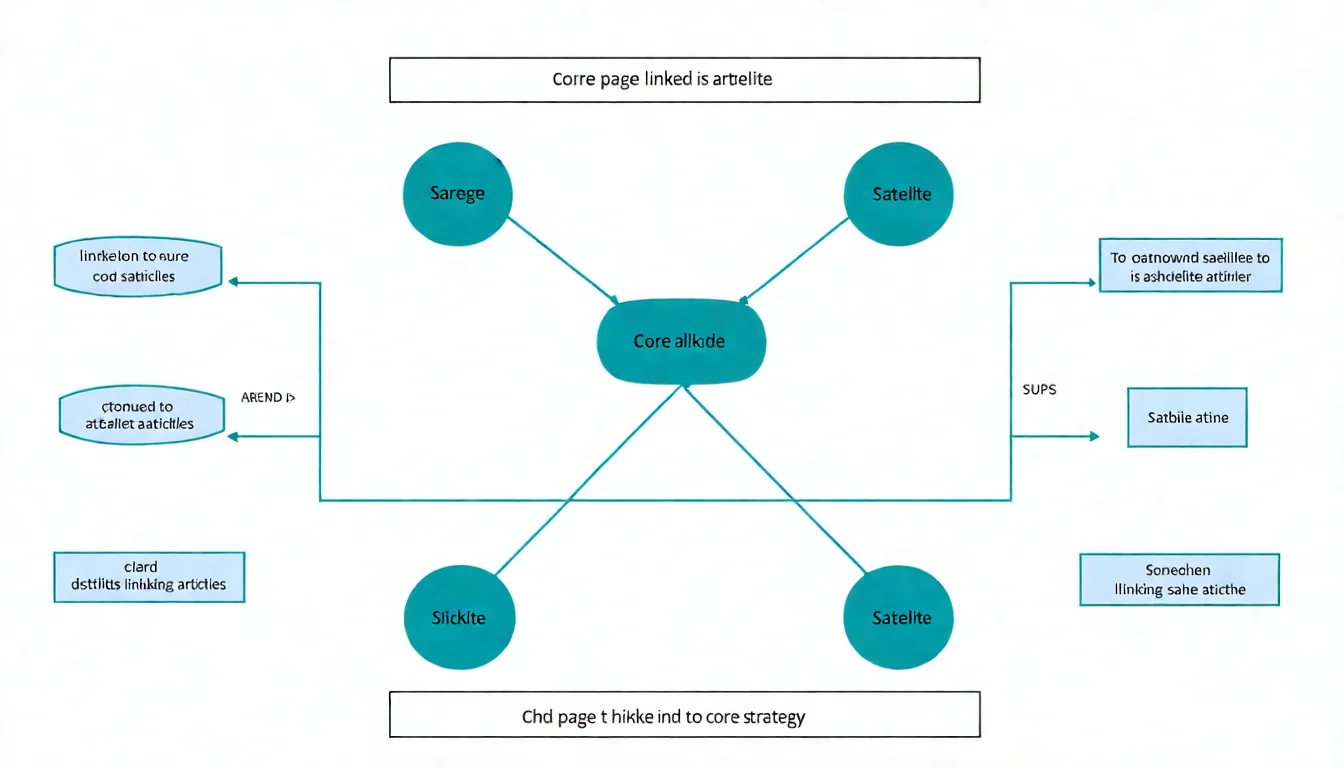
Link strategy:
-
Cluster pages -> Pillar page (required)
- Each cluster page links to the pillar page at least 1-2 times
- Use relevant anchor text
-
Pillar page -> Cluster pages (required)
- Pillar page links to all cluster pages
- Insert naturally in relevant sections
-
Cluster page <-> Cluster page (recommended)
- Cross-link related cluster pages
- Increases cluster cohesion
Anchor text tips:
- Use descriptive text, not "click here"
- Can include target keywords
- Vary the wording — don't use the same phrase every time
Topic Cluster Case Studies
Example: SEO Topic Cluster Architecture
Core topic: SEO (Search Engine Optimization)
Pillar page:
- Title: "What Is SEO? Complete Beginner's Guide 2026"
- Target keywords: "SEO," "SEO tutorial"
Cluster pages:
| Subtopic | Title | Target Keyword |
|---|---|---|
| Keyword Research | Complete Guide to Keyword Research | keyword research |
| Technical SEO | Technical SEO Checklist | technical SEO |
| Content Optimization | How to Write SEO Articles | SEO articles |
| Link Building | Backlink Strategy Guide | backlinks |
| Local SEO | Google Business Profile Optimization | Google Business |
| SEO Tools | Best SEO Tools Reviewed | SEO tools |
This architecture covers all major aspects of SEO.
Example: Content Marketing Topic Cluster Architecture
Core topic: Content Marketing
Pillar page:
- Title: "What Is Content Marketing? Complete Guide"
- Target keyword: "content marketing"
Cluster pages:
| Subtopic | Title | Target Keyword |
|---|---|---|
| AI Writing | AI Article Generator Review | AI article generator |
| AI Detection | AI Content Detection Guide | AI content detection |
| Article Writing | SEO Article Writing Tutorial | SEO articles |
| Content Architecture | Topic Cluster Tutorial | topic cluster |
| Blogging | Blog Management Guide | blog management |
| Outsourcing | Content Marketing Outsourcing Guide | content outsourcing |
Each cluster page links back to the pillar page, forming a complete topic cluster.
Topic Cluster planning too complex? Let an expert help.
👉 Free LINE Consultation: @006ljkda
Recommended Topic Cluster Tools
Keyword Grouping Tools
1. Ahrefs
- Features: Find related keywords, analyze competition
- Strength: Comprehensive data, deep analysis
- Pricing: Free plan available; paid plans start at $29/month (Starter)
2. SEMrush
- Features: Keyword research, content planning
- Strength: Tightly integrated keyword and content planning workflow
- Pricing: Free plan available; paid plans start at $117.33/month (SEO plan, annual billing)
3. Ubersuggest
- Features: Keyword suggestions, competitive analysis
- Strength: Simple interface, one-time 7-day free trial
- Pricing: From $29/month on monthly billing (Individual plan; in Taiwan and some other regions the pricing page shows a lower regional price, e.g. $12/month)
4. KeywordTool.io
- Features: Google autocomplete keywords
- Strength: Rich long-tail keywords
- Pricing: Free / Paid plans
Internal Link Analysis Tools
1. Screaming Frog
- Features: Site crawling, link structure analysis
- Strength: Identifies orphan pages, link issues
- Pricing: Free (500 URLs) / £199/year
2. Sitebulb
- Features: Site auditing, internal link analysis
- Strength: Visual presentation
- Pricing: Paid software — see the official site for current plans
3. Link Whisper (WordPress)
- Features: Automatic internal link suggestions
- Strength: Simplifies link building
- Pricing: Paid plugin — see the official site for current pricing
For more on AI article generation tools, see our reviews.
Topic Cluster FAQ
Q: How many articles does a Topic Cluster need?
A: There's no fixed number. We recommend starting with at least 1 pillar page + 5-6 cluster pages. Expand over time. Focus on quality and relevance, not quantity.
Q: What's the difference between a Pillar Page and a Cluster Page?
A: A Pillar Page is a comprehensive long-form article that covers an entire topic broadly without going too deep. A Cluster Page is a shorter, more focused article that deeply explores a specific subtopic and links back to the Pillar Page.
Q: How do I know if my Topic Cluster is working?
A: Watch these indicators: (1) Cluster pages begin ranking; (2) Pillar page rankings improve; (3) Overall topic-related traffic increases; (4) Keyword visibility in SERPs grows. Results build up over time rather than showing up immediately.
Q: Can I convert existing articles into a Topic Cluster?
A: Yes. Steps: (1) Inventory relevant existing articles; (2) Identify or create a pillar page; (3) Build links from cluster pages to the pillar page; (4) Write missing cluster pages; (5) Update the pillar page to link to all cluster pages.
Why Topic Clusters Are Essential to Content Strategy
Topic Clusters are more than an SEO technique — they're a systematic content strategy.
Key Takeaways:
- Definition: Pillar Page + Cluster Pages + Internal Links forming a content network
- Benefits: Build topical authority, strengthen internal links, improve overall rankings
- 5 steps: Choose topic -> Group keywords -> Plan pillar page -> Write cluster pages -> Build links
- Tools: Ahrefs/SEMrush (keywords), Screaming Frog (link analysis)
Recommendations:
- Choose a core topic relevant to your business
- Research related long-tail keywords
- Produce 5-6 high-quality articles first
- Build a complete internal link network
- Continuously expand and optimize
For more content marketing strategies, see our complete guide.
Complete content architecture planning services — make your content more strategic.
![AI Content Detection Guide | How to Tell If an Article Is AI-Generated [2026]](/_next/image?url=%2Fblog%2Fimages%2Fcontent-marketing%2Fai-content-detection-guide-01.webp&w=3840&q=75)
![Blog Management Guide | From Zero to Profit — A Complete Playbook [2026]](/_next/image?url=%2Fblog%2Fimages%2Fcontent-marketing%2Fblog-management-guide-01.webp&w=3840&q=75)