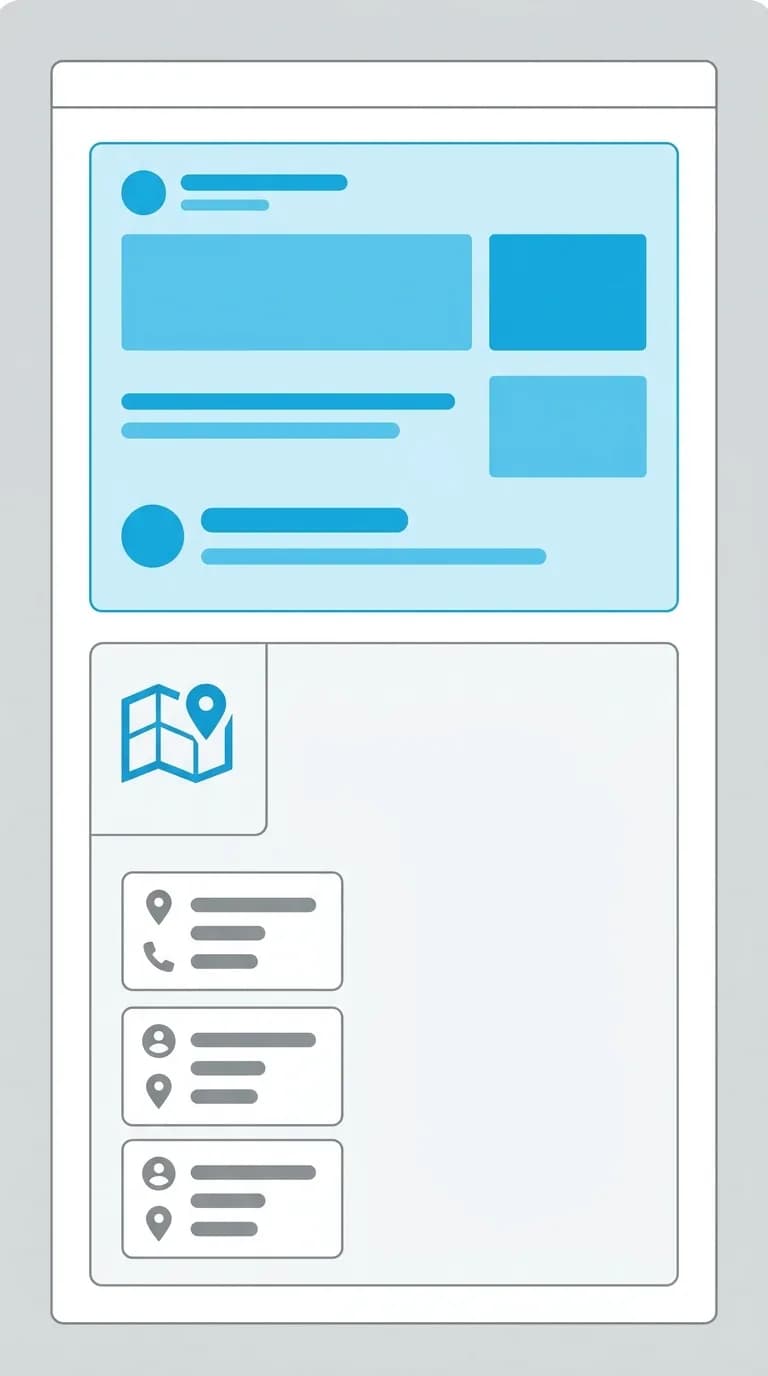
Search "dentist near me" and Google used to hand you that familiar map block with three stores (the local pack). Now, for many local searches, an AI-generated answer runs across the very top first.
The map block is still there — it just got pushed further down.
So the question is: are AI Overviews "replacing" the local pack? This article uses verifiable research caveats to set the record straight, then hands Taiwan store owners a playbook they can act on today.
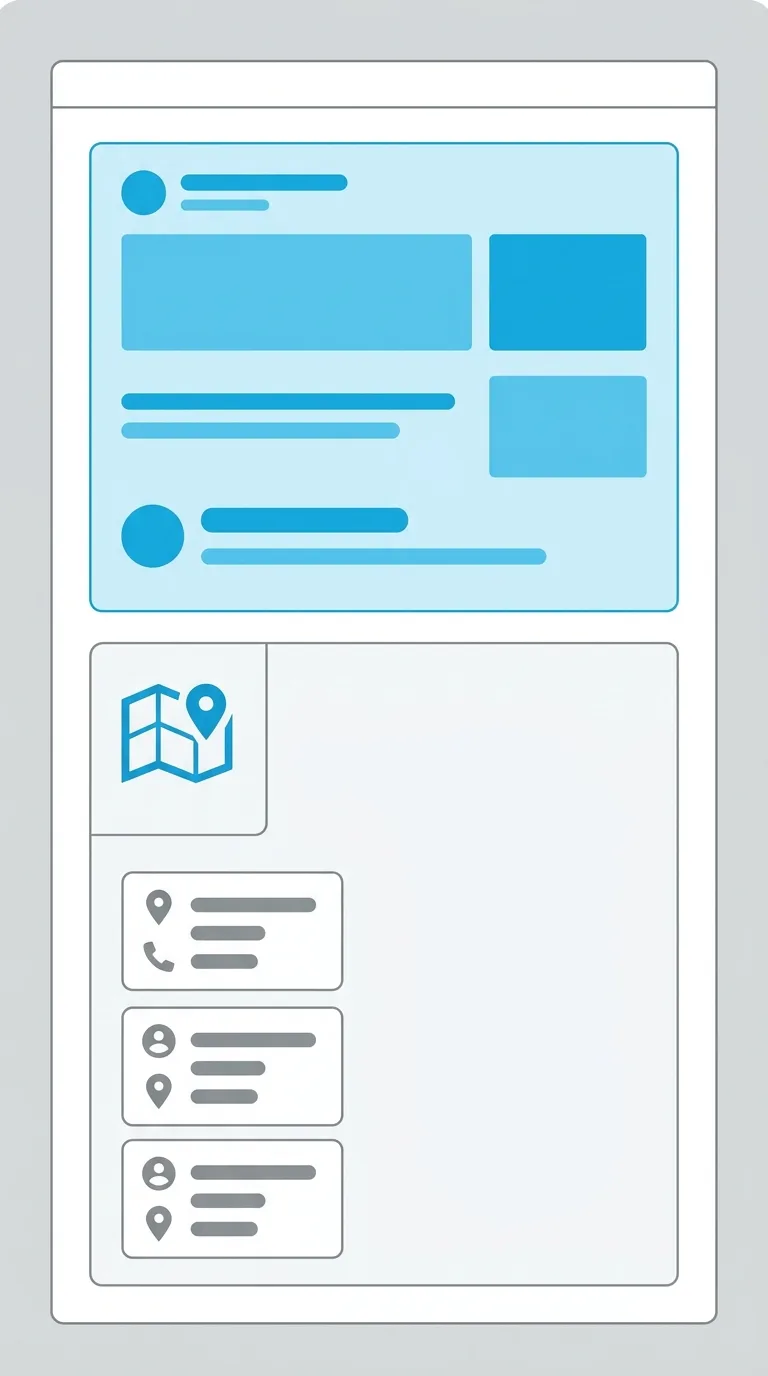 Caption: The new layout of a local search page — the AI-generated answer sits at the top, pushing the classic three-store map block down.
Want to see how your store shows up in AI search? Get a free consultation on your local visibility via LINE.
👉 Free LINE Consultation: @006ljkda
First, separate two different things: the local pack vs. AI Overviews
To talk about "replacement," you first have to keep the two terms apart. Many people blur them together, and the conclusion comes out crooked.
The local pack (sometimes called the map pack) is that familiar face in Google local search: a map plus a list of usually three stores, with ratings, hours, and a directions button. It has long been the most important visibility slot for brick-and-mortar stores.
AI Overviews is newer: at the very top of the results, a single AI-generated answer that blends several sources into one paragraph, with a few citation links beneath it.
Where's the difference? The local pack "lists a few stores and lets you pick"; AI Overviews "just finishes the answer for you and names a few along the way." With the former, making the list at all gives you a shot; with the latter, if AI doesn't mention you in that paragraph, you don't even get seen.
That's why "when AI skips local businesses entirely" deserves its own discussion — we cover that in Why AI Answers Skip Your Store. This article focuses on the bigger layout shift: the whole shape of local search is changing.
"AI Overviews replacing the local pack" — read the numbers carefully
Let's start with the figures that get shared everywhere, because they're easy to misuse.
A Whitespark study measured this: in their batch of local searches, AI Overviews triggered on 68% and the traditional local pack on only 39%. At a glance, AI answers do appear more often than the map block.
But those figures need three caveats, or you'll misuse them:
- This study was published in May 2025 — more than a year ago, and AI search has changed fast in that year
- The sample was only 540 queries, across 6 industries in 3 US cities (Houston, Phoenix, Denver) — not a large sample
- This is US data — not a global average, and definitely not Taiwan
So the correct reading is: "In a small US study from May 2025, AI Overviews appeared more frequently than the local pack." It's a directional indicator, not a universal law you can drop straight onto Taiwan.
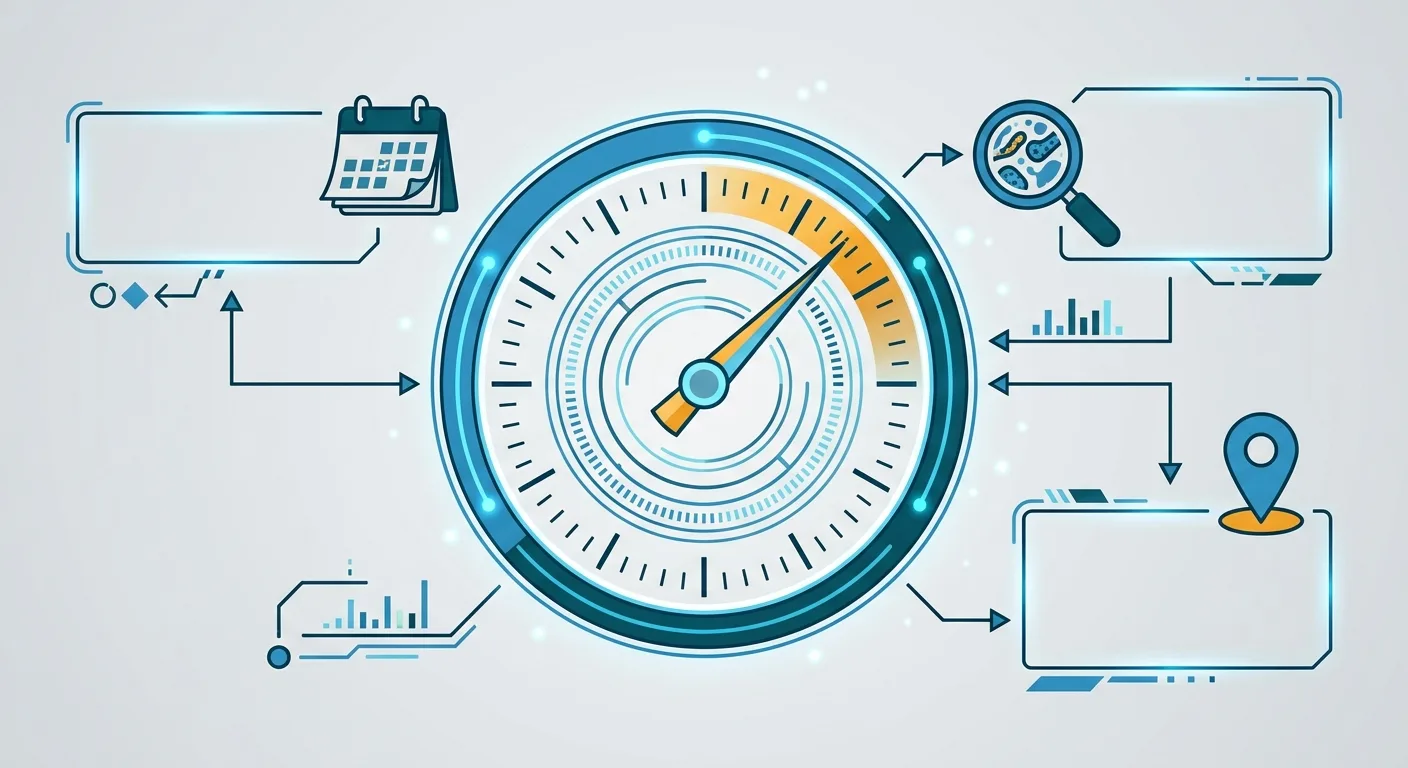 Caption: When you see "AI Overviews 68%, local pack 39%," flag three things first — May 2025 data, a 540-query US sample, and not the current Taiwan reality.
While we're at it: there is no "surpassing the local pack in 15+ markets"
There's another claim making the rounds: "AI Overviews already surpass the local pack across 15+ markets."
That's a misreading, and it should be cut. The original Search Engine Journal piece (by Adam Heitzman) describes the author's observation across 15+ "client markets" — not quantitative data that "AI Overviews out-trigger the local pack across 15 countries." The actual numbers come from a single US study, not 15 markets.
In other words, "we see this trend across 15+ client markets" got garbled into "the data beats the local pack in 15 markets." Those two statements mean very different things — stop resharing the latter version.
Why it's "displacement," not "disappearance"
Once the caveats are cleaned up, the framing that fits the facts is: AI Overviews is displacing, not making the local pack disappear.
In a July 21, 2026 article, Search Engine Journal noted that AI Overviews can now answer most local searches, and laid out what a business needs to be cited in those AI answers. The point isn't that the map block was deleted — it's still there — it's that the AI-generated paragraph sits in front of it and answers the customer's question first.
From the customer's side, it feels like this: before, you'd scroll to the map and open a few stores to compare; now, in many cases, the AI paragraph hands you a conclusion first — "these few nearby are recommended." If you're not in that paragraph, the customer may never scroll down to the map block at all.
So the real threat isn't "the local pack is gone" — it's "the decision point moved up a level." You used to compete to make the three map slots; now there's one more gate: getting into the AI paragraph. That new layer of competition is exactly what people mean by local GEO (Generative Engine Optimization — getting cited when AI answers). For the full strategy map, start with the Complete Guide to Local GEO.
Want to squeeze your store into that AI paragraph? We specialize in rewriting local stores' content into something that gets cited.
What Taiwan stores will actually see change
Let's be clear up front: there is currently no public measurement of Taiwan local search that can tell you "what share of Taiwan local searches already show AI Overviews." So what follows extrapolates overseas trends plus our hands-on observations — not official Taiwan statistics.
With that caveat, here's roughly what Taiwan stores will run into next:
- For some local queries, AI hands over an answer first — the customer makes an initial decision in that paragraph and leaves without reaching the map
- The sources AI names get messier — not just your website and Google Business Profile, but forum threads, blogger reviews, and Google reviews
- "Ranking first" no longer equals "getting mentioned" — being high on the map doesn't guarantee the AI answer cites you; these are two different mechanisms
- Inconsistency gets amplified — when your name, address, and phone don't match across places, AI is more likely to get you wrong or skip you entirely
Worth noting: this shift isn't all bad news for small and midsize Taiwan stores. AI favors sources with clean, structured information and real reviews — precisely what a diligent small store can pull off and what big brands often neglect. To track results quantitatively, see How to Measure GEO Performance and Reading AI Search Data with Ahrefs.
Google Business Profile: from "set and forget" to active management
In the age of AI search, the mindset most in need of a reset is how many stores treat their Google Business Profile (GBP): set it up, fill it in, and then leave it alone.
In a July 2026 article bluntly titled "The Death of the Static GBP," Search Engine Journal argues that GBP has to shift from "set and forget" to "a continuously managed channel." It flags several signals that are becoming ranking factors:
- Freshness signals — whether the profile is being updated, whether it looks alive
- Review response speed — whether you reply to customer reviews promptly
- Regular posts and photos — whether you keep posting updates and adding new photos
In plain terms, a profile that "hasn't moved in three months and never replies to reviews" looks, to AI, like a store that may have closed; while a profile with weekly activity, replied reviews, and fresh photos looks like a store that's "still alive and worth recommending."
This doesn't ask you to launch some new feature — it asks you to treat the GBP you already have as an asset that needs regular care. For how to build the basics, see the Complete Google Business Profile Guide; this piece stresses the other half — what you keep doing after it's built.
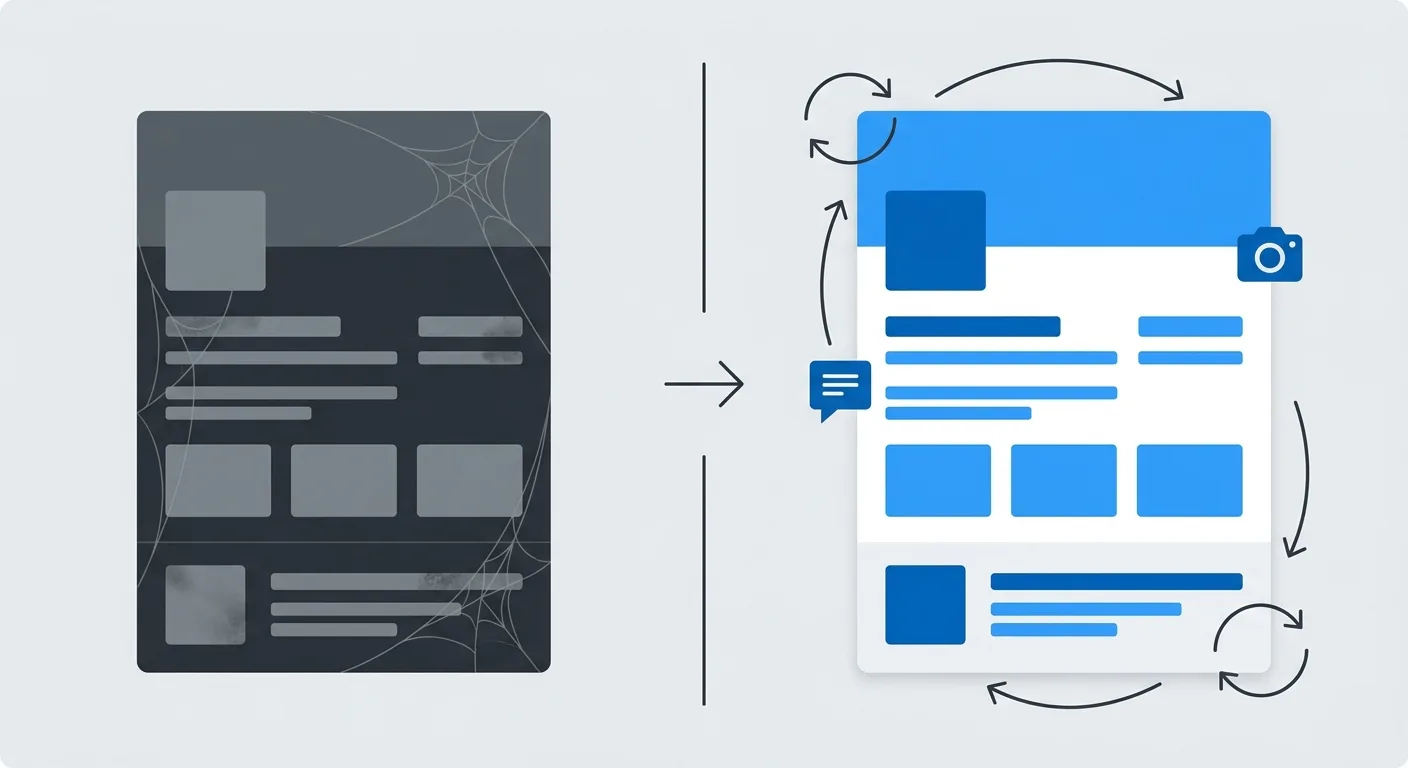 Caption: Static GBP (left, dusty and untouched) vs. actively managed GBP (right, regular updates / replied reviews / fresh photos) — AI favors the latter.
A hands-on playbook for Taiwan stores
Let's boil the above into an actionable checklist. The core is one sentence: get clean, consistent, structured business information into the places AI reaches — and make it look alive.
1. Fill the profile out completely, and update it regularly
Name, address, phone, hours, category, photos — leave none blank. Filling it in isn't the finish line, it's the start: weekly posts, replied reviews, fresh photos.
2. Keep NAP consistent everywhere
NAP means Name, Address, Phone. These three must look identical across your website, Google, social, and directory sites, so AI doesn't scramble your information.
3. Make location/branch pages something AI can read
Give each location its own page with structured data (Schema), local FAQs, and real reviews. Write the content as blocks that "stand on their own," so AI can cite a single passage.
4. Cultivate real reviews and community discussion
AI loves content with genuine human discussion. Rather than fret, deliver service worth sharing, then naturally invite customers to leave real reviews. Never buy fake reviews or run sockpuppet accounts — if caught, your Business Profile can be suspended, and it's not worth it.
5. Self-audit regularly for AI getting you wrong
Take your store name, address, and "○○ near me" questions and ask each of Google AI Overviews, AI Mode, ChatGPT, Gemini, and Perplexity once, and see how they answer and whether they get anything wrong.
 Caption: Five-step store playbook (1) fill and regularly update the profile (2) consistent NAP everywhere (3) location pages with Schema and local FAQ (4) cultivate real reviews and discussion (5) regularly self-audit AI across platforms.
None of these five is a new magic trick. They've always been the fundamentals of solid local SEO — it's just that in the age of AI, the gap between doing them and not doing them got amplified. For how to lay the full traditional foundation, see the Complete Local SEO Guide.
Frequently Asked Questions
Have AI Overviews really replaced the local pack?
The more accurate word is "displacement," not "replacement." The map block is still there — the AI-generated answer just sits in front of it and answers the customer first. A Whitespark study from May 2025 (a small US sample) measured AI Overviews triggering on 68% and the local pack on 39%, but that's old data, only 540 queries, and only 3 US cities — you can't treat it as the verdict for Taiwan or for today.
Is "AI Overviews surpass the local pack in 15+ markets" true?
No — it's a misreading. The original Search Engine Journal piece describes the author's observation across 15+ "client markets," not data showing "AI Overviews out-trigger the local pack across 15 markets." The real numbers come from a single US study. Don't relay "an observation across 15 client markets" as "data beating it in 15 markets."
What share of Taiwan local searches show AI Overviews?
There's currently no public measurement of Taiwan local search that answers this ratio. Every percentage in this article comes from US research; the Taiwan portion is trend extrapolation plus hands-on observation, not official statistics. To learn your own industry's reality, the most practical move is to ask your common questions across the AI platforms yourself.
I rank first on Google Maps — will AI definitely mention me?
Not necessarily. Traditional ranking and "getting cited by AI" are two different mechanisms. Map ranking leans on distance, relevance, and prominence; AI citation looks at whether your information is clean, structured, alive, and discussed. Ranking first is good, but it doesn't guarantee that AI paragraph names you.
Once GBP is set up, can I leave it alone?
Quite the opposite. The 2026 trend is "the death of the static GBP" — freshness, review response speed, and regular posts and photos are all becoming signals for AI local citations. A profile untouched for three months looks, to AI, possibly closed; only one with ongoing activity looks worth recommending.
Recap: Local search changed, but the foundation didn't
To boil this down to a few lines:
- The local pack didn't disappear — it got displaced by AI-generated answers. The decision point moved up a level, adding the gate of "getting into the AI paragraph"
- The 68/39 figures need caveats — an old, small US sample (May 2025, 3 cities, 540 queries), not Taiwan and not the present
- "Surpassing in 15+ markets" is a misreading — the original was an observation across 15 client markets; don't reshare it as data
- Taiwan has no public measurement — anything about Taiwan is trend extrapolation plus hands-on observation, not official stats
- The playbook is still the fundamentals — a complete, regularly updated profile, consistent NAP, structured location pages, real reviews, and cross-platform self-audits
The shape of search is changing, but the underlying logic that makes AI willing to recommend you hasn't: clean, consistent, structured, and looking like a store that's "still alive and worth recommending."
 Caption: Want AI's local answers to start naming your store? Reach out via LINE.
Want into AI's local answers?
The slot for local search is shifting, but what AI cites is still content that's "easy to pull." AI SEO Hacker rewrites your business information and local content into something both AI and Google love. Chat with us free via LINE about your local visibility.
👉 Free LINE Consultation: @006ljkda
Further Reading
- Complete Guide to Local GEO: the full strategy map for getting local stores recommended in the AI era
- Why AI Answers Skip Your Store: when AI skips local businesses entirely, and why Reddit gets cited
- Complete Google Business Profile Guide: the basic steps from setup to verification
- How to Measure GEO Performance: which metrics to track for AI search visibility
References
- Whitespark, "Case Study: The Prevalence of AI Overviews in Local Search," 2025-05-12
- Search Engine Journal (Adam Heitzman / HigherVisibility), "AI Overviews Now Answer Most Local Searches," 2026-07-21
- Search Engine Journal (Adam Heitzman), "The Death of the Static GBP: The New Google Business Profile Playbook for AI Local Search," 2026-07