Google calls it the biggest model upgrade to Search yet.
Yet you can read every word of the announcement and not find a single number about website traffic.
On November 12, 2026, Google brought Gemini 4 Hydrogen to Google Search, available globally to all users. This article doesn't guess or fill in blanks. It works only from the official text: the four things that changed, how Hydrogen relates to Argon and Carbon from the same period, what Google conspicuously didn't say, and what site owners should actually do now.
💡 Not sure whether this wave of AI search upgrades affects your site? We'll take a look for you. 👉 Free LINE consultation
Key takeaway: On November 12, 2026, Google announced that Gemini 4 Hydrogen is now available globally in Google Search for all users, calling it "the biggest model upgrade to Search yet" (Google Blog, 2026). Google lists four changes, including a query fan-out that connects people to a broader range of sites — but it published no traffic, click, or ranking figures.
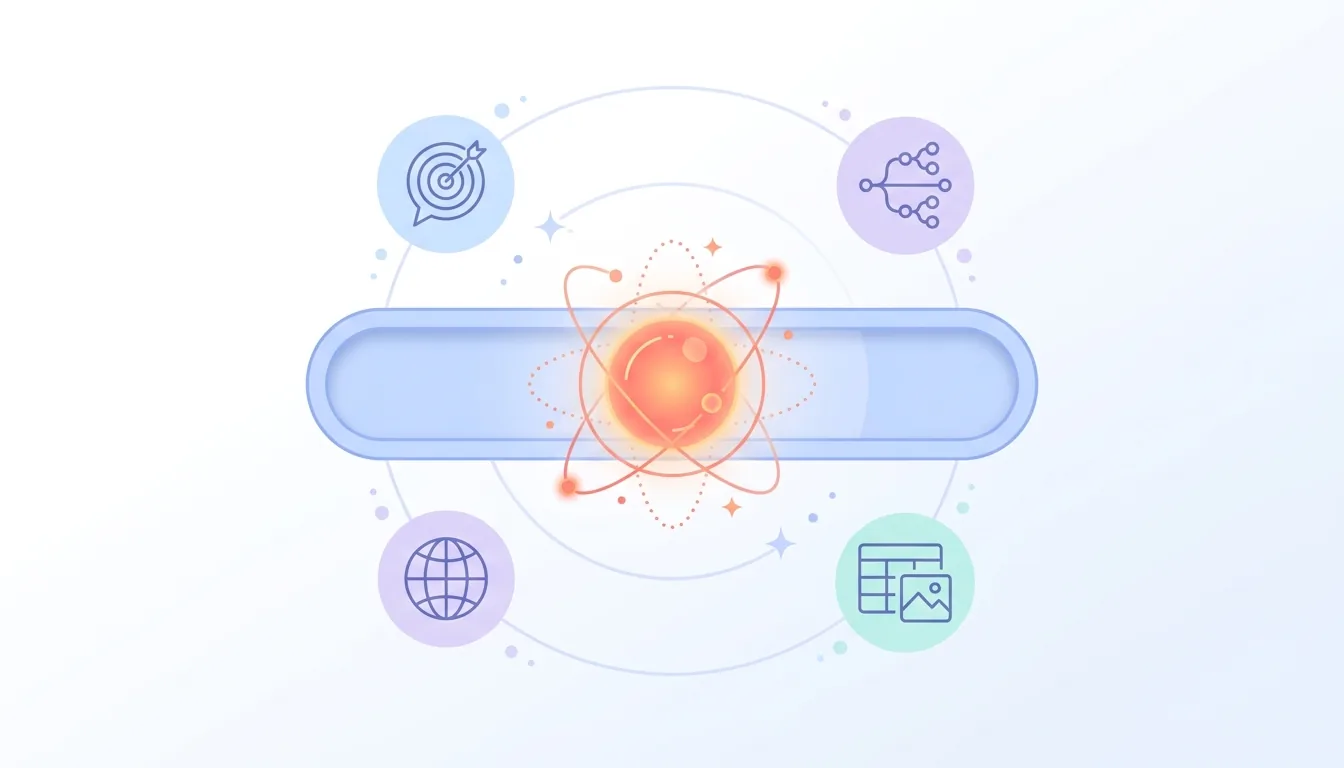 Caption: The model upgrade brings four changes: better intent understanding, a fan-out that links to more sites, more visual answers, and richer language understanding.
Gemini 4 Hydrogen in Google Search: The Four Changes Google Announced
The short version: this is a model upgrade, not a ranking algorithm update. Robby Stein, VP of Product for Google Search, put it plainly in the November 12, 2026 announcement — Hydrogen is now available globally in Google Search for all users, and it is the biggest model upgrade to Search yet (Google Blog, 2026).
The announcement lists four changes. Here they are side by side with a plain-language reading and what each means for a website:
| Change Google listed | What it means in plain terms | What it means for your site |
|---|---|---|
| Better understanding of intent | Multi-part questions, typos and highly specific requests are understood and answered point by point | People will ask longer, more detailed questions; your content needs to answer the details, not just the headline topic |
| Improved query fan-out and linking | The question is split into subtopics searched simultaneously, linking to a broader range of sites than before | You can surface because one subtopic is well covered, even if you don't rank for the main keyword |
| More visual responses | More images, structured responses, comparison tables and custom tools built for the user | Material beyond plain prose — tables, images — matters more |
| Richer language understanding | More nuanced answers across all supported AI Mode languages | Non-English content, including Chinese, is within the scope of this upgrade |
One thing to be clear about up front. The announcement says "Google Search"; it doesn't separately state which model powers AI Overviews (the AI Mode help page does name Hydrogen directly, covered in the next section). And Google Search Central's documentation already says AI Mode and AI Overviews "may use different models and techniques," so the responses and links they show will vary (Google Search Central). If AI Overviews and AI Mode give you different answers, that doesn't mean either one is broken.
Why is this worth ten minutes of a site owner's time? Because two of the four changes bear directly on whether your site gets linked: query fan-out and visual responses. The other two change how people ask, which indirectly changes what you should write.
Hydrogen, Argon, Carbon: How the Gemini 4 Models in Google Search Fit Together
If all the element names in Gemini 4 have you confused, you're not alone. Google shipped several Gemini 4 models in a little over a month, and these three are the ones that touch Search (Neon, released November 18, went to developers and the Gemini app; its announcement doesn't mention Search).
In the order Google announced them:
| Model | How Google positions it | Relationship to Google Search | Primary source |
|---|---|---|---|
| Gemini 4 Argon | A frontier reasoning model | Rolled out globally in October 2026 across Google AI Studio, the Gemini API, Google Cloud, Search and the Gemini app | Google's October AI recap |
| Gemini 4 Carbon | Google's strongest model, with frontier cybersecurity and long-horizon capabilities | From November 10, rolling out in AI Mode in Search to all Google AI Ultra subscribers | Gemini 4 Carbon announcement |
| Gemini 4 Hydrogen | Built for speed and efficiency, for everyday work and rapid execution | From November 12, available in Google Search globally for all users | Gemini 4 Hydrogen announcement |
Watch Carbon's timeline closely. Google's October recap says Carbon was announced two weeks after Argon, and at that point was only in pre-release testing with the U.S. government and a subset of trusted cyber defenders via the Fairwind Program (Google's October AI recap, 2026). Only on November 10 did Google make Carbon available to developers, enterprises and consumers; on the Search side, it is rolling out in AI Mode to Google AI Ultra subscribers (Google Blog, 2026).
Some write-ups claim "AI Pro and Ultra subscribers can use Carbon in Search." That isn't what the official text says. Where the Hydrogen announcement mentions AI Pro and Ultra subscribers, it's about Google Antigravity (a developer tool) and Gemini in Google Sheets — not Search. And when the Carbon announcement talks about Search, it names Ultra only.
So which model does an ordinary user get in AI Mode? The Google Search Help page on AI Mode says Carbon has to be selected manually from the menu in the "Ask anything" bar, is limited to Google AI Ultra subscribers aged 18 and above, and has daily usage limits; Hydrogen is described as "helpful for fast, all-around assistance on most questions" (Google Search Help). Taiwan is on the list of countries where Carbon in AI Mode is available.
For site owners, one sentence is enough: Hydrogen is the model Google explicitly says all users can use in Google Search; Carbon is limited to Ultra subscribers who switch to it themselves. If you want an optimization direction from this upgrade, the search behavior described in the Hydrogen announcement is the most practical guide.
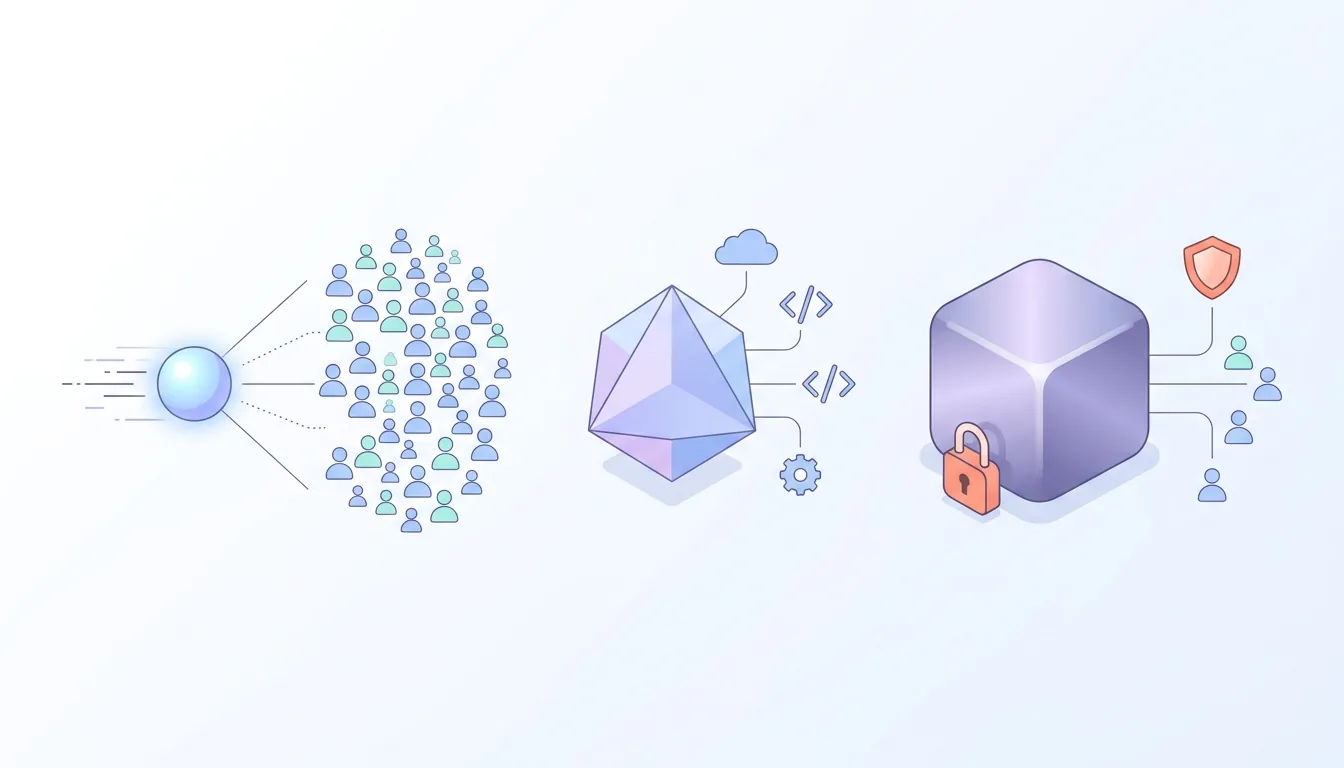 Caption: Everyone gets the fast Hydrogen; the most powerful Carbon is limited to certain subscribers and must be switched on manually.
The Query Fan-Out Upgrade: What "Connecting You to More Sites" Means for You
This is the passage most directly relevant to SEO and GEO. The official text says Hydrogen's advanced reasoning "supercharges our query fan-out technique in Search, connecting you to a broader range of helpful links than before," and that by "conducting simultaneous queries across all the relevant subtopics," Search helps people "find sites you previously might not have discovered" (Google Blog, 2026).
What is query fan-out? Google Search Central defines it this way: AI Overviews and AI Mode may use a "query fan-out" technique — "issuing multiple related searches across subtopics and data sources" — to develop a response, which lets them show a wider, more diverse set of links than a classic web search (Google Search Central). Put simply: you ask one question, and the AI asks a dozen more behind the scenes.
Picture someone asking AI Mode: "Indoor attractions in Taichung that are good for elderly parents, wheelchair accessible, and not crowded on weekdays?" That question might be split into "indoor attractions in Taichung," "accessibility facilities" and "weekday crowds," each searched separately. A museum whose website has one page clearly describing its accessible routes could be linked because of that subtopic — even if its homepage has never ranked near the top for "Taichung attractions."
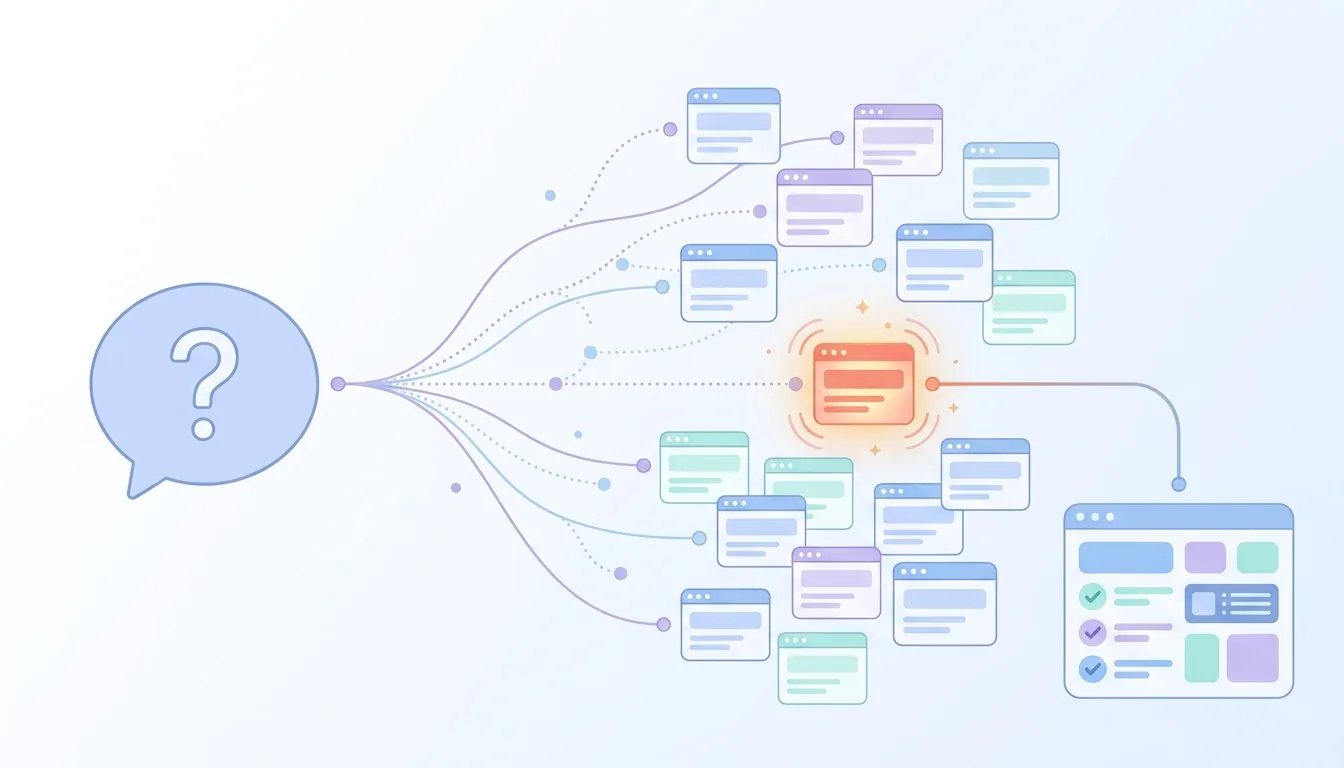 Caption: AI splits one question into sub-questions and searches each; a small site that covers a sub-topic well can get surfaced too.
Is this good news for small businesses? Directionally, yes. Google says it wants to connect people with sites they "previously might not have discovered," which suggests the door isn't only open to big sites. But keep two things in view:
- Google did not say this brings more clicks. "A broader range of links" means the links in a response become more varied. It is not a promise that any given site gets more traffic.
- The subtopic has to actually be covered. Fan-out looks for pages that answer each subtopic. If your content only has vague headings and no detail, you have nothing for it to cite — even when the subtopic is squarely your business.
Our recommendation: take your single most important service, list the details customers actually ask about (how pricing works, who it suits, how it compares with alternatives, what its limits are), and check whether your site has a passage that answers each one directly. For a deeper look at the mechanism and how to audit your coverage, see what query fan-out is.
Not sure which subtopics your site is still missing?
Query fan-out breaks a user's question apart to find answers — wherever you have a gap, the AI cites someone else. AI SEO Hacker audits your service pages and articles for subtopic gaps and tells you what to fill first.
More Tables and Images: What Visual Responses Ask of Your Content
The third change in the Hydrogen announcement is "more visual responses": people will see more images, structured responses, comparison tables and custom tools built for them (Google Blog, 2026).
To build a comparison table, the AI first has to find comparable data on the web. If your product specs live only in an image and your pricing plans only in a PDF, there's far less for the AI to read.
Of the SEO fundamentals Google Search Central lists for AI features, three bear directly on this (Google Search Central):
- Make sure important content is available in textual form
- Support your textual content with high-quality images and videos, when applicable
- Make sure your structured data matches the visible text on the page
The third one gets overlooked. Some sites say one thing in structured data and another on the page — FAQ markup whose answers differ from what's on screen, or prices that went stale and were never synced. Google lists this as a fundamental, so the mismatch is a problem in itself.
One limitation to note: Google Search Help says AI Mode's interactive visuals — custom-coded interactive diagrams, charts and simulations — are currently available to signed-in users in English (Google Search Help). So "AI automatically builds an interactive calculator for your product" isn't the current reality in other languages, and there's no need to rebuild your site for it.
 Caption: To build a comparison table, AI first needs readable text and tables on your page, and structured data must match what's on screen.
Do Sites in Taiwan Get This? Chinese-Language AI Mode and Language Support
Yes — at least at the level of Google's own documentation.
The fourth change in the Hydrogen announcement says that no matter what language you ask in, you'll get more nuanced and helpful responses "across all supported AI Mode languages" (Google Blog, 2026). And the AI Mode availability list on Google Search Help includes Taiwan, with "Chinese (Traditional)" among the supported languages (Google Search Help).
So this isn't a "US first, everyone else later" story. If your customers ask AI Mode questions in Traditional Chinese, they fall within the scope this upgrade describes.
That said, Google hasn't published any per-language quality comparison, and it hasn't said Chinese responses will link to as many sites as English ones. The most practical move is to take the Chinese questions your own customers ask, run them through AI Mode yourself, and see who gets linked. We lay out a process for which prompts to ask and how to log the results in how to check if ChatGPT and other AI tools cite your website — Google AI Mode is one of the platforms it covers. For how AI Overviews and AI Mode differ in everyday use in Taiwan, see AI Overviews vs AI Mode.
What Google Didn't Say: No Numbers on Traffic, Clicks or Rankings
This is the most important section of the article.
Neither of Google's two Hydrogen announcements says anything about how website traffic, click-through rates, citation counts or rankings will change. What Google describes is the user experience: better intent understanding, links to a broader range of sites, more visuals, more nuanced language handling. Not one sentence says "websites will gain this many clicks."
So if you see "site traffic up X% since Hydrogen" or "AI Mode CTR down Y%" on social media, those are not Google's numbers. They might be a tool vendor's sample or one site's observation; before citing them, ask who was sampled and over what period.
The only way to know whether your site is affected is your own data — and you need to read the timing carefully:
- Search Console's Performance report already includes AI features. Google Search Central says sites appearing in AI Overviews and AI Mode are included in the overall search traffic, reported in the Performance report under the "Web" search type (Google Search Central).
- Dedicated generative AI reports are now available to all sites. On June 3, 2026, Google announced Search Generative AI performance reports in Search Console, showing impressions of your URLs in AI features along with pages, countries, devices and dates; they first rolled out to a subset of websites and reached all websites worldwide on August 31, 2026 (Google Search Central Blog, 2026). For how to read them, see The Complete Guide to Search Console AI Performance Reports.
- A core update is running in November too. The Google Search Status Dashboard shows the November 2026 core update began on November 10 and, as of November 20, was not yet marked complete (Google Search Status Dashboard). Hydrogen arrived on November 12 — the two almost completely overlap.
That last point is critical. Any traffic swing you see from mid-November on could come from the core update, from Hydrogen, from seasonality, or from all three at once. Until the core update is complete, don't attribute a change to any single one of them. For how to read your data during a core update, see Google's November 2026 Core Update Is Rolling Out: What Business Owners Should Do and Avoid.
 Caption: The core update and the model upgrade overlapped in mid-November, so traffic swings can't be pinned on either one.
Five Things Websites Should Do Now That Gemini 4 Hydrogen Is Live
The answer may be duller than you expect: Google's official position on AI features is that the existing SEO fundamentals still apply. Search Central says that to be eligible as a supporting link in AI Overviews or AI Mode, a page must be indexed and eligible to be shown in Google Search with a snippet, and "there are no additional technical requirements" (Google Search Central).
A model upgrade doesn't change that bar. What you can do is execute well on everything inside it:
1. Make sure Googlebot can get in. Check robots.txt, and check whether your CDN or host is blocking crawlers. Google specifically names "CDN or hosting infrastructure," so look at your host's and CDN's firewall and bot-protection settings, not just robots.txt. To limit how your content appears in Search's AI features, the controls Google gives are robots.txt rules for Googlebot and the nosnippet, data-nosnippet, max-snippet and noindex preview controls; Google-Extended governs training and grounding in some of Google's other systems, not Search (Google Search Central). For telling AI crawlers apart and configuring them, see the OAI-SearchBot & Claude-SearchBot setup guide.
2. Write each subtopic as a passage that can be cited on its own. Fan-out looks for pages subtopic by subtopic. A section that opens with its answer and doesn't depend on earlier context has a better chance of being lifted out. For how to do it, see content chunking for AI.
3. Use internal links so subtopic pages can be found. Search Central lists "making your content easily findable through internal links" as one of the fundamentals. A well-written detail page that sits isolated may not be found by fan-out either.
4. Put specs, pricing and comparisons in text and tables. Visual responses need readable data. Keep structured data consistent with what's on the page, and keep your Merchant Center and Business Profile information up to date — both are on Google's list too.
5. Compare before and after only once the core update is complete. Save your early-November Search Console data as a baseline, wait for the core update to be marked complete, then read the trend over a longer window. Don't draw conclusions from a single week.
Honestly, none of these five is "special prep for Hydrogen." And that's the point: every time Google swaps models, the variables a website actually controls stay the same. Get them right, and whatever the next element name is, you won't have to start over.
Frequently Asked Questions
Is Gemini 4 Hydrogen the default model in Google Search?
Google's announcements don't use the word "default." The official text says Hydrogen is now available globally in Google Search for all users; Google Search Help describes Hydrogen in AI Mode as "helpful for fast, all-around assistance on most questions," while Carbon must be selected manually from the menu by Google AI Ultra subscribers aged 18 and above, with daily usage limits. In other words, Hydrogen is the model Google explicitly says all users can use in Search.
Will Hydrogen increase or decrease my website's traffic?
Google published no traffic, click or ranking figures. It only says the upgraded query fan-out connects people to a broader range of sites than before — meaning the links in a response become more varied, not that any given site is guaranteed more clicks. The November 2026 core update began on November 10 and Hydrogen arrived on November 12, so the timing overlaps; wait for the core update to complete, then compare trends in Search Console.
Does my site need any special technical setup for Hydrogen?
No. Google Search Central says the requirement for appearing in AI Overviews or AI Mode is that a page is indexed and eligible to be shown with a snippet, with no additional technical requirements. What matters are the fundamentals: robots.txt and your CDN don't block Googlebot, important content is in text form, structured data matches the visible page, internal links make content easy to find, and your Merchant Center and Business Profile information stays current.
Does Traditional Chinese search in Taiwan get this upgrade too?
Google's announcement says responses get more nuanced across all supported AI Mode languages, and the AI Mode availability list on Google Search Help includes Taiwan and Traditional Chinese, so Traditional Chinese falls within the scope of this upgrade. However, AI Mode's interactive charts and simulations are currently available only to signed-in users in English, so that feature isn't visible in Chinese yet.
Models Will Keep Changing; Your Website Fundamentals Don't Need a Restart
Three takeaways: Gemini 4 Hydrogen arrived in Google Search globally on November 12, 2026, and of the four changes Google listed, a query fan-out that links to more sites and more visual responses matter most to websites; Google gave no traffic numbers, and the launch coincided with the November core update, so before-and-after comparisons have to wait until the core update completes; and what websites should do is still the indexing, crawling, text-content and structured-data fundamentals Google spells out — plus covering subtopics in real detail.
The next time Google swaps models, the element name will be different. This checklist probably won't be.
🎯 Take Action Now
Want to know how often your site gets linked in the Hydrogen generation of AI search, and which subtopics are still blank? AI SEO Hacker offers AI-driven SEO/GEO content services — from crawl settings and subtopic audits to content rewrites — that turn your website, step by step, into a source AI is willing to cite.
👉 Free LINE consultation | Fill out the inquiry form
Further Reading
- One Question Becomes Dozens: What Query Fan-Out Is
- AI Overviews vs AI Mode: What's the Difference? Taiwan's 2026 Zero-Click Reality
- The Complete 2026 SEO Trends Guide: Google Algorithm Updates and Ranking Strategies
- Google's November 2026 Core Update Is Rolling Out: What Business Owners Should Do and Avoid
- The Complete Guide to Search Console AI Performance Reports
- Content Chunking for AI: Key Techniques to Boost AI Readability
References
- Google Search gets a major upgrade with Gemini 4 Hydrogen - Google Blog (2026-11-12)
- Introducing Gemini 4 Hydrogen - Google Blog (2026-11-12)
- Gemini 4 Carbon is now available - Google Blog (2026-11-10)
- The latest AI news we announced in October 2026 - Google Blog (2026-11-02)
- AI features and your website - Google Search Central
- Get AI-powered responses with AI Mode in Google Search - Google Search Help
- Introducing Search Generative AI performance reports - Google Search Central Blog (2026-06-03)
- Google Search Status Dashboard