![What Is Persistent Search? Google's Autonomous Search Explained [2026]](/_next/image?url=%2Fblog%2Fimages%2Fgeo%2Fpersistent-search-explained-01.webp&w=3840&q=75)
Picture a kind of search that doesn't switch off after you ask. New information shows up, it pings you. No answer yet, it waits on its own until one appears.
This isn't science fiction. Google's head of Search, Liz Reid, has described this direction — "persistent search," or "autonomous search." What it describes is a shift in the plumbing of search itself: from "you go search" to "it keeps searching for you."
This is a concept explainer. It covers three things: what persistent search actually is, the six trigger scenarios described in a patent, and — for anyone who makes content — what you should start preparing for.
 Caption: Persistent search — search no longer ends when you finish asking; it keeps running and alerts you when something turns up.
💡 Want to know whether your content is ready to be "continuously monitored" by AI search? We'll take a look. Free consultation
Key takeaway: Persistent / autonomous search means search runs in the background and proactively reports back only when qualifying new information appears. The idea comes from Liz Reid's remarks in an interview during Google I/O 2026 and a Google patent published in February 2026, recently reorganized and analyzed by Search Engine Journal on 2026-07-21 (Search Engine Journal, 2026). It isn't a feature announced this week; Google announced background-monitoring "information agents" for Search at I/O in May 2026, so the direction is already landing. For content owners, the implication is this: your content needs to be "monitored continuously," not just retrieved once.
What Persistent Search Is, in One Sentence
One sentence: persistent search is the kind of search that keeps watching on your behalf and comes to you only when there's an answer worth reporting.
Traditional search is one-shot. You type a question, get the results as they stand right now, close the tab, done. Want to follow how something develops? You have to remember to come back and re-search, over and over.
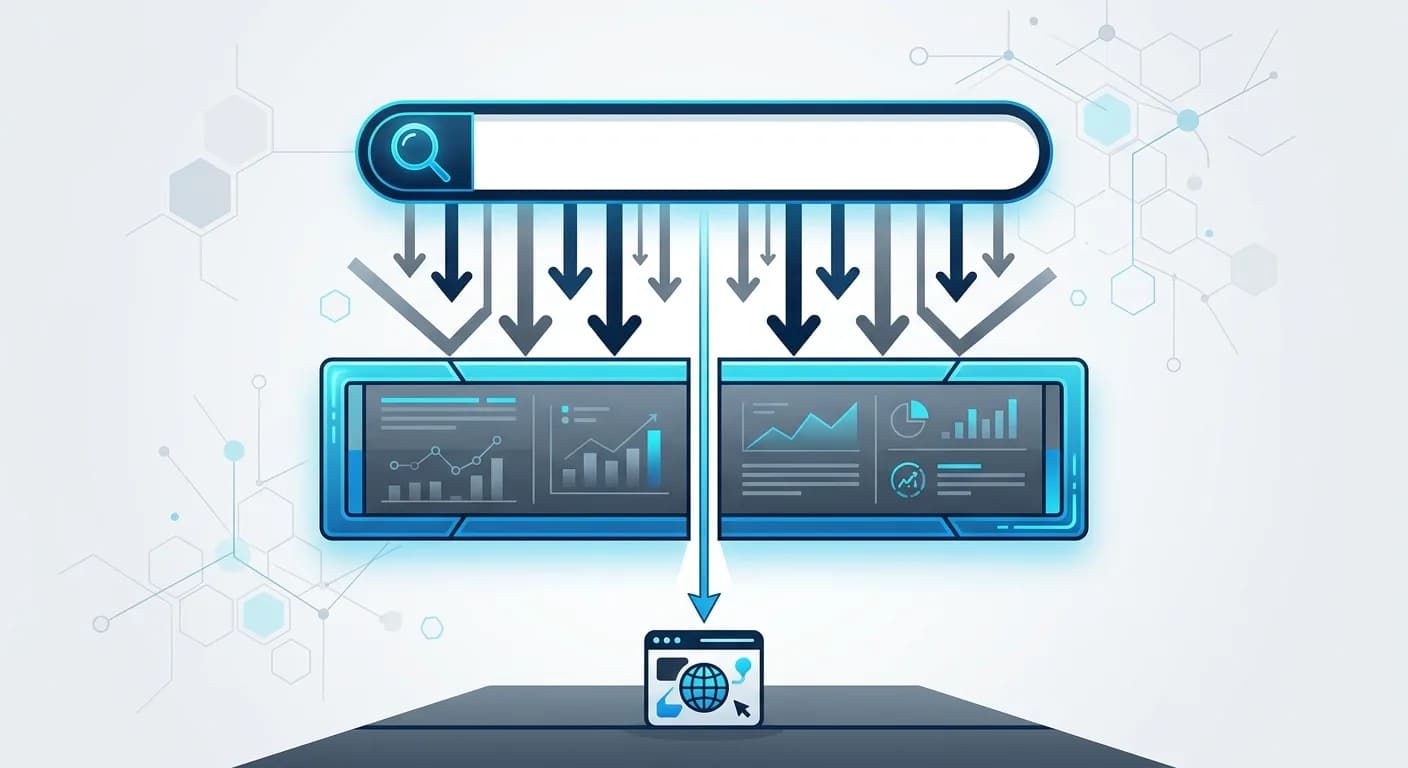
The direction Reid describes is different. Search becomes a service that stands by in the background: you tell it once to "keep an eye on this," and it keeps checking. The moment qualifying new information appears, it notifies you. You don't have to keep circling back.
Let's fix the timeline first, so nobody gets the wrong idea. This concept is not news Google dropped this week or this month. It comes from Reid's interview during Google I/O 2026, plus a patent published in February 2026. So it's a "already said, recently resurfaced" topic. We treat it as a trend worth understanding early, not a breaking scoop.
How Liz Reid Describes It in Her Own Words
To understand a new concept, it helps to hear it from the person describing it.
Reid gave a very everyday example in the interview. To follow something not yet settled, she said, "You have to keep checking and checking and checking. It's so much work that often people don't even bother" — so what she wants is to "just say, Hey, can you keep me updated whenever there's anything new in the town... it will alert me when that comes" (Search Engine Journal, 2026).
She added a telling line: "You don't have to worry about it. When you're ready, you get the information, you can get direct to the source."
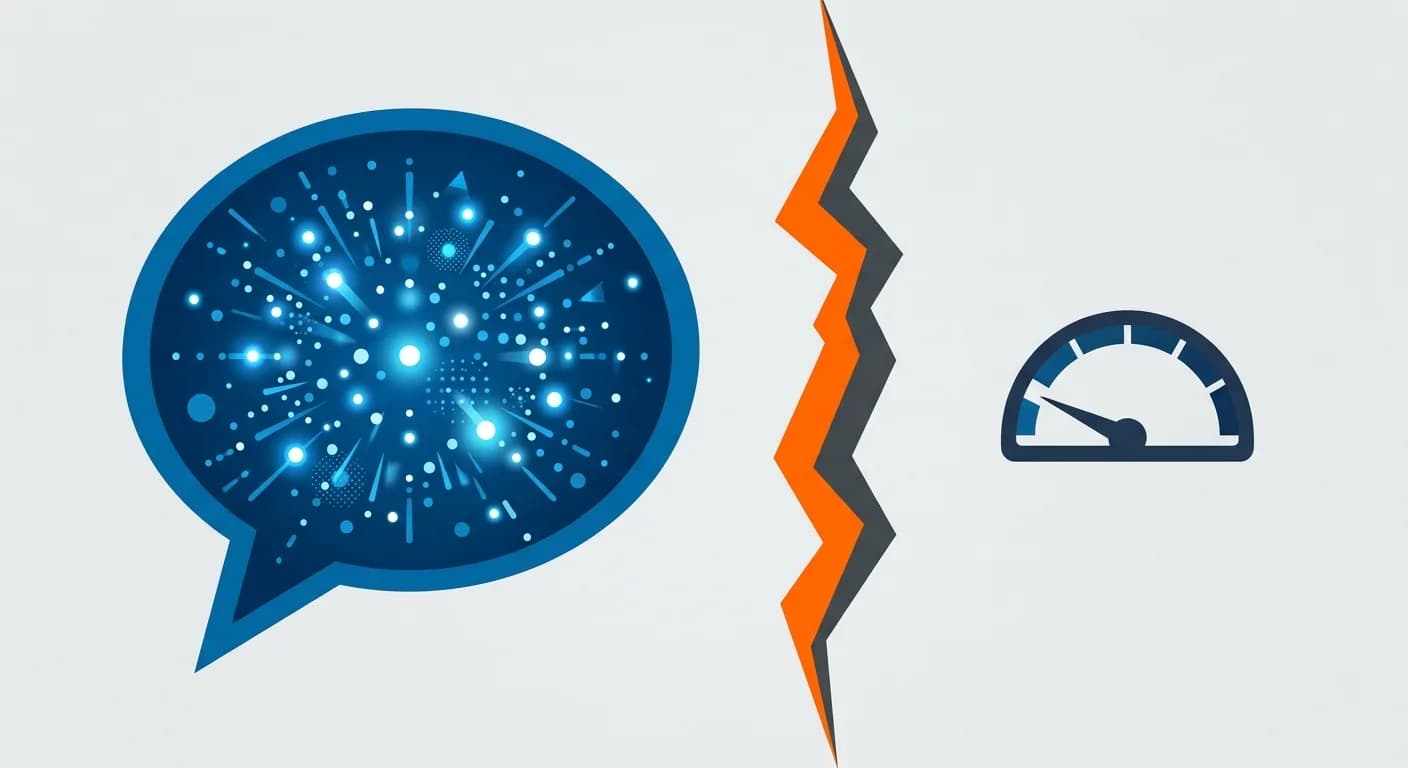
Catch the point? The chore of "coming back to re-search" gets outsourced to search itself. The user's role drops from "actively querying" to "being notified," while search's role rises from "answering once" to "working on it continuously."
 Caption: On the left, you re-search over and over; on the right, search watches for you and pings you when there's news.
The Six Trigger Scenarios in the Patent
A concept needs a mechanism to become real. That patent published in February 2026 — titled "Autonomously Providing Search Results Post-Facto, Including in Assistant Context" — describes when search would kick off this "autonomous, after-the-fact" behavior.
Search Engine Journal lays out six trigger scenarios (Search Engine Journal, 2026). Here they are, faithful to the patent and that report — we don't expand the details on our own:
- When no search results meet the defined quality or authoritative-answer criteria — nothing currently clears the bar.
- When results exist but none provides a definitive or authoritative answer that satisfies those criteria — there's stuff, but nothing that truly answers.
- When no results meet the quality criteria because the information isn't available yet — it's not that you searched badly; the thing simply hasn't happened, so the data doesn't exist yet.
- When a query seeks a specific answer and no result satisfies the required criteria — the question is clear; supply hasn't caught up.
- When a resource later satisfies the defined criteria after previously lacking the required information — it wasn't good enough before, then it got filled in.
- When a previously available resource is refined or updated so that it now meets the criteria — old content was improved and now qualifies.
The first four are about "can't answer right now, so keep it pending." The last two matter most — they're about "once content gets better, search circles back and picks you up." For anyone making content, that sentence is worth its weight in gold, as you'll see next.
 Caption: The patent's six trigger scenarios — the first four are "can't answer now, keep it pending," the last two are "circle back once your content improves."
From "You Go Search" to "It Searches for You" — What Changes
On the surface this shift looks like a nicer user experience. Underneath, it's a move in the power structure of search.
The old competition was a "single match." A user searches once; your page has to rank high enough and get seen in that moment. Miss it? Better luck next time. You were optimizing for "this instant of one query."
Persistent search turns it into "extra time." Search doesn't pack up after the question — it stays in the background, continuously evaluating. Falling short this moment is fine; if you fix and improve your content afterward, trigger scenarios 5 and 6 could have search circle back and include you. It shifts from "one shot decides everything" to "you keep getting chances."
But there's a flip side: you can't "publish and forget" anymore. If others keep updating and yours sits still, that continuous evaluation slowly leaves you behind. Persistent search rewards content that's actively maintained and penalizes content that's dumped out once.
Want your content to keep up with this shift?
Getting content seen continuously by AI search takes more than one good article — it takes a content system that's maintained and updated. AI SEO Hacker offers AI-driven SEO/GEO content services to make your content a source AI keeps citing.
What This Means for Marketers, and How to Prepare Your Content
Enough concept — what lands on your desk? We narrow it to three directions.
First, content needs to be "monitored continuously," not retrieved once. That makes freshness more important. An article untouched for two years might still coast on old authority in one-shot search; under continuous evaluation, it reads as "not maintained." Regularly refreshing data, adding new developments, and stamping a clear lastmod is table stakes.
Second, treat "improving content gets you picked up later" as strategy. Remember trigger scenarios 5 and 6? They effectively say: not chosen today doesn't mean never. So instead of agonizing over why one article "didn't get cited this time," keep making it more authoritative and more complete — because the mechanism will re-evaluate. That's a very different mindset from traditional SEO's fixation on "current ranking." For the underlying difference between these two logics, see GEO vs SEO: the difference.
Third, start measuring whether AI brings you any traffic. Persistent search is still forming, but AI search sending traffic is happening now. You need to see that stream before you can judge whether content maintenance pays off. How to filter AI platform traffic in GA4 and cross-check it against GSC is covered in tracking the traffic AI search brings.
Honestly, none of these three is something you can "wait until Google formally ships it" to start. They're just what good content should look like anyway — persistent search only magnifies the cost of not maintaining it.
 Caption: Three ways to prepare — (1) keep it fresh through maintenance (2) improvements get you picked up later (3) start measuring AI traffic first.
FAQ
Is persistent search live yet?
Closely related features are already arriving: at I/O in May 2026 Google announced "information agents" in Search, which monitor the web in the background 24/7 and send you updates; they opened first to Google AI Ultra subscribers in June 2026 (in all AI Mode languages and markets), with expansion to more people to follow (Search Engine Journal, 2026). The persistent-search concept in this article is a direction sketched out by Liz Reid's remarks and a February 2026 patent, recently reorganized and discussed by Search Engine Journal. A patent existing doesn't guarantee a feature ships as-is. Treating it as "a trend worth understanding early" rather than "a button you'll have tomorrow" is the realistic stance.
How is this different from today's AI Overviews or AI Mode?
The difference is the time axis. AI Overviews and AI Mode are still ask-once, answer-once — just with AI-generated answers. Persistent search adds a layer of "runs continuously in the background and reports back proactively." The former makes the answer smarter; the latter turns the act of searching into an ongoing service.
Do small businesses or personal sites need to react now?
What you need isn't chasing a new feature — it's building the habit of content maintenance. Regular updates, clear update dates, content worth circling back to: these already help in traditional SEO, and they'll only help more under a persistent-search mechanism. Don't overhaul your architecture for a feature that is still rolling out; get the fundamentals right first.
How do I know if my content is being "continuously seen" by AI?
The most practical move right now is to track the trend of AI-driven traffic. Filter referral traffic from ChatGPT, Perplexity, and similar platforms in GA4, cross-check against Search Console's AI report, and watch the trajectory over time. See tracking the traffic AI search brings.
Conclusion: Put "Continuous" Into Your Content Habits
Three takeaways. Persistent search is the direction where "search keeps watching for you and notifies you only when there's an answer," rooted in Reid's remarks and a February patent — not this week's news. Of the patent's six trigger scenarios, the two to remember are the last: once content improves, search circles back to include you. So for content makers, the answer isn't chasing a feature that is still rolling out — it's shifting content from "publish and forget" to "actively maintained."
Search is moving from a one-shot action to a service that keeps running. Is your content ready to be seen continuously?
 Caption: Search will come to you — is your content ready? Reach out if you'd like to talk it through.
🎯 Take Action
Search is shifting from "you go search" to "it searches for you," and whoever maintains their content first gets seen first. AI SEO Hacker offers AI-driven SEO/GEO content services to make your site a source AI keeps citing.
Free consultation | Submit a request
Further Reading
- Tracking the traffic AI search brings: GA4 and GSC cross-check
- GEO vs SEO: content logic for the AI search era
References
- Google's Liz Reid Discusses Persistent, Autonomous Search - Search Engine Journal (2026-07-21, Roger Montti)
- Google patent "Autonomously Providing Search Results Post-Facto, Including in Assistant Context" (published February 2026)
- Google Expands AI Mode With Information Agents: Ultra Only - Search Engine Journal (2026-06-12)
![Should You Opt Out of Google AI Search? The UK Mandate Explained — and What to Do Instead [2026]](/_next/image?url=%2Fblog%2Fimages%2Fgeo%2Fgoogle-ai-search-opt-out-01.webp&w=3840&q=75)