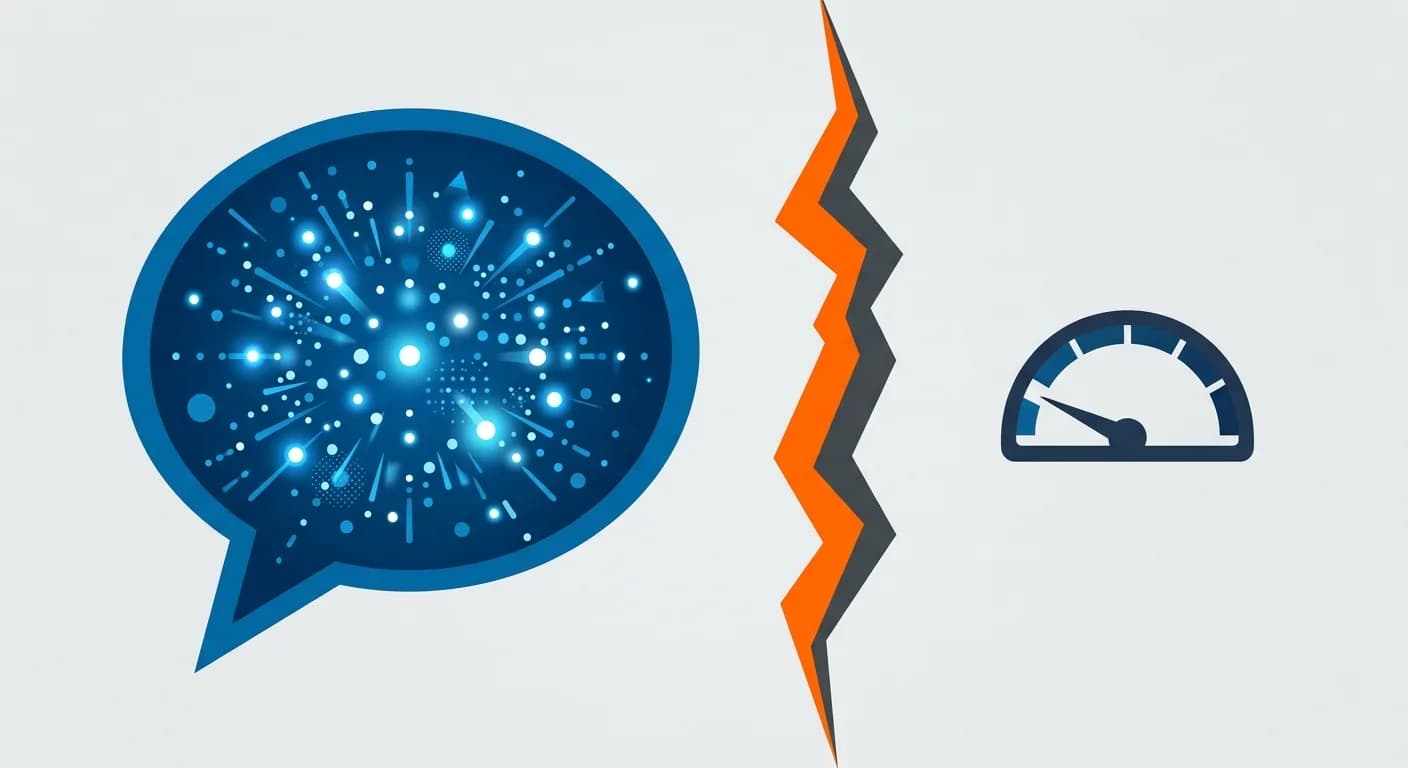
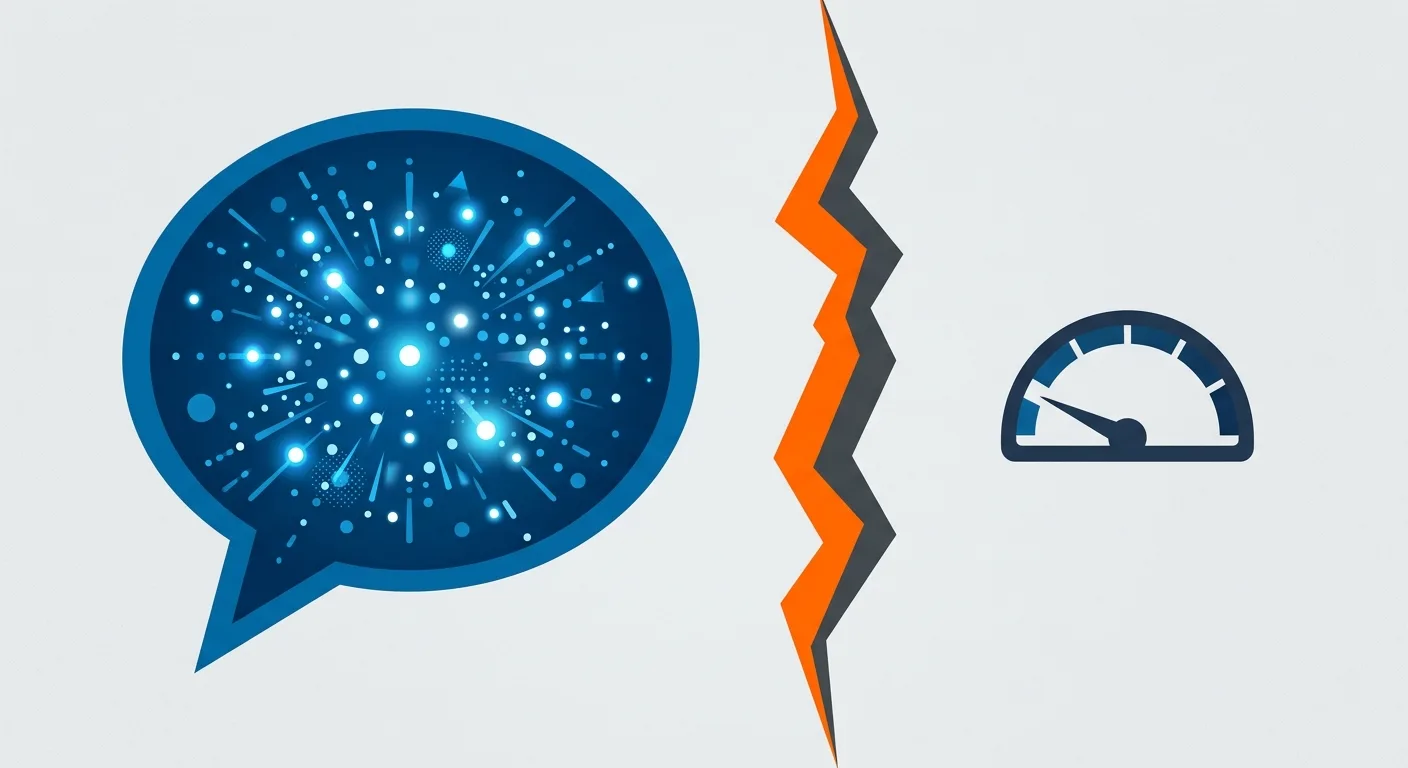
Your boss forwards you a headline: Google says AI search sends "billions" of clicks a week. Then asks — so where's our AI traffic?
You open GSC. The number is tiny. Your stomach drops — did we screw something up?
Don't panic. Almost every site owner hits this gap, and in most cases it isn't your fault. This article shows you where the gap comes from, how to explain it to your boss, and which three numbers you can actually verify instead.
💡 Want to know how much AI traffic your site really gets? We'll measure it for your boss. 👉 Free LINE consultation
Key takeaway: Google's head of Search, Nick Fox, claimed on his personal LinkedIn on 17 July 2026 that AI features send "billions" of clicks a week — but Google published no verifiable data (Search Engine Roundtable, 2026). Your GSC doesn't match because that's an all-web total, a different measurement scope, and 68% of searches are zero-click — not because you did anything wrong.
Who Actually Said "Billions of Clicks," and Is It Credible?
The claim comes from Google's head of Search, Nick Fox, in a personal LinkedIn post on 17 July 2026, saying AI features in Search send "billions" of clicks a week to websites and that total search clicks are still growing (Search Engine Roundtable, 2026). That's a sentence, not a report.
The difference matters. As of today, Google has released no underlying data to verify that figure, and you can't check it with your own tools. Industry press pushed back on exactly this: it reads more like a flattering top-line number used to cover the question everyone actually cares about — how many clicks AI search is quietly draining away.
So the first thing to make clear to your boss: "billions" is an executive's statement on a social platform, not official, auditable data from Google. It isn't fake, but neither you nor any third party can verify it. Keep those two things separate.
Then why does an unverifiable number sit so many multiples above what your GSC shows? Here are the four reasons, one at a time.
Why Is Your GSC So Far Off from What Google Says? Four Reasons
The most direct reason is the base: Google is quoting an all-web total while your GSC shows one site — and on top of that, US data shows 68% of Google searches are zero-click (Search Engine Journal, 2026). The gap is structural, not a sign your site is broken.
Break it into four layers and it gets easier to explain.
Reason 1: Wildly different bases. "Billions" is every AI click every website on earth receives, added together. Your site is one cup from that reservoir. Comparing a whole-web total against a single site never lines up — it's like using a whole country's annual revenue to question one shop's monthly takings.
Reason 2: Different measurement scope. Google's "clicks" fold in all kinds of link behavior inside AI features. Your GSC generative AI report only counts your pages being seen and clicked inside Google's AI features. The two aren't measuring the same thing. For how to read that report, see The Complete Guide to the Search Console AI Report.
Reason 3: The zero-click era. This is the sharpest cut. In 2026, US data shows 68% of Google searches end with zero clicks, and only 232 of every 1,000 searches actually click out to the open web (Search Engine Journal, 2026). The AI answer solves the user's question right on the page — they never need to click into your site. Exposure, yes; clicks, gone.
Reason 4: The GSC AI report is still very new. Google only launched this generative AI performance report in June 2026, and right now it has exposure only — no clicks or conversions (Google official, 2026). It also covers only Google's own AI features (like AI Overviews), missing ChatGPT and Perplexity entirely. The tool itself can't see everything, so of course it won't match a total that claims to cover everything.
We've reconciled these numbers with clients, and the reason most often overlooked is the third one. A boss hears "billions" and assumes traffic is exploding — without realizing many of those clicks never left Google at all.
 Caption: Four layers of the gap — (1) all-web total (widest) (2) scope narrowing (3) 68% zero-click loss (4) GSC reports only Google's own AI. Each layer leaks, leaving only the thin band your site actually sees.
The One-Liner for Your Boss: How to Explain the Gap Upward
To explain this upward, set the frame in one sentence: "That 'billions' is a Google exec's all-web number on LinkedIn — not official, not verifiable. What we should watch is the number we can verify, and it's growing steadily."
In real client meetings, I get asked three questions most often. Have the answers ready and you won't get cornered on the spot.
| What the boss asks | Your answer |
|---|---|
| "Google said billions — why are we so low?" | That's every website added together, and it's an exec's personal claim with no verifiable data. Comparing it to our one site makes no sense. What we compare is our last month vs this month. |
| "So AI search is useless for us?" | It's useful, but the value is in exposure before clicks. 68% of searches are now zero-click — being cited by AI means the brand is seen first; the click-through is the next step. |
| "Should we keep investing?" | Yes, and it's cheapest now. The map is unsettled; early positioning is the cheapest. I'll prove it with our own GSC + GA4 trend line, not Google's PR number. |
The core of this script is pulling the conversation away from "a giant number you can't beat or verify" and back to "a first-party number you hold in your hand and can watch trend." What a boss actually wants isn't Google's total — it's whether our investment is working. You can answer that; nobody can answer the first one.
Honestly, the worst thing in a conversation with your boss is letting a headline lead you. The headline says "billions," you scramble to explain why you're so low — and you've already lost the moment you open your mouth. The right first sentence downgrades that number to "an unverifiable claim."
Not Sure How to Raise It with Your Boss?
We turn your AI traffic into a trend chart anyone can read, with the "how to report it upward" script included. AI SEO Hacker specializes in content and data interpretation for the AI era.
Stop Chasing an Unverifiable Total — Track Your Own Three Numbers
Instead of wrestling with Google's mismatched total, lock onto three numbers you can verify yourself: GSC AI exposure, GA4 AI referral visits, and the monthly trend of both. All three are in your hands, all auditable — and they're what your boss should actually be looking at.
First, GSC generative AI exposure. It tells you how much your content was seen inside Google's AI features. Remember it's exposure-only for now — say that up front when reporting, so you don't get grilled about orders three months later. Full read in The Complete Guide to the Search Console AI Report.
Second, GA4 AI platform referrals. Visits from non-Google platforms like ChatGPT and Perplexity sit in GA4's referral report — you filter them out by source domain. ChatGPT currently accounts for 78.23% of AI platform referrals (Search Engine Journal, 2026). The how-to and a monthly template are in AI Search Traffic Analysis.
Third, and most important — the trend, not the single month. AI traffic has a small base, so a single month means nothing. Watch three months in a row; a rising share is the right direction. This "lengthen the time axis" discipline matches exactly what we cover in How to Measure GEO Performance.
Our own monthly report is just those three cells: GSC exposure, GA4 visits, month-over-month change. Five minutes to read, and it answers the boss's "is our investment working." Once you switch to your own data, whether Google says billions or trillions stops mattering to you at all.
 Caption: Track your own three numbers — (1) GSC AI exposure (2) GA4 AI visits (3) three-month trend. All verifiable, all in your hands.
Is AI Search Really Bringing You Traffic? First Separate "Exposure" from "Clicks"
The answer: it helps you get "seen," but not necessarily "clicked" — and in the AI era those two have split apart. With 68% of US Google searches ending zero-click (Search Engine Journal, 2026), content getting cited by AI while the user reads the answer and leaves has become the norm.
That's not bad news — the rules changed. Old SEO value equaled "rank high → get the click." Now GEO adds a layer: being cited by AI means your brand is mentioned inside the answer — even with no click, that's an impression, a deposit of trust.
The catch is that exposure doesn't convert neatly into the "orders" bosses love. So the pragmatic move is staged reporting: first use GSC AI exposure to prove "we're inside the AI answers," then GA4 referral to prove "some of them actually clicked through," and close with conversion data. Lay out that chain and your boss won't judge a new game by an old, zero-click-era yardstick.
 Caption: An AI answer's value splits two ways — the thick path is "being seen" (exposure, high volume), the thin path is "being clicked" (clicks, low volume). In the zero-click era, credit the exposure first.
FAQ
Is Google's claim of billions of AI search clicks a week true?
Unverifiable. The figure comes from Google's head of Search, Nick Fox, in a personal LinkedIn post on 17 July 2026, and Google published no underlying data to verify it (Search Engine Roundtable, 2026). It's an executive's public statement, not an auditable official report — so treat it as neither disinformation nor established fact, and make that positioning clear when you explain it to your boss.
Why doesn't my GSC show much AI click activity?
Because the GSC generative AI report only launched in June 2026, currently offers exposure with no click data, and covers only Google's own AI features (Google official, 2026). Add that 68% of searches are zero-click (Search Engine Journal, 2026) and users leave after reading the AI answer, and you naturally see few clicks. It's structural, not a misconfigured site.
Do AI Overviews actually bring me traffic?
They bring "exposure," but clicks shrink sharply. In 2026, only 232 of every 1,000 US searches click out to the open web (Search Engine Journal, 2026), meaning AI answered the question on the page. The sound view is to book AI Overviews' value under "brand got seen" first, treat referral as a second-stage result, and not judge it all by an old click standard.
Should I trust Google's statements about AI search?
Take them as reference, not evidence. Any claim Google hasn't released verifiable data for can inform tone and direction only — never your own performance baseline. What truly proves whether your GEO investment works is your own GSC AI exposure trend plus GA4 referral visits — both of which you can look up and audit; method in AI Search Traffic Analysis.
Turning "Doesn't Match" into "Clearly Explained"
Three takeaways. First, Google's "billions" is an exec's personal claim, an all-web total, and unverifiable — don't compare it to your one site. Second, the gap comes from four layers — base, scope, zero-click, and tool limits — it's structural, not your mistake. Third, tracking GSC exposure, GA4 visits, and the monthly trend is the real way to answer the boss's "is the investment working."
Headlines will keep changing, and Google's PR numbers will keep coming. What you can do is hold tight to the one trend line you can verify. Build your GSC AI report and GA4 referral filter today — next time the boss shows up with a headline, don't panic; just open the trend chart and show him.

🎯 Take Action
Tired of getting stumped by a headline number that doesn't match? AI SEO Hacker turns your AI traffic into a boss-ready trend report, with the interpretation and next-step strategy included.
👉 Free LINE consultation | Fill out the request form
Further Reading
- AI Search Traffic Analysis: Tools and Methods for Tracking ChatGPT and AI Referrals
- The Complete Guide to the Search Console AI Report
- How to Measure GEO Performance: AI Search Visibility Metrics
- Google Search Console Tutorial: From Setup to Reading Reports
- How AI Affects SEO: Content Strategy for the AI Search Era
References
- Google Says AI Search Sends Billions Of Clicks, Won't Share Data - Search Engine Roundtable
- Google Search Traffic To Open Web Drops To 23% - Search Engine Journal
- Introducing Search Generative AI performance reports - Google Search Central Blog
- Claude Is The Fastest-Growing AI Traffic Source - Search Engine Journal

![Search Console AI Performance Report: The Complete Guide — GEO Is Finally Measurable [2026]](/_next/image?url=%2Fblog%2Fimages%2Fgeo%2Fgsc-ai-performance-report-01.webp&w=3840&q=75)
![How to Measure GEO Performance: AI Search Visibility Metrics Explained [2026]](/_next/image?url=%2Fblog%2Fimages%2Fgeo%2Fgeo-performance-measurement-01.webp&w=3840&q=75)