![AI Cites You but Gets You Wrong? Building a Brand Source of Truth [2026]](/_next/image?url=%2Fblog%2Fimages%2Fgeo%2Fai-misquote-trust-01.webp&w=3840&q=75)
AI cited you. That's the good news.
But it got your service scope wrong, quoted a price from three years ago, or pinned another company's bad history onto you — and now you have a problem. In the world of AI search, being seen isn't enough. Being seen correctly is what counts.
This article answers a question that keeps getting more important: how do you build the trust signals that make AI want to cite you correctly? We'll unpack the "single source of truth" approach — which page on your site should be the authority for your brand facts, what fields it needs, and how to keep your description consistent across platforms.

💡 Want to know how AI describes your brand right now? We'll test it across platforms. Free consultation
Key takeaway: SEO veteran Bill Hunt argues in Search Engine Journal (July 2026) that AI rewards the most trustworthy evidence, not the best-optimized page, and that brands should build an AI-ready "source of truth" (Search Engine Journal, 2026). Trust is replacing keyword density as the most important signal for AI visibility.
Why Trust Became the Most Important AI Visibility Signal
In AI search, what decides whether you get cited correctly is no longer how many keywords you packed in — it's how trustworthy and consistent your information is. A recent MarTech analysis put it bluntly: trust is now the most important visibility signal in the AI search era. That's an opinion piece, not empirical data, but the direction it points matches exactly what we see in our clients.
Where's the difference? Traditional SEO competes on "what rank do I hit." AI search competes on "when I'm mentioned, does it get me right." Ranking is you beating others. Citation accuracy is whether AI trusts you.
Bill Hunt puts it sharper. He argues AI systems reward the most trustworthy evidence, not the page with the flashiest optimization tricks (Search Engine Journal, 2026). That means one thing: the effort you spend stuffing keywords is better spent making AI believe your version at a glance.
Why did trust suddenly matter this much? Because the stakes went up. When AI platforms start being held legally responsible for the errors they generate — a German court in Munich ruled Google liable for false AI summary content, which we cover in detail in our pillar, What If AI Gets Your Brand Wrong — platforms lean harder toward content that is verifiable, clearly sourced, and unambiguous. Put plainly: a platform protecting itself will favor brands it can trust.
 Caption: The AI citation scale — keyword stuffing on the left, trustworthy evidence on the right; AI clearly tips toward the trustworthy side.
What Is a "Single Source of Truth"? The Sole Authority for Your Brand Facts
A single source of truth is one fixed, clean, always-current page on your own site that acts as the sole authority for every fact about your brand. When AI retrieves "who is this, what do they do, what does it cost," it has one clearly stated official version to grab — so it doesn't have to stitch an answer together from scattered, contradictory scraps.
Bill Hunt calls this concept "Brand Sovereignty" — you proactively own how you appear inside AI, instead of letting web fragments speak for you (Search Engine Journal, 2026).
Think about how AI hallucination actually happens. Most of the time it isn't inventing from nothing — your data was already in conflict across the web: your site says one thing, a directory keeps an old version, your social profile is yet another. AI faithfully sews the contradictory sources together, and out comes a mess. Both an information vacuum and information conflict are breeding grounds for hallucination.
We run monthly AI citation tests for clients, and the two errors we catch most are these: prices and plans quoted from a pre-update version, and a service scope where AI "helpfully" added an item the client doesn't even offer. Trace it back, and the root is almost always the same — the site never nailed the facts down in one place. With a source of truth, the fix shifts from "chase ten websites to change them" to "get your own page right first."
What Fields Does a Source of Truth Need? Five Must-Haves
An authoritative page that AI can cite correctly needs at least five fields written clearly and completely. These five aren't marketing copy for humans — they're a fact list for AI to read, so they must be specific and quotable line by line.
| Field | What to write | Why AI needs it |
|---|---|---|
| Legal name | Full name, common short forms, former names | Prevents same/similar-name entities being mixed up |
| Service scope | What you do — and explicitly what you don't | Blocks AI from inventing a service you don't offer |
| Price range | Plan tiers or starting price, billing model | Stale pricing is a hot spot for being misquoted |
| Contact info | Official phone, address, messaging, form | Wrong contact info means customers walk away |
| Background & credentials | Founding date, case count, proof of expertise | Trust evidence that makes AI willing to cite you |
The second field — "explicitly what you don't do" — is the one most people skip, yet it's the most useful. Write "this service does not include X," and you've drawn the boundary for AI, so it won't add a nonexistent service item on its own.
Bill Hunt shared one case: a brand that simply organized its own on-site search queries into first-party facts uncovered around $6.8M in hidden demand from them (Search Engine Journal, 2026). That's a single anecdote he cites, not a general statistic — but it makes a point: the first-party data about you is richest and most accurate in your own hands. The question is whether you've organized it into a version AI can read.
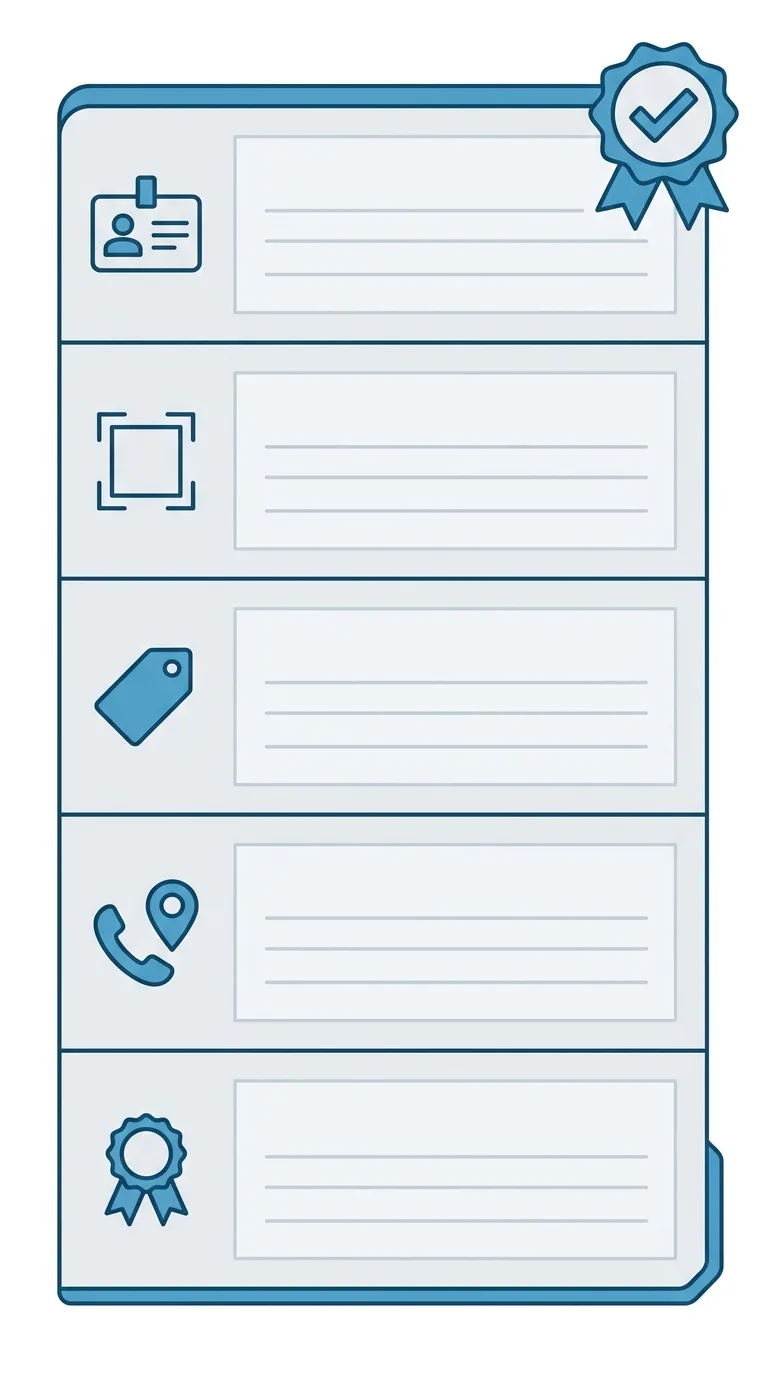 Caption: Five source-of-truth must-haves — (1) legal name (2) service scope (incl. what you don't do) (3) price range (4) contact info (5) background & credentials.
Not Sure Your Site Qualifies as a "Source of Truth"?
AI SEO Hacker's GEO service includes monthly AI citation testing. We verify your brand description accuracy platform by platform — if AI gets you wrong, you hear it from us first.
How to Keep Your Description Consistent Across Platforms: Entity Consistency
A source of truth alone isn't enough — you need the whole web to tell the same story. This is entity consistency. AI decides "are you really you" by cross-referencing sources; the more your accounts agree, the higher its confidence in identifying you, and the less likely it pins someone else's info onto you.
The minimum consistency checklist has three items:
- Uniform name spelling everywhere: the exact wording, spacing, and capitalization must match character for character across your site, socials, and directories.
- Core fields aligned across platforms: the address, phone, and hours on your "About" page and your Google Business Profile must sync — this is also the antidote to entity confusion.
- Clear out stale info: moved, renamed, or dropped a service? An old version sitting somewhere online drags consistency down — update it or request removal one by one.
Wrong claims written by other people can reach AI answers fast, too. A paper from a Fudan University team published on 8 October 2026 (arXiv) tested 10 AI-search platforms (ChatGPT, Google AI, Perplexity, Grok, plus Doubao, Wenxin, Yuanbao, DeepSeek, Kimi and Qwen). The researchers posted about a made-up concept on sites those platforms often cite and that anyone can post to; 8 of the 10 platforms cited it within seven days. For a topic that already had plenty of discussion online, though, only 3 of the 10 did, so the easiest gaps to fill are topics with little existing information. Separately, for $14 a GEO vendor posted content for them, and one platform cited the vendor's posts within an hour. The experiments were run months ago and platforms may have changed how they cite since, but the lesson for brands is plain: wrong claims about you on forums, Q&A sites and blogs can become an AI answer within a week. Besides keeping your own site in order, check regularly what those places say about you, and reply with a correction or ask the platform to act when something is wrong.
There's a technical step too: mark these facts up with structured data (Schema) so AI shifts from "guessing" to "reading." To help AI understand a standalone passage, see the self-contained writing approach in content chunking for AI; and don't forget to confirm you've allowed AI crawlers in first, or AI can't reach you no matter how well you write (see the AI crawler settings guide).
An honest limit here: consistency work is never "do it once and forget it." AI models update and your information changes, so this is ongoing maintenance, not a one-off project. For the more operational side — how to align multi-location store details — our sister article, AI Says Your Store Closed, walks that exact path.
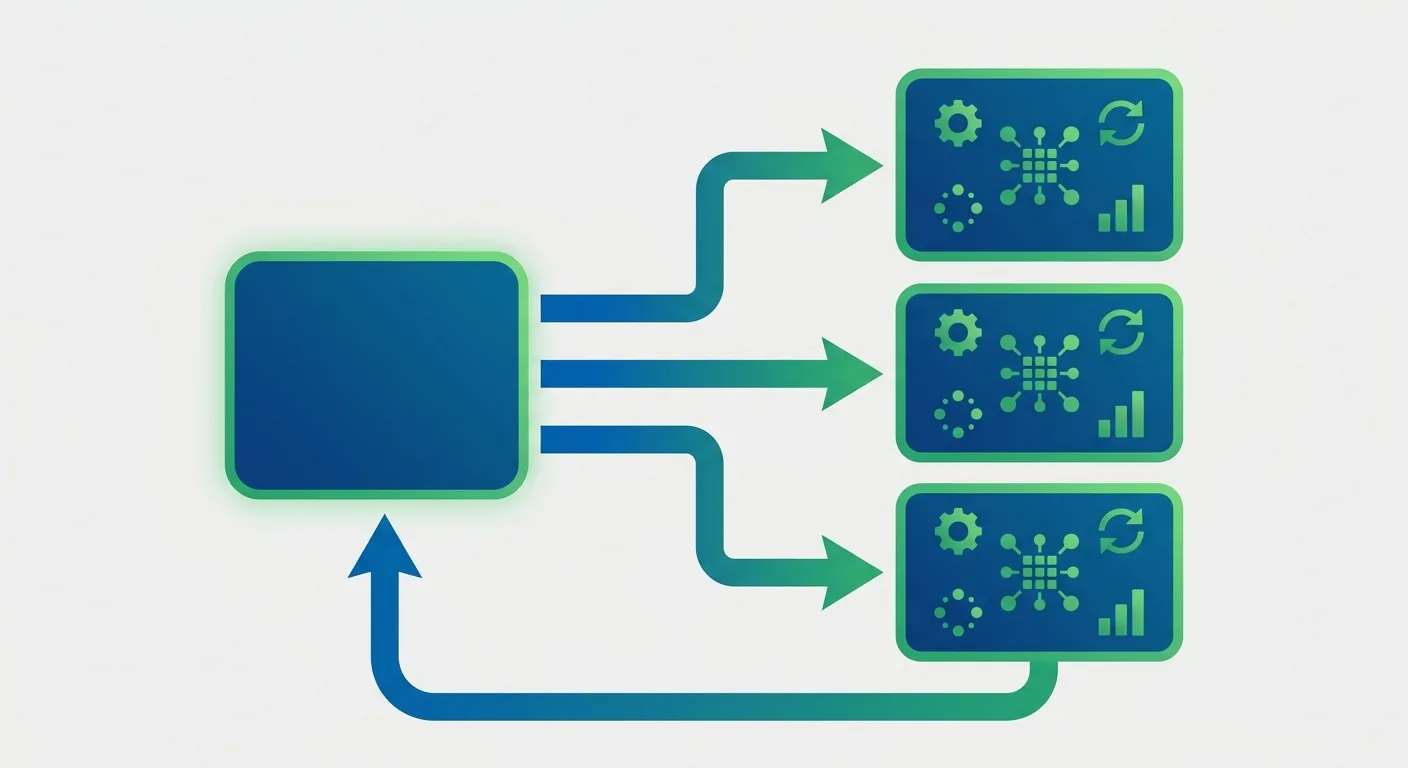 Caption: Consistency engineering — (1) one source of truth (2) spread consistently to each platform (3) re-test and maintain on a schedule.
Is Your Brand AI-Ready? A Four-Capability Audit
Bill Hunt offers a four-capability framework for an "AI-ready source of truth" that you can use to audit your own brand (Search Engine Journal, 2026). It's his methodology view, not an industry standard, but the four questions are handy:
- Knowledge Completeness: does your site state all the key facts about you in one complete place? Leave a gap, and AI fills it itself.
- Connectivity: are those facts — and your external citations — linked and reinforcing each other? Isolated facts are hard for AI to weave into an answer.
- Answer Readiness: is your content written as "question-and-answer, directly quotable," or buried in long marketing copy AI has to dig through?
- Governance: is someone responsible for regularly checking, updating, and correcting these facts? With no owner, consistency collapses eventually.
How many out of four do you score? When we audit clients, the ones that stick most are the third and fourth — the facts exist, but they're written in a form that's hard to cite, and no one maintains them. Fix those two, and you usually hit the highest return on effort.
FAQ
How is a "source of truth" different from a regular "About Us" page?
The difference is purpose. A regular "About Us" is a brand story written for humans, aimed at emotion; a source of truth is a fact list written for AI, aimed at accuracy and completeness. It should cover at least five fields — legal name, service scope, price range, contact info, and background — written so each line is quotable. They can be the same page, but the fact fields must be nailed down and clear, not just adjectives.
Is trust really the most important AI visibility signal? Is there data?
This claim currently comes mainly from industry methodology views — for example MarTech's analysis and Bill Hunt's Search Engine Journal article (2026) — which are expert opinion, not empirical statistics, and should be read as such. But the direction has concrete support: once AI platforms are held liable for errors, they have an incentive to favor verifiable, clearly sourced brands. So rather than wait for perfect data, make your information trustworthy and consistent first.
My brand is rarely searched — do I still need a source of truth?
Yes, for the opposite reason. The thinner the authoritative info about you online, the more AI leans on guesswork, so the odds of being misdescribed are actually higher and found later. The good news: small brands have it easier — in a near-empty information space, the authoritative self-description you publish easily becomes AI's main reference about you, effective on the first try. Start by writing out the five must-have fields completely.
Once I build a source of truth, how soon will AI get me right?
There's no guaranteed timeline. AI retrieval and model updates run on their own rhythms; usually, after you write the facts correctly and freshly on your own site, later retrievals gradually favor the new version — because AI prefers fresh, unambiguous content. But it's a probability boost, not a switch. The practical move: after fixing, re-test one round every month to confirm the key questions answer correctly, treating it as a find → fix → re-test loop rather than a one-off task.
Build Your Source of Truth Now: Trust Compounds
Every day, AI answers "who are you, what do you do, what does it cost" on your behalf. What you can do isn't stop it from speaking — it's prepare the correct answer first, and put it somewhere AI can reach and trust.
The upside is that this compounds. Get the five fields right, make the whole web agree, maintain it regularly — each pass raises AI's trust in you, and once trust is built, every following question is more likely to cite you correctly. Keyword windfalls get washed out by the next algorithm update; trust signals don't. Write down your source-of-truth page today, and stop letting AI improvise about you.

🎯 Take Action
How AI cites you shouldn't be left to luck. AI SEO Hacker's GEO service includes monthly AI citation testing and brand-description accuracy checks — we help you build your source of truth and keep every platform telling the same story.
Free consultation | Contact form
Further Reading
- What If AI Gets Your Brand Wrong? Reputation Management
- AI Says Your Store Closed? A 5-Platform Check to Fix Wrong Location Info
- What Is Content Chunking for AI?
- How to Check If AI Is Citing Your Website
- Taiwan Enterprise GEO Strategy: AI Search Optimization for SMBs
- A paper’s test: how fast US$14 of paid posts reached AI answers
References
- Beyond Brand Sovereignty: How To Build An AI-Ready Source Of Truth - Search Engine Journal
- CMSWire, what to do when AI cites you but gets it wrong (author opinion piece)
- MarTech, trust has become the most important visibility signal in AI search (author opinion piece)
- From Public Posts to AI-Search Citations: Measuring the Fragility of AI Search - arXiv
![Multilingual SEO: New Language, New AI Brand Picks [2026]](/_next/image?url=%2Fblog%2Fimages%2Fgeo%2Fmultilingual-ai-visibility-01.webp&w=3840&q=75)
![Is Cheap GEO Worth It? Risks of Paid AI Posting [2026]](/_next/image?url=%2Fblog%2Fimages%2Fgeo%2Fcheap-geo-posting-risk-01.webp&w=3840&q=75)