
You ask ChatGPT in Chinese which companies in Taiwan are worth working with, see your own brand on the list, and breathe a sigh of relief.
But your overseas buyers aren't asking in Chinese.
On 13 October 2026, Search Engine Journal (SEJ) published a test run by a single author: same AI, same shopping question, only the language of the question changed, and the recommended brand changed too. The author is Reza Moaiandin, co-founder of SALT.agency, and the questions were ones he designed himself.
Multilingual SEO used to deal with one thing: can search engines find the right language version? Now there's another layer: when AI answers in a different language, does it still recommend you?
This article pulls together three primary sources: the SEJ test data, Anthropic's research on how Claude behaves across languages, and a paper that observed how ChatGPT rewrites Chinese questions. At the end, we give exporters a way to check and record AI visibility language by language.
 Caption: Ask the same question in five languages, and AI's top brand pick may be different in each one.
💡 Not sure how AI introduces you right now? Start with a Free AI visibility check.
Key takeaway: A single-author test published by SEJ (Reza Moaiandin, 2026-10-13) used Claude Sonnet 5 with web search off and asked each question 40 times in each of five languages. In the airline scenario, asked in Persian, it recommended British Airways 52.5% of the time; asked in Russian, it recommended easyJet 72.5% of the time and never recommended British Airways once. Being found in Chinese doesn't guarantee foreign buyers will see you when they ask in their own language.
A New Problem for Multilingual SEO: Change the Language of an AI Search, and the Answer Changes
It does change, at least in one single-author test: same model, same scenario, same afternoon, only the language of the question changed, and the top brand pick was different. In the author Reza Moaiandin's own words: "Same model, same scenario, same question, same afternoon. The only difference was the language." (Search Engine Journal, 2026).
Why can't you just look at the Chinese results?
The author explains that when you ask AI in another language, the response "won’t simply be a translation of the answer it would give in English". The AI reasons and composes its answer directly in that language; it doesn't work out an English answer first and then translate it.
This is a new issue for multilingual SEO. Multilingual SEO used to focus on getting search engines to find the right language version and serve it to the right country. Now you need to ask one more question: when buyers ask AI in their own language, who does AI recommend?
And the AI these buyers use is mostly the same AI you use. The SEJ article cites Statcounter data from August 2026: in Saudi Arabia, Kazakhstan and Singapore, roughly three-quarters of website visits from AI chatbots came from ChatGPT; add Claude and Gemini, and the three together accounted for more than 90% in each market.
The same handful of AIs, a different language, and possibly a different answer. That's the problem this article tackles.
Does AI Change Its Brand Recommendations by Language? A Single-Author Test of 1,650 Answers
Yes, but not in every industry. This single-author SEJ test collected 1,650 answers in total. Across six shopping scenarios, the top brand pick for flights and hotels shifted sharply by language, while for headphones, robot vacuums, CRM and project management software, the top pick was the same in all five languages (Search Engine Journal, 2026).
How the Test Worked
Look at the test design first, so you know how far these numbers can be stretched:
| Item | Details |
|---|---|
| Author | Reza Moaiandin (co-founder of SALT.agency) |
| Published | 13 October 2026, Search Engine Journal |
| Collected | 7 September 2026, in a single afternoon |
| Main model | Claude Sonnet 5, web search off, queried through DataForSEO's LLM Responses API |
| Languages | English, Arabic, Russian, Simplified Chinese, Persian (Traditional Chinese was not tested) |
| Scenarios | A hotel in Tenerife, a return flight from London to Tenerife, noise-canceling headphones under £400, a robot vacuum under £500, a CRM for a small U.K. business, project management software for a 50-person U.K. firm |
| Prompt | Each time, name three brand options and say which one it recommends |
| Sample | Core data: 6 scenarios × 5 languages × 40 runs = 1,200 answers; adding the web search and cross-model comparisons, 1,650 answers in total |
One point needs special attention: this test measures the top recommendation, meaning which brand the AI finally says it recommends, not whether the AI cites your web page. For how those two differ, see Recommended vs. Cited by AI.
The Two Biggest Gaps: Flights and Hotels
The flight scenario had the biggest gap. The table below shows, out of 40 answers in each language, how often each of three airlines was the top pick:
| Airline | English | Arabic | Russian | Simplified Chinese | Persian |
|---|---|---|---|---|---|
| British Airways | 12.5% | 45.0% | 0 (not once) | 10.0% | 52.5% |
| Jet2 | 45.0% | 22.5% | 25.0% | 32.5% | 32.5% |
| easyJet | 35.0% | 17.5% | 72.5% | 50.0% | 12.5% |
Asked in Persian, it recommended British Airways 52.5% of the time and easyJet only 12.5%. Asked in Russian, it recommended easyJet 72.5% of the time, and British Airways never came up. The author called easyJet's gap between the two languages "a staggering 60-point swing".
The hotel scenario was just as clear. Bahía del Duque was the top pick in 43.6% of Simplified Chinese answers but only 7.7% of Arabic ones. Hotel Botánico took about a third (32.5%) in English and didn't appear at all in Russian.
The hotel percentages are lower across the board because Tenerife has many hotels to choose from, so the recommendations were spread out to begin with. Also, the author excluded 3 answers that didn't name a top pick, so two of the percentages are based on 39 answers, not 40.
Four Categories Stayed Stable
Not every category changed. In the other four scenarios, the top brand pick was the same in all five languages:
| Scenario | Top pick in all five languages | Range |
|---|---|---|
| Noise-canceling headphones | Sony | English 50.0% (Bose close behind at 42.5%), the other four languages 87.5%–100% |
| Robot vacuums | Roborock | 87.5%–97.5% |
| CRM | Zoho CRM | 75.0%–95.0% |
| Project management software | Monday.com | 45.0%–55.0% |
Why are some categories stable and others not? The author doesn't have an answer either. He writes: "For now, I can only guess at why some categories are stable across all languages while others see such huge variations."
With Web Search Turned On
Most people use AI with web search on. So the author picked two scenarios, hotels and project management software, and tested all five languages again with search on.
The result: in 7 of the 10 language-and-scenario combinations, the top brand pick differed from the search-off results. The hotel scenario was even more extreme: the top pick changed in all five languages.
The most dramatic case was a renamed hotel. In July 2024, Iberostar's Grand tier hotels were renamed JOIA by Iberostar. With search off, the model was still using the old name and recommended it only 2 times in 198 answers; with search on, JOIA by Iberostar took 31% of hotel top picks overall and 60% in English. Project management software changed too: in Arabic with search on, 46.7% picked Wrike, compared with only 5% with search off.
But this data comes with an important caveat. With search on, 42.7% of answers hit the output limit and were cut off before finishing, rising to 83% in Persian and 63% in Arabic. The author says the model usually names its top pick before giving its reasons, so the recommended brand could still be captured from most answers, but he also writes "I can’t rule out the possibility of these numbers being soft".
The author's reading of these results is that because recommendations change once search is on, these language differences "are fluid and can be influenced". That's the author's inference, not proof.
Is It the Same with ChatGPT and Gemini?
The author tested ChatGPT (gpt-5.6-sol) and Gemini (gemini-3.5-flash) on the same two scenarios, also with search off. Out of 10 combinations, Gemini's top pick matched Claude's in 5; ChatGPT's matched in only 1.
ChatGPT showed language differences of its own. For project management software, Claude picked Monday.com in all five languages; in ChatGPT, Monday.com didn't win a single language, and Wrike won four.
The author's conclusion is that language differences are "not exclusive to any one AI model", but that these findings should be treated as "suggestive rather than definitive".
The Limits of This Test
The author lists them clearly himself, and we've summarized them from the original:
- Small sample: collected in a single afternoon, covering only a few models, categories and languages
- One mention doesn't count: the original says "Does one mention in 40 constitute evidence? No."
- No guarantee it holds: the tests weren't rerun, and "there’s no reason to assume these numbers and patterns will hold true from one week to the next"
- No Traditional Chinese: the test used Simplified Chinese, so it can't be applied directly to Traditional Chinese users in Taiwan
So what this test can tell you is that language affects AI recommendations, and that's worth checking for yourself. It can't tell you how your industry or your brand will be affected.
Why Does This Happen? Anthropic's Research: Claude Expresses Different Leanings in Different Languages
There's no settled answer yet. One useful piece of background is research Anthropic published on 13 July 2026: it sampled 309,815 Claude.ai conversations and found that the values Claude expresses shift with language (Anthropic, 2026). But that research measures value leanings, not brand recommendations.
How the Research Worked and What It Found
The research sampled conversations in which users gave Claude subjective tasks, meaning questions with no single right answer, such as whether to change jobs. The sample was drawn equally from three models (Sonnet 4.6, Opus 4.6, Opus 4.7) and the 20 most common languages on Claude.ai, giving roughly 5,000 conversations per model-language pair, with data from two weeks in May 2026.
The research compressed thousands of values into four axes. After controlling for the task, the topic and the values users expressed themselves, these four axes together explain 15% of the variation in values:
| Value axis | What the two ends compare | Variation across languages |
|---|---|---|
| Deference vs. Caution | Going along with what the user wants, or flagging risks | One of the two most stable axes |
| Warmth vs. Rigor | Positive encouragement, or emphasis on accuracy | Varies the most |
| Depth vs. Brevity | Explaining in depth, or doing only what was asked | One of the two most stable axes |
| Candor vs. Execution | Stating its own uncertainty first, or producing a confident finished piece | One of the two axes that vary more |
The research's conclusion, in the original: "The values Claude expresses vary across languages." The biggest difference is on Warmth vs. Rigor: Arabic and Hindi lean most toward warmth, English and Russian most toward rigor.
The research gives its own example: two people asking Claude for feedback on the same business plan, one in Hindi and one in Russian, "may come away with different impressions of its quality".
What This Research Can't Be Used to Conclude
A line needs to be drawn here.
Anthropic's research measures value leanings, not which brand Claude recommends. The SEJ author says so explicitly: "One thing the Anthropic research doesn’t test is whether the choice of language also impacts whether Claude mentions, cites or recommends your brand in the first place."
So it can't explain the SEJ flight and hotel results, and it can't be read as Claude favoring a particular brand. It shows only one thing: when a model answers in different languages, it was never simply translating.
Even Anthropic is still looking for the cause. The research says "We don't yet know which properties of our training data drive these differences." One possibility is that training data is unevenly distributed across languages. As for whether these differences are reasonable, the research also says "We also aren’t yet sure how much of this variation is desirable."
What It Means for Exporters in Taiwan: Being Found in Chinese Doesn't Mean English-Speaking Buyers Can See You
Making decisions based only on what AI says in Chinese is like looking at the map of a single market. A paper published on 11 October 2026 (arXiv 2610.15382) observed that when Chinese questions were sent to ChatGPT, 67.0% of chatgpt-5.3-instant runs and 69.6% of chatgpt-5.5-instant runs searched with English-only queries (arXiv, 2026).
The old question in export SEO was: have you done SEO for your English website? The new question is: when AI answers in English, Japanese or Arabic, are you in the answer?
ChatGPT Rewrites Chinese Questions into English Queries
The paper comes from a team at Xi'an Jiaotong University, the National University of Singapore and others. It observed how ChatGPT rewrites questions and picks citations when it searches the web. Its sample design:
- 80 questions taken from the Search Arena dataset, 20 for each of four intents, with 10 in Chinese and 10 in English for each intent
- Data period from 29 March to 29 July 2026
- chatgpt-5.3-instant and chatgpt-5.5-instant each ran 80 questions × 20 times, 1,600 runs each
The language-related findings:
| What was observed | chatgpt-5.2-instant | chatgpt-5.3-instant | chatgpt-5.5-instant |
|---|---|---|---|
| Query language for Chinese questions | 96.8% issued both Chinese and English queries | 67.0% used English-only queries | 69.6% used English-only queries |
| Share searching the original question as written | 5.5% | 0% | 0% |
There are two details to know about the table. First, the queries chatgpt-5.3-instant actually ran were observable in only 1,339 of its 1,600 runs. Second, chatgpt-5.2-instant covers only 32 questions, because it was retired before data collection finished (arXiv 2610.15382, 2026).
AI rewrites your question and splits it into several queries before searching; for how that works, see Query Fan-Out Explained.
Putting the SEJ test and this paper side by side, our inference is that an exporter's English content may shape the answers seen both by English-speaking buyers and by some people who ask in Chinese. That's only an inference; neither source proves it directly. The paper's Chinese questions came from the Search Arena dataset and weren't designed around Traditional Chinese use in Taiwan, so they can't be applied directly to buyers in Taiwan.
 Caption: The same brand, asked about in another language, may not be recommended by AI: some language markets light up, others stay dark.
Your Export Strategy Needs One More Map
Export marketing has always been split by market: which country, which channel, which language for the catalog. AI visibility should follow the same logic.
Ranking first in Chinese questions doesn't mean you rank first in questions in other languages. The headphones example from the SEJ single-author test points the other way: Sony was the top pick at 87.5% or more in the other four languages, yet only 50.0% in English, with Bose close behind at 42.5%. The English market isn't necessarily your safest one.
For how companies in Taiwan can prioritize their overall GEO plan, see Taiwan Enterprise GEO Strategy.
How to Do International SEO: A Four-Step Multilingual Check for the AI Era
International SEO has gained a step in the AI era: for each target language, check separately how AI answers. Reza Moaiandin (SALT.agency), author of the single-author SEJ test, advises: "Take a handful of questions customers typically ask before they buy from your category." Then repeat the test in each target market's language across multiple AI models (Search Engine Journal, 2026).
Based on that advice, we've organized it into four steps:
| Step | What to do | Notes |
|---|---|---|
| 1 | List your target markets and languages | Go by the languages buyers actually use, not the ones your company wants to cover |
| 2 | Prepare a set of pre-purchase questions for each language | Use the way local buyers phrase things; don't translate the Chinese questions word for word |
| 3 | Ask each question on several AI platforms, several times each, rerun on a fixed schedule | Record the model that actually answered each time |
| 4 | Get the basics right on each language version of your site | URL structure, hreflang, localized content, consistent brand information |
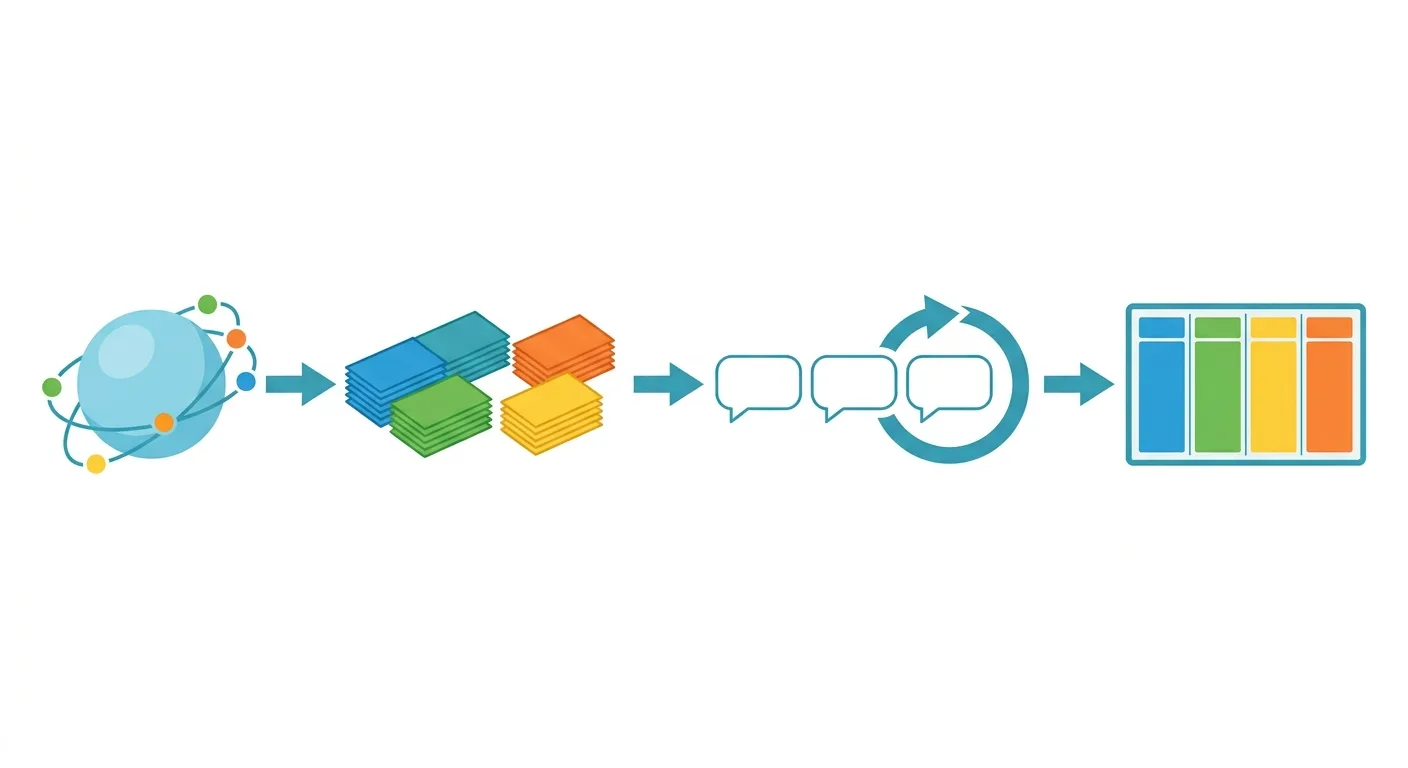 Caption: The four-step multilingual check: pick the languages, prepare a question set for each language, rerun several times across platforms, and record by language.
Step 1: List the Languages Buyers Actually Use
Start by asking: what language do your buyers use when they ask AI?
The answer isn't necessarily a language your website has. If you sell to the Middle East, buyers may ask in Arabic; if you sell to Southeast Asia, it may be English or a local language. The SEJ single-author test article notes that more than half of Los Angeles County residents speak a language other than English at home, a reminder that even one country can have several buyer languages.
Step 2: One Set of Pre-Purchase Questions per Language
Following the SEJ author's advice, pick a few questions customers often ask before they buy.
The key is to use the way local buyers phrase things. In Chinese people ask for a "recommendation", in English they ask for the "best", and Japanese has its own habitual phrasing; a question translated word for word may be one no real buyer would ask. You don't need many questions. First make sure every language has a set, and that the wording stays fixed every time.
Step 3: Several Platforms, Several Runs, a Fixed Schedule
Asking a question once gives you a result with very little value. The SEJ single-author test asked each combination 40 times, and the author still said one mention in 40 isn't evidence; the arXiv paper ran each question 20 times.
There's another easily missed trap: during repeated measurement, the model serving you may be silently swapped. The paper notes that two sessions switched to fallback models after 14 and 16 successful runs, so it recommends confirming the model that actually served every single answer.
For how to check each AI platform and how to write the prompts, work through the checklist in How to Check If AI Is Citing Your Website one platform at a time.
Step 4: Get the Basics Right on Each Language Version of Your Site
hreflang, URL structure for language versions, and localized content are the basics of multilingual SEO. Their job is to let search engines recognize which language versions you have and which market each one is for. Whether they directly affect AI recommendations, none of the three sources has data on; but when AI searches the web it still needs to find the right language version, so the basics still come first. For how to do it, see the international markets section of the Manufacturing SEO guide.
The SEJ author's inference is that because recommendations change once search is on, language differences can be influenced. The place you can act is the online content AI can find when it searches. Our approach is likewise to write content on the client's own website, so that when AI searches, it can read the brand's first-hand account.
Finally, keep brand information consistent across every language version: company name, product names, specifications, contact details. If the language versions say different things, AI may stitch together a wrong version; for how to handle that, see Building a Brand Source of Truth.
Customers Overseas? First See Whether You Show Up When They Ask AI
When buyers ask AI in English or their local language, are you on the recommendation list? AI SEO Hacker can talk you through an AI visibility check for your export audience, starting with your target markets and setting priorities from there.
Record AI Visibility by Language: Don't Just Look at the Total
When you track AI visibility, add a language column to your log, and record the English, Japanese and Chinese results for the same question on the same platform separately. The reason is simple: an average hides a language where you score zero. Take the airline scenario from the SEJ single-author test (Reza Moaiandin, SALT.agency): British Airways' overall top-pick rate was 24.0%, which doesn't look bad, but in Russian it was 0 (Search Engine Journal, 2026).
Look at easyJet in the same table: 37.5% overall, which breaks down to 72.5% in Russian and 12.5% in Persian. If you only looked at the 37.5% total, you'd think it performed evenly across markets; in reality, it's the top pick in one language market and barely exists in another. Totals are good for trends; decisions need the per-language numbers.
How to Design the Log
| Field | Why record it |
|---|---|
| Date | Results change over time, so you need to compare before and after |
| AI platform | Different AIs may recommend completely different brands |
| Model that actually answered | The serving model may be switched to a fallback model |
| Question language | Change the language of the same question and the top pick may change |
| Question | The wording must stay fixed each time so results are comparable |
| Top brand pick | This is what the SEJ test measured |
| Whether you were mentioned, and which URLs were cited | Recommendation and citation are two different things, so record them separately |
When we track AI citations for contracted clients, we use an AI citation tracking tool to test fixed questions on a fixed schedule. If your buyers are spread across several language markets, we suggest adding a language column on top of those same fixed questions. If you'd like to build your own tracking with open-source tools, start with open-source AI visibility tracking tools you can self-host.
Match Your Brand Name in Every Script
When we read the measurement method section of the SEJ article, we noticed a detail that's easy to miss: most brand names were still written in Latin script even in non-English answers, but in the airline scenario, roughly 5% of the Chinese answers wrote British Airways and easyJet only by their Chinese names, with no English name nearby. Because of this, the author added the Chinese and Arabic spellings to the matching list.
The same applies to your brand. If you have a Chinese name, an English name, an abbreviation, or even a translated name the local market is used to, put all of them on your matching list; otherwise AI may clearly mention you while your log shows 0.
Enough Runs, at the Right Level
The arXiv paper reran the same question 20 times and found that 40.8% of chatgpt-5.3-instant's candidate URLs and 44.5% of chatgpt-5.5-instant's appeared in only one of those runs. In other words, seeing or not seeing yourself once isn't enough to conclude anything.
The paper also compared how many of the actual citations external measurement could recover. Using Google Search plus the OpenAI Responses API as stand-ins, together they recovered only 28.3% (5.3-instant) and 26.2% (5.5-instant) of the URLs actually cited; widened to the site level, it was 50.3% and 48.7%. So besides single URLs, also check whether your site as a whole is being cited. For the full measurement framework, see How to Measure GEO Performance.
When the Model Changes, Compare Again from Scratch
The paper's closing advice is that GEO strategy "should be re-evaluated when the deployed setting or serving environment changes".
AI platforms update their models; chatgpt-5.2-instant in the paper was retired before data collection finished. Every time the model changes, treat that round's results as a new baseline, and don't compare the new model's numbers directly with the old model's.
FAQ
What's the difference between multilingual SEO and international SEO?
Multilingual SEO focuses on language versions, helping search engines recognize the Chinese, English and Japanese versions of the same page. International SEO focuses on target country markets; for example, within English you still need to separate the U.S. and the U.K. The two are often done together. In the AI era, both need one more layer: in the SEJ single-author test, asking the same question in a different language changed the top brand pick in the airline scenario.
Will asking AI in Traditional Chinese give the same results as Simplified Chinese?
There's no data to answer that yet. The SEJ single-author test used Simplified Chinese and didn't test Traditional; the Chinese questions in arXiv 2610.15382 came from the Search Arena dataset and weren't designed around Traditional Chinese use in Taiwan. To know how your brand performs in Traditional Chinese questions, the only way is to check yourself with fixed questions and repeated runs.
Do language differences disappear once AI turns on web search?
No. In the SEJ single-author test, with search on, the top brand pick changed in 7 of 10 language-and-scenario combinations; the differences just took a different shape. But with search on, 42.7% of answers were cut off, 83% in Persian and 63% in Arabic, so the numbers may be soft. The author's reading is that this shows language differences can be influenced.
How many times do I need to test per language before the results count?
There's no standard number. The SEJ single-author test asked each combination 40 times, and the author still said one mention in 40 isn't evidence; the arXiv paper ran each question 20 times and found that more than 40% of candidate URLs appeared only once. We recommend fixed questions rerun several times on a fixed schedule, looking at the trend rather than any single result.
Do ChatGPT's brand recommendations also change by language?
In SEJ's small sample, they did. The author tested gpt-5.6-sol on two scenarios, hotels and project management software, and language differences showed up there too; only 1 of 10 combinations had the same top pick as Claude, while Gemini (gemini-3.5-flash) matched in 5. The sample is very small, and the author himself says it should be treated as suggestive, not definitive.
For Exporters Doing Multilingual SEO, AI Visibility Has to Be Read by Language Too
For exporters, multilingual SEO now needs one more lesson: when AI answers in different languages, the recommendation list may be different. The three sources in this article come down to three points:
- Language changes AI recommendations: in the SEJ single-author test's airline scenario, asked in Persian it recommended British Airways 52.5% of the time, and asked in Russian it never did. But this was one author's test on one afternoon, and your industry won't necessarily behave this way
- The cause isn't settled: the SEJ author can only guess, and Anthropic's research found that Claude's value leanings shift with language, but it doesn't measure brand recommendations
- What you can do is concrete: check by language, record by language, build good content for each target language version of your site, and keep brand information consistent across languages
Being found in Chinese is a good thing, but it's only one market. The next step is to ask once in your buyers' language.

🎯 Make Sure AI Finds You in Every Target Language
The next step for multilingual SEO is making sure that when buyers ask AI in their own language, they find you too. AI SEO Hacker offers AI-driven SEO/GEO article services, from keyword planning for your target markets to writing content AI can understand. Let's talk about your export markets.
Further Reading
- How to Check If AI Is Citing Your Website
- How to Measure GEO Performance
- Recommended vs. Cited by AI
- Taiwan Enterprise GEO Strategy
- Query Fan-Out Explained