When did you last seriously update your branch page?
Most stores' location pages stop at "address, phone, one storefront photo." That used to be enough, because customers would click into Google Maps themselves.
But now customers increasingly ask AI directly—"which store in Xinyi sells this," "what time does this branch close"—and when AI answers, it pulls the paragraphs it can understand off your page. If the page is empty, AI skips you, or stitches something together from elsewhere and gets your info wrong. This article walks you through rewriting your location page into a form AI is willing to cite, from content structure to chunk-writing to schema.
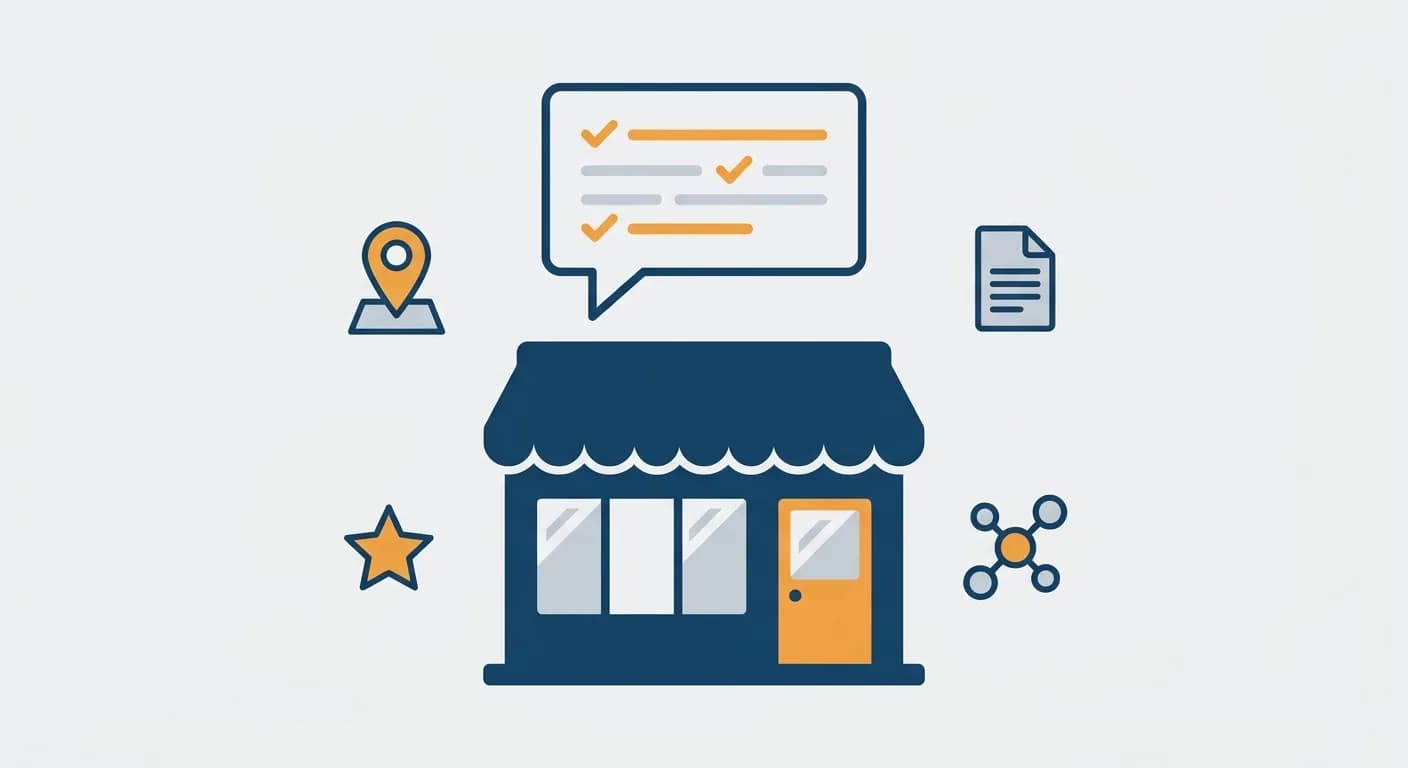
 Caption: When AI answers a local question, it pulls paragraphs from your location page—what's on the page decides whether it can cite you at all.
Want to know whether your branch page looks "citable" in the eyes of AI? Get a free audit via LINE.
👉 Free LINE Consultation: @006ljkda
Why the AI Era Means Rewriting Your Location Page
The entry point to local search is changing: customers used to search "coffee shop nearby" and see a row of blue links plus a map; now they increasingly see a block of AI-generated answer first. There's data to feel the direction, but the framing matters. According to a Whitespark study published in May 2025, across 540 local queries in three US cities (Houston, Phoenix, Denver) and six industries, AI Overviews appeared about 68% of the time versus about 39% for the traditional local pack (Whitespark, 2025-05). That's a small 2025 US sample—not Taiwan, and not a current universal rate—useful only as a signal that "AI-generated answers are eating into local blue links." On the how-to side, Search Engine Journal in July 2026 laid out how AI Overviews already answer most local searches and how stores get cited (Search Engine Journal, 2026-07). The point is consistent: being cited depends on your page carrying correct data a machine can read.
Your location page is the piece you fully control. A Google Business Profile is a fixed set of boxes; your own location page can go deeper, more local, and closer to what customers actually ask—it's exactly where you feed material to AI. If your storefront website's basics aren't set up yet, start with the local business website SEO guide before pursuing AI citations.
For AI to Cite Your Location Page, It Needs These Six Things
When AI generates a local answer, it picks sources that are "specific and internally consistent." To get picked, complete these six first.
First, consistent NAP. NAP means name, address, phone. These three must match exactly across your website, Google Business Profile, Facebook, and directories—if they don't, AI tends to grab the wrong version or skip you.
Second, clear services/products with price ranges. Don't just write "we offer many services"—list the actual items, short descriptions, and rough prices. When a customer asks AI "do they do X, roughly how much," AI can only answer if you wrote it down.
Third, hours including special hours. Regular hours must be accurate, and set special hours for holidays too. This is the item AI is asked about most and gets wrong most—we've hit a case where a branch left holiday closures unmarked and AI told customers "they're open."
Fourth, local context. Nearby landmarks, how to get there by MRT or bus, whether there's parking, which exit is closest. These details are the biggest difference between a branch page and the brand's homepage, and a signal AI uses to decide "this page really is about this location."
Fifth, structured Q&A. Write the questions customers actually ask as question-and-answer pairs: can you book, are pets allowed, is it wheelchair accessible. AI grabs this paired format especially well.
Sixth, real local content. This branch's actual photos, excerpts of local customer reviews, small stories that happened at this store. Concrete content that belongs only to this location makes AI trust you more than generic marketing copy.
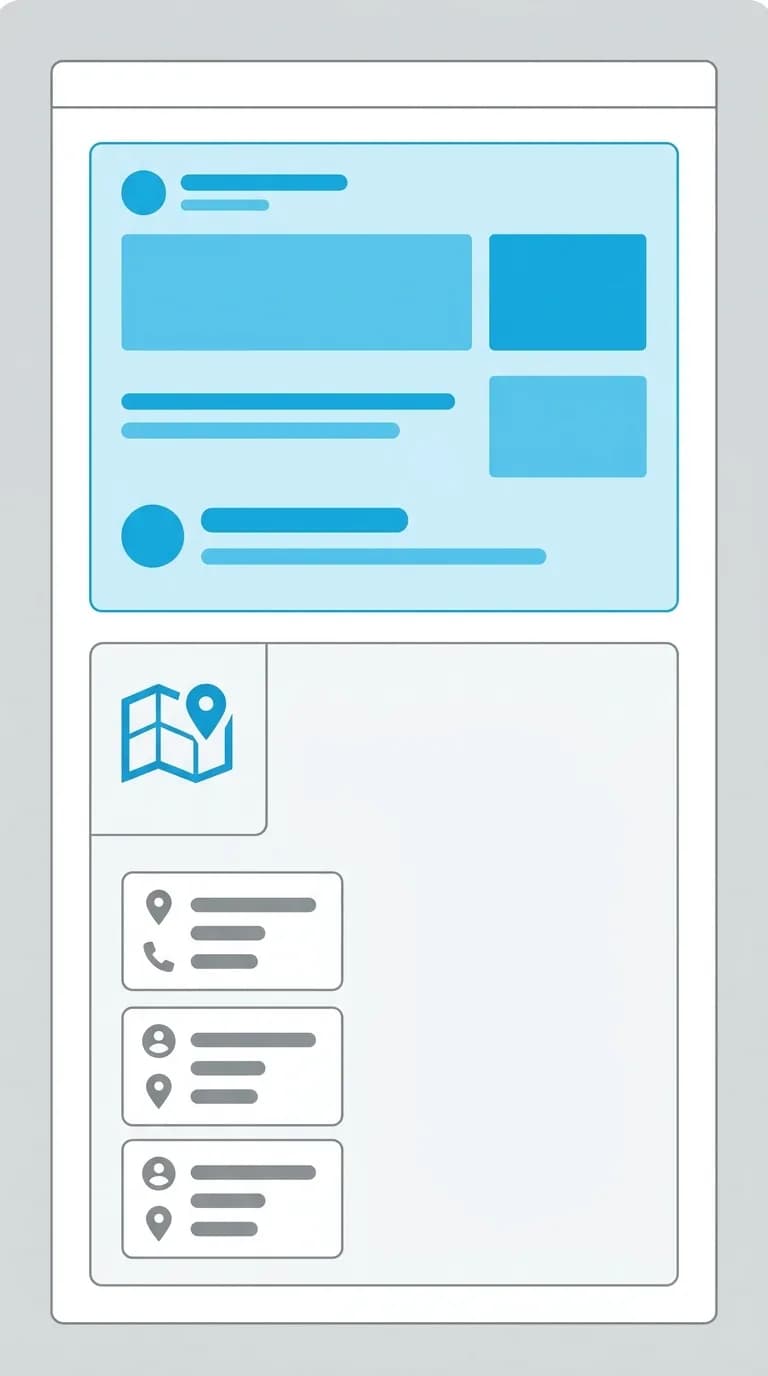
 Caption: Six location-page essentials—(1) consistent name/address/phone (2) services/products + price ranges (3) hours including special hours (4) local context (landmarks/transit/parking) (5) structured Q&A (6) real local content.
Location-Page Chunk Citability: Every Paragraph Must Survive Being Lifted Out
Here's the key many people miss: AI doesn't cite "your whole page"—it cites "one paragraph" within it, so what really decides whether you get cited is how grab-able a single paragraph is. This is called chunk citability—write each paragraph so that even cut out and stripped of context, it still makes sense and answers one question.
How? First, put the conclusion at the start of the paragraph—don't build up before the point, because AI may only get the first two sentences. Second, one paragraph, one thing—mix "hours" and "parking" into the same paragraph and AI grabs a blur. Third, avoid relative references like "as mentioned above" or "as noted earlier"—when a paragraph is lifted out, "above" doesn't exist and the answer comes out incomplete.
Take a parking example. Instead of "About parking, as we touched on above…," write "This store has a dedicated lot with 8 spaces behind the building; spend over a threshold and get one hour validated"—lifted out on its own, the latter is still a complete answer. That's why, when we rework location pages for stores, what we adjust most isn't adding content but "chunking"—breaking a big block of intro into short, one-topic, conclusion-first paragraphs. For how to think about it, content chunking for AI goes deeper, and it applies fully to location pages.
One pass over your branch page changes the citation odds
Not sure whether your location page paragraphs are chunked right, or whether AI can grab them? AI SEO Hacker offers a free audit to find the gaps.
👉 Free LINE Consultation: @006ljkda
Use LocalBusiness Schema to Mark Up Location Data for AI to Read
Once the text is written, there's another layer that's for machines: structured data, or schema. It's a set of tags hidden in the page source for search engines and AI to read. With LocalBusiness schema in place, a machine's accuracy at grabbing fields like address and phone goes up a lot.
On a location page, mark up at least these: name, address, phone, hours (including special hours), geo coordinates, and business type (restaurant, clinic, retail, etc.); skip rating and review count on your own pages — Google's documentation says aggregateRating is only recommended for sites that capture reviews about other local businesses (Google Search Central).
Here's a common trap: the schema's contents must match the text visible on the page. If the page says you close at 9pm but the schema says 10pm, that inconsistency actually drags down trust. For how to write schema and which types exist, the complete structured data (Schema) guide has a from-scratch method—for location pages, apply LocalBusiness. One reminder: schema "helps" machines understand; it doesn't "guarantee" citations. If the page content is empty, no amount of schema helps. Content is the substance; schema is the aid.
 Caption: LocalBusiness schema marks address, phone, hours, and coordinates into machine-readable fields—on the condition that the markup matches the page text.
How to Architect Multi-Branch Pages Without Cannibalizing Yourself
If you have just one store, skip this section; for brands with many branches, this is where it's easiest to go wrong. The principle is one page per branch, each with its own local content—don't template every branch and just swap the address, because then every page is nearly identical and AI can't tell which one to cite.
How do you make each page different? With genuinely local things: this branch's nearby landmarks, its own photos, its unique services or events, its local customer reviews. Fill in content that "belongs only to this location" and each page naturally becomes distinct.
Keep the URL structure consistent too—something like brand-domain/locations/xinyi, a clear hierarchy so a machine immediately knows which page maps to which store. With many branches, add an "all locations" overview page that links to each.
We took over a brand with a dozen-plus branches where every page differed only by address, contents identical, and AI kept mixing up branches when asked; it only improved noticeably after we added local context and real photos to each page. This isn't advanced tech—it's just writing "each store as a real place."
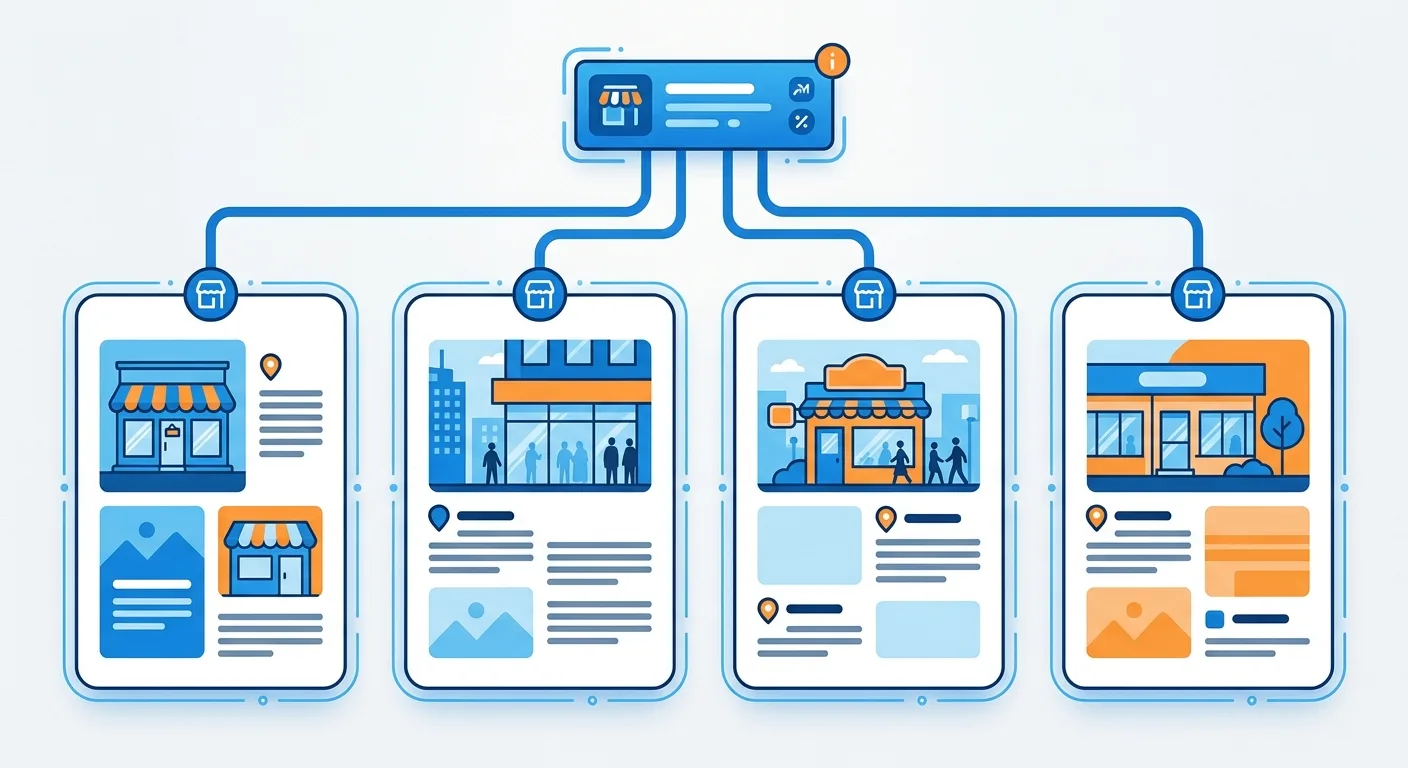 Caption: Multi-branch architecture—an overview page links to each branch page, each with its own local content, so AI can tell which one to cite.
After Writing, How to Verify Whether AI Cites Your Location Page
Finishing the write-up isn't the end—you have to go back and verify, and the method is low-tech but works. Using a customer's phrasing, ask AI directly about your branch, things like "does XX store in Xinyi have parking," "is XX clinic open Sundays," "can I bring a dog to XX branch," and see whether the answer is right and whether it mentions you.
If it's wrong or missing, go back to the six-essentials checklist above and complete the content or fix the schema—don't rush off to change something else. Test five to eight common phrasings per store; it takes under ten minutes and often surfaces one or two pieces of wrong info that have been misleading customers.
To more fully confirm whether you're being cited—and whether you're being described wrong—pair this with the self-check logic in Google is AI Mode's #2 cited domain, cross-checking your Business Profile and location page.
One limitation first: AI answers shift, and the same question at different times can cite different sources—that's the nature of generative search, so treat verification as a regular habit, not a one-and-done.
FAQ
"Multi-location SEO" and "location page GEO" barely get searched—is doing this worth it?
It's a forward-positioning trade-off. These terms genuinely have low search volume today and won't drive big traffic short-term. But local search is moving toward AI-generated answers, and whether your location page gets cited will increasingly affect whether customers see you at all. On top of that, writing a good location page already helps traditional local SEO—layering in AI-citation positioning is a low-risk preparation, not a pure gamble.
Which matters more, the location page or the Google Business Profile?
The two are complementary, not either-or. The Business Profile is fixed fields that AI loves to grab, but limited in depth; your own location page is a fully-controlled asset where you can write deeper local context and Q&A. The ideal is to keep both consistent and mutually reinforcing.
How long until my updated location page gets cited by AI?
There's no guaranteed timeline, to be honest. Which source AI cites depends on your content completeness, data consistency, and the competition in your industry and area—and the answer itself fluctuates. The realistic expectation is that completing content and schema "gives being cited a chance," not "press a button and get cited." So make periodic self-checks a habit rather than waiting for a specific go-live date.
Writing Your Location Page Into a Citable Form Is the Next Step for Store-Page SEO
Back to the opening question: when did you last seriously update your branch page?
Local search is moving toward AI-generated answers. Whether your location page gets cited hinges not on some mysterious algorithm but on whether the page carries content AI can read and that holds up: complete the six essentials, put the conclusion first in every paragraph, keep schema markup consistent with the page, write unique local content per branch, and self-check with AI regularly.
This is a forward bet on "AI local search demand." Even if "multi-location SEO" hasn't taken off as a term, a well-written location page has a floor for both traditional local ranking and future AI citations. For how it fits the overall strategy, head back to the complete local GEO strategy guide.
 Caption: Content six-essentials + citable paragraphs + schema markup—three layers in place turn a location page from "having a page" into "being citable by AI."
🎯 Take Action Now
Skip one piece of local content on your branch page and AI has one less chance to cite you. AI SEO Hacker audits your location pages and site-wide GEO gaps—free LINE consultation.
👉 Free LINE Consultation: @006ljkda