![AI Exposure Isn't Revenue: How SMEs Monetize AI Traffic in 2026 [5 Paths]](/_next/image?url=%2Fblog%2Fimages%2Fgeo%2Fsme-zero-click-monetization-01.webp&w=3840&q=75)
Cited by AI — now what? You may have noticed ChatGPT and Google AI Overview starting to mention your brand lately. It feels great, but at month-end the revenue number hasn't moved. The problem isn't AI. It's that you still set the "endpoint" at that click into your website — and that click is now disappearing.
This article isn't about chasing more AI exposure. It's about what happens after the exposure arrives: how Taiwan SMEs turn it into real inquiries and orders.
 Caption: AI exposure climbs while revenue stalls — that fault line in the middle is the monetization gap this article closes.
💡 Your brand is starting to appear in AI answers but you don't know how to turn it into business? See how to catch exposure and convert it into inquiries.
Why AI Exposure Rises but Revenue Doesn't: The Truth About the Zero-Click Gap
The conclusion first: it isn't that AI brings no business — it's that the old monetization model broke. The old logic was simple: search finds you, you get clicked into the website, the sale happens on the website. Now AI writes the "answer" straight onto the results page, the user reads it and leaves, and that click that used to carry them to your site gets intercepted halfway.
How serious is this? According to SparkToro's analysis using Similarweb clickstream data, of US Google searches from January to April 2026, fewer than one-third send users to a site outside Google — in other words, about 68% of searches are "zero-click" (SparkToro, 2026). Be clear about the scope: this is the share of all US searches, and over the same period only 0.34% of searches actually used AI Mode, so you can't simplify it into "AI ate 70% of clicks." Most zero-clicks are weather or conversion queries that never needed a click anyway.
If you look only at AI Mode, the gap is starker. Semrush's July 2025 analysis (Semrush) found that among AI Mode–specific queries, about 93% (a 92–94% range in the original) produce no external click. Even ranking first gets compressed — Ahrefs' updated study in February 2026 (300,000 keywords) measured that when an AI Overview appears, the average click-through rate of the number-one organic result is 58% lower (Ahrefs, 2026). That 58% measures "the CTR of position 1," not total traffic, and it refers to AI Overviews, not AI Mode.
Three numbers, three different scopes, but they point to the same thing. Your ranking may not have dropped and your citations may even be up, yet the path of "monetizing through website clicks" is narrowing. For a full diagnosis of that gap, see how to read the AI search clicks gap.
Stop Fixating on Website Clicks: Separate "Getting Seen" From "Getting the Sale"
The mindset most worth replacing in the zero-click era: assuming exposure turns into revenue on its own. It doesn't. The middle step needs you to take over actively.
When we look at AI referrals for clients, we keep seeing one pattern: AI's job is to put you "in front of the eyes," but it won't close the deal for you. It hands you one chance to "be known," not an order. Once you split those two stages, your marketing changes — hand the exposure stage to content and GEO, and for the sale stage, you build a path that's short and close.
The old funnel was a straight line: exposure → website click → website conversion. Now that middle segment, "website click," can break at any moment. So the smart move isn't repairing that segment — it's bypassing it, catching demand right where the user is closest to you. For Taiwan SMEs, those three places are branded search, LINE Official Account, and Google Business Profile. What they share: they catch people without depending on that one website click.
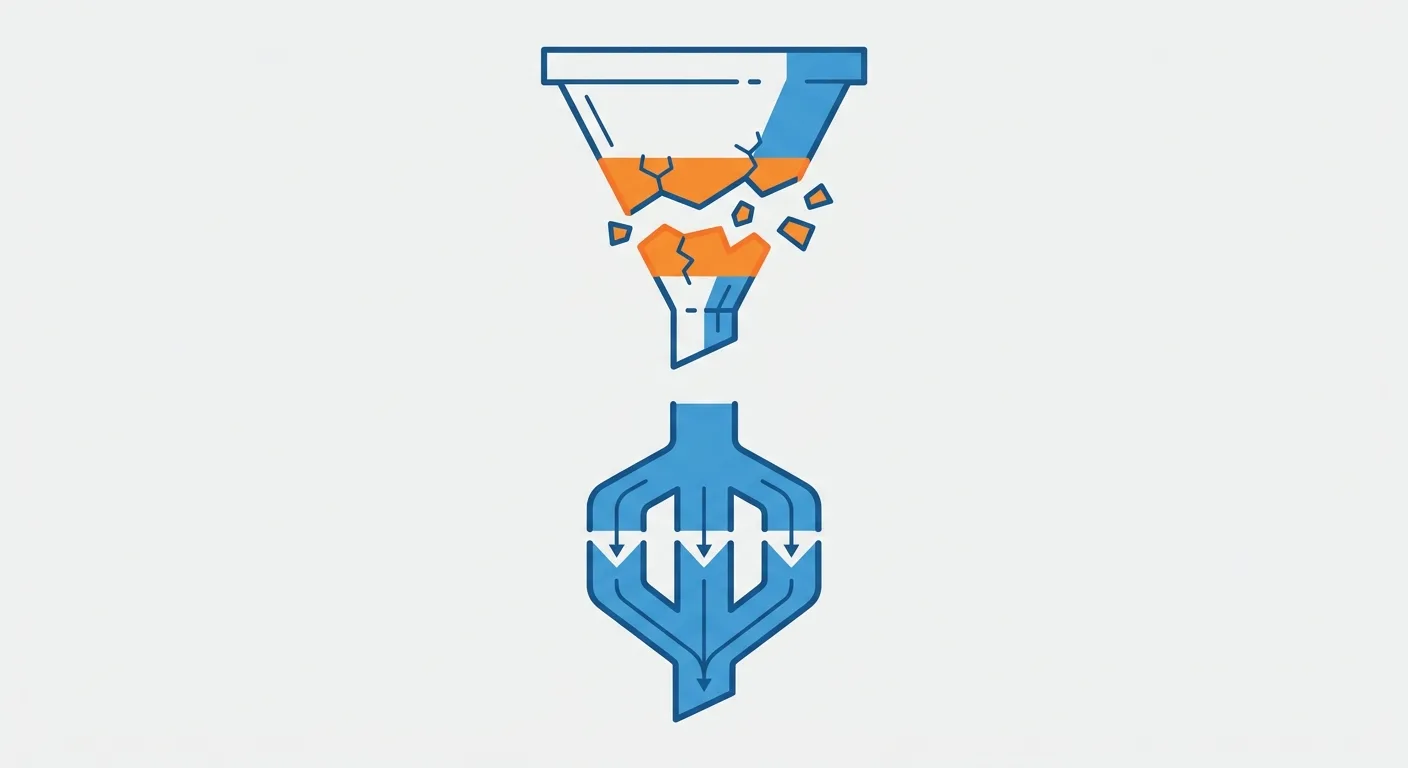 Caption: The old funnel's middle (the website click) breaks easily → replace it with three short paths: branded search, LINE Official Account, Google Business Profile.
Path One: Use AI Exposure to Grow "Branded Search" and Reclaim the SERP
This is the most underrated yet most usable path: let AI exposure grow your branded search.
The logic goes like this. A user sees your brand mentioned in ChatGPT or an AI Overview. They won't order right then, but the name sticks. A few days later, when they have a need, they do one thing — Google your brand name directly. That "branded search" is golden traffic: intent is extremely strong, almost no competitor can cut in line, and you own that entire results page 100%. AI completes the "knowing," and branded search completes the "coming back." AI does the awareness; branded search does the return.
So what SMEs should do isn't complain that AI gives no clicks — it's deliberately make your name "copyable by AI" inside your content. How? Tie your brand name to a concrete fact in the same sentence, like "Company X buys used machinery in the Taichung area," rather than a vague "we provide professional services." When AI cites it, it carries the name along, and the user has something to search back for. This "get AI to copy your brand name" writing is fully broken down in the get-cited-by-AI content strategy.
Growing branded search has a bonus: it's a signal you can watch yourself. When your brand name's search volume rises, it means AI exposure really is building recognition for you — more on that shortly. One caveat: AI sometimes gets your details wrong, and a misstated brand can hurt trust, so see how to fix AI getting your brand wrong.
Want to actually turn AI exposure into inquiries?
Not sure whether AI mentions your brand, or how to catch it as business? AI SEO Hacker offers a free audit to map your current AI exposure and the conversion paths you can act on.
Path Two: Move the Endpoint From the Website to LINE Official Account
Website clicks are shrinking, so stop pinning the sale on the website. For Taiwan SMEs, the shortest path is usually the LINE Official Account.
Why LINE? Three very practical reasons. First, Taiwanese already live inside LINE, and the psychological barrier to adding a friend is far lower than filling out a website form. Second, LINE is a two-way conversation — a single "how much is this?" opens a sale, and you don't have to guess what they want. Third, once someone adds you as a friend, you can keep messaging them, turning a one-off exposure into a list you can reach repeatedly. A single website click gives you none of these three.
How do you connect it in practice? Place the LINE add-friend entry at every spot where a user has "just met you": the end of a content article, the intro of your Google Business Profile, your social profile. When someone meets you through AI, searches your brand name, and comes back, the first thing they should see is an "add LINE and ask" button — not a form with ten fields. In our own work, switching the endpoint from a form to LINE often multiplies inquiries from the same batch of traffic several times over, because you cut the distance to the sale as short as it goes.
One reminder: set up auto-replies and a welcome message on your LINE Official Account first, or people who add you get left hanging and leak away anyway. Building the conversion channel is worth doing before producing one more article.
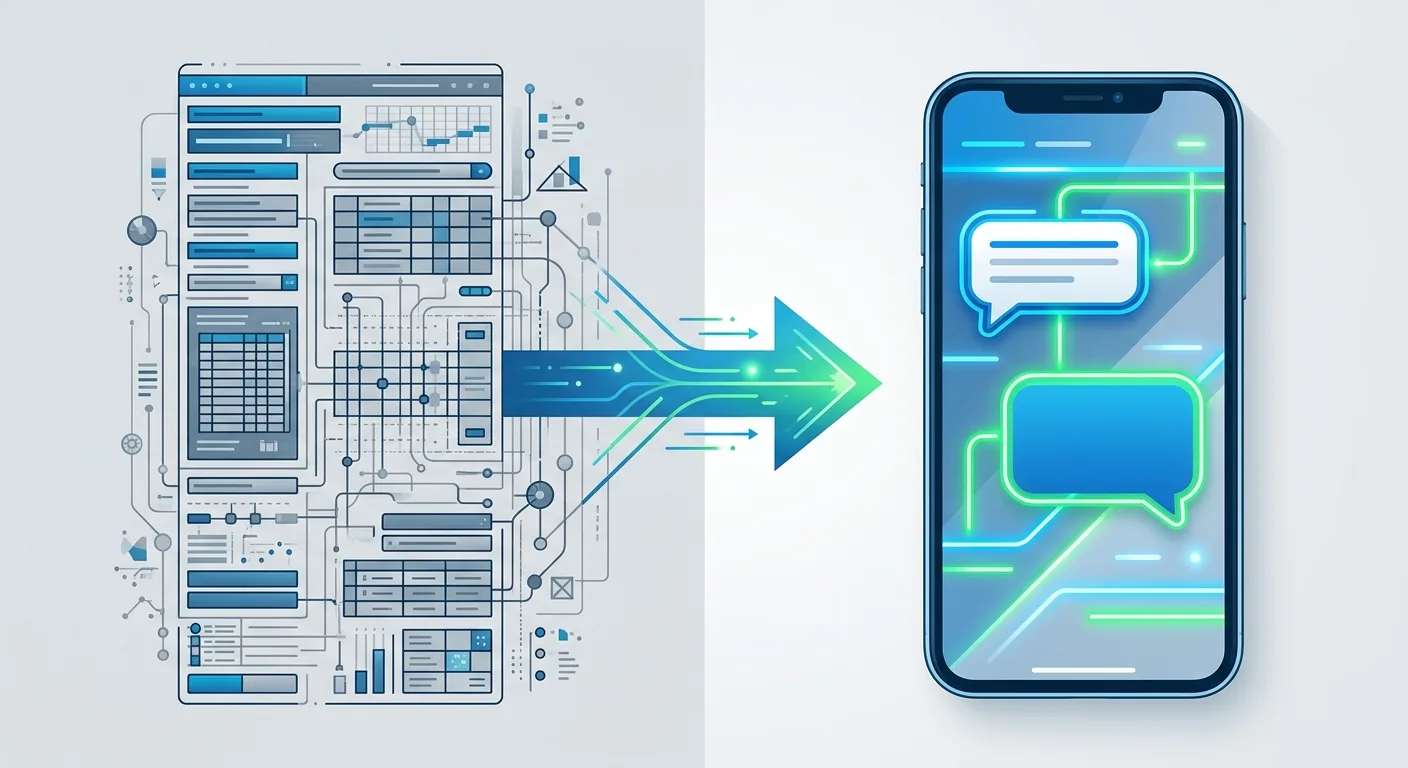 Caption: Swap the conversion endpoint from a ten-field website form to a LINE chat that starts with one sentence — the shortest distance to a sale.
Path Three: Use Google Business Profile to Catch Local AI Recommendations
If you're a local business with a storefront or a service area, there's a third path: Google Business Profile (GBP). It's one of the few assets in the zero-click era that gets found — and directly contacted — without a website.
AI and Google Maps lean heavily on Business Profile information when answering local questions: hours, address, services, reviews. A user can see you, call you, or check directions right inside Maps or an AI answer, without ever entering your site. That's a second storefront beyond the website, and it naturally sits at the exact moment a user is "looking for a local business."
In practice, mind three things. Write your services and common questions into the profile, using words close to how customers actually ask, so AI can copy them. Keep updating photos and posts so the profile looks alive. And reply seriously to every review, because review content also gets pulled by AI as a basis for its answers. For the full setup and optimization steps, follow the Google Business Profile guide. Paired with branded search, you'll see the chain: AI mentions you → the user searches your brand name → your Business Profile appears → they call or add LINE directly — the whole sequence bypasses the website click.
Without Site Clicks, How Do You Prove AI Brings Business? Three Visible Signals
This is where many owners get stuck: if traffic doesn't enter my website, how do I know whether AI is helping? The answer — look at a different set of metrics and stop fixating on website traffic.
The first signal is branded search volume. In Google Search Console, look at queries related to your brand name; if impressions and clicks rise as you build AI exposure, the path of "AI makes people remember you, then search you back" is working. The second signal is the source of LINE friends. Use different add-friend links to separate pages, and you'll know which article and which entry brings the most friends. The third signal is Business Profile interactions — calls, direction requests, and website clicks, all visible in the dashboard.
What these three share: they measure "action," not "clicks." In the zero-click era, whether you can be contacted is closer to revenue than whether you got clicked into. To look at AI referrals in more detail, see how to filter AI sources in GA4 in AI search traffic analysis, and the metric framework in how to measure GEO performance. Honestly, this measurement is a bit fuzzier than the old traffic report, but it measures the right thing.
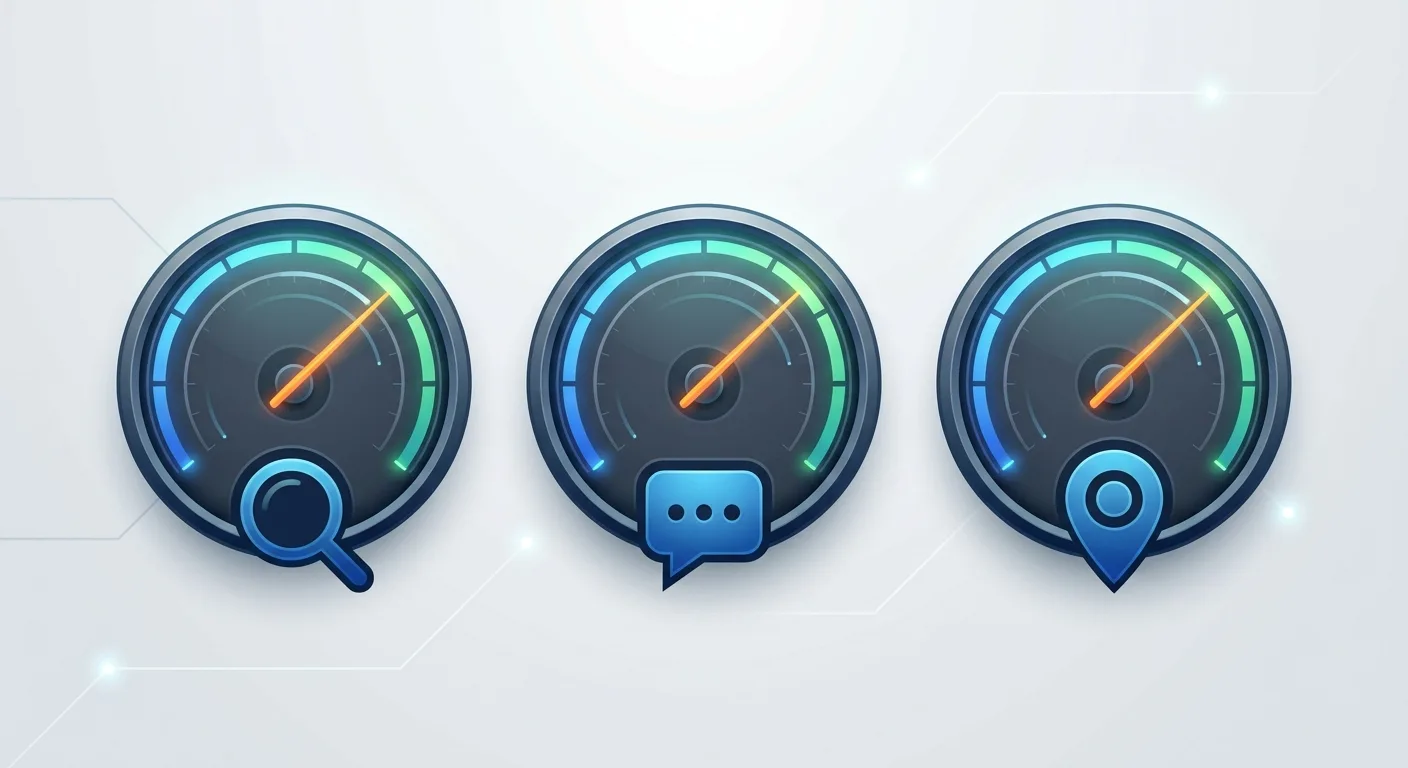 Caption: Instead of website traffic, watch three action signals (1) branded search volume (2) LINE friend source (3) Business Profile interactions.
SME Rollout Order: Catch Demand First, Then Scale AI Exposure
Now that you know the three paths, the order is where most people go wrong. Instinct says "chase exposure first," but do that and the exposure leaks out through channels you never built.
The correct order is reversed — catch first, then scale. Step one, build the conversion channels: open the LINE Official Account, set up auto-replies, and fill out the Google Business Profile completely. This step costs almost nothing and takes a day or two. Step two, deliberately tie your brand name to concrete facts in your content, so AI can copy you and users have something to search back for. Step three — and only now — keep producing AI-citable content to scale exposure. The benefit of reversing the order is direct: by the time exposure actually arrives, you were ready to catch it long ago.
Taiwan SMEs have a clear edge here — you decide fast and pivot fast, so this setup can go live within a week, unlike large enterprises stuck in three-month processes. For a fuller SME AI-search playbook, the Taiwan enterprise GEO strategy has a five-step process from audit to execution. And the whole picture of zero-click era traffic strategy sits in the pillar article, zero-click search era traffic strategy.
An honest reminder: this method won't spike revenue overnight. Branded search takes cultivating and lists take accumulating, usually a 3-to-6-month observation window. But the direction is right — you're building a monetization path that doesn't depend on website clicks, and that's the only path that works in the zero-click era.
Frequently Asked Questions
Q: AI exposure is up, so why hasn't revenue grown?
A: Because exposure and the sale are two things. AI gets you "seen," but it won't close the deal — that middle step is on you. If you still set the endpoint at a website click while that click is being intercepted by AI, exposure naturally won't convert. The fix is to move the endpoint to closer touchpoints: branded search, LINE Official Account, and Google Business Profile.
Q: What does "use AI exposure to grow branded search" mean?
A: A user sees your brand name in an AI answer, remembers it, and a few days later — when they have a need — Googles your brand name directly. That branded search has extremely strong intent and almost no competition, so you own the entire results page. The method is to tie your brand name to a concrete fact in the same sentence, so AI carries the name along when it cites you.
Q: Do SMEs need a website to monetize AI at all?
A: Not necessarily. Google Business Profile and LINE Official Account can both catch demand without a website click, and local businesses especially can be found and contacted through the profile alone. A website is still useful, but it shouldn't be your only conversion endpoint.
Q: Without website traffic, how do I prove AI brings business?
A: Watch three metrics. First, whether branded search volume in Google Search Console is rising; second, which pages your LINE friends come from (separate with different links); third, calls and direction requests on your Business Profile. These three measure "action," which is closer to actual revenue than website clicks.
Conclusion: In the Zero-Click Era, Whoever Catches Demand Wins
AI exposure isn't revenue — that line isn't telling you to give up on AI search. It's reminding you to shift part of your focus from "chasing exposure" to "catching demand." Clicks are disappearing, but demand isn't; it just surfaces somewhere new — inside branded search, inside a LINE conversation, inside a phone call from Google Maps.
For Taiwan SMEs, this is actually good news. You don't have to fight large enterprises on website traffic. What you do is build three close paths: get AI to copy your name, move the endpoint to LINE, use the Business Profile to catch local recommendations — then measure with the right signals. Catch first, then scale. Get the order right, and none of AI's exposure goes to waste.
 Caption: Turn AI exposure into inquiries — it starts with one conversation.
🎯 Take Action Now
AI has started mentioning your brand, but you don't know how to turn it into orders? AI SEO Hacker maps your current AI exposure and builds the LINE and Business Profile conversion paths, so every bit of exposure has somewhere to land.
Further Reading
- Zero-Click Search Era Traffic Strategy: the full traffic strategy overview after AI eats the clicks (pillar)
- Taiwan Enterprise GEO Strategy: a five-step practical process for SME AI search optimization
- Google Business Profile Guide: profile setup that catches local AI recommendations
- AI Search Traffic Analysis: filter AI sources in GA4 and measure referrals
- How to Measure GEO Performance: a metric framework that doesn't rely on clicks
- The Get-Cited-by-AI Content Strategy: writing that gets AI to copy your brand name
![AI Says Your Store Closed? A 5-Platform Check to Fix Wrong Location Info [2026]](/_next/image?url=%2Fblog%2Fimages%2Fgeo%2Fai-wrong-store-info-01.webp&w=3840&q=75)
![Is Cheap GEO Worth It? Risks of Paid AI Posting [2026]](/_next/image?url=%2Fblog%2Fimages%2Fgeo%2Fcheap-geo-posting-risk-01.webp&w=3840&q=75)
![Multilingual SEO: New Language, New AI Brand Picks [2026]](/_next/image?url=%2Fblog%2Fimages%2Fgeo%2Fmultilingual-ai-visibility-01.webp&w=3840&q=75)